
Bluetooth 5km Range Module: The MultiNav Pro+ BLE That Scales to 50km
RFOXiA Long Range Bluetooth Module
The bluetooth 5km range module that developers have been waiting for — finally exists, ships today, and costs $59.
Every hardware developer working on drones, robots, remote IoT deployments, or field sensor networks has run into the same wall. Standard Bluetooth modules advertise impressive ranges that evaporate the moment you step outside a clean lab environment. You get 80 meters if you're lucky. 100 meters in ideal line-of-sight conditions. And then nothing.
The alternative has always been military-grade long-range RF systems — hardware that starts at $5,000 and requires export licensing, specialized integration knowledge, and an enterprise procurement budget. For individual developers, small teams, and research labs, those systems have simply been inaccessible.
RFOXiA built the MultiNav Pro+ BLE to close that gap permanently.
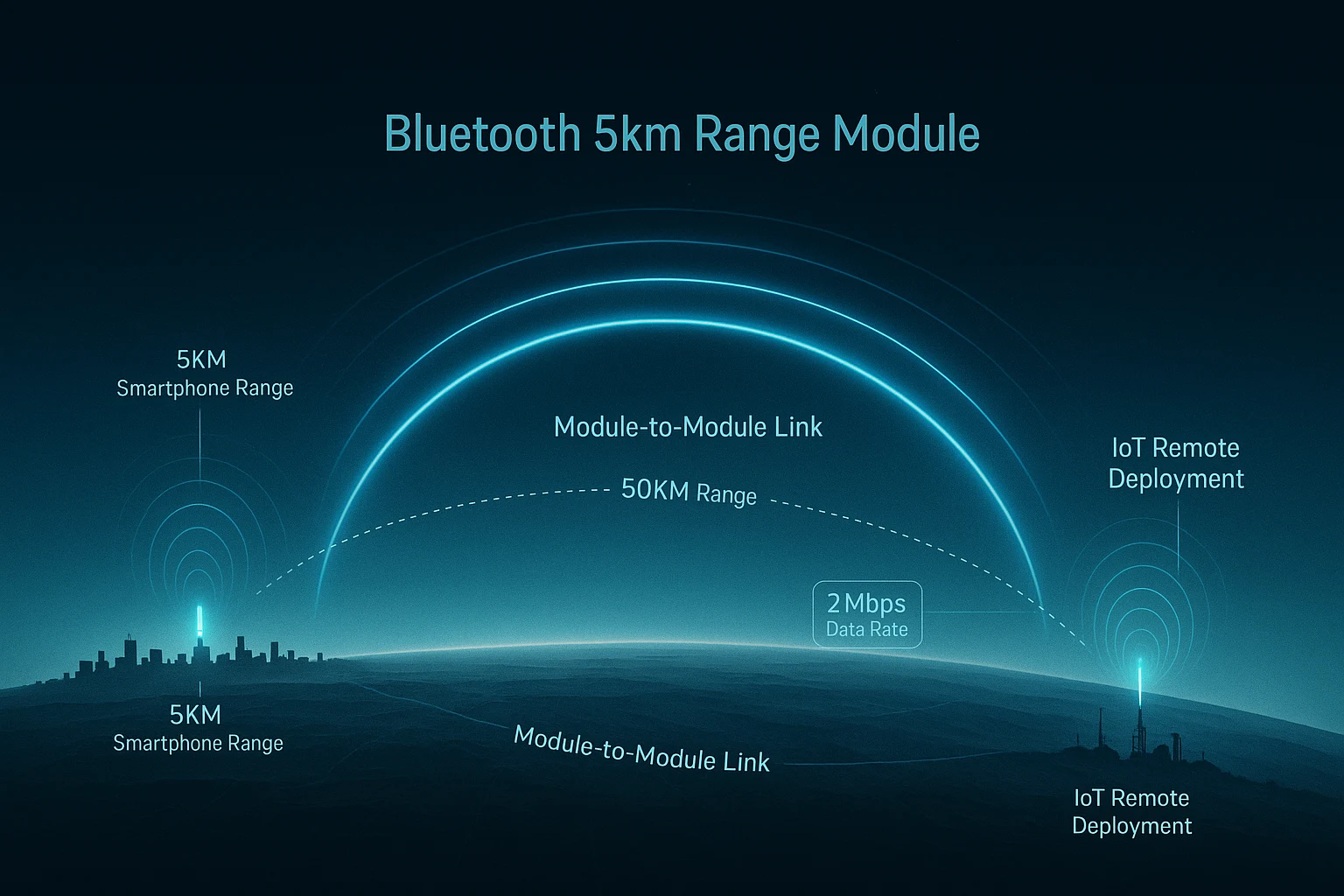
This is a bluetooth 5km range module that doesn't just hit 5km — it uses that as its baseline ground-to-ground figure. Pair two units on drones and you're looking at 50km of reliable, high-speed wireless communication. At $59 for two units, it's the most significant price-to-performance leap in the BLE module market today.
Why Standard BLE Modules Fail at Range
Before understanding what makes the MultiNav Pro+ different, it helps to understand why commodity BLE modules struggle with range.
Most off-the-shelf BLE modules use the integrated RF front-end provided by their system-on-chip — components like the Nordic nRF52840 or similar. These are highly capable chips for short-range communication inside buildings, between wearables, or across a room. They're not designed for kilometer-scale outdoor deployment.
The core limitations come down to three factors:
Transmit power — commodity modules operate at low transmit power to minimize battery consumption and meet regulatory requirements for general-purpose use. Higher power is possible but requires external amplification.
Receiver sensitivity — the ability to decode a weak signal at distance is determined by the receiver's noise floor. Consumer BLE chips optimize for cost and power efficiency, not sensitivity.
Antenna design — most cheap modules use onboard trace antennas or basic ceramic antennas that provide minimal gain. An optimized high-gain antenna dramatically extends effective range.
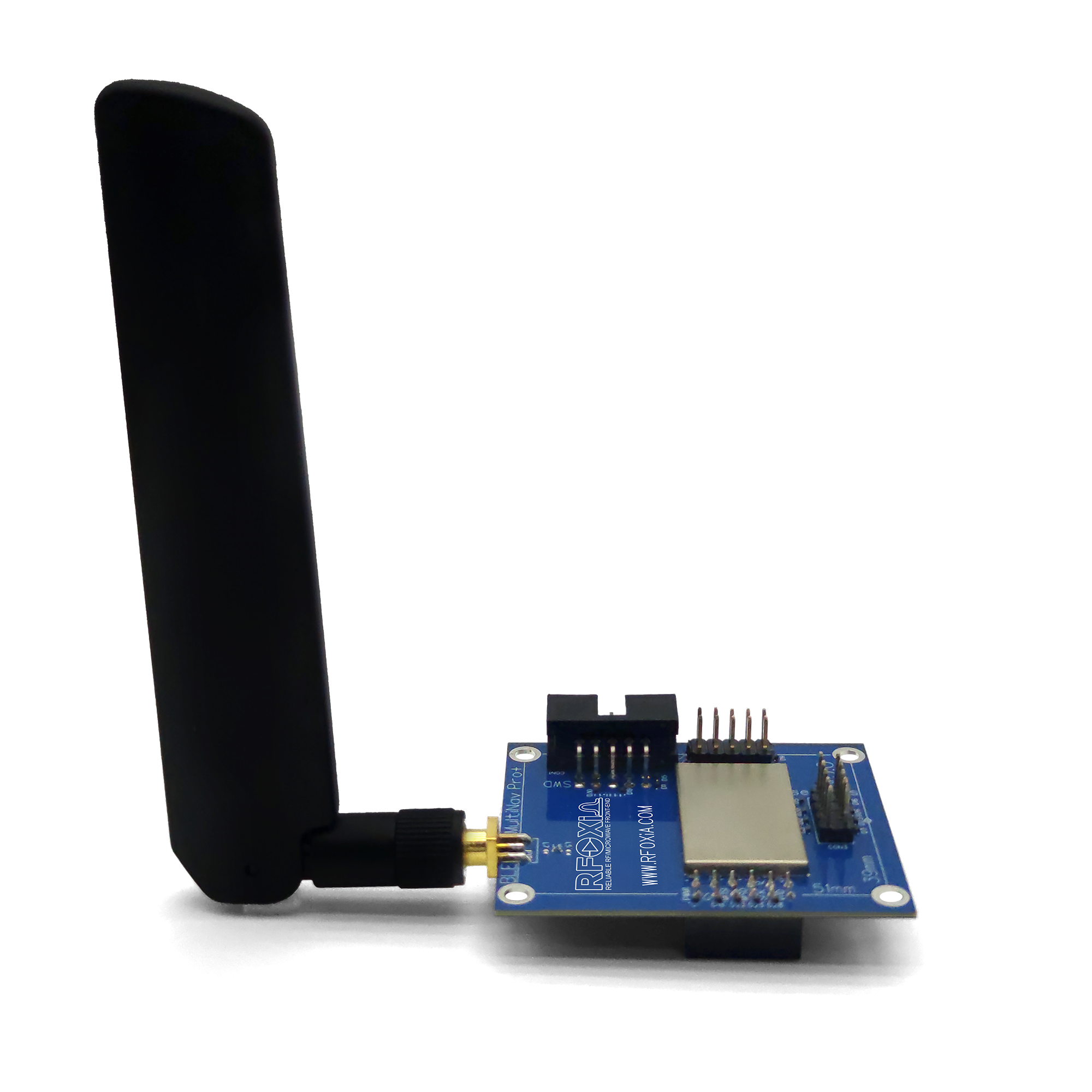
The MultiNav Pro+ addresses all three. It uses an optimized RF front-end with external amplifiers, pushes receiver sensitivity to the limits of what the hardware allows, and integrates a high-gain chip antenna paired with an external 140mm antenna. The result is a bluetooth 5km range module that operates in the same product category as commodity BLE but delivers results previously only achievable with proprietary long-range protocols.
Range Breakdown: Ground, Air, and Drone-to-Drone
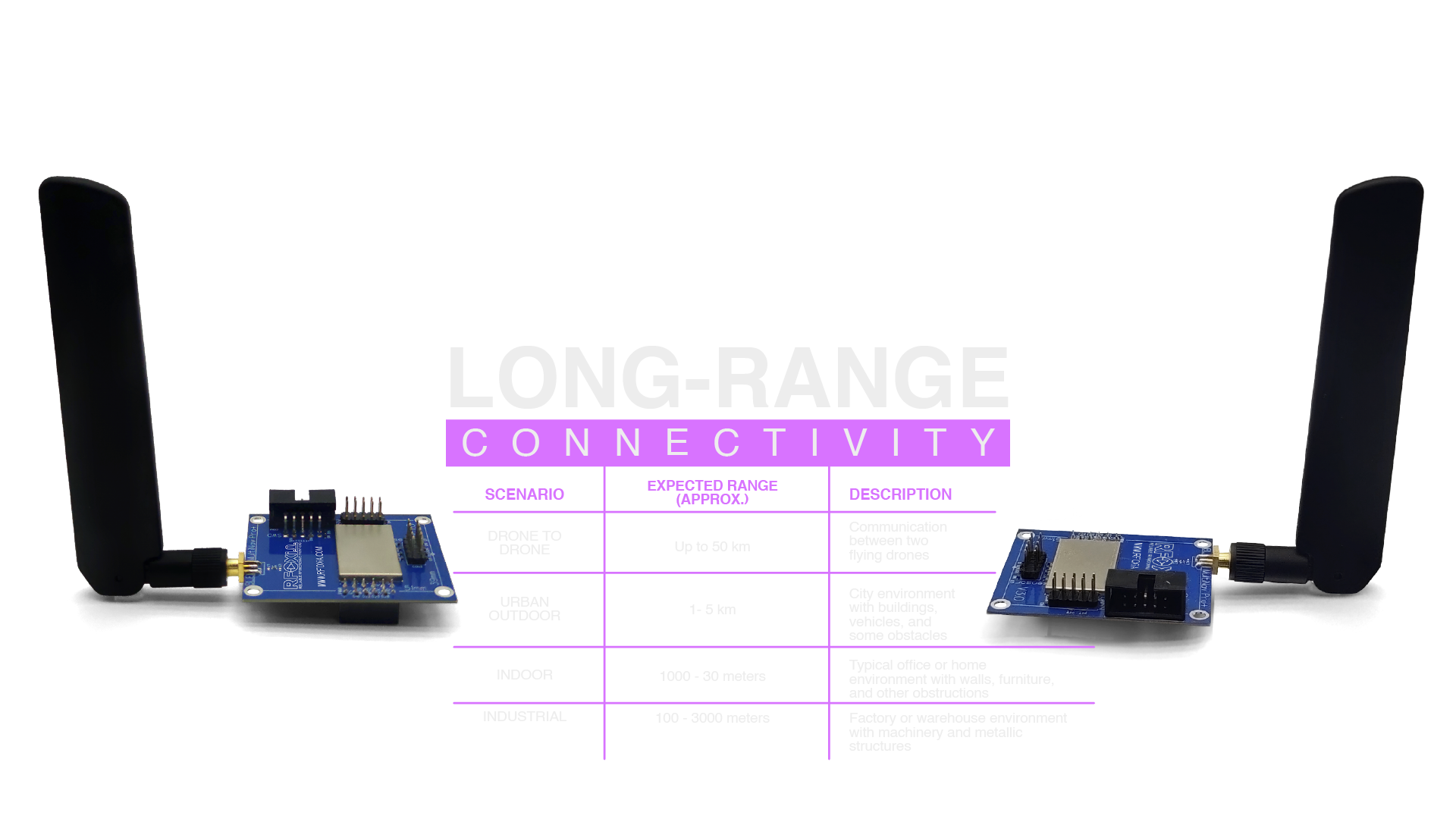
Understanding the MultiNav Pro+'s range figures requires understanding what changes at different deployment heights — and why it matters for your specific application.
Ground-to-Ground: 5km
When both modules are at ground level — one paired with your smartphone, the second paired with another user's phone — the modules establish a reliable link at over 5km. This is the most conservative figure and the one most affected by terrain, obstructions, and multipath interference from ground reflections.
For ground-level IoT deployments, agricultural sensor networks, field research setups, and peer-to-peer communication applications, 5km represents a fundamental capability upgrade over anything in this price category.
Man-to-Drone: 15–20km
When one module is at ground level paired with a smartphone, and the second module is mounted on an airborne drone, ground reflections are dramatically reduced on the drone side. The elevated position improves line-of-sight geometry and reduces multipath interference. Effective range extends to 15–20km.
For drone operators, this figure is the primary specification. It means reliable telemetry, command-and-control, and live sensor data streaming from a drone at distances that no commercial BLE solution has previously achieved.
Drone-to-Drone: 50km
With both modules in the air, ground reflections are eliminated entirely. The clean RF path between two elevated nodes allows the modules to achieve their maximum theoretical range — over 50km. This configuration is relevant for multi-drone swarm operations, relay network setups, or drone-based communication infrastructure for field teams.
Technical Specifications Deep Dive
Processing Core: STM32WB07CCV6
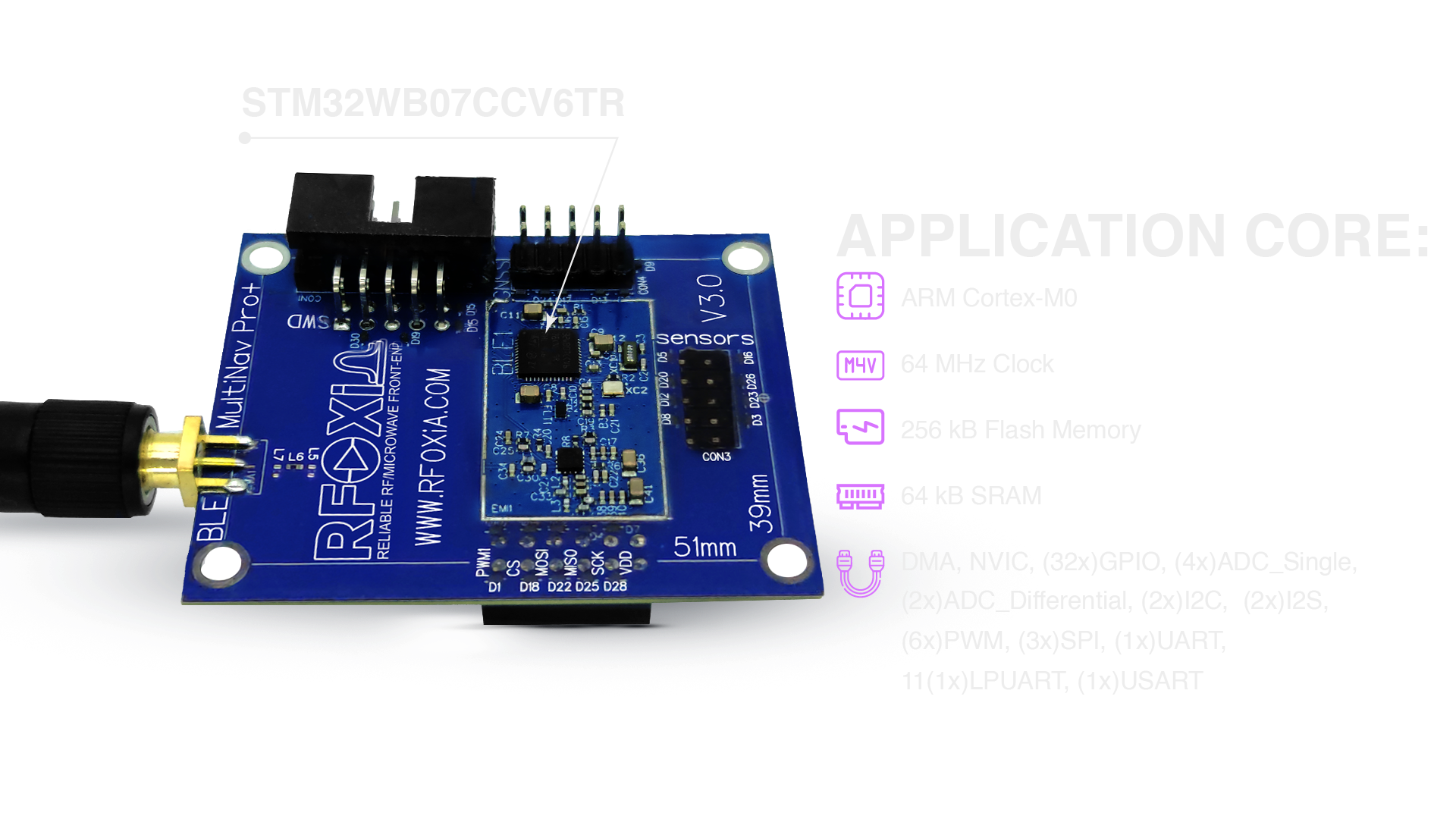
At the heart of the MultiNav Pro+ BLE is the STM32WB07CCV6 from STMicroelectronics. This is not a budget wireless chip — it's a dual-core wireless microcontroller that manages the BLE stack on a dedicated radio core while leaving the application core free for your firmware logic. This separation ensures that your application code never competes with the radio stack for processing time, resulting in consistent, low-latency communication performance.
The STM32WB07 series is widely used in professional IoT and industrial applications precisely because of this architecture. RFOXiA's implementation leverages the full capability of this chip to run custom BLE profiles, handle application logic, and interface with the module's four hardware connectors simultaneously.
2Mbps Data Rate
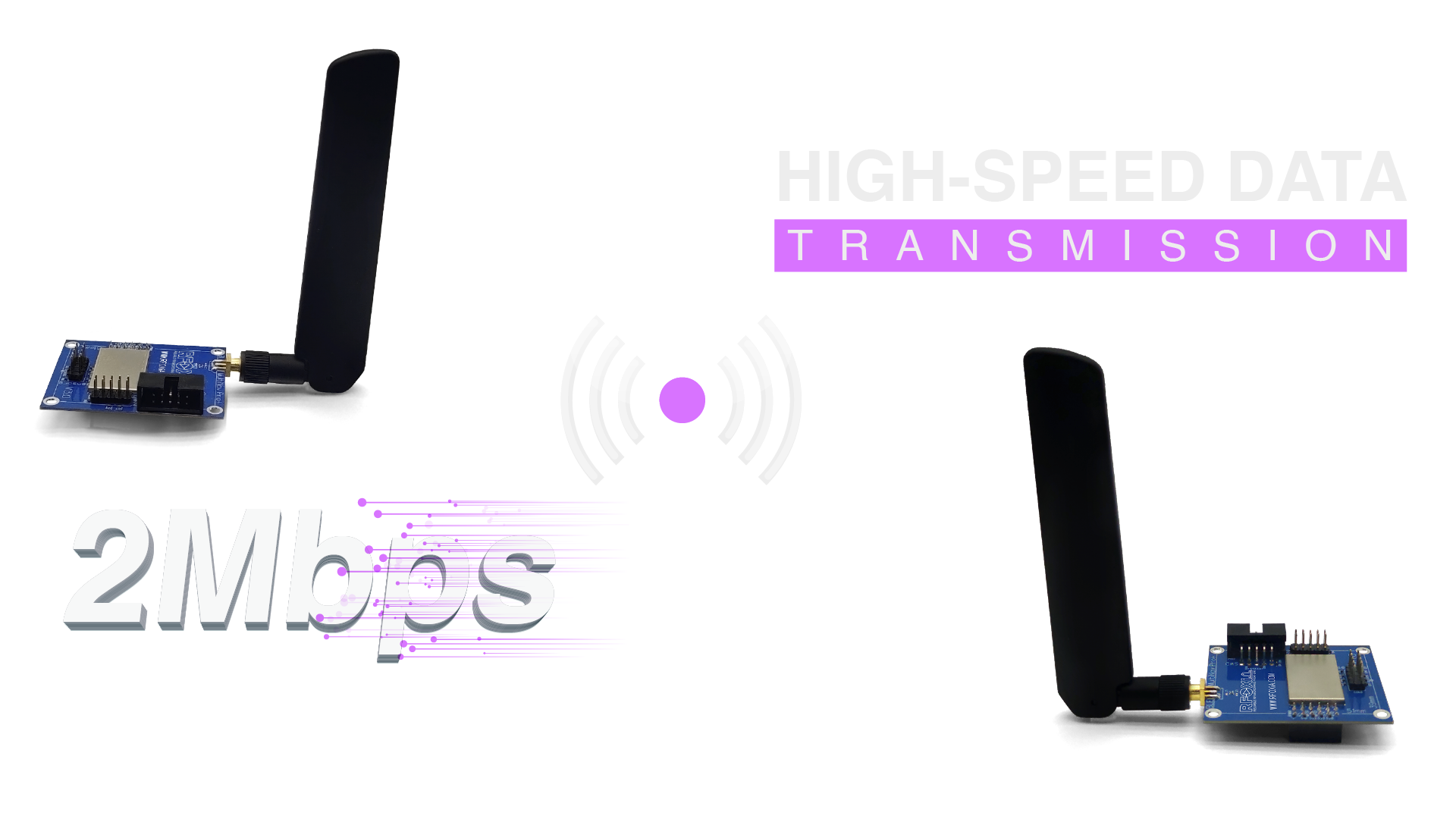
The MultiNav Pro+ supports BLE's maximum data rate of 2Mbps. In the context of long-range BLE, this is a notable achievement — many long-range optimizations require reducing data rate to improve link budget. The MultiNav Pro+ maintains full 2Mbps throughput, enabling applications that require both range and data bandwidth simultaneously.
This matters for drone telemetry (where you need real-time sensor data plus control signals plus GPS feed), robotics (where actuator feedback and sensor readings need low-latency transmission), and any application where throughput and range are both non-negotiable.
Form Factor and Mechanical Design
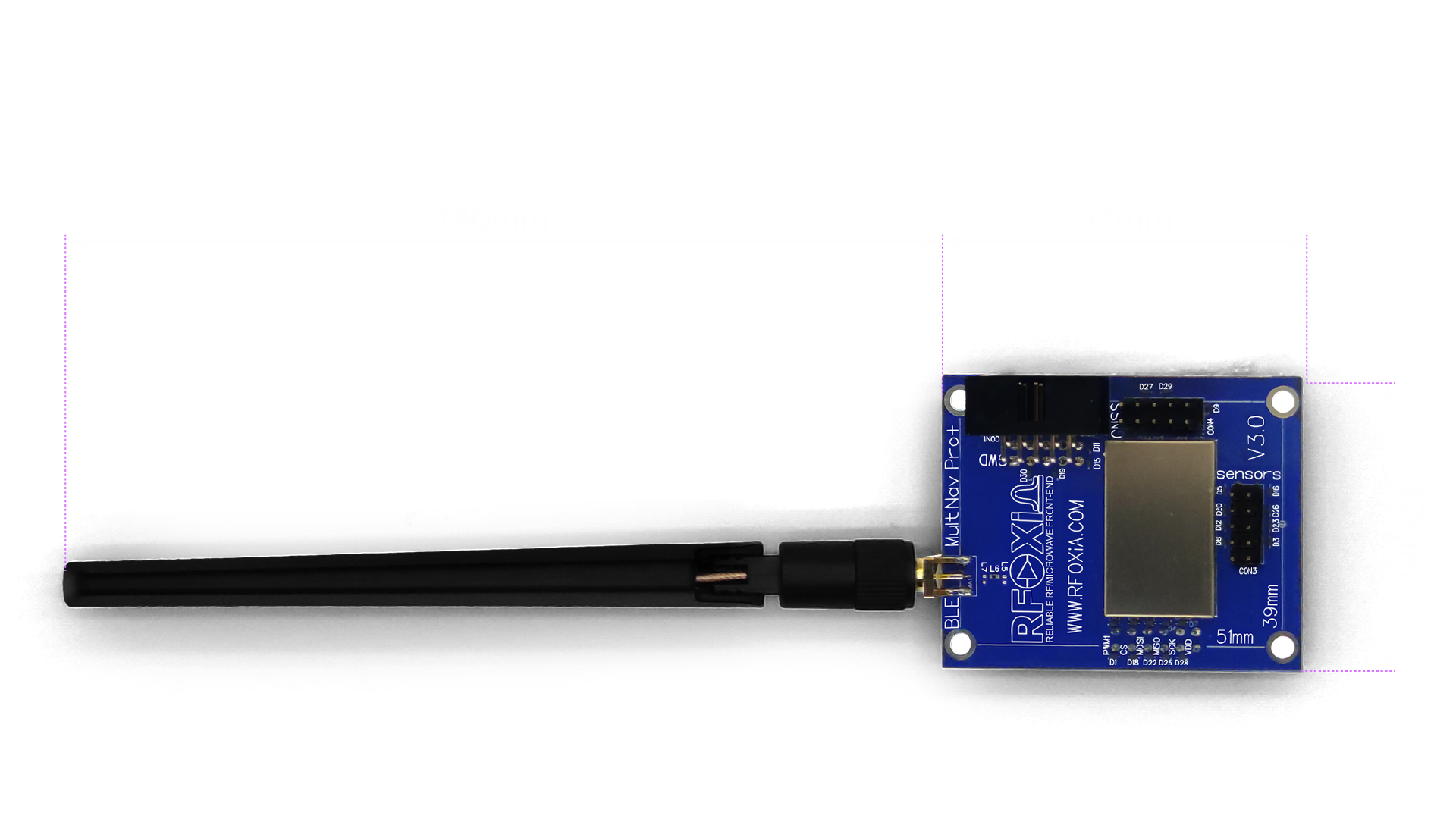
The module measures 57mm x 47mm, with a fixing frame size of 54mm x 34mm featuring corner mounting holes for secure mechanical integration. The external antenna measures 140mm — this length contributes directly to the high-gain performance that enables the bluetooth 5km range module specification.
For drone integration specifically, the mounting hole pattern makes it straightforward to secure the module to a frame plate. The compact footprint keeps weight low and leaves room for other components in space-constrained builds.
Integrated RTC
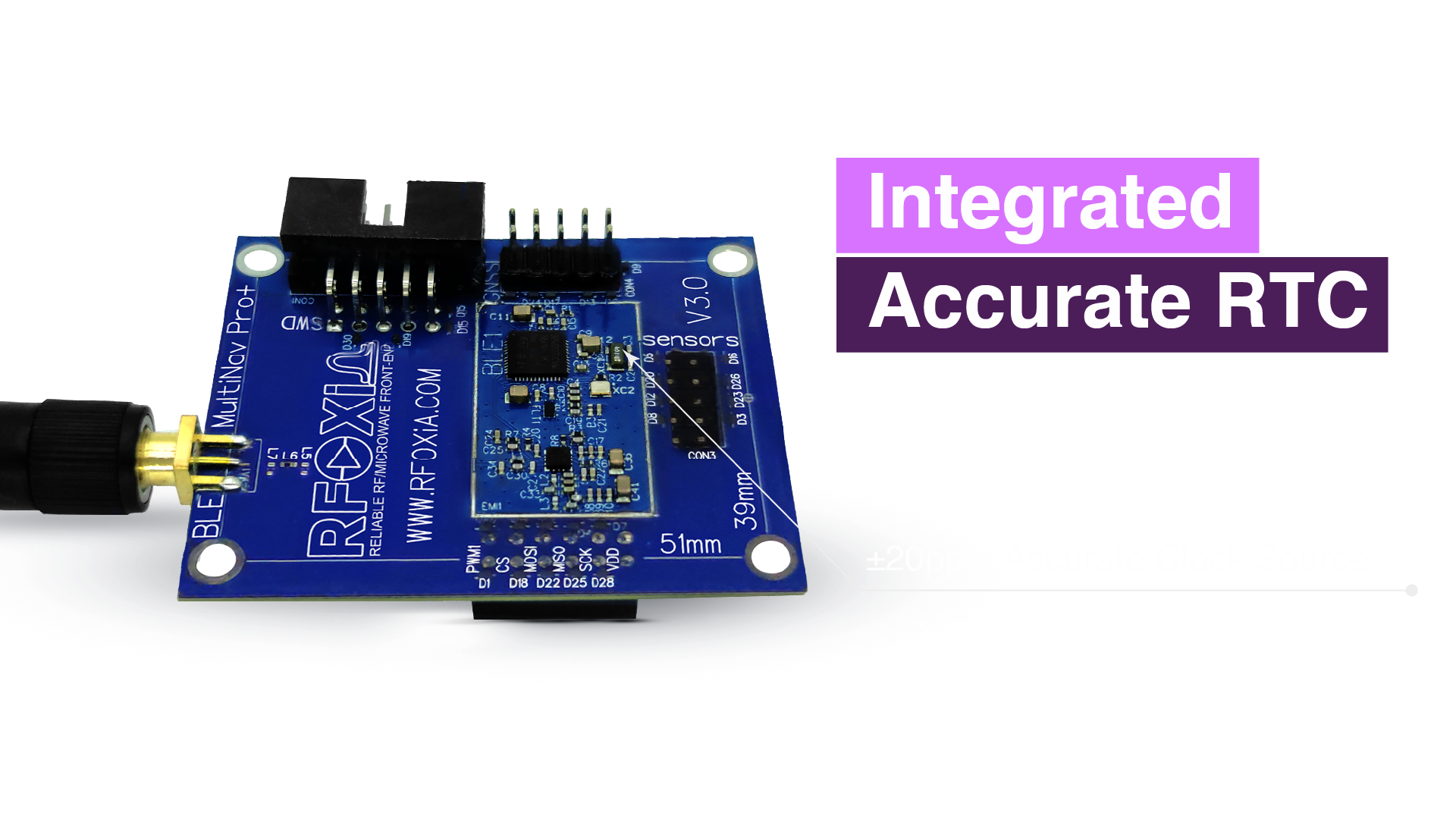
An onboard RTC crystal provides accurate timekeeping independent of the main processing core. This is essential for applications where multiple nodes need synchronized timestamps — multi-sensor environmental monitoring, distributed logging, coordinated drone swarm timing, and any protocol that relies on time-division channel access.
Four Interface Connectors: Built for System Integration
The MultiNav Pro+ BLE doesn't exist as an isolated component. It's designed as the communication backbone of a complete hardware system, and the four onboard interface connectors reflect that architecture:
- GNSS Interface — connects directly to the MultiNav Pro+ GNSS module for precision location at 18Hz fix rate with 1.5 meter accuracy
- Sensors Interface — connects to the MultiNav Pro+ Sensors module with temperature, humidity, pressure, air quality, accelerometer, gyroscope, and magnetometer
- Motors & Battery Management Interface — enables direct motor control and battery monitoring for autonomous vehicle and robotics applications
- Programming Interface — STLink-compatible SWD programming port for full firmware customization
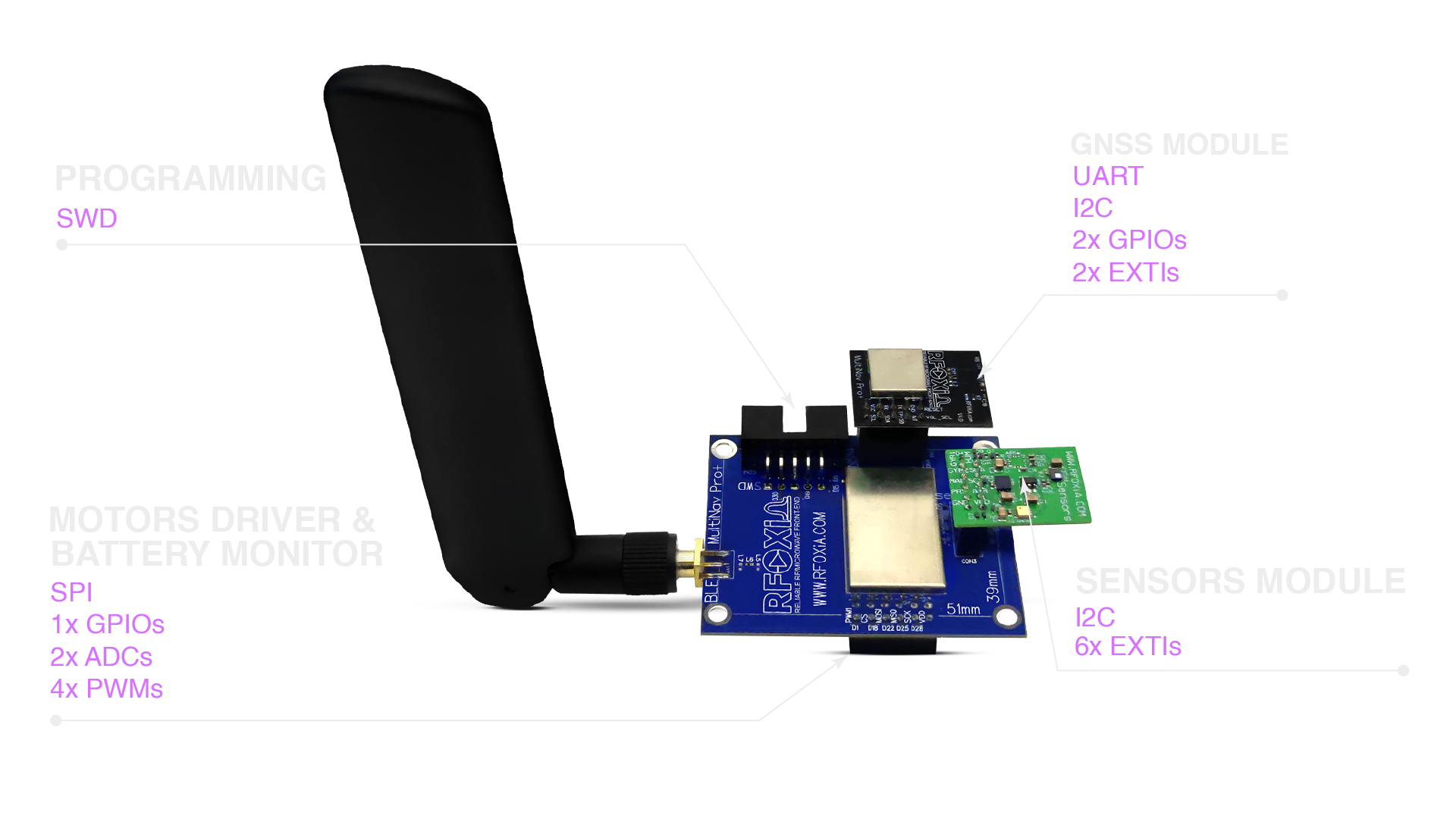
This four-connector architecture means you can stack the complete MultiNav Pro+ ecosystem into a single integrated hardware platform. A drone carrying the BLE module, GNSS module, and Sensors module has long-range communication, precision positioning, and full environmental monitoring — all in one cohesive system with unified firmware.
For developers who want to move beyond breadboard prototypes and build serious hardware, this is the integration path that turns modules into products.
RFOXiA Connect App: Complete Mobile Control
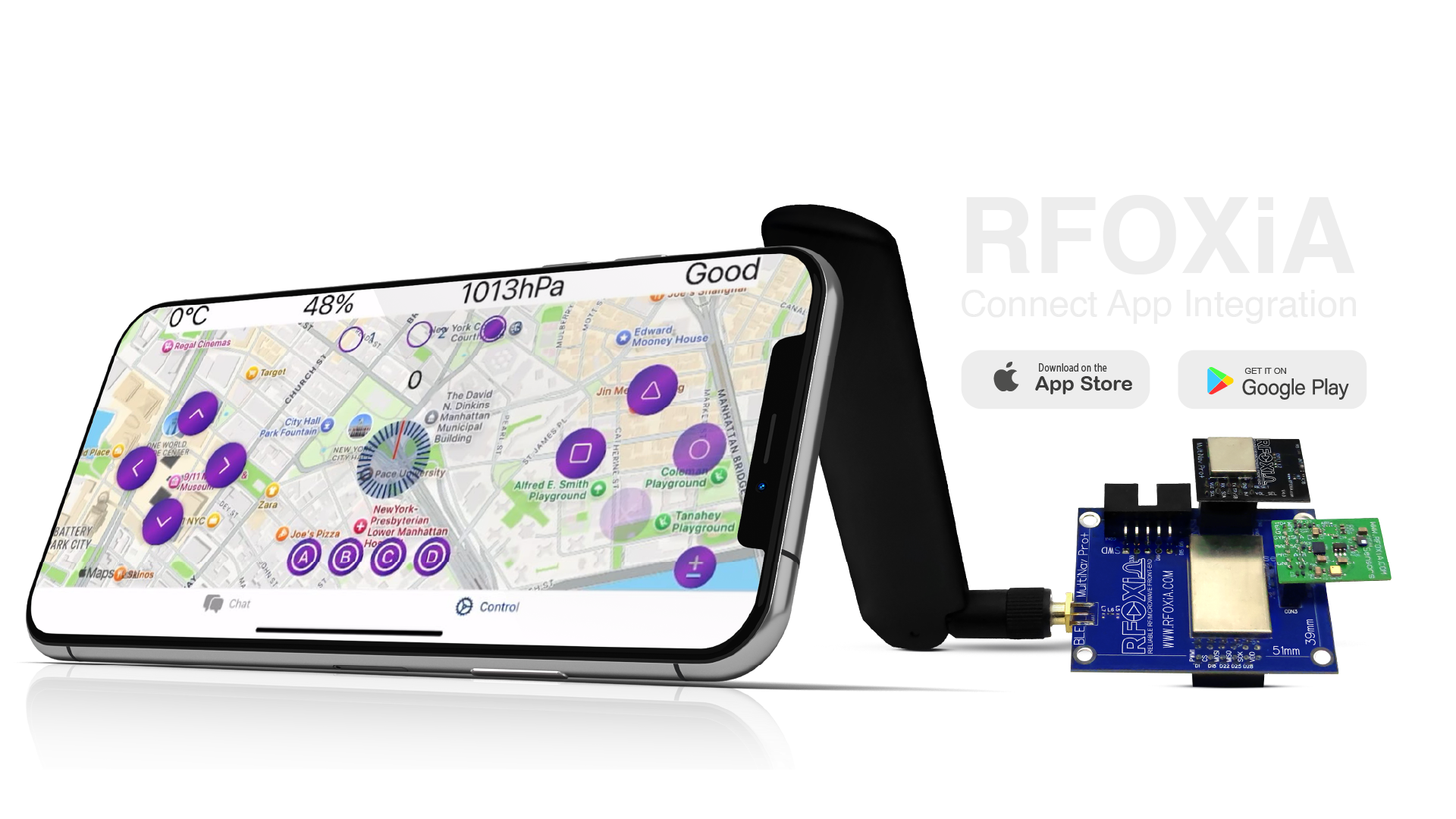
The MultiNav Pro+ BLE pairs with the RFOXiA Connect app on iOS and Android, transforming a smartphone into a professional control and monitoring terminal for your hardware.
The Control Screen features a PS5-style controller interface for precise drone and robot control, a live map with real-time GPS tracking (when paired with the GNSS module), and live sensor data display from all seven sensors if the Sensors module is connected. The entire control interface works completely without internet — the BLE link between your phone and the module is the only communication path required.
This offline-first architecture matters more than most developers initially realize. GPS-denied environments, RF-congested airspace, remote field deployments, disaster response scenarios — in all of these contexts, internet dependency is a liability. The MultiNav Pro+ and RFOXiA Connect combination eliminates that dependency entirely.
For teams operating multiple units simultaneously, the app supports real-time multi-user coordination through the BLE mesh architecture.
BLE Chat: Internet-Independent Communication
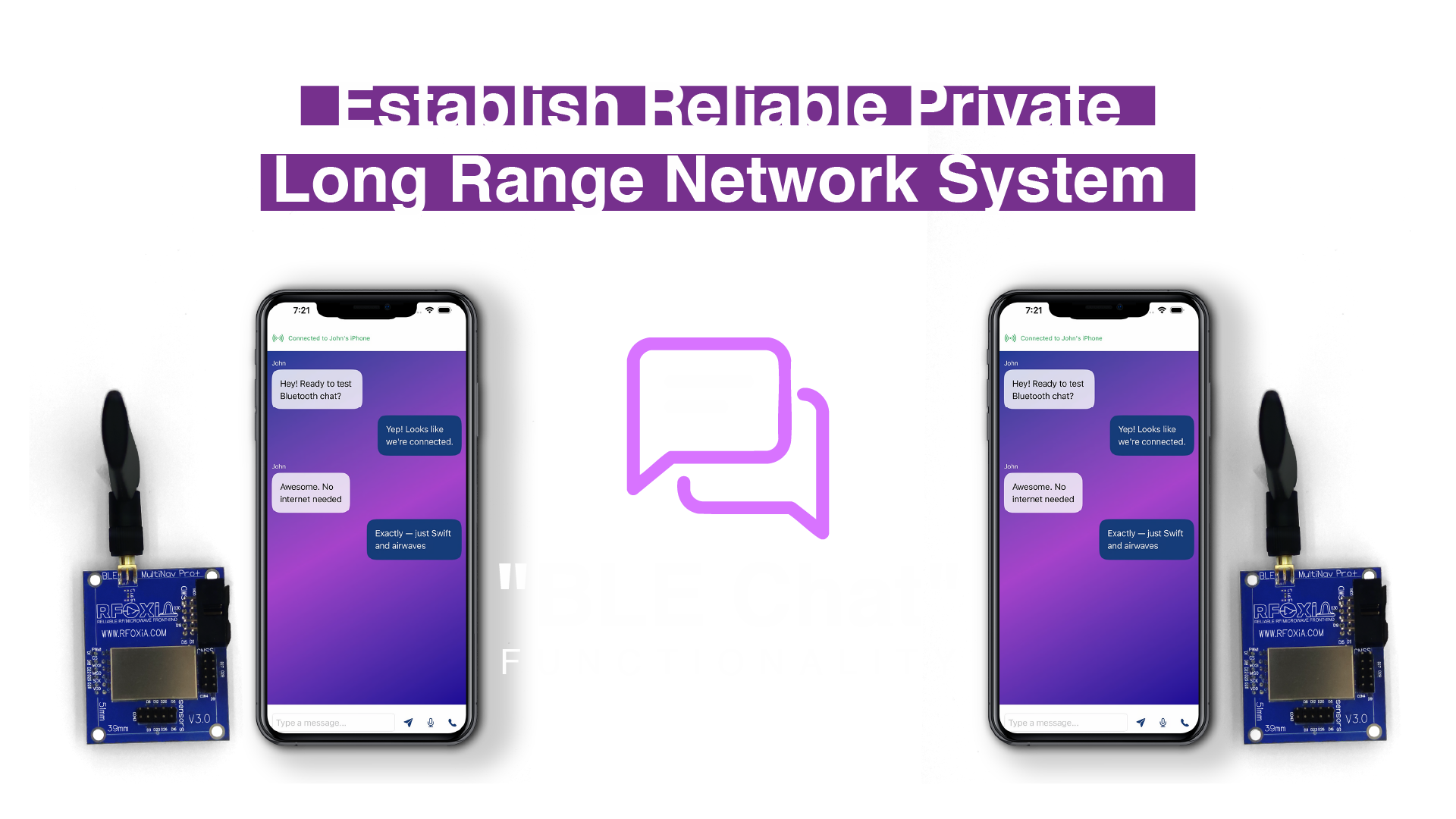
Beyond drone control and IoT telemetry, the MultiNav Pro+ BLE includes a dedicated communication mode: BLE Chat. Using the module as a communication node, RFOXiA Connect users can exchange text, data, and voice communication with other MultiNav Pro+ BLE users — at ranges up to 5km ground-to-ground, with no internet, no cellular network, and no infrastructure required.
This capability opens applications that go well beyond standard IoT:
- Disaster response teams coordinating in areas with destroyed communications infrastructure
- Remote expedition groups maintaining contact in areas with no cellular coverage
- Search and rescue operations where reliable off-grid communication is safety-critical
- Field research teams maintaining data and voice connectivity across large study areas
- Events and festivals in areas with overloaded cellular networks
The mesh architecture means that with multiple nodes deployed, communication range extends through relay. A chain of MultiNav Pro+ modules creates a private, infrastructure-free communication network deployable in minutes.
Open Source, Fully Programmable
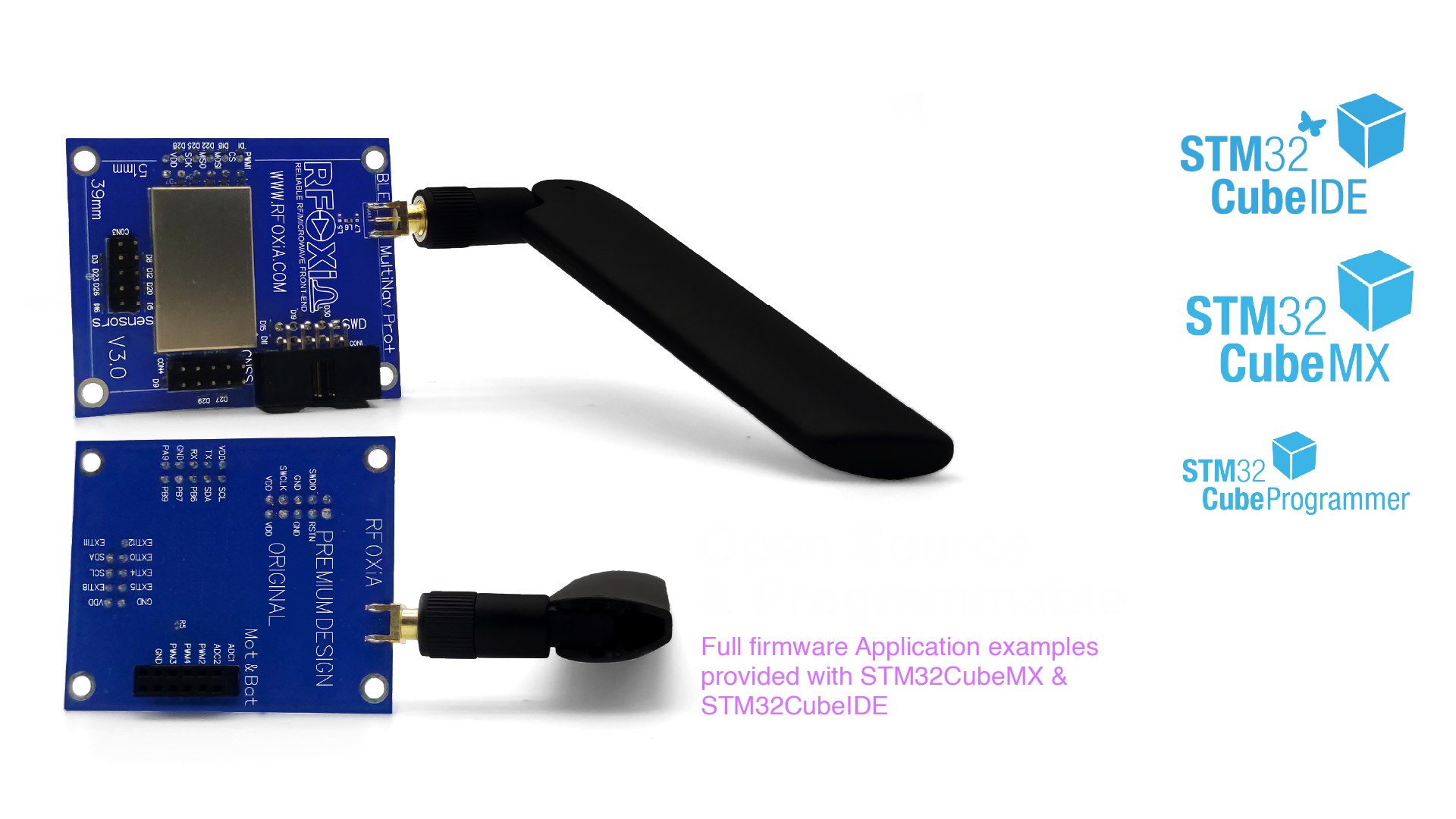
The MultiNav Pro+ BLE ships with full open-source firmware and complete SWD programming access. This is not a black-box module with a fixed AT command interface — it's a professional development platform that gives you complete control over the radio stack, application logic, and hardware peripherals.
For developers who want to customize without writing firmware from scratch, RFOXiA Club includes an AI Firmware Builder that generates production-ready firmware from plain-language descriptions of your application. Describe what you want your device to do, and the AI produces complete, deployable source code that you can modify, extend, and flash directly through the SWD interface.
This dramatically reduces the development timeline for custom applications — from months of firmware development to hours of AI-assisted generation and testing.
If you're ready to explore the full capability of this bluetooth 5km range module, the RFOXiA Long Range Bluetooth Module product page includes full technical documentation, firmware examples, and SDK access.
FCC Certification: The Professional Credential That Matters
Every module in the MultiNav Pro+ ecosystem — including the BLE module — is FCC certified. This is not a minor administrative detail. FCC certification means:
- The module has been independently tested and verified to meet all US RF emission standards
- The device can be legally deployed commercially in the United States
- The certification provides the documentation needed for integration into commercial products without requiring re-certification of the module itself (subject to standard FCC rules for integrated modules)
- Distribution through major electronics retailers and distributors is possible — most require FCC certification as a listing prerequisite
For hardware startups and individual developers building commercial products, integrating an FCC-certified module dramatically simplifies the path to market. You inherit the RF certification rather than funding your own.
Competitive Landscape: Nothing Else Exists at This Position
The honest competitive analysis for the MultiNav Pro+ BLE is straightforward: there is no direct competitor in this price tier with these specifications.
Commodity BLE modules — Nordic, Silicon Labs, Chinese alternatives — range from $5 to $15 and deliver 80–100 meters in real-world conditions. They're excellent for their intended purpose: short-range communication inside buildings between consumer devices. They are not designed for, and cannot achieve, kilometer-scale outdoor deployments.
Professional long-range RF systems from vendors like Taisync and similar industrial/military suppliers deliver the range, but at price points starting at $5,000 and extending into five figures. These are not products for individual developers, researchers, or small product teams.
The MultiNav Pro+ BLE occupies a position that was simply unoccupied: professional-grade long-range wireless performance, at maker-accessible pricing, with an FCC certification and a complete software ecosystem. The bluetooth 5km range module specification isn't a marketing claim — it's a measured, real-world performance figure backed by hardware that ships today.
Who Builds With the MultiNav Pro+ BLE
The MultiNav Pro+ BLE serves a specific class of developer and builder:
Drone builders and FPV pilots who need reliable, high-bandwidth, long-range control links and telemetry without depending on proprietary RC protocols that lock them into specific transmitter ecosystems.
Robotics engineers building autonomous ground vehicles, underwater ROVs, or aerial platforms that need real-time control and sensor feedback over distances that cellular modems can't reliably handle in the field.
IoT developers deploying sensor networks in agricultural, industrial, or smart city contexts where running cable is impossible and cellular connectivity is either unavailable or prohibitively expensive at scale.
Researchers and academics in environmental science, ecology, disaster preparedness, and communications who need deployable, off-grid data collection and communication infrastructure.
Field operations teams in search and rescue, disaster response, military-adjacent applications, and extreme environment expeditions who need communication tools that function when infrastructure doesn't exist.
For all of these users, the MultiNav Pro+ BLE isn't a nice-to-have upgrade from their current hardware. It's a fundamentally new capability that their applications haven't had access to at this price point before.
The Complete RFOXiA Ecosystem
The MultiNav Pro+ BLE is the communication core of a broader hardware ecosystem. The full Developer Bundle combines the BLE module with the GNSS module (18Hz, 1.5m accuracy), the Sensors module (seven sensors, environmental monitoring and data network contribution), and the Power/Program Kit (supercapacitor-based, 5-minute charge, 24-hour runtime).
The Developer Bundle includes access to the RFOXiA Club platform with the AI Firmware Builder, full SDK access, and enrollment in the data monetization network where deployed sensor nodes earn daily rewards for contributing verified environmental data.
This means the MultiNav Pro+ BLE isn't just a communication module for your project — it's the entry point into a system where your hardware actively contributes to a growing data network and generates passive income while deployed.
For developers considering the full ecosystem, the RFOXiA Long Range Bluetooth Module page includes bundle options, pricing details, and the complete technical comparison between individual modules and the bundled system.
Getting Started
The MultiNav Pro+ BLE ships as a pair — two modules for $59. This means from day one you have a complete point-to-point wireless link ready for development and testing. No pairing fees, no subscription required, no gateway hardware needed.
Getting started involves three steps:
- Order the modules through the RFOXiA Club store — inventory is in stock and ships promptly
- Download RFOXiA Connect on iOS or Android — the app connects to your module via Bluetooth on your smartphone immediately
- Access the Dev Hub — firmware examples, SDK documentation, and the AI Firmware Builder are available to all Club members
RFOXiA Club membership is free and includes a $10 welcome credit toward your first purchase. New members who complete the platform onboarding earn additional credits redeemable toward the full Developer Bundle.
Final Assessment
The MultiNav Pro+ BLE solves a real problem that the hardware development community has lived with for years: the gap between short-range commodity BLE and inaccessible military-grade RF systems.
At $59 for two units, with 5km ground-to-ground range, 50km drone-to-drone capability, 2Mbps data rate, full open-source programmability, FCC certification, complete mobile app support, and an integrated ecosystem of compatible modules — this is the bluetooth 5km range module that changes the economics and accessibility of long-range wireless development.
If your project has ever been limited by what short-range Bluetooth can reach, or by what you could afford from the long-range RF market, the MultiNav Pro+ BLE is the hardware that removes that constraint.
Explore the full specifications and order your pair through the RFOXiA Long Range Bluetooth Module product page. The technology exists. It's certified. It ships.
RFOXiA — Democratizing Connectivity and Computing Power.
Written by: Moamen Mohamed LinkedIn