
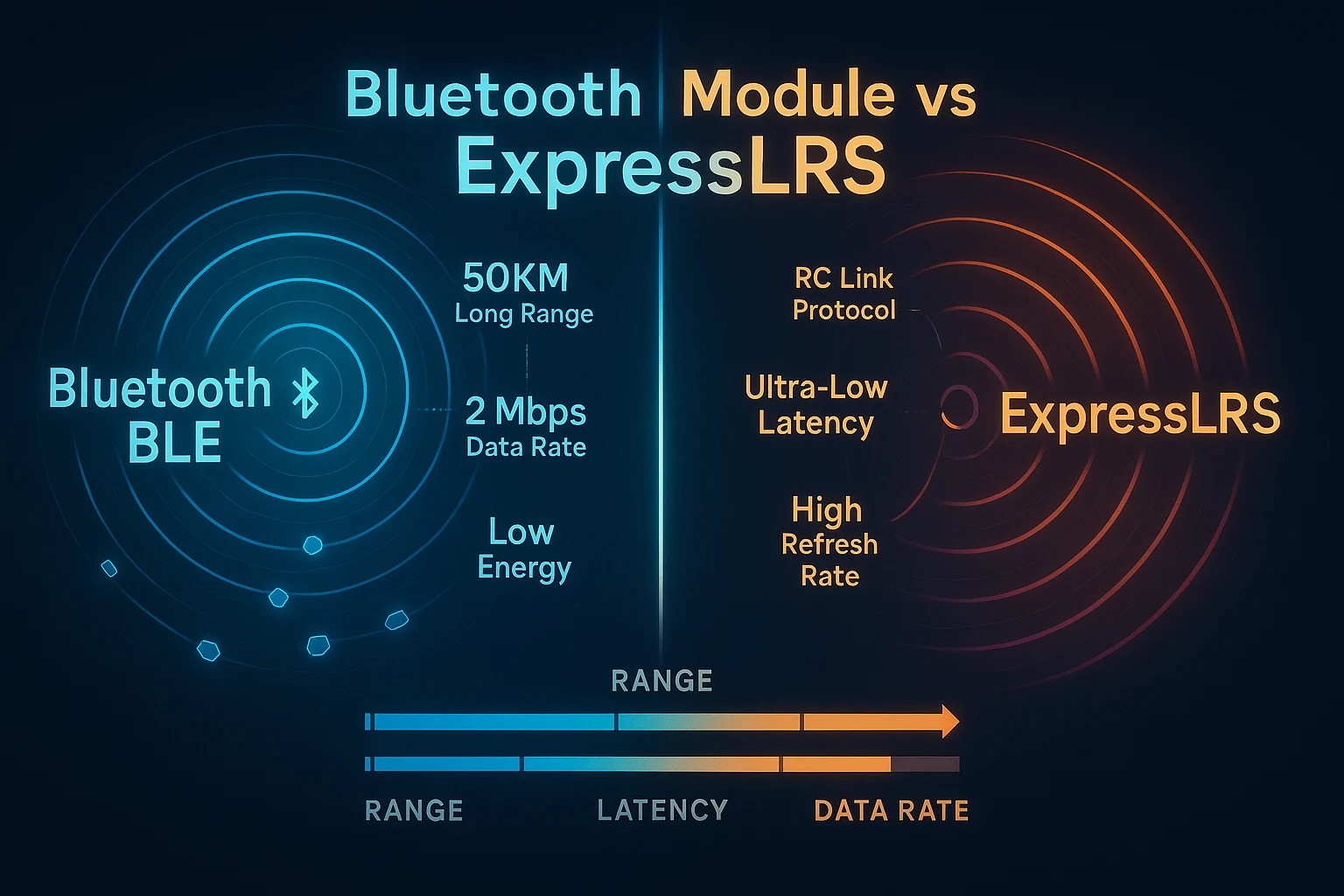
Bluetooth Module vs ExpressLRS: Which Wins for Long-Range Drone Control?
RFOXiA Long Range Bluetooth Module
Bluetooth Module vs ExpressLRS — The Real Comparison Every Drone Builder Needs
If you have ever searched for a wireless link for your drone, robot, or long-range IoT deployment, you have almost certainly come across two names: a bluetooth module of some variety, and ExpressLRS. Both are used by builders, both are talked about in FPV and robotics communities, and both claim to solve the problem of reliable remote communication. But the comparison is rarely made honestly, and when it is, it almost always ignores a third option that outperforms both in ways that matter most to serious developers.
This article breaks down the real differences between a standard bluetooth module, ExpressLRS, and the RFOXiA MultiNav Pro+ Long Range Bluetooth Module — a purpose-built, FCC-certified BLE module that reaches 50KM module-to-module and delivers a full developer ecosystem no other product in this price range can match.
Let us get into it.
What Is ExpressLRS and Why Do Drone Builders Love It?
ExpressLRS (ELRS) is an open-source RC link protocol designed specifically for controlling drones and RC vehicles. It runs primarily on 900MHz and 2.4GHz radio frequencies, uses LoRa modulation for long range, and was built from the ground up to be a low-latency control link between a transmitter and a receiver mounted on a drone or aircraft.
ExpressLRS has genuine strengths:
- Latency as low as 1ms on supported hardware at short ranges
- Range up to 40km on 900MHz hardware under ideal line-of-sight conditions with high-gain antennas
- Open source — a massive community has built hardware, firmware, and tooling around it
- Affordable hardware — ELRS receivers can be purchased for under $10
- Tight flight controller integration — works natively with Betaflight, iNav, and ArduPilot
For a pure RC link — sending stick inputs from a handheld transmitter to a drone and receiving telemetry back — ExpressLRS is genuinely excellent. It was designed for exactly that, and it does it well.
But ExpressLRS is not a general-purpose wireless communication platform. It does not stream sensor data. It does not support peer-to-peer communication between multiple autonomous nodes. It cannot run independent of a dedicated RC transmitter. It has no mobile app with a map view, no AI firmware builder, no data monetization network. It is a point-to-point RC link. That is its strength — and also its ceiling.
What Is a Standard Bluetooth Module and Why Does It Fall Short?
When most developers search for a bluetooth module, they find commodity options from Silicon Labs, Nordic Semiconductor, or lower-cost Chinese manufacturers. These are capable devices for short-range communication — sending sensor readings from a device to a phone, pairing a peripheral with a host, or bridging serial data over BLE.
The fundamental limitation is range. Standard BLE modules are designed for personal area networking. The Bluetooth specification itself imposes transmitter power constraints, and most commodity modules offer:
- Range: 10–100 meters in typical real-world conditions
- Data rate: 1–2Mbps (theoretical, often lower in practice)
- No external amplifier — signal strength limited by chip spec
- No ecosystem — just a module, no app, no platform, no community
- Price: $5–15 per module
For indoor IoT, wearables, or proximity-based applications, these modules are perfectly adequate. But the moment a developer needs to control a drone at 1km, monitor a remote sensor array, or build a field communication system, standard BLE collapses.
That is the gap the MultiNav Pro+ was built to fill.
The MultiNav Pro+ BLE Module: A New Category of Bluetooth Module
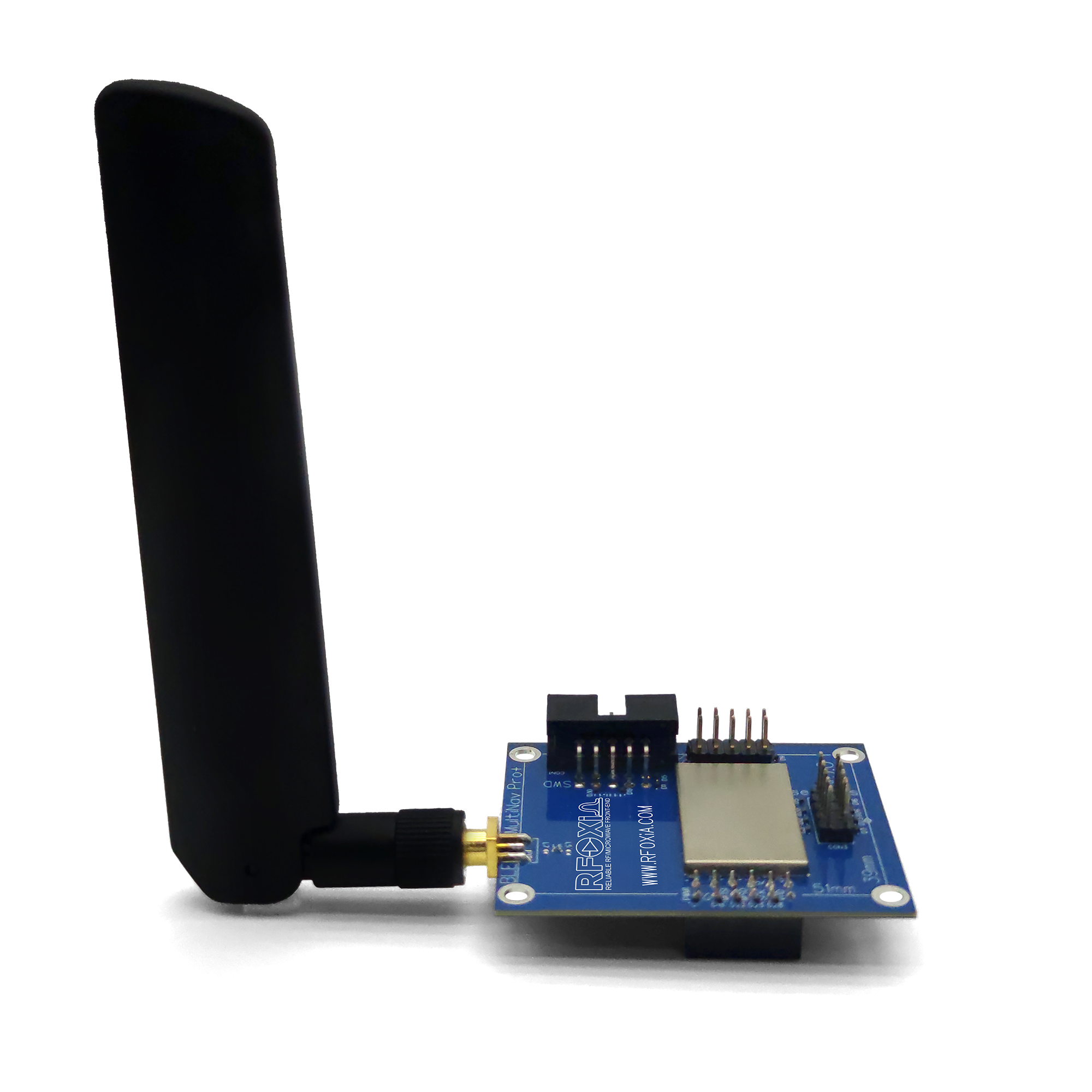
The RFOXiA MultiNav Pro+ BLE module is not a standard bluetooth module. It is not an RC link like ExpressLRS. It occupies a category that, until now, did not exist at this price point: a professional-grade, long-range BLE development module with a complete ecosystem, priced at $59 for two units.
Here is what that means in practice.
Range That Changes What BLE Can Do
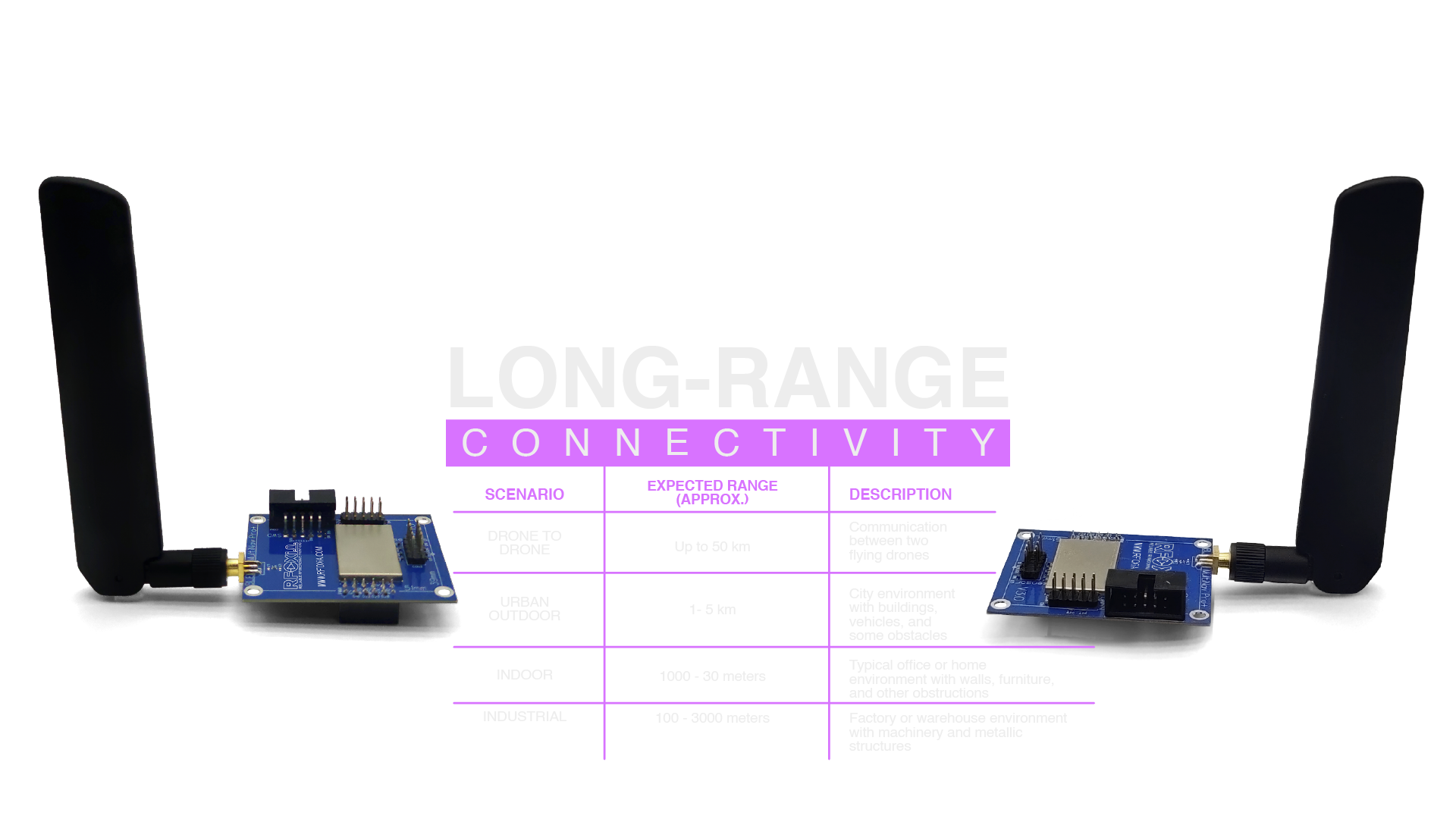
The MultiNav Pro+ achieves its extraordinary range through a combination of optimized RF front-end design, external amplifiers, and advanced receiver sensitivity engineering. The numbers are real and verified:
- Ground-to-ground (module paired with phone on both ends): 5KM
- Man-to-drone (module paired with phone on ground, second module on drone): 15–20KM
- Drone-to-drone (both modules airborne, ground reflections eliminated): 50KM
No commodity bluetooth module comes close to these figures. And while ExpressLRS can achieve comparable line-of-sight range at 900MHz, it requires dedicated RC transmitter hardware and cannot pair directly with a smartphone. The MultiNav Pro+ pairs with any iOS or Android device over standard Bluetooth — no special transmitter required.
This is a fundamental architectural difference. The bluetooth module vs ExpressLRS comparison usually ends here for drone builders who want smartphone integration, but the MultiNav Pro+ makes that comparison much more nuanced.
2Mbps Data Rate — Real Throughput for Real Applications
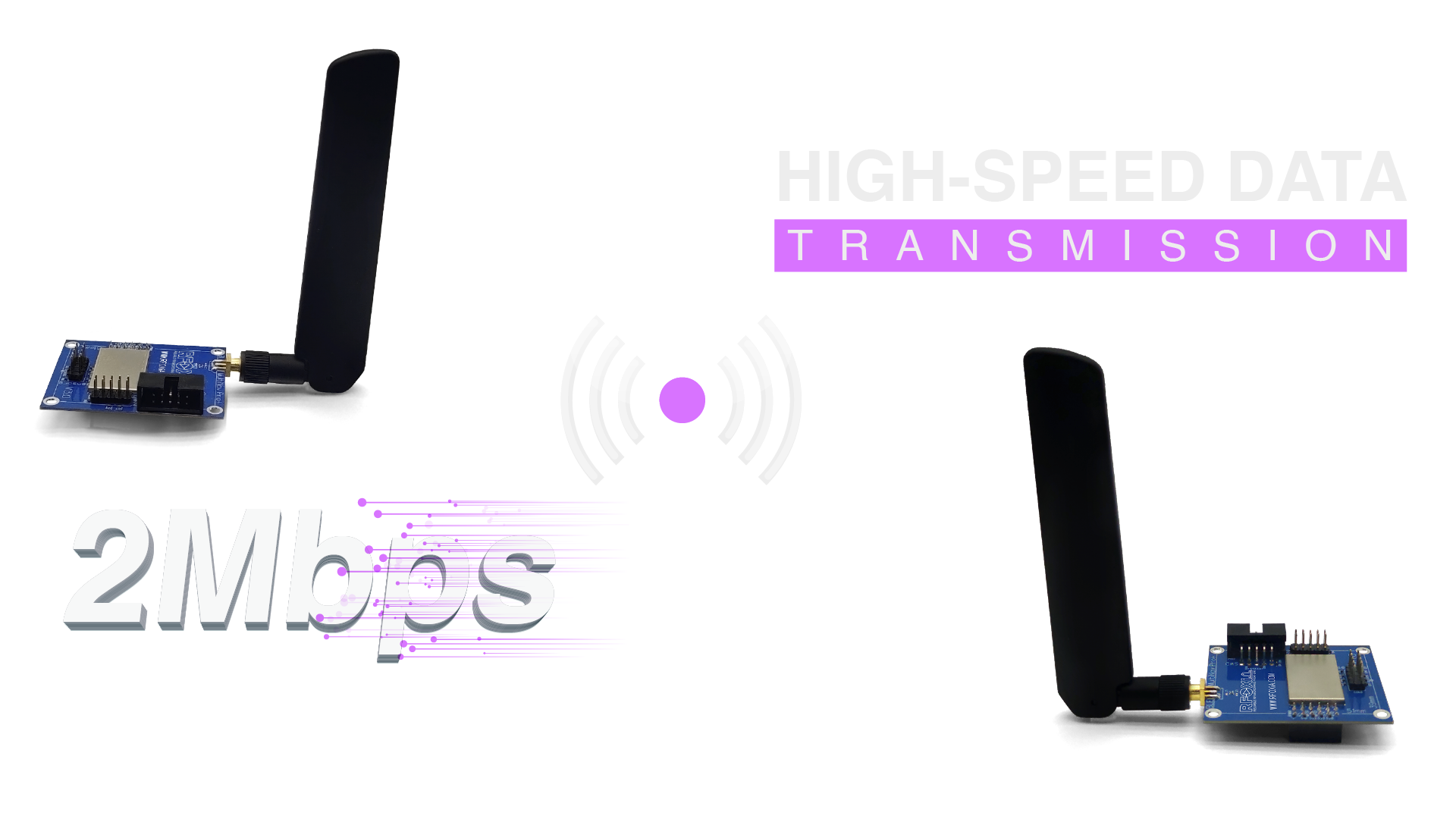
The MultiNav Pro+ supports up to 2Mbps data rate. This is not just a spec sheet number — it matters for real applications. Streaming live sensor data, sending control inputs with minimal latency, relaying GNSS position updates at 18Hz, transmitting environmental monitoring data continuously — all of these demand throughput that standard BLE struggles to maintain at range.
At 2Mbps, the MultiNav Pro+ handles all of these simultaneously without the packet loss that plagues lower-quality modules under load.
The Processing Core That Makes It Work
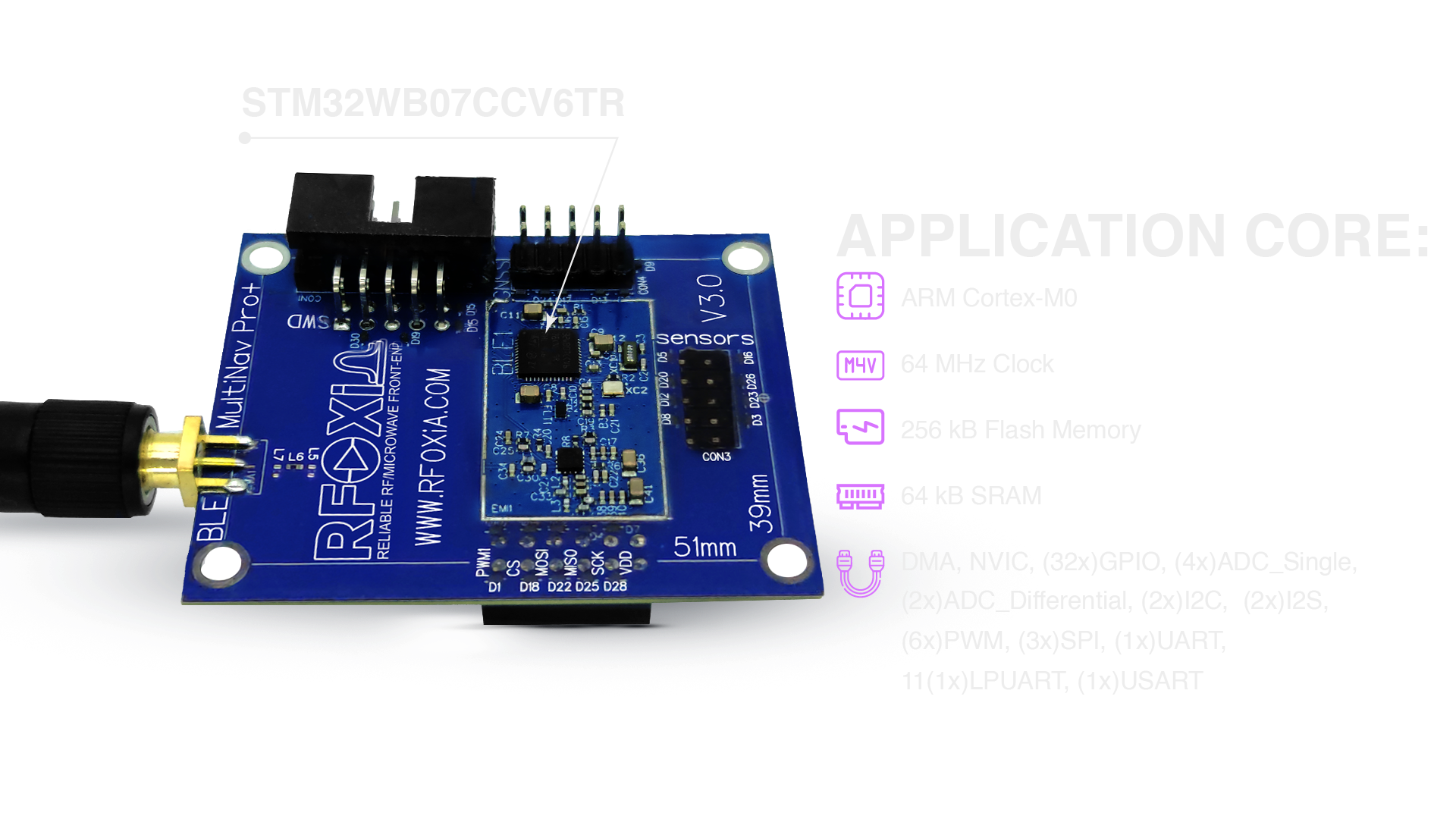
At the heart of the MultiNav Pro+ is the STM32WB07CCV6 — a dual-core processor from STMicroelectronics that manages both the BLE stack and user applications independently. This architecture means the radio stack never competes with application logic for CPU cycles, resulting in consistent latency, reliable connections, and headroom for custom firmware.
This is not a single-core chip trying to do two jobs at once. The dedicated BLE core handles protocol timing with precision, while the application core runs your code. The result is a bluetooth module that behaves predictably under load — exactly what drone and robotics applications demand.
Bluetooth Module vs ExpressLRS: The Direct Comparison
Let us put these three options side by side across the criteria that matter most to drone builders and IoT developers.
| Feature | Standard BLE Module | ExpressLRS | MultiNav Pro+ BLE |
|---|---|---|---|
| Max range | 80–100m | Up to 40km (900MHz) | 50KM (drone-to-drone) |
| Protocol | Bluetooth 5.x | LoRa (proprietary RC) | Bluetooth 5.x |
| Smartphone compatible | Yes | No (requires RC TX) | Yes |
| Data rate | 1–2Mbps (short range) | ~200kbps telemetry | 2Mbps at range |
| Sensor integration | No | No | Yes (GNSS, sensors, motor/battery) |
| Mobile app | No | Companion app only | Full control + map + automation |
| Internet-independent comms | No | No | Yes (BLE Chat mesh) |
| FCC certified | Varies | Varies | Yes |
| Open source firmware | Varies | Yes | Yes (GitHub) |
| AI firmware builder | No | No | Yes (RFOXiA Club) |
| Data monetization | No | No | Yes (sensor data network) |
| Price (2 units) | $10–30 | $20–60 | $59 |
The bluetooth module vs ExpressLRS debate is real and legitimate for pure RC applications. ExpressLRS wins if your only requirement is a low-latency RC link between a transmitter and a drone, you already own compatible transmitter hardware, and you do not need smartphone control or sensor integration.
But for developers building IoT systems, autonomous platforms, field communication tools, or any application that requires smartphone integration and real-world range beyond 100m, the MultiNav Pro+ is in a different category entirely.
Ecosystem Integration That Standard BLE Modules Cannot Match
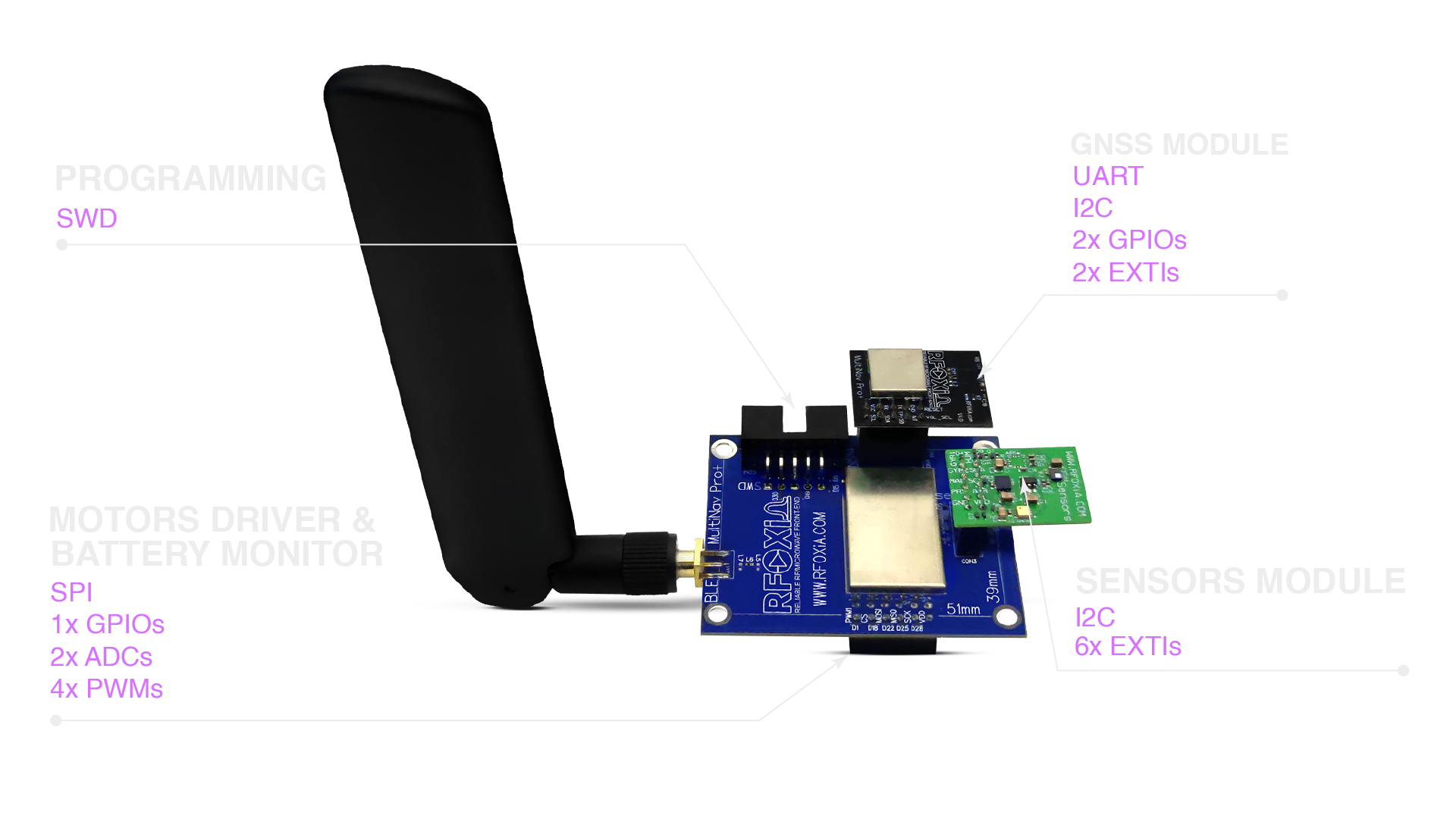
One of the most significant advantages the MultiNav Pro+ holds over both standard BLE modules and ExpressLRS is ecosystem depth. The module is designed from the ground up to integrate with the full RFOXiA hardware stack:
- GNSS Module — 1.5m accuracy, 18Hz fix rate, FCC certified
- Sensors Module — temperature, humidity, pressure, air quality, accelerometer, gyroscope, magnetometer
- Power/Program Kit — supercapacitor-based power, 5-minute charge, 24-hour runtime
All four modules connect through standardized interfaces. The result is a complete autonomous system platform that can be assembled and deployed in hours, not weeks. No compatibility research, no custom interface boards, no firmware integration headaches.
ExpressLRS has no equivalent ecosystem. Standard bluetooth modules have no equivalent ecosystem. The MultiNav Pro+ is the only device in this price range where buying the module also means buying into a complete, integrated platform.
The RFOXiA Connect App: What Smartphone Control Actually Looks Like
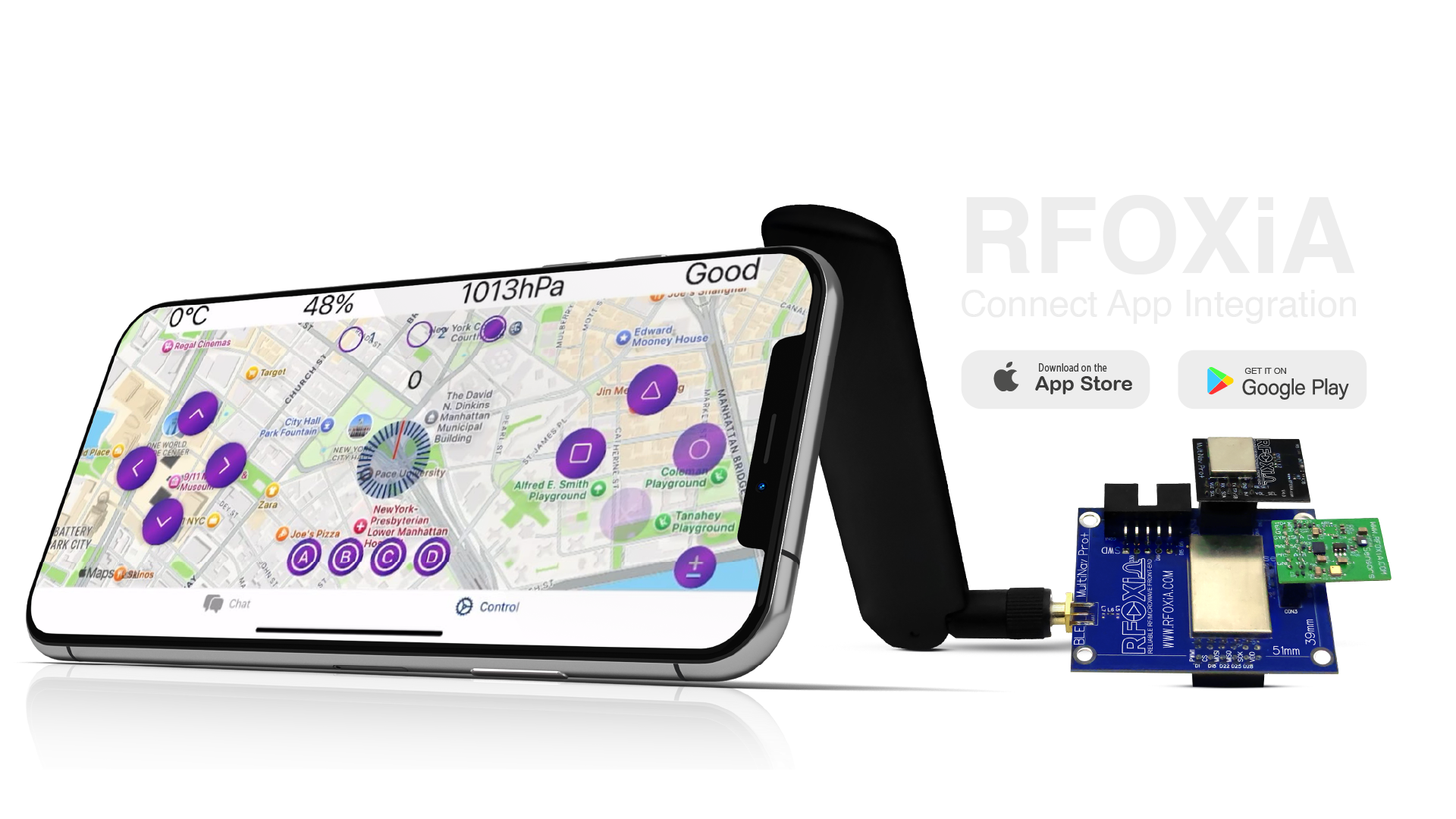
The RFOXiA Connect app is the control interface for the MultiNav Pro+ ecosystem. Available on iOS and Android, it provides:
- PS5-style controller interface for drone and robot control
- Live map with real-time GPS tracking from the GNSS module
- Live sensor data display from the Sensors module
- Automation center for programmable control sequences
- BLE Chat — internet-independent mesh communication between multiple MultiNav Pro+ users
The app works completely without internet. At up to 20KM man-to-drone range, you have a full-featured ground control station running on your phone with no infrastructure dependencies. This is not a comparison point for ExpressLRS or for a standard bluetooth module — neither can offer this.
BLE Chat: Internet-Independent Communication That ExpressLRS Cannot Do
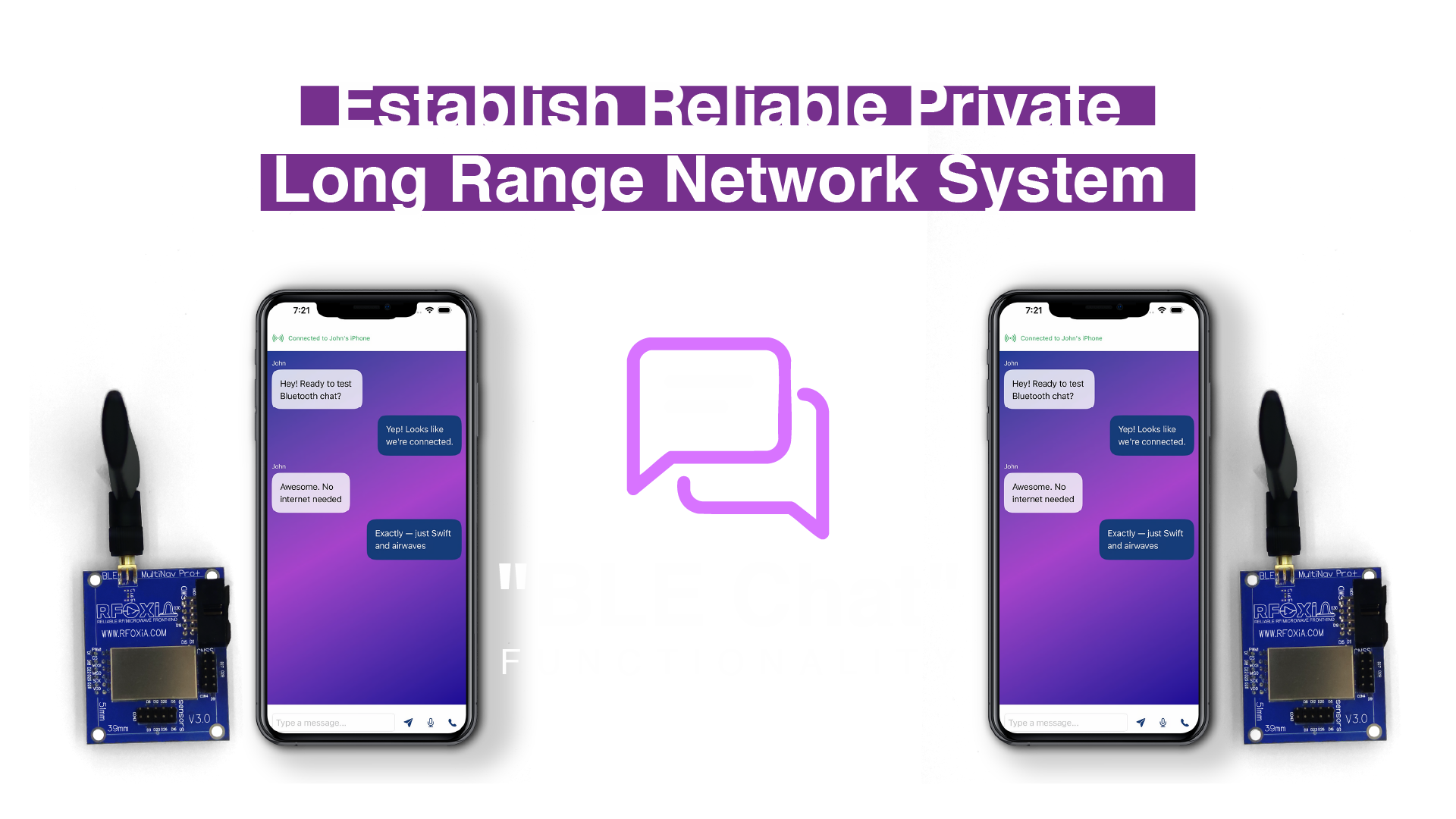
BLE Chat is one of the MultiNav Pro+ features that moves it completely outside the bluetooth module vs ExpressLRS comparison frame. Using the BLE modules as communication nodes, multiple RFOXiA users can establish a mesh communication network that requires no internet, no cellular towers, and no infrastructure of any kind.
Applications include:
- Disaster response coordination — when infrastructure is down
- Remote expedition teams — mountains, deserts, backcountry environments
- Industrial field teams — mines, offshore platforms, construction sites
- Military and defense adjacent applications — mesh comms without spectrum dependency
ExpressLRS cannot do this. It is an RC link — a one-way or two-way channel between a transmitter and a receiver, not a mesh communication network. Standard bluetooth modules theoretically support peer-to-peer communication but at 80m range, mesh networking is not a realistic deployment scenario.
Physical Design: Compact, Durable, Integration-Ready
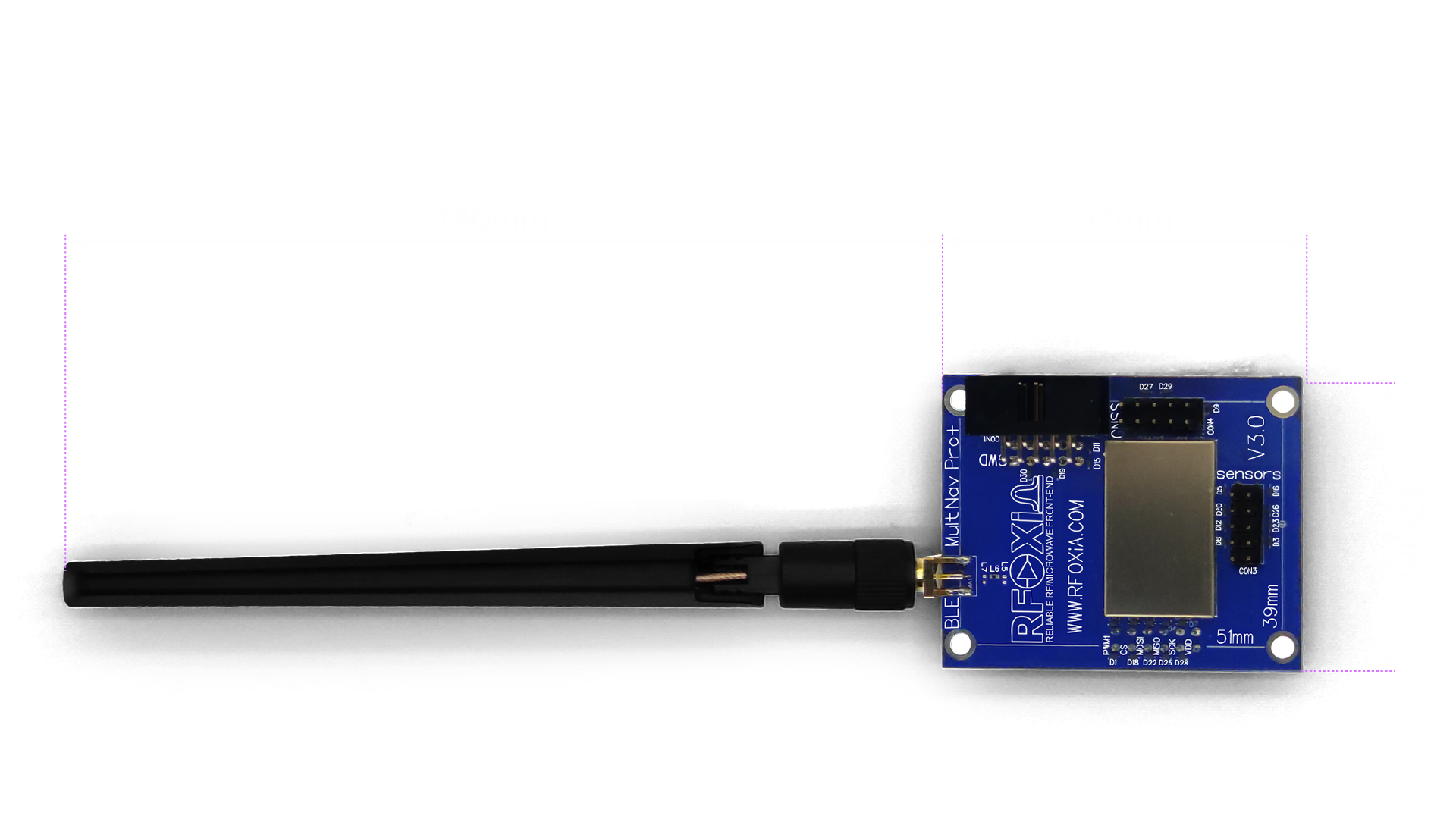
The MultiNav Pro+ measures 57mm x 47mm with a fixing frame size of 54mm x 34mm and corner mounting holes for secure mechanical installation. The integrated high-gain chip antenna with a 140mm antenna element delivers the RF performance without requiring external antenna assemblies for most deployment scenarios.
This is a module designed to be mounted. Corner holes, standardized interfaces, a compact footprint — these are engineering decisions made for real deployments, not breadboard prototyping. Drone builders and robotics engineers will recognize the design language immediately.
Open Source Firmware and AI-Assisted Development
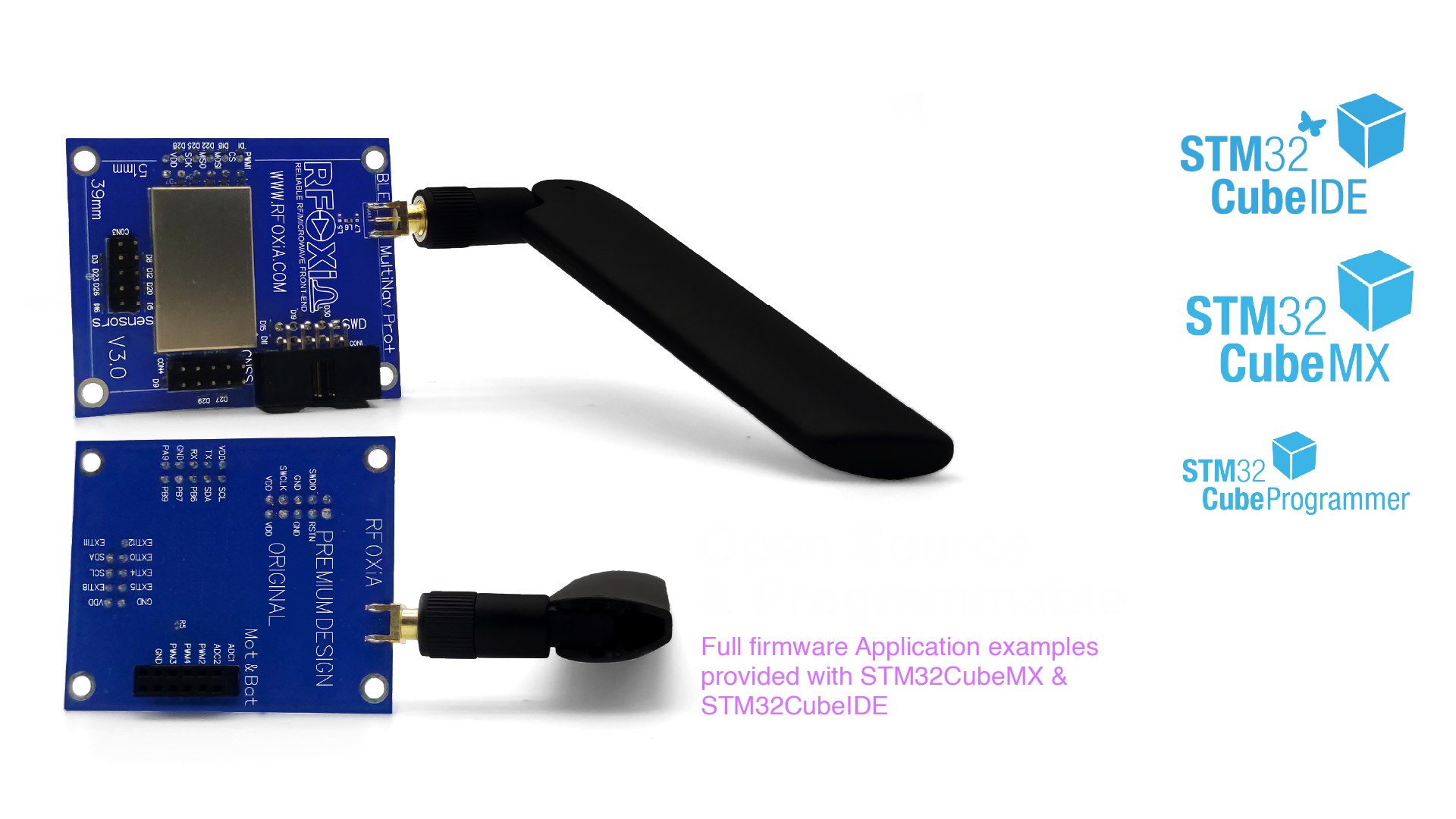
The full firmware source for the MultiNav Pro+ is available on GitHub at github.com/RFOXiA/MultiNav-Pro-Long-Range-BLE-Module-Firmware-STM32WB07. The module is programmable via SWD, giving developers complete control over behavior at the firmware level.
This is where the comparison with ExpressLRS gets interesting. ExpressLRS is also open source, and that is one of its genuine strengths. But the MultiNav Pro+ goes further through the RFOXiA Club AI Firmware Builder — a platform that lets developers describe their application in plain language and receive production-ready firmware with full source code.
Building a custom telemetry link for an autonomous vehicle? Describe it. Building a sensor relay node for environmental monitoring? Describe it. The AI generates the firmware. Developers can then customize from working code rather than starting from scratch.
For teams or individual developers who want the openness of ExpressLRS but need a general-purpose BLE platform rather than an RC-specific one, the MultiNav Pro+ delivers open-source access with significantly lower firmware development overhead.
Precision Timing Built In
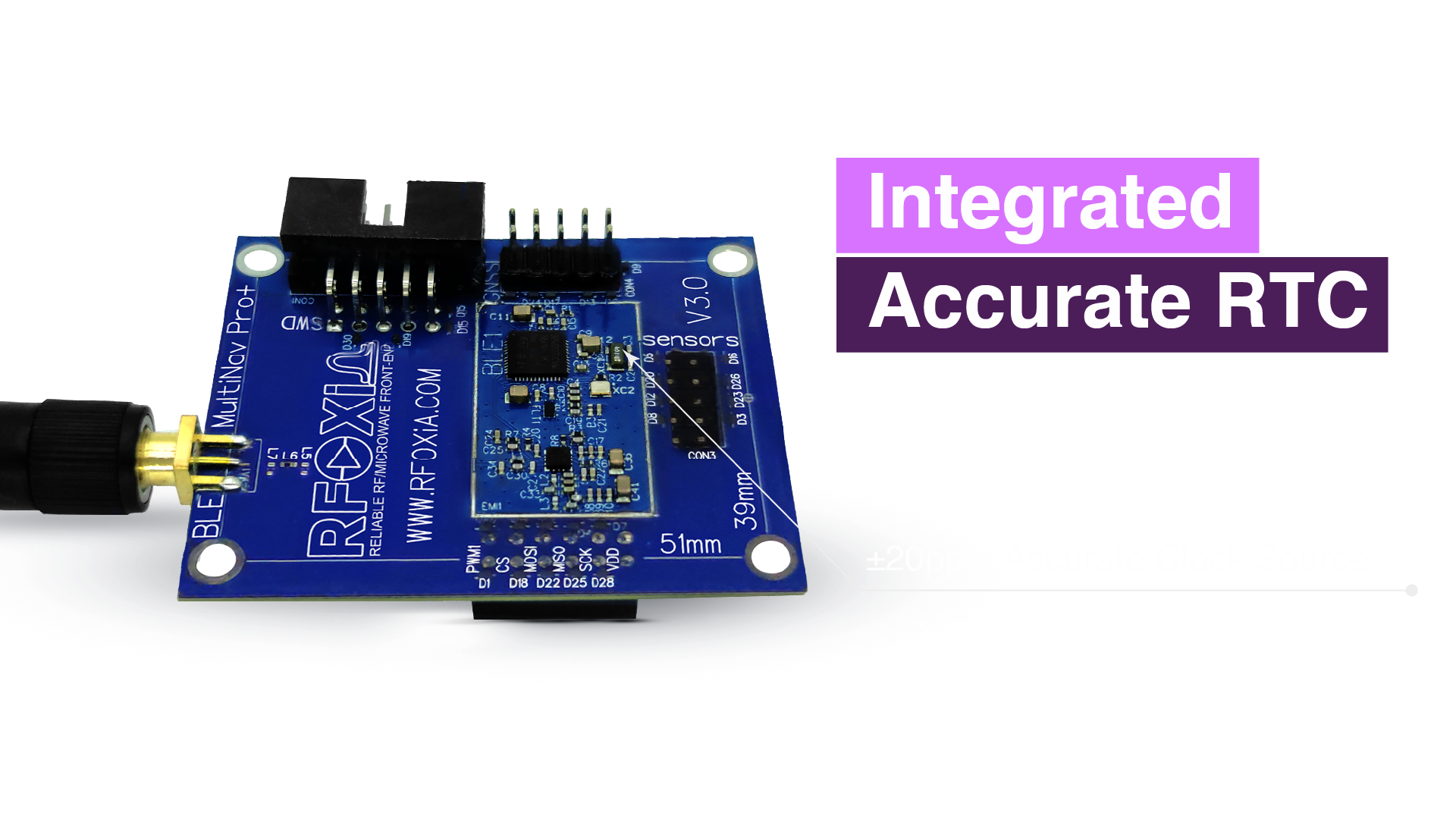
The MultiNav Pro+ includes an integrated RTC crystal for precise timekeeping. In networked deployments — sensor arrays, autonomous fleets, synchronized data logging — timing accuracy is not a detail. It is fundamental to data integrity.
Data samples that cannot be accurately timestamped cannot be meaningfully correlated. Control commands that arrive without reliable timing context introduce uncertainty into autonomous decision-making. The integrated RTC addresses this at the hardware level, so developers do not need to solve it in firmware.
For the data network application specifically — where sensor data from distributed nodes is aggregated and compared against reference sources — timestamping precision directly impacts data value and monetization potential.
When to Choose ExpressLRS, When to Choose MultiNav Pro+
This is an honest breakdown, not a sales pitch disguised as analysis.
Choose ExpressLRS if:
- You need a pure RC link for FPV freestyle or racing drones
- You already own an ELRS-compatible transmitter and want to minimize cost
- Sub-1ms latency for control input is your primary requirement
- You do not need smartphone integration
- You are not building an IoT, sensor, or data application
Choose the MultiNav Pro+ BLE module if:
- You want smartphone control without a dedicated RC transmitter
- You need sensor data integration alongside the control link
- You are building an IoT, environmental monitoring, or autonomous systems application
- You need internet-independent mesh communication between multiple users
- You want a complete ecosystem (hardware + app + AI firmware + data network)
- You want FCC-certified hardware with open-source firmware at under $60 for two units
The bluetooth module vs ExpressLRS debate resolves differently depending on what you are building. For pure RC, ExpressLRS is a mature and excellent choice. For everything else — for the developer who needs range, smartphone integration, sensor fusion, and a platform that grows with their project — the MultiNav Pro+ is the answer.
FCC Certification, Manufacturing, and Real Inventory
One factor that never appears in spec sheet comparisons but matters enormously in practice: regulatory status and product availability.
The MultiNav Pro+ BLE module is FCC certified. It ships from real inventory — 680 units in stock. It has completed multiple Kickstarter campaigns with over 200 backers on the most recent run, including a "Project We Love" designation from Kickstarter.
This is not a crowd-funded concept. It is not a prototype looking for backers to fund production. It is a certified, produced, shipping product from a company with established manufacturing infrastructure and a track record of fulfillment.
For developers evaluating hardware for serious projects — whether professional IoT deployments, drone development programs, research applications, or commercial products — that manufacturing and certification reality matters as much as the specs.
The Data Network Advantage: Your Module Pays You Back
There is one more dimension to the bluetooth module vs ExpressLRS comparison that does not exist anywhere else in the market: the RFOXiA data monetization network.
When the MultiNav Pro+ BLE module is deployed with the Sensors Module in an outdoor environment, the system streams verified environmental data — temperature, humidity, pressure, air quality, GPS-confirmed location — to the RFOXiA data network. Contributors earn daily rewards at rates between $0.08 and $0.40 per day depending on location scarcity and network tier.
The data is aggregated and sold to enterprise buyers: agricultural technology companies, smart city operators, insurance firms, logistics companies, and research institutions who need hyper-local environmental data at temporal resolutions that public weather APIs cannot provide.
No bluetooth module on the market offers this. ExpressLRS has no equivalent. The MultiNav Pro+ is the only wireless development module that also functions as a passive income asset.
Conclusion: The Bluetooth Module vs ExpressLRS Question Has a Third Answer
The bluetooth module vs ExpressLRS debate is real and worth having for developers who are choosing between them for RC and drone applications. ExpressLRS wins on RC-specific latency and community tooling. Standard BLE wins on simplicity and ecosystem familiarity for short-range use cases.
But for the developer who needs long-range wireless performance, smartphone integration, sensor ecosystem access, internet-independent mesh communication, AI-assisted firmware development, and a data monetization opportunity — all in one FCC-certified module at $59 for two units — the MultiNav Pro+ BLE module is not an entry in the debate. It is the answer the debate was missing.
Ready to move beyond the limitations of both standard BLE and RC-only links? Explore the RFOXiA Long Range Bluetooth Module and see what long-range wireless actually looks like when it is built for developers.
The MultiNav Pro+ BLE module is available now at rfoxia.com. FCC certified. Open source firmware on GitHub. Ships from stock.
Written by: Moamen Mohamed LinkedIn