
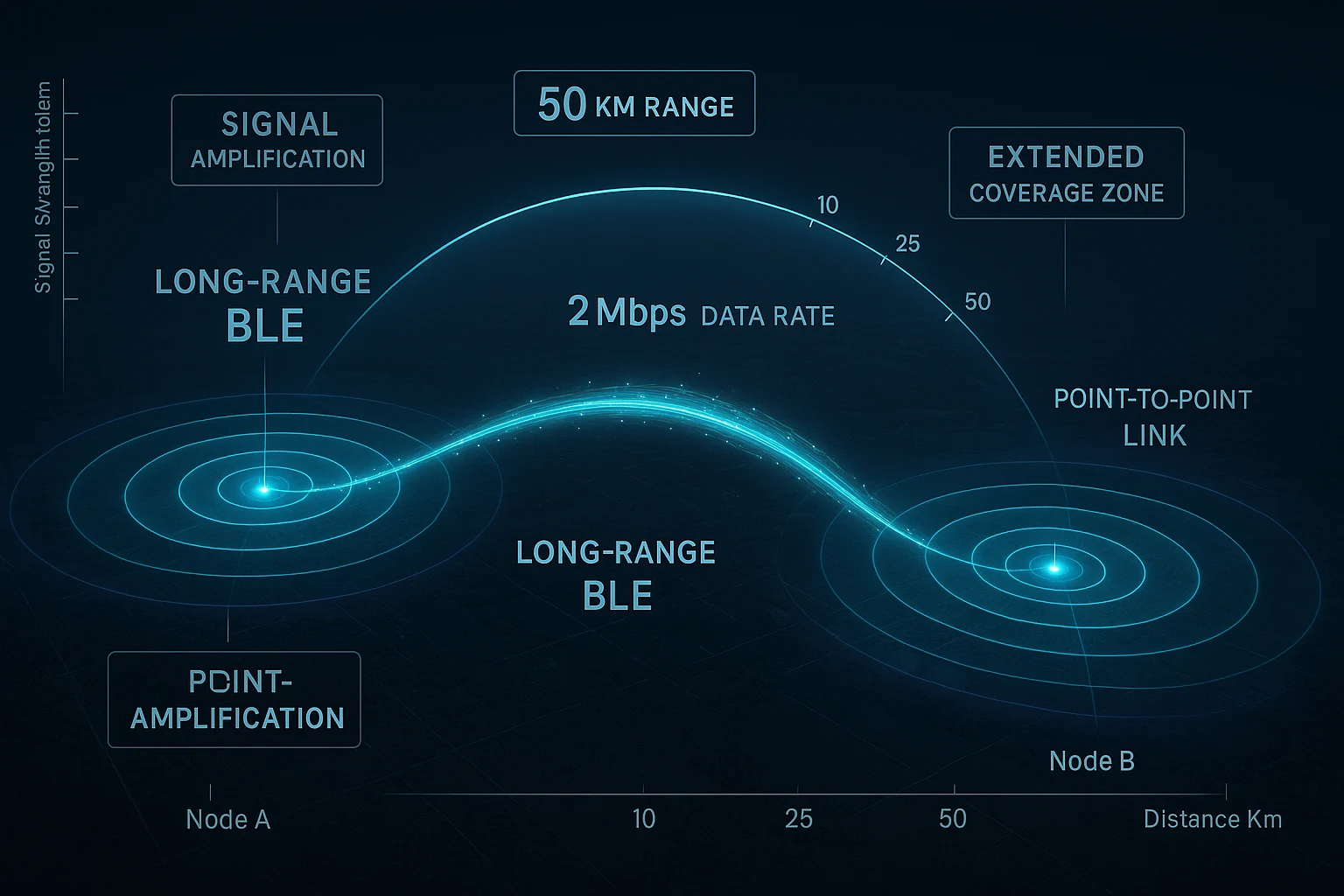
Bluetooth Range Improvement Techniques: From 100m to 50KM
RFOXiA Long Range Bluetooth Module
Bluetooth Range Improvement Techniques That Are Redefining What Wireless Can Do
If you have ever tried to push a standard Bluetooth module beyond its rated range, you already know the frustration. Signal drops. Packets get corrupted. Your drone loses contact at 80 meters and starts behaving unpredictably. Standard commodity BLE modules were never designed to go further than a few hundred meters under ideal conditions — and real-world conditions are never ideal.
But the ceiling that commodity hardware imposes on you is not a physical law. It is an engineering and cost tradeoff that most manufacturers make to hit a $5 price point. When you actually apply serious bluetooth range improvement techniques — RF front-end amplification, receiver sensitivity optimization, antenna design, protocol tuning, and physical layer configuration — the results are extraordinary.
This post breaks down exactly how Bluetooth range is improved from an engineering standpoint, what the real limits are, and how a hardware platform like the RFOXiA Long Range Bluetooth Module achieves ranges that most engineers assume are impossible for BLE.
Why Standard Bluetooth Range Is So Limited
The range limitation of standard Bluetooth modules comes from several compounding factors:
1. Low transmit power Most commodity BLE chips operate at +0 dBm to +4 dBm transmit power. This is intentional — it reduces power consumption and meets regulatory emission limits without additional engineering. But it severely limits how far the signal can travel before it drops below the receiver noise floor.
2. No RF front-end A raw Bluetooth SoC typically outputs the signal directly to the antenna with no amplification stage. There is no Low Noise Amplifier (LNA) on the receive path and no Power Amplifier (PA) on the transmit path. This is the single biggest bottleneck.
3. Basic antenna design Commodity modules ship with PCB trace antennas or simple chip antennas optimized for small size, not radiation efficiency. Antenna gain directly affects range in both directions.
4. Protocol overhead at short range modes Many standard BLE implementations use connection parameters and PHY settings tuned for indoor use — high advertising frequency, shorter connection intervals, standard 1Mbps PHY — none of which are optimized for long-range operation.
5. Ground reflections and multipath At ground level, signals bounce off terrain, vegetation, and structures. These reflections create destructive interference that collapses range rapidly. Elevation above ground is one of the most powerful non-electronic range improvement techniques available.
The Core Bluetooth Range Improvement Techniques Used by Engineers
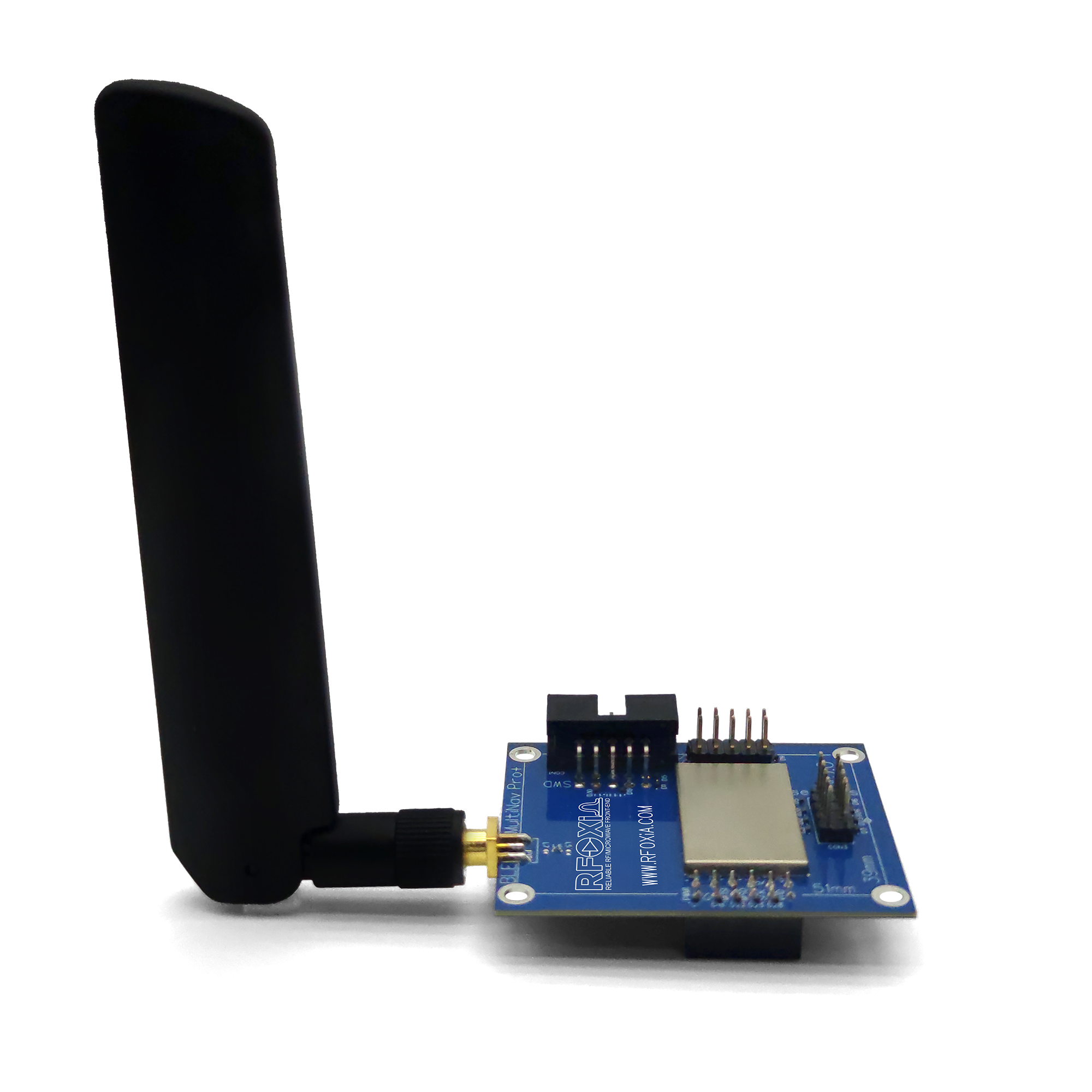
Here is how serious RF engineers actually extend Bluetooth range beyond what commodity hardware can do:
1. RF Front-End Amplification (PA + LNA)
This is the most impactful single change you can make. A Power Amplifier on the transmit path increases output power — typically from +4 dBm to +20 dBm or higher. A Low Noise Amplifier on the receive path lowers the effective noise figure, allowing the receiver to detect weaker signals that would otherwise be lost in the noise floor.
The combination of increased TX power and improved RX sensitivity can yield 20-30 dB of link budget improvement. In practical terms, that translates to a range multiplication factor of 10x to 30x depending on the environment.
The MultiNav Pro+ BLE module incorporates exactly this approach — a carefully designed RF front-end with external PA and LNA stages that dramatically extends the link budget beyond what the STM32WB07CCV6 SoC alone can achieve.
2. Antenna Selection and Design
Antenna gain is a free multiplier on range. Every 3 dBi of antenna gain doubles the effective range in open space (in terms of field intensity). A well-designed high-gain directional antenna can add 6-12 dBi over a basic chip antenna.
For omnidirectional deployments like drone tracking, the goal is to maximize gain in the horizontal plane while maintaining broad vertical coverage. Helical antennas, sleeve dipoles, and optimized monopoles all offer meaningful gain over basic chip antennas.
The MultiNav Pro+ BLE module features an integrated high-gain chip antenna designed specifically for long-range operation — delivering strong signal performance without requiring the user to source and install external antenna hardware.
3. BLE Long Range PHY (Coded PHY)
Bluetooth 5.0 introduced Coded PHY, a physical layer mode specifically designed for extended range at the cost of data rate. Coded PHY uses forward error correction (FEC) coding at either S=2 (500Kbps effective) or S=8 (125Kbps effective) to dramatically improve receiver sensitivity.
The sensitivity improvement from Coded PHY is approximately 6-12 dB compared to 1Mbps standard PHY. Combined with amplification and good antenna design, Coded PHY enables ranges that were simply impossible with earlier Bluetooth versions.
For the MultiNav Pro+ BLE module, firmware is configurable — developers can choose between 2Mbps PHY for high-speed close-range applications and Coded PHY for maximum range deployments. The 2Mbps mode delivers the lowest latency for drone control; the range-optimized modes push the distance ceiling to its documented limits.
4. Elevation and Line-of-Sight Path
This is the most underestimated bluetooth range improvement technique because it costs nothing and requires no electronics. Fresnel zone clearance is critical for radio links — obstacles and ground reflections within the Fresnel zone absorb and scatter energy that should be reaching the receiver.
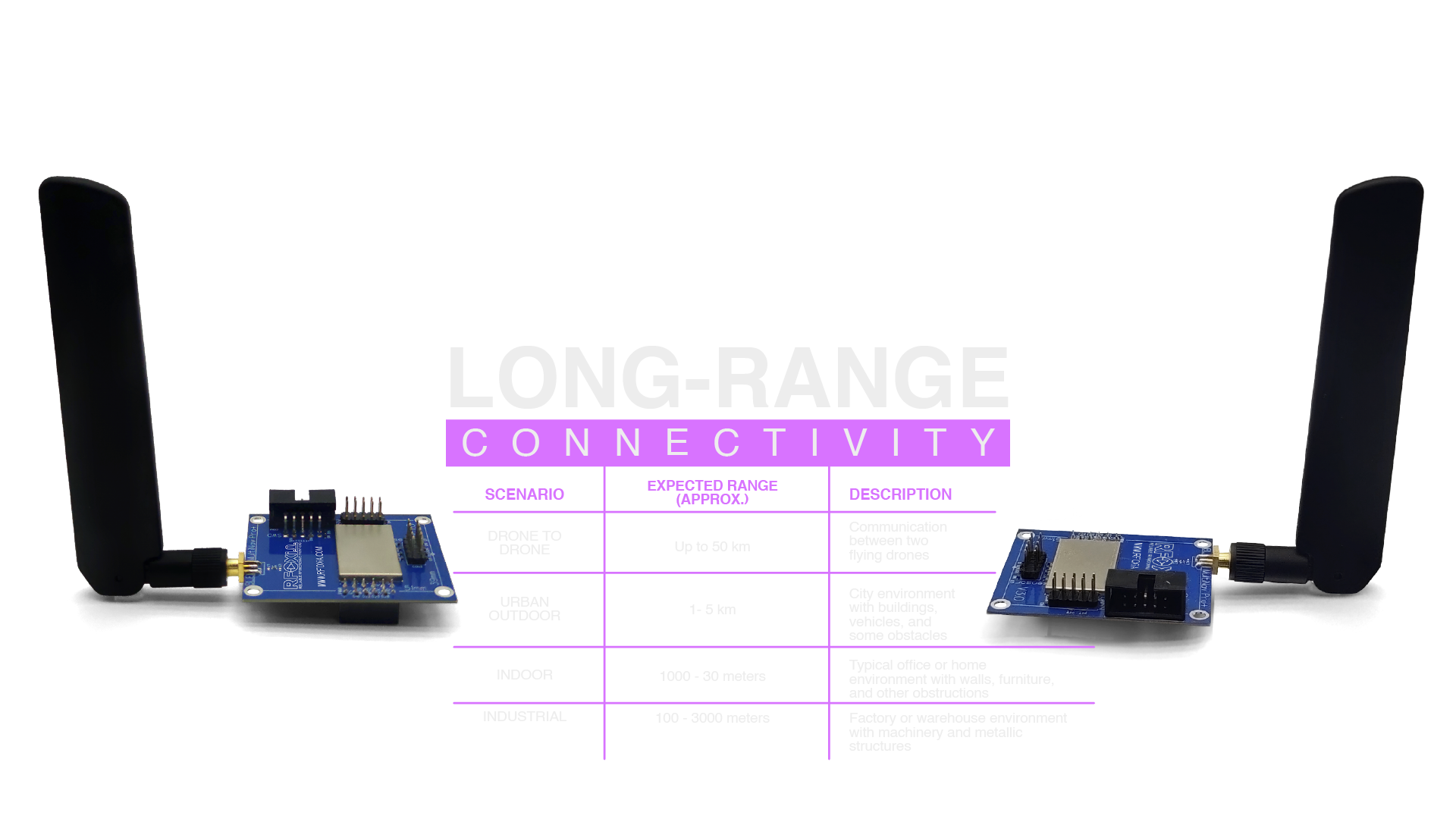
This is why the MultiNav Pro+ BLE module achieves dramatically different ranges depending on deployment:
- Ground-to-ground (both modules at human height): 5KM — ground reflections significantly limit range
- Man-to-drone (one module elevated on a drone): 15-20KM — partial Fresnel zone clearance
- Drone-to-drone (both modules airborne): 50KM — full Fresnel zone clearance, ground reflections eliminated
The physics here are well understood. At altitude, the link budget is dominated by free-space path loss, which follows the inverse square law. Near ground, multipath interference adds 10-20 dB of additional loss that no amplifier can fully compensate. Getting the antenna off the ground is as powerful as adding a 20 dB amplifier.
5. Transmit Power Management
Running at maximum transmit power at all times is not always optimal. At short range, high TX power causes receiver saturation and intermodulation. A smart power management strategy — reducing TX power at short range and increasing it as distance grows — maintains link quality across the full operational envelope.
This adaptive approach also reduces power consumption in close-range scenarios, extending battery life for field-deployed systems.
6. Channel and Frequency Optimization
Bluetooth operates across 40 channels in the 2.4 GHz band. Not all channels are equally clean in all environments. Wi-Fi, ZigBee, microwave ovens, and other ISM band devices all compete for the same spectrum. Intelligent channel hopping and channel assessment can improve real-world performance in congested RF environments, even when raw link budget is not the limiting factor.
7. Packet Structure and Connection Parameter Tuning
Connection interval, slave latency, and supervision timeout all affect both range performance and power consumption. For long-range deployments where the link is marginal, longer connection intervals reduce the number of packet retransmissions per unit time, allowing the system to tolerate worse channel conditions without dropping the connection.
For latency-critical applications like drone control, shorter intervals are needed — which is why a 2Mbps high data rate mode is valuable even when raw range is not the primary goal.
How the MultiNav Pro+ BLE Module Implements These Techniques
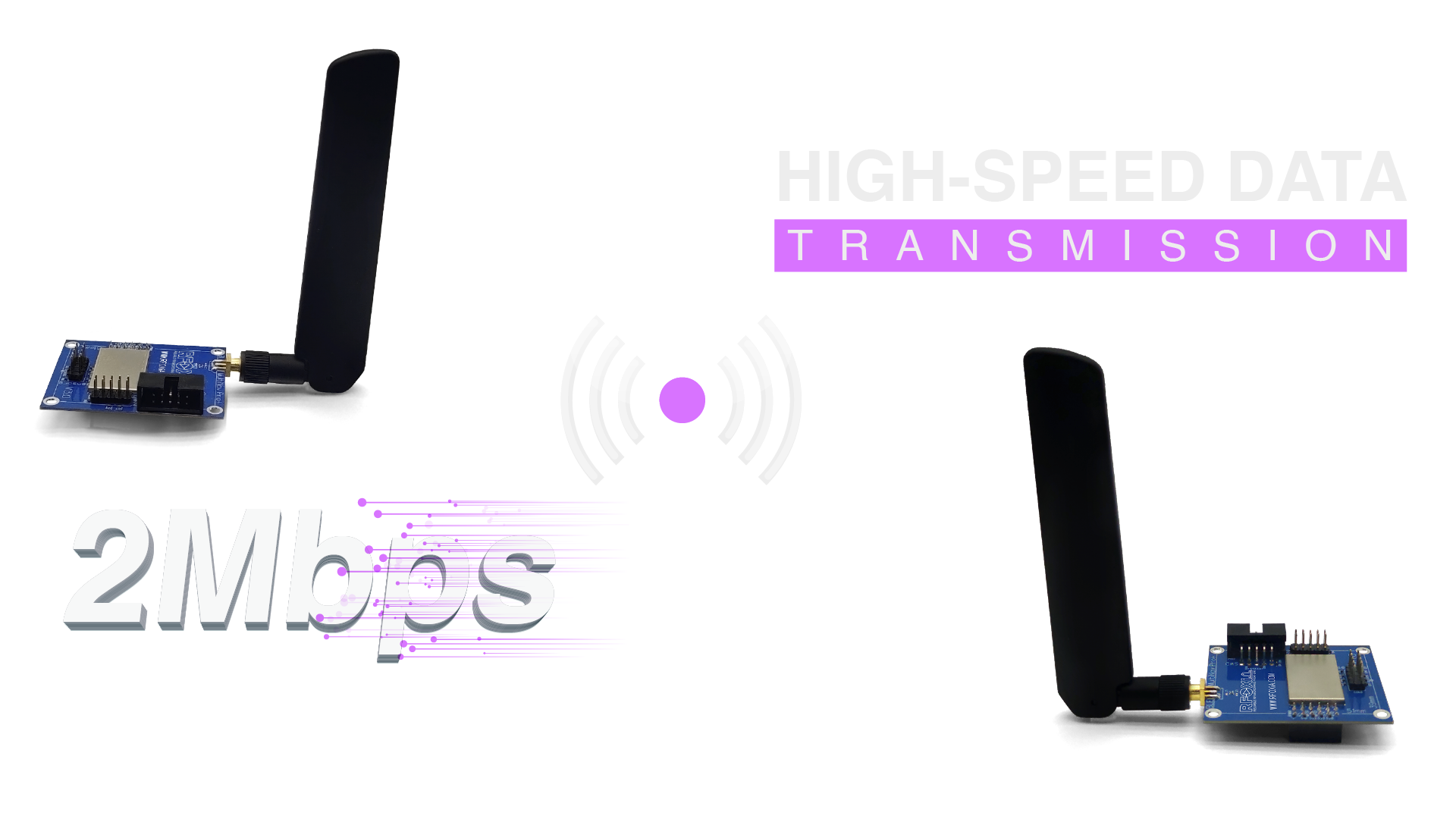
The MultiNav Pro+ BLE module is not a commodity BLE module with a marketing claim. It is a purpose-engineered hardware platform that applies the full stack of bluetooth range improvement techniques described above in a single compact PCB:
Processing Core: STM32WB07CCV6 — ST's latest wireless microcontroller managing both the BLE stack and user application code in a dual-core architecture.
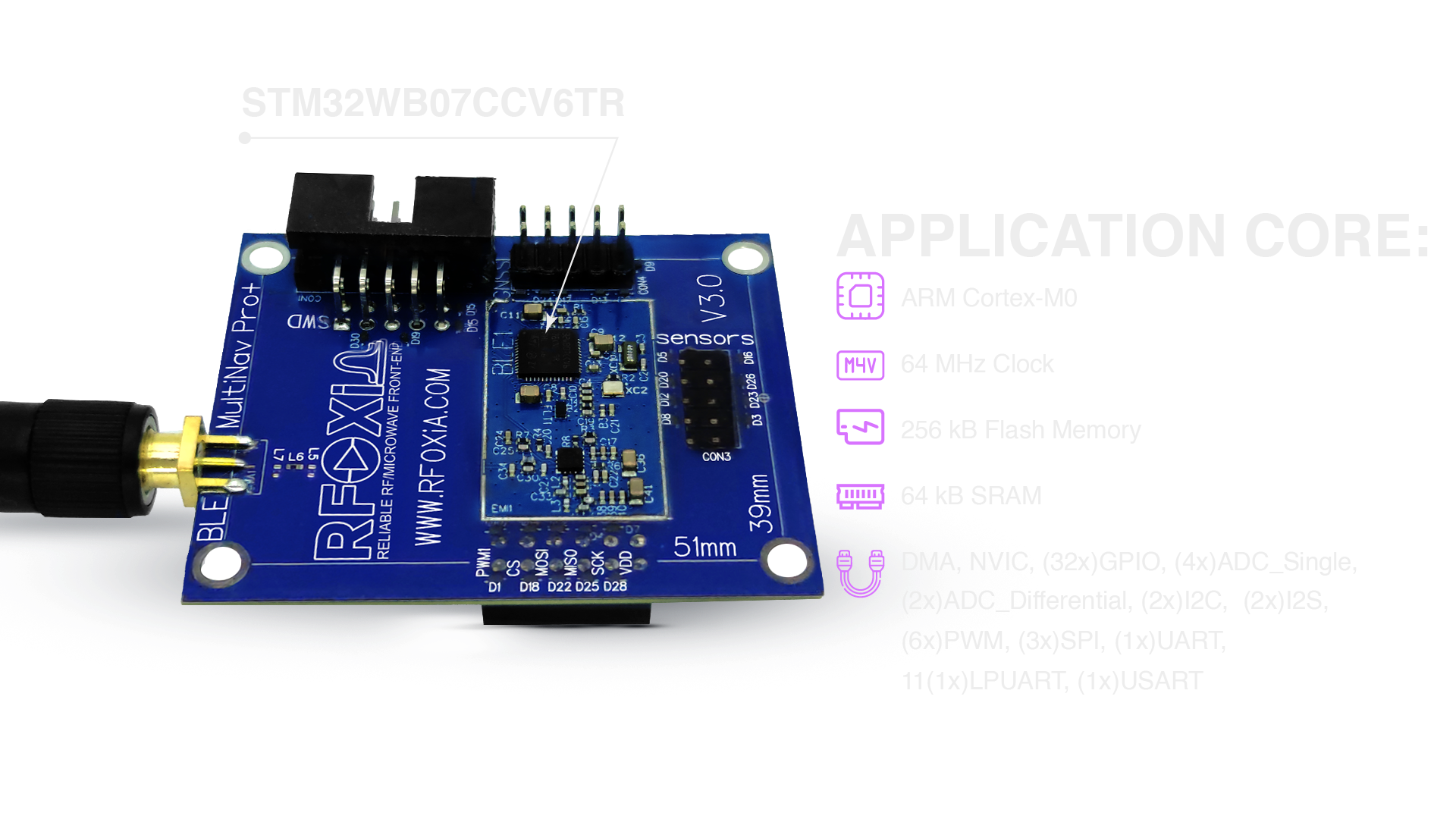
RF Front-End: External PA and LNA stages engineered for maximum link budget extension. This is the core of the range performance — not achievable with a raw SoC design.
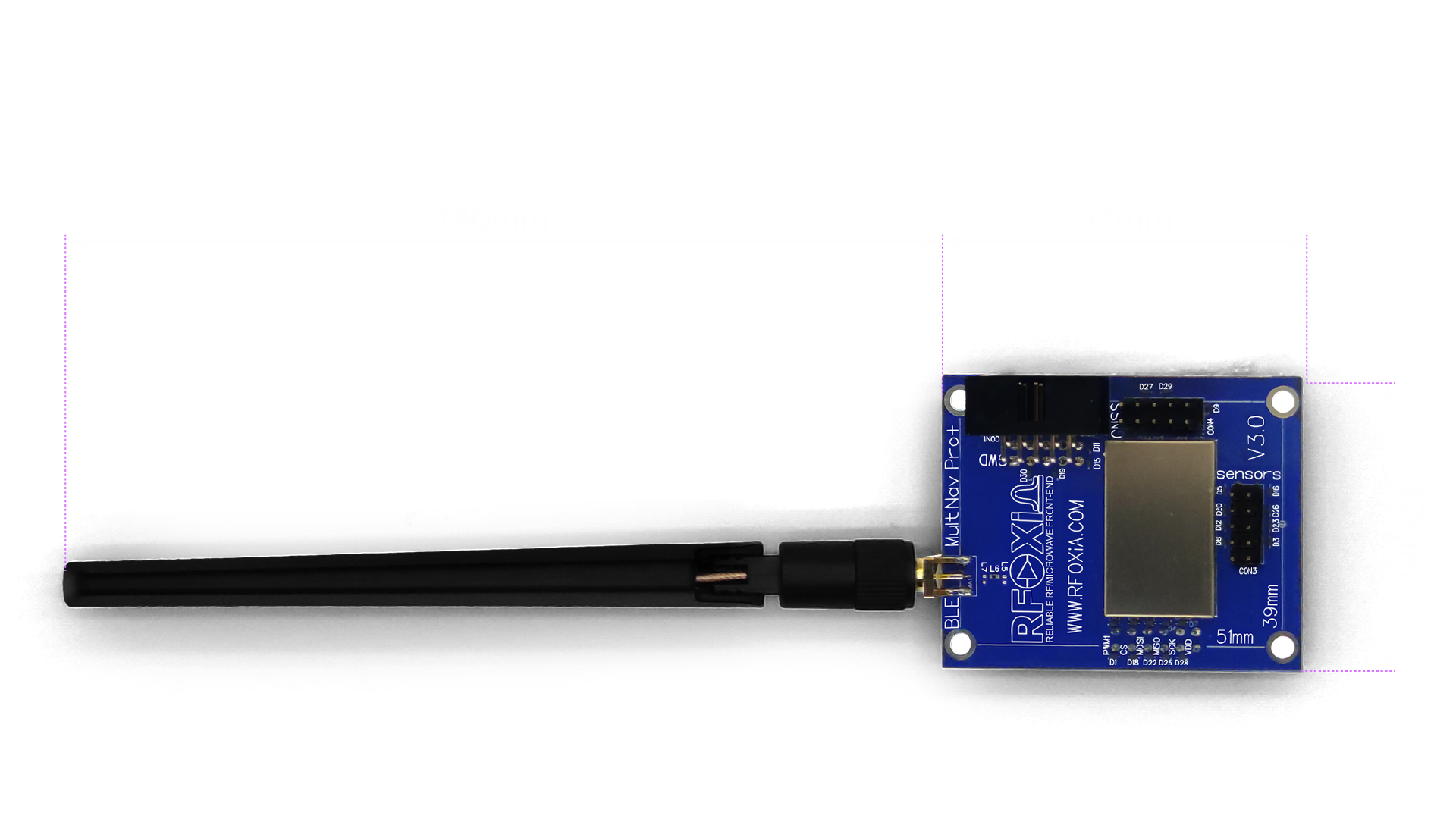
Antenna: Integrated high-gain chip antenna, 140mm length, optimized for long-range operation without requiring external antenna hardware.
Data Rate: 2Mbps maximum — ensuring that when you are within range, you are not wasting time on slow communication. Real-time control applications need fast data throughput, not just range.
Form Factor: 57mm x 47mm with a 54mm x 34mm mounting frame and corner mounting holes. Designed to integrate into drones, robots, field sensors, and IoT enclosures without requiring custom mechanical adaptation.
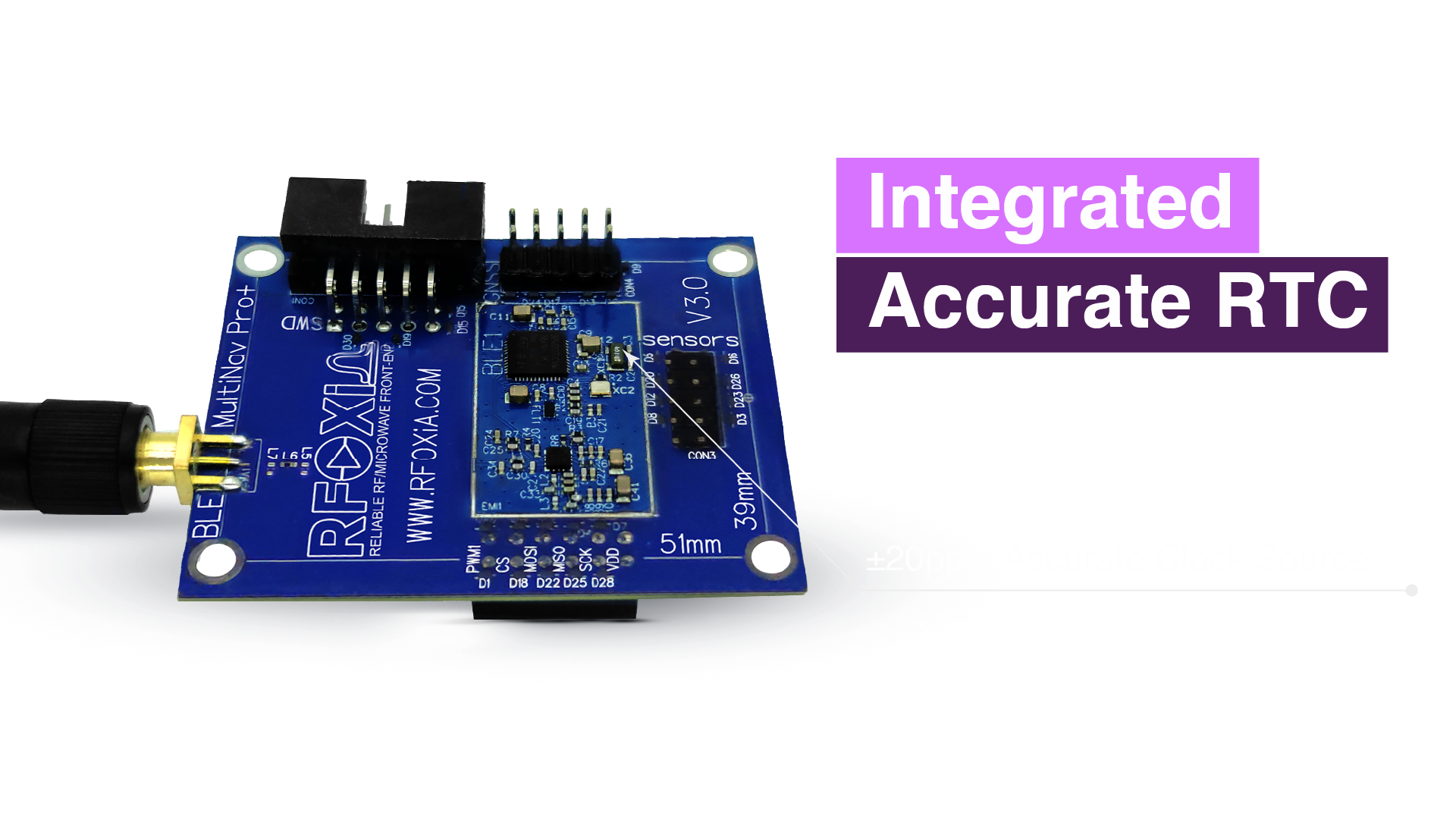
Real-Time Clock: Integrated RTC crystal for precise timing synchronization — critical in navigation systems and time-stamped data logging applications.
FCC Certified: Every RFOXiA module carries FCC certification — not a lab curiosity, a product you can legally deploy and sell in finished devices.
The Ecosystem That Makes Long Range Actually Useful
Raw range is only valuable if the software layer makes it accessible. This is where the MultiNav Pro+ BLE module separates itself from every other long-range wireless solution on the market.
RFOXiA Connect App
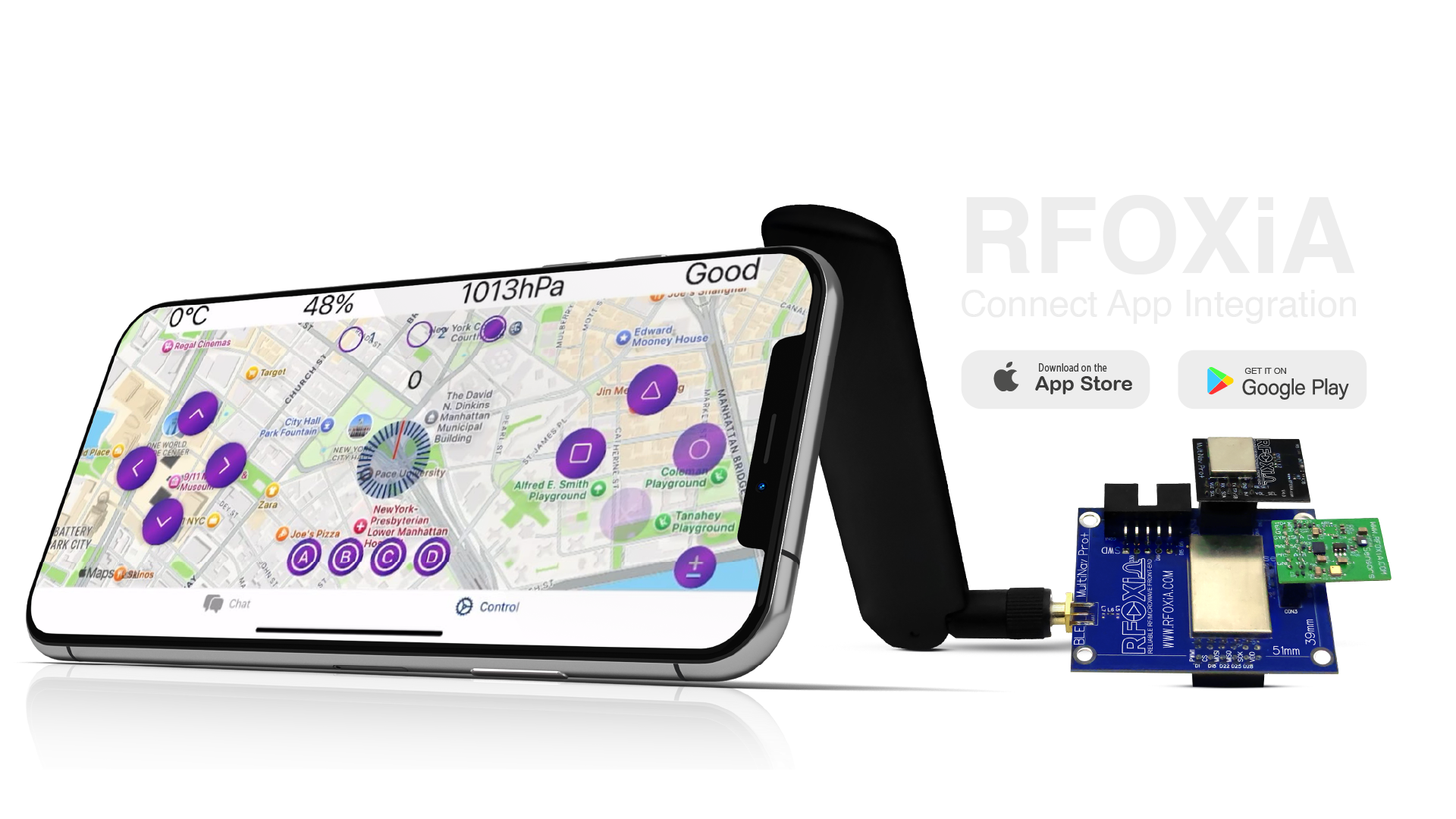
The RFOXiA Connect app (iOS and Android) gives you a complete operational interface for your BLE module:
- Live map view with real-time GPS tracking of your drone or mobile platform
- Sensor data display — temperature, humidity, pressure, air quality, IMU data streamed live
- PS5-style controller interface for drone and robot control — intuitive, low-latency
- Automation center for programmable behavior rules
- Zero internet dependency — the full app works over direct BLE link, no cloud required
At 20KM man-to-drone range, you are controlling your platform with the same interface you would use at 20 meters. That continuity is the point.
BLE Chat — Internet-Independent Mesh Communication
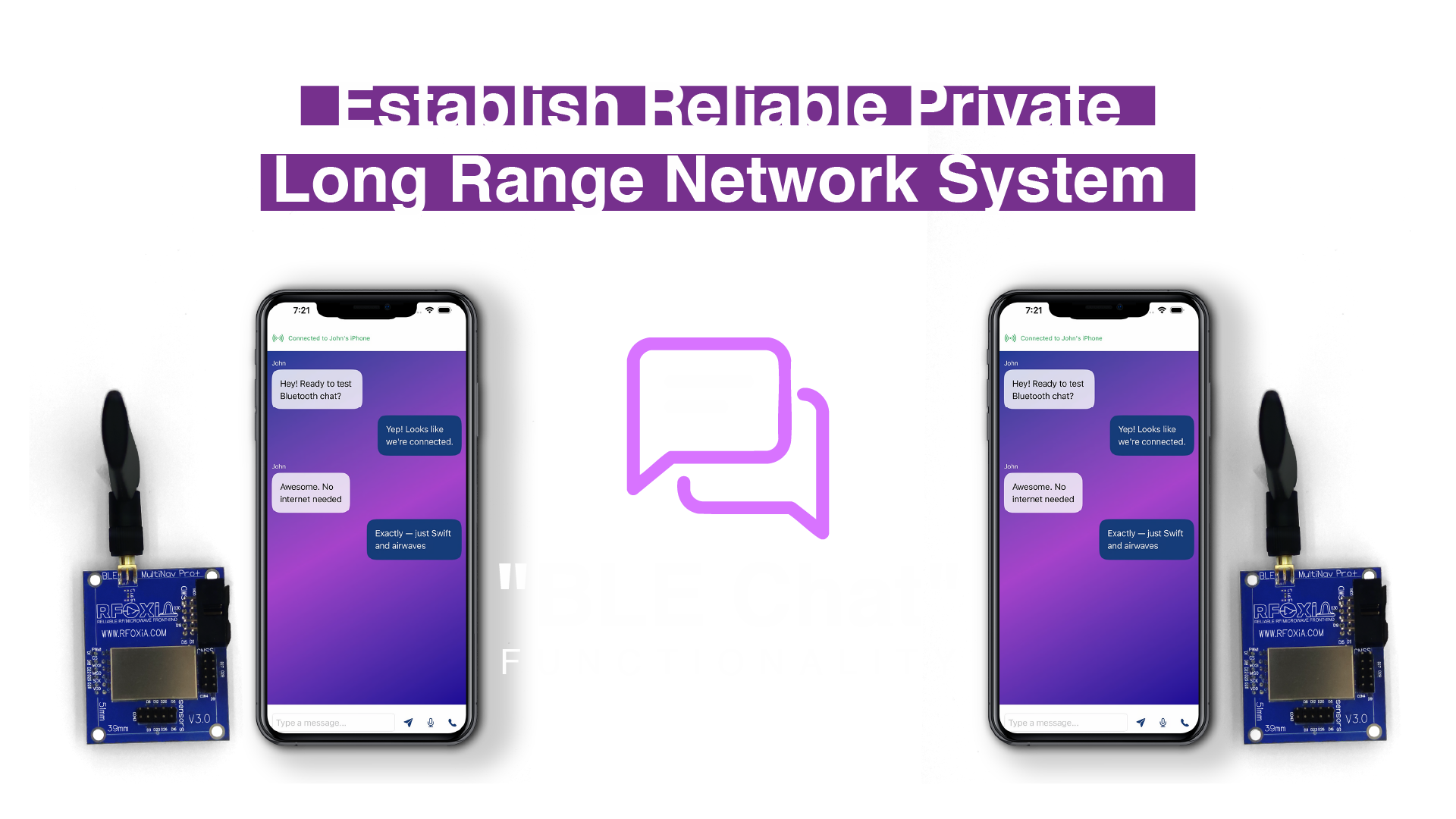
Beyond drone control, the MultiNav Pro+ BLE module supports a mesh communication mode — BLE Chat. Multiple users with BLE modules can communicate via text, data, and voice without any internet connection or cellular infrastructure. The applications here go well beyond hobbyist use:
- Disaster response teams in areas with destroyed infrastructure
- Field research teams in remote locations
- Off-grid expeditions where satellite comms are too expensive
- Industrial field teams operating in RF-shielded or underground environments
Seamless Ecosystem Integration
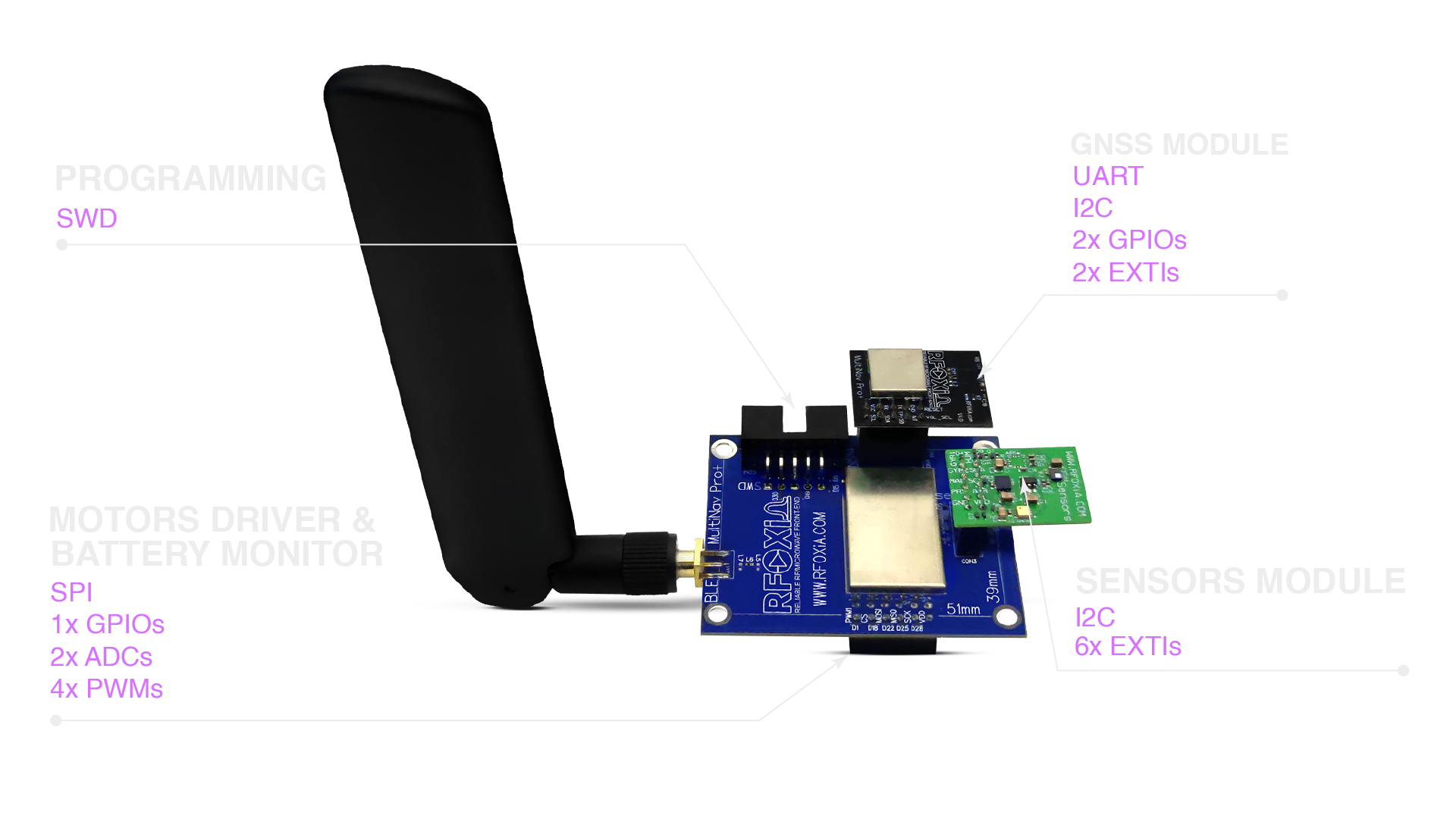
The MultiNav Pro+ BLE module is designed to integrate directly with the full RFOXiA hardware ecosystem — GNSS module (1.5m accuracy, 18Hz fix rate), Sensors module (7 environmental sensors), and Power/Program Kit (5-minute charge, 24-hour runtime). The four-interface connector system means you are not wire-splicing on a workbench — you are building a coherent platform.
Open Source and Fully Programmable
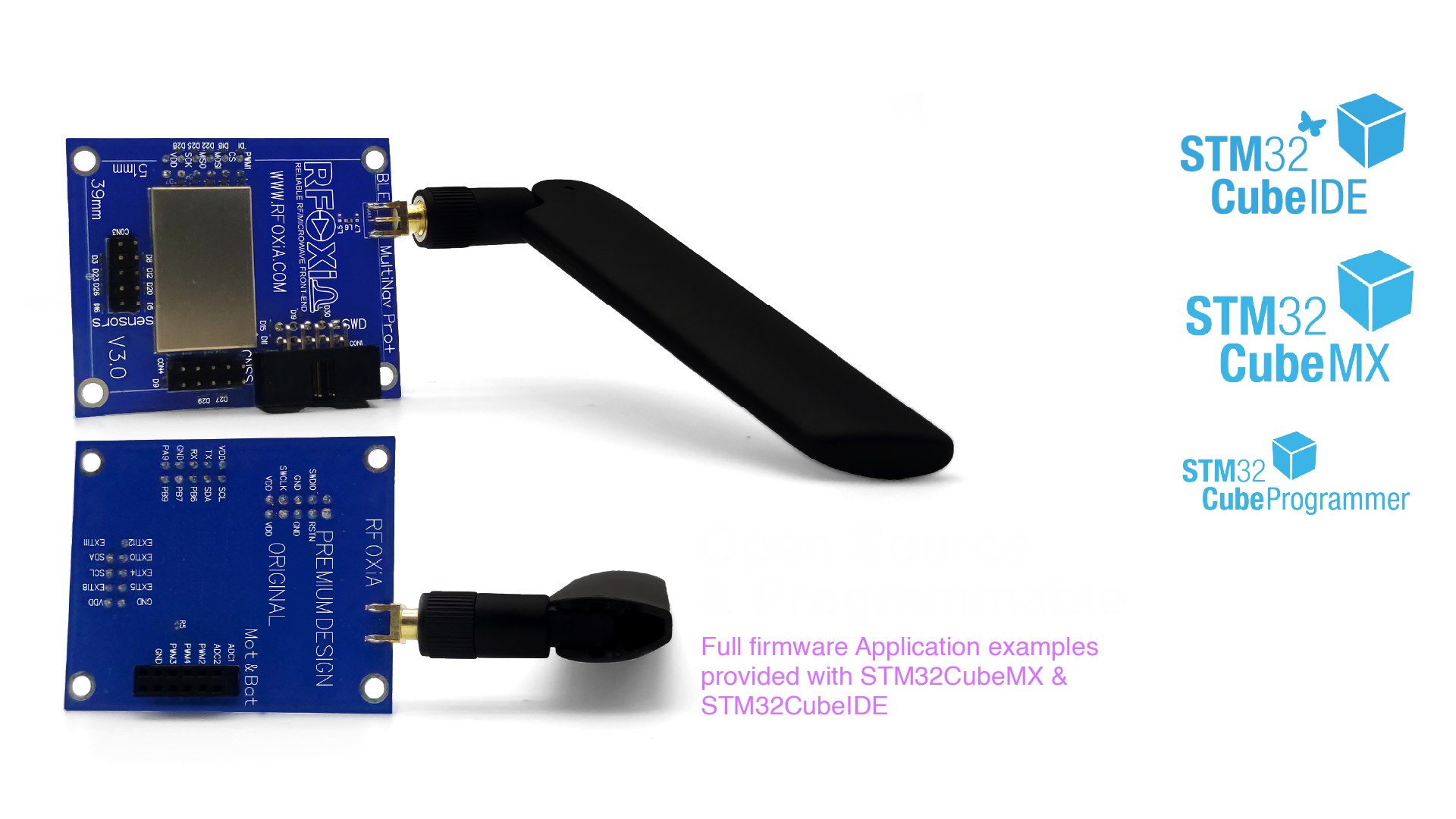
Full source code is available on GitHub. SWD programming interface is built in. If the standard firmware does not fit your application, you modify it. This is not a black box — it is a development platform. The AI Firmware Builder inside RFOXiA Club can generate custom firmware from a plain-language description of your application, reducing development time from weeks to hours.
Explore the RFOXiA Long Range Bluetooth Module and see full specifications, documentation, and ordering details.
Who Needs These Bluetooth Range Improvement Techniques Applied in Hardware
The applications for a properly engineered long-range BLE module are broader than most people initially recognize:
Drone builders and FPV pilots — Control range beyond visual line of sight, telemetry at distances where standard links fail, GPS tracking of drones during extended missions.
Robotics engineers — Ground vehicle control in large facilities, outdoor autonomous systems, industrial inspection robots operating in areas too hazardous for personnel.
IoT developers — Remote sensor nodes that cannot rely on cellular or Wi-Fi infrastructure. Agricultural monitoring, environmental sensing, pipeline inspection.
Field researchers — Scientific instruments deployed in remote locations where data needs to be retrieved without physically visiting the sensor node.
Search and rescue teams — Communication in disaster scenarios where infrastructure is destroyed. BLE mesh networking that works as long as the modules have power.
Smart city developers — High-density sensor networks where the economics of cellular connectivity per node are prohibitive.
Real-World Range Expectations: What to Actually Expect
Let us be specific about what the MultiNav Pro+ BLE module achieves, because marketing claims without context are worthless:
| Deployment Scenario | Achievable Range |
|---|---|
| Ground-to-ground (walking height, open field) | 5KM |
| Handheld to drone (50m+ altitude) | 15-20KM |
| Drone-to-drone (both airborne) | 50KM |
These numbers are achieved in open, unobstructed environments. Urban deployments with buildings, dense foliage, and high RF noise will see reduced range — as will any wireless technology. The physics do not change. But even in a dense urban environment with 10-15 dB of additional path loss, the MultiNav Pro+ BLE module will outperform any commodity BLE solution by a factor of 10-20x.
At $59 for two modules, no competitive product exists that delivers comparable performance. Military-grade long-range wireless systems with similar or greater range cost $5,000 to $50,000+. The gap is not incremental — it is structural, and it is what RFOXiA was built to close.
Getting Started with Long-Range BLE Development
The fastest path to deploying a long-range BLE system with the MultiNav Pro+ module:
- Order two modules — you need a pair for bidirectional communication. At $59 for two, the barrier to starting is low.
- Download RFOXiA Connect — available now on Android, iOS pending. Test the app interface in simulation before hardware arrives.
- Join RFOXiA Club — free access, $10 welcome credit, full documentation, AI Firmware Builder, and a developer community of builders using the same hardware.
- Clone the GitHub repo — full open-source firmware at https://github.com/RFOXiA/MultiNav-Pro-Long-Range-BLE-Module-Firmware-STM32WB07
- Build and deploy — the four-interface connector system means your first system can be operational within hours of receiving hardware.
If you are serious about building wireless systems that actually work at range, applying bluetooth range improvement techniques at the hardware level is the only approach that delivers results. Software tricks, positioning adjustments, and firmware tuning all help at the margins. But the fundamental limit is the RF link budget — and that is set in hardware.
The MultiNav Pro+ BLE module is the only product on the market that applies professional-grade RF engineering to a maker-accessible price point, wraps it in a complete software and ecosystem platform, and ships FCC-certified and ready to integrate.
Get the RFOXiA Long Range Bluetooth Module and start building wireless systems that go further than you thought possible.
RFOXiA is a Delaware-based hardware technology company building a vertically integrated wireless development ecosystem. The MultiNav Pro+ BLE module is FCC certified and available for immediate shipment.
Written by: Moamen Mohamed LinkedIn