
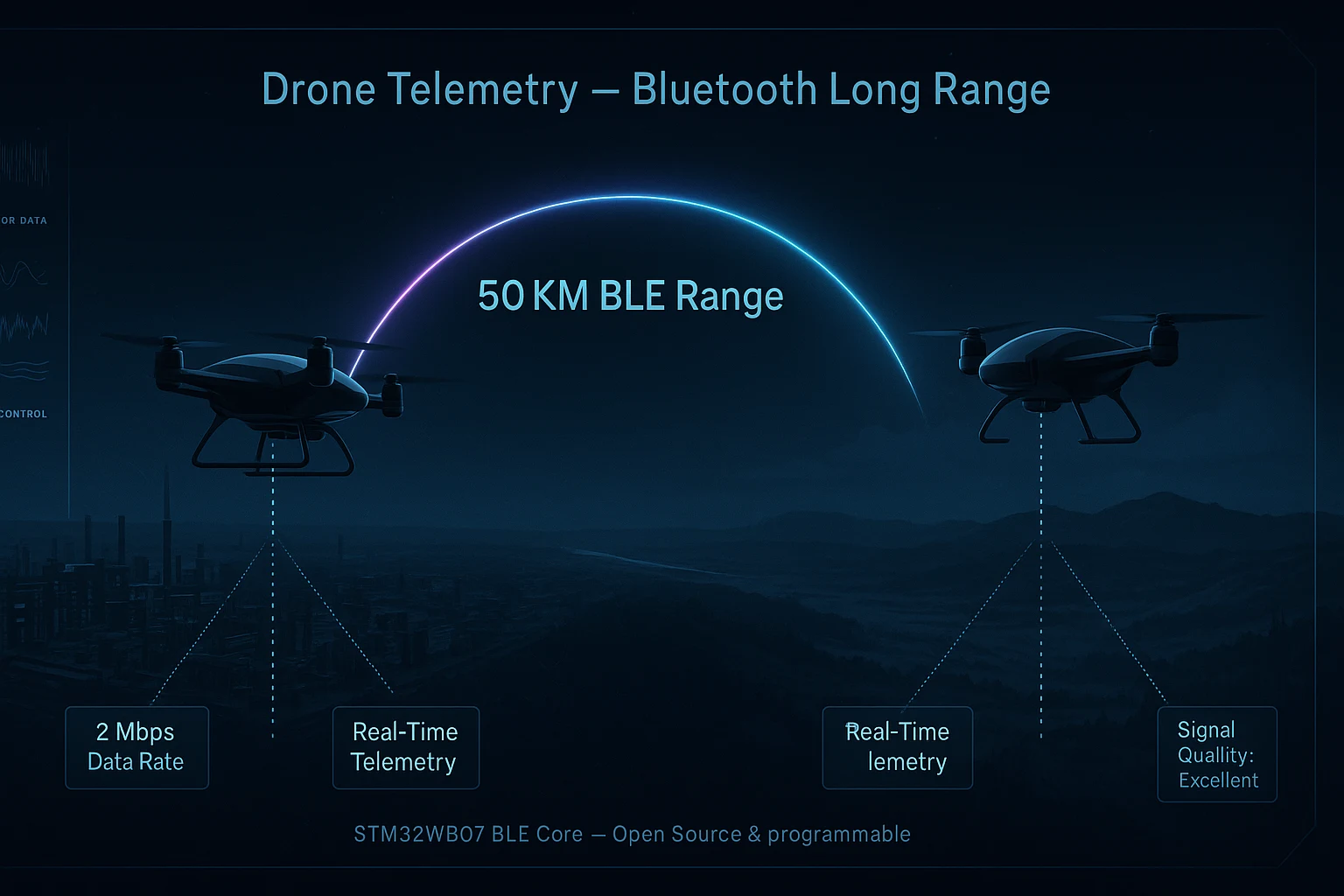
Drone Telemetry Module Bluetooth: How the MultiNav Pro+ Achieves 50KM Range
RFOXiA Long Range Bluetooth Module
The Drone Telemetry Module Bluetooth That Rewrites the Rules
Every drone builder, FPV pilot, and robotics engineer eventually hits the same wall: range. Standard Bluetooth modules give you 80 to 100 meters if you are lucky. After that, your telemetry link drops, your control signal disappears, and your drone becomes an expensive lawn dart. The industry has accepted this limitation for years, treating long-range wireless communication as something reserved for military budgets and government contracts.
The MultiNav Pro+ BLE Module from RFOXiA exists to end that compromise.
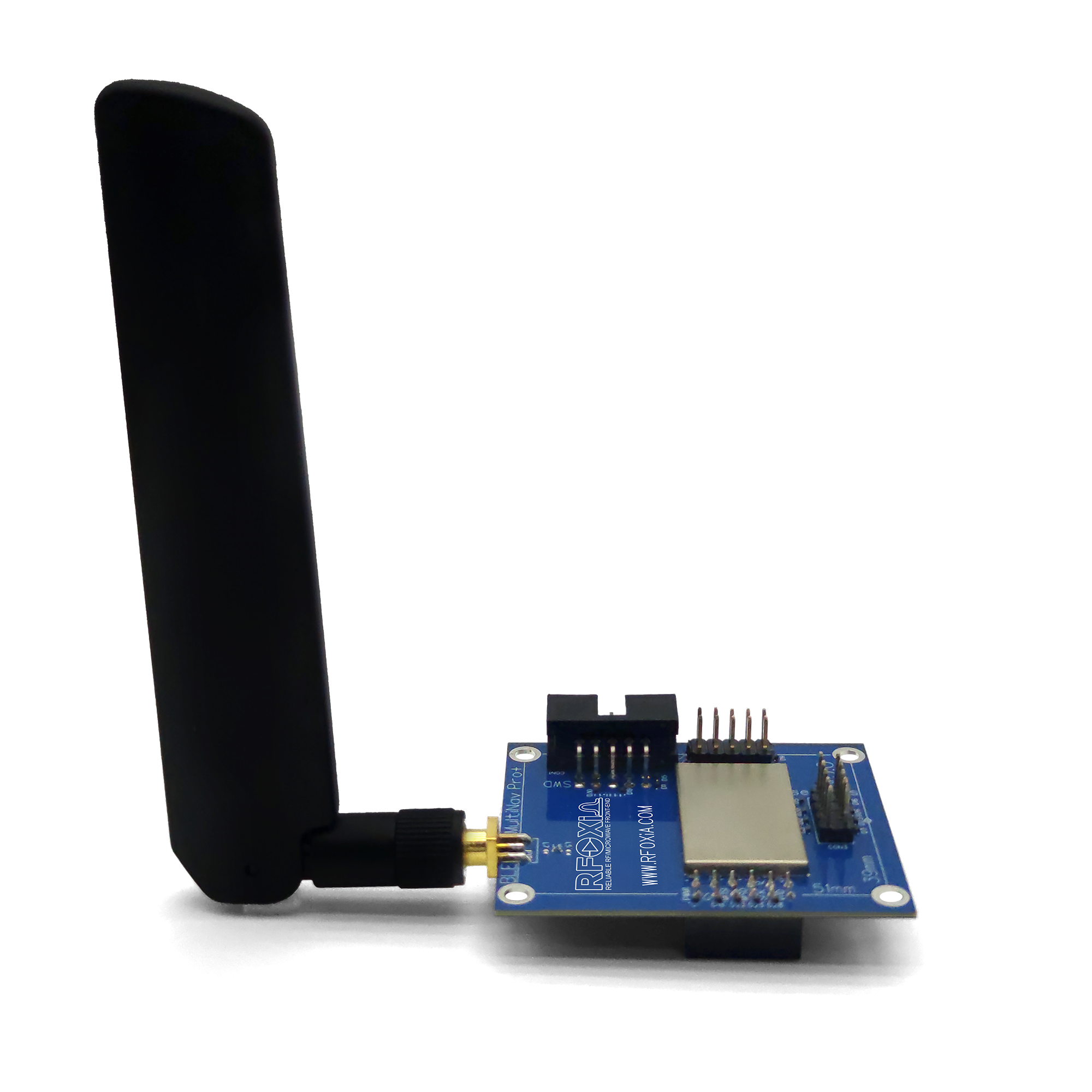
This is not a marginal improvement over commodity hardware. The MultiNav Pro+ is a professionally engineered drone telemetry module Bluetooth solution that achieves ranges measured in kilometers, not meters. Ground to ground: over 5KM when paired with a smartphone. Module to module on airborne platforms: beyond 50KM. At a price point of $59 for two units, it sits in a market position that previously did not exist — professional-grade long-range wireless at maker-accessible prices.
This post breaks down exactly how the MultiNav Pro+ achieves these numbers, what makes it different from every other BLE module on the market, and why it is the right foundation for your next drone, robot, or remote IoT deployment.
Why Standard Bluetooth Fails for Drone Telemetry
To understand why the MultiNav Pro+ matters, you need to understand why conventional BLE modules fall short for aerial and remote applications.
Off-the-shelf BLE modules — the kind you find from commodity suppliers — are designed for consumer electronics. Earbuds. Smartwatches. Health trackers. These devices operate within 10 meters of each other, and the module specifications reflect that intended use. Power output is kept low to preserve battery life. Receiver sensitivity is adequate but not exceptional. Antenna design is optimized for size and cost, not for signal propagation.
When you put one of these modules on a drone and one in your hand, you are fighting multiple physical challenges simultaneously:
- Path loss increases with the square of distance — doubling range requires four times the signal power or sensitivity
- Ground reflections create multipath interference at low elevations
- Obstructions between transmitter and receiver scatter and absorb signal energy
- Noise floor at the receiver determines the minimum detectable signal
Commodity BLE modules cannot overcome these challenges because they were never designed to. The physics is not the problem. The engineering choices are the problem.
How the MultiNav Pro+ Achieves 50KM as a Drone Telemetry Module Bluetooth
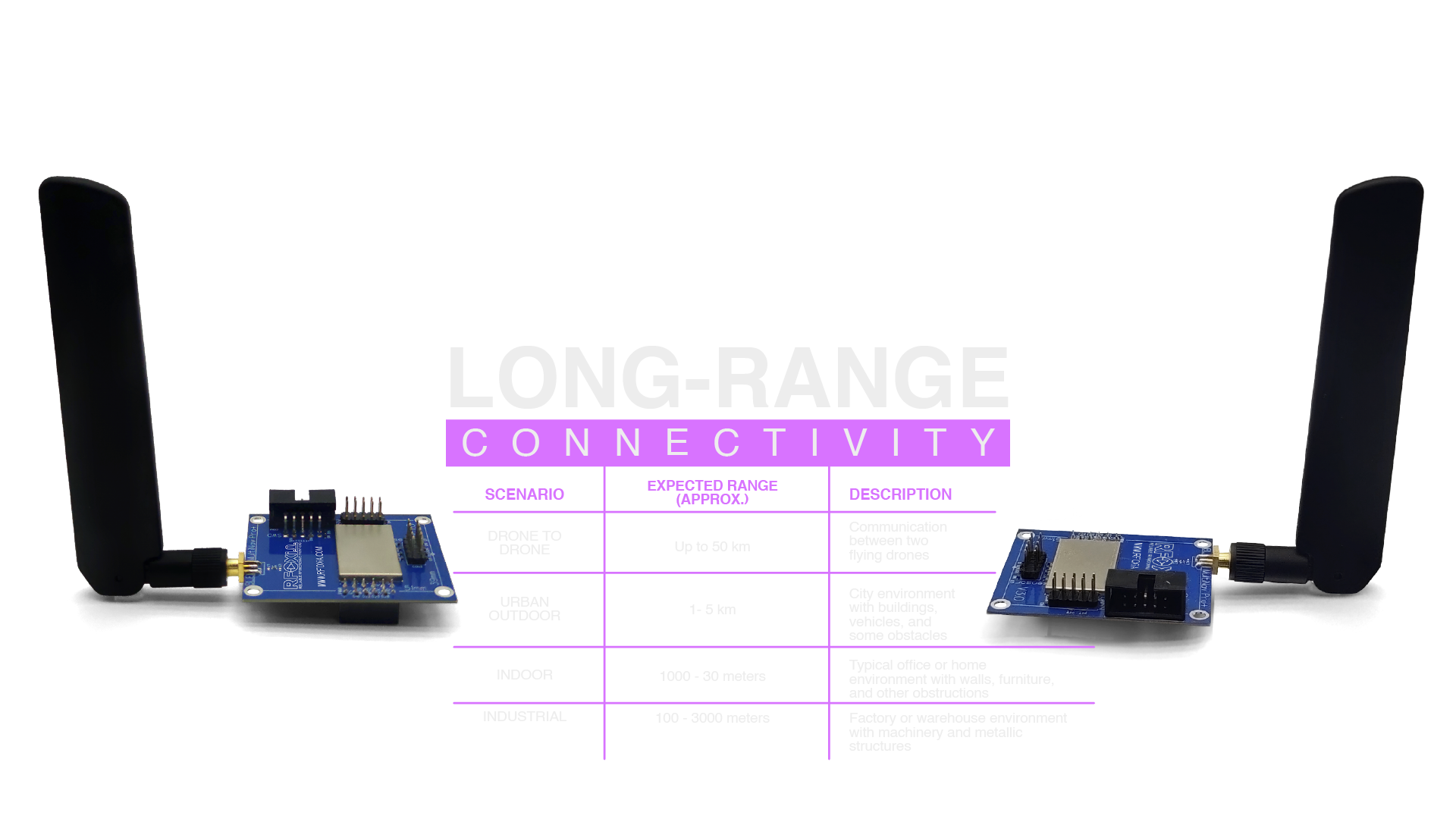
The MultiNav Pro+ achieves its performance through a combination of engineering decisions that compound on each other:
Optimized RF Front-End with External Amplifiers
The module incorporates an RF front-end that goes well beyond what is integrated in a standard BLE SoC. External power amplifiers boost the transmitted signal, while a low-noise amplifier (LNA) on the receive path pulls signals out of the noise floor that a standard receiver would completely miss. This combination dramatically extends both transmission distance and receive sensitivity.
Three Distinct Range Scenarios
The MultiNav Pro+ is FCC certified and delivers different range figures depending on deployment:
- Ground-to-ground (smartphone to smartphone): Over 5KM. This is the mode used for long-range mesh communication between users on the ground, disaster response coordination, or field team communication.
- Man-to-drone (smartphone to airborne module): 15 to 20KM. The module on the drone eliminates ground reflections and multipath interference, dramatically extending reliable telemetry range.
- Drone-to-drone (module to module, both airborne): Beyond 50KM. When both modules are elevated, ground reflections are eliminated entirely, and the line-of-sight path is clean. This is where the headline range figure comes from — and it is real.
2Mbps Data Rate
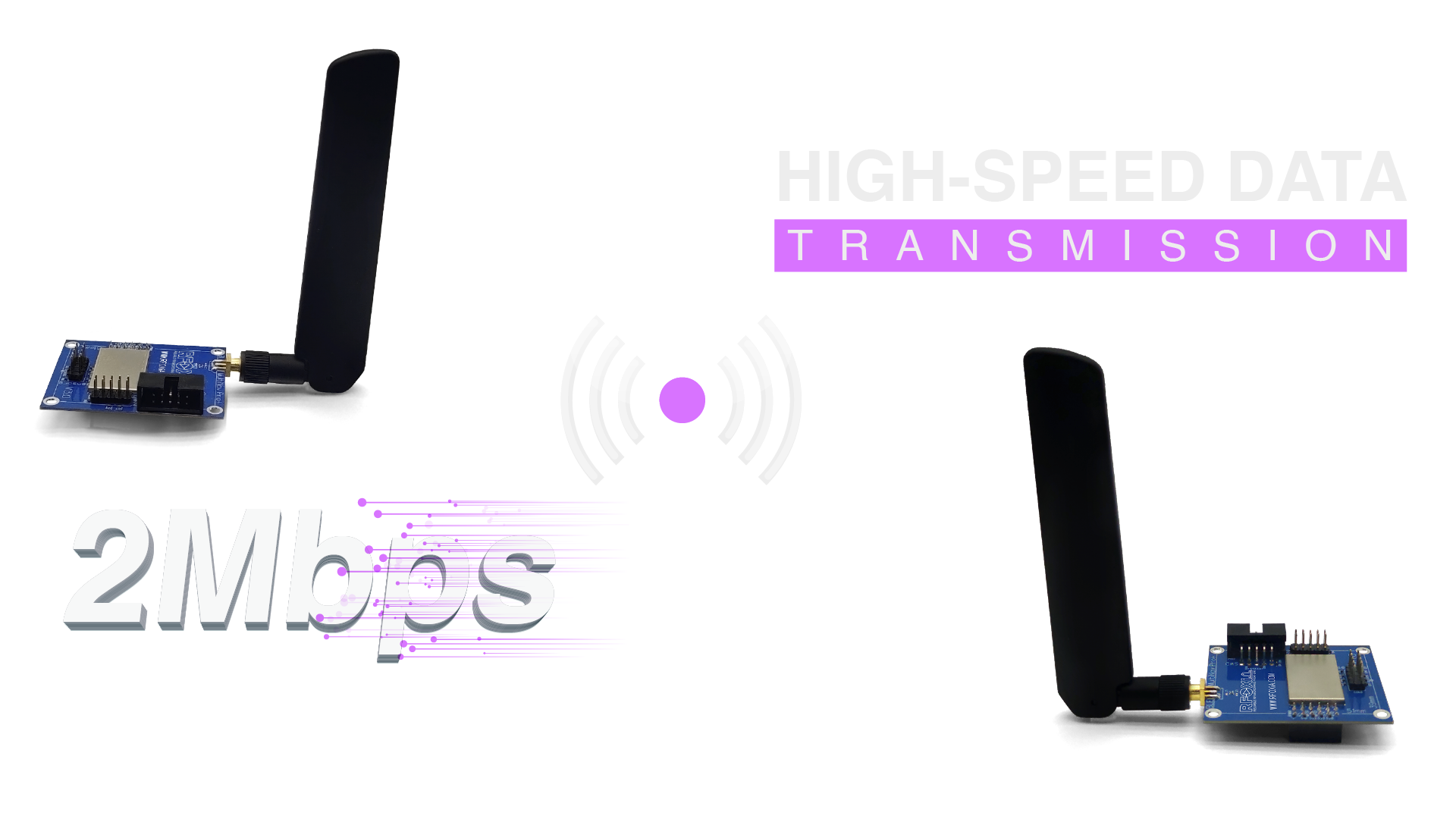
Range without bandwidth is useless for telemetry. The MultiNav Pro+ supports up to 2Mbps data rate, enabling real-time streaming of sensor data, GPS coordinates, control commands, and video metadata without the latency that would make a drone control link dangerous. Whether you are streaming IMU data, waypoint commands, or full telemetry packets, the link stays fast and reliable.
STM32WB07CCV6 Processing Core
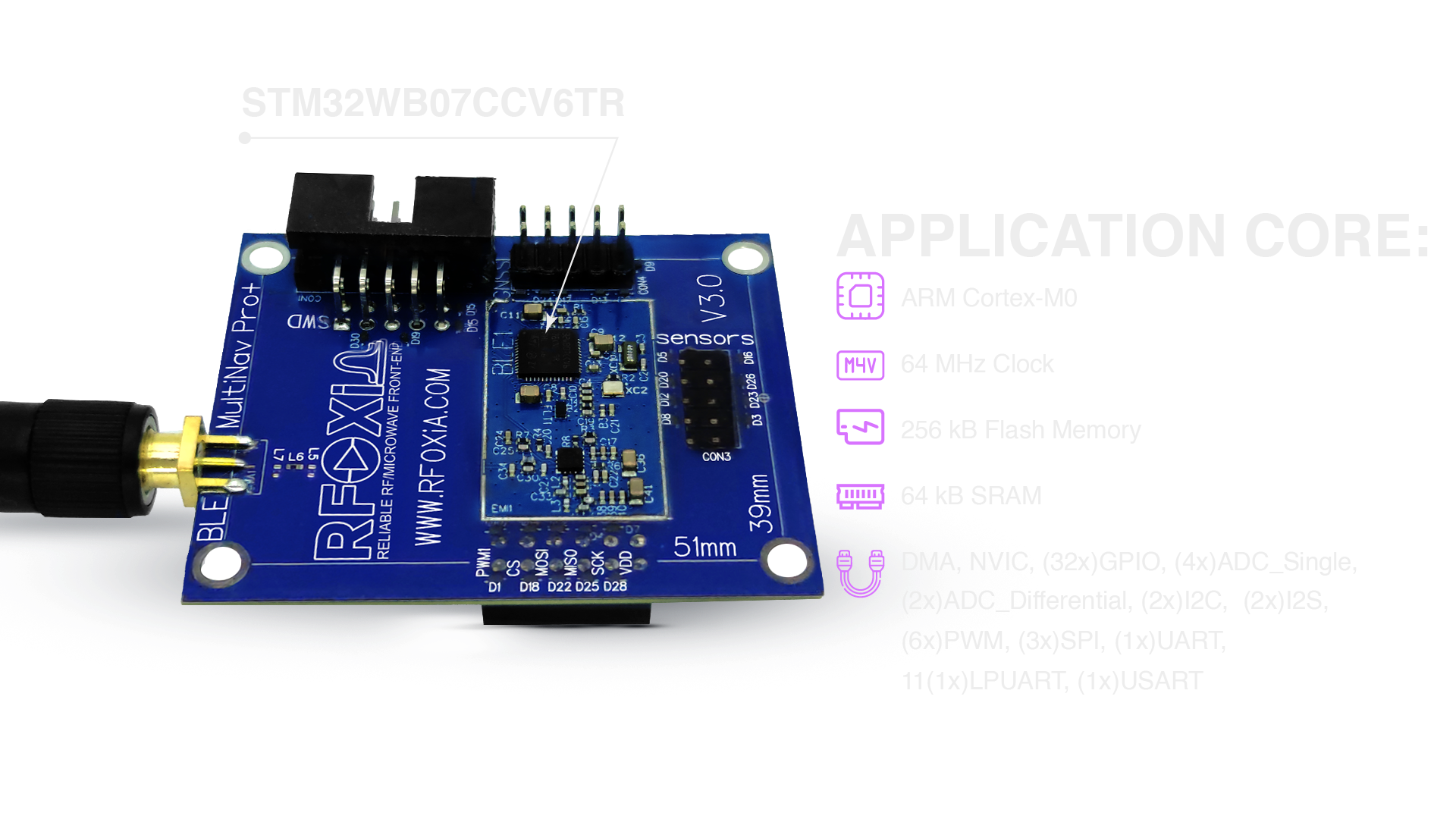
At the heart of the MultiNav Pro+ is the STM32WB07CCV6, a dual-core processor that separates the BLE stack management from your user application code. This architecture means the radio stack runs reliably and deterministically while your application logic executes independently — critical for real-time control applications where timing matters. The processor provides the horsepower to handle complex protocol processing, data formatting, and application logic simultaneously without compromising radio performance.
Physical Design: Compact Enough for Any Platform
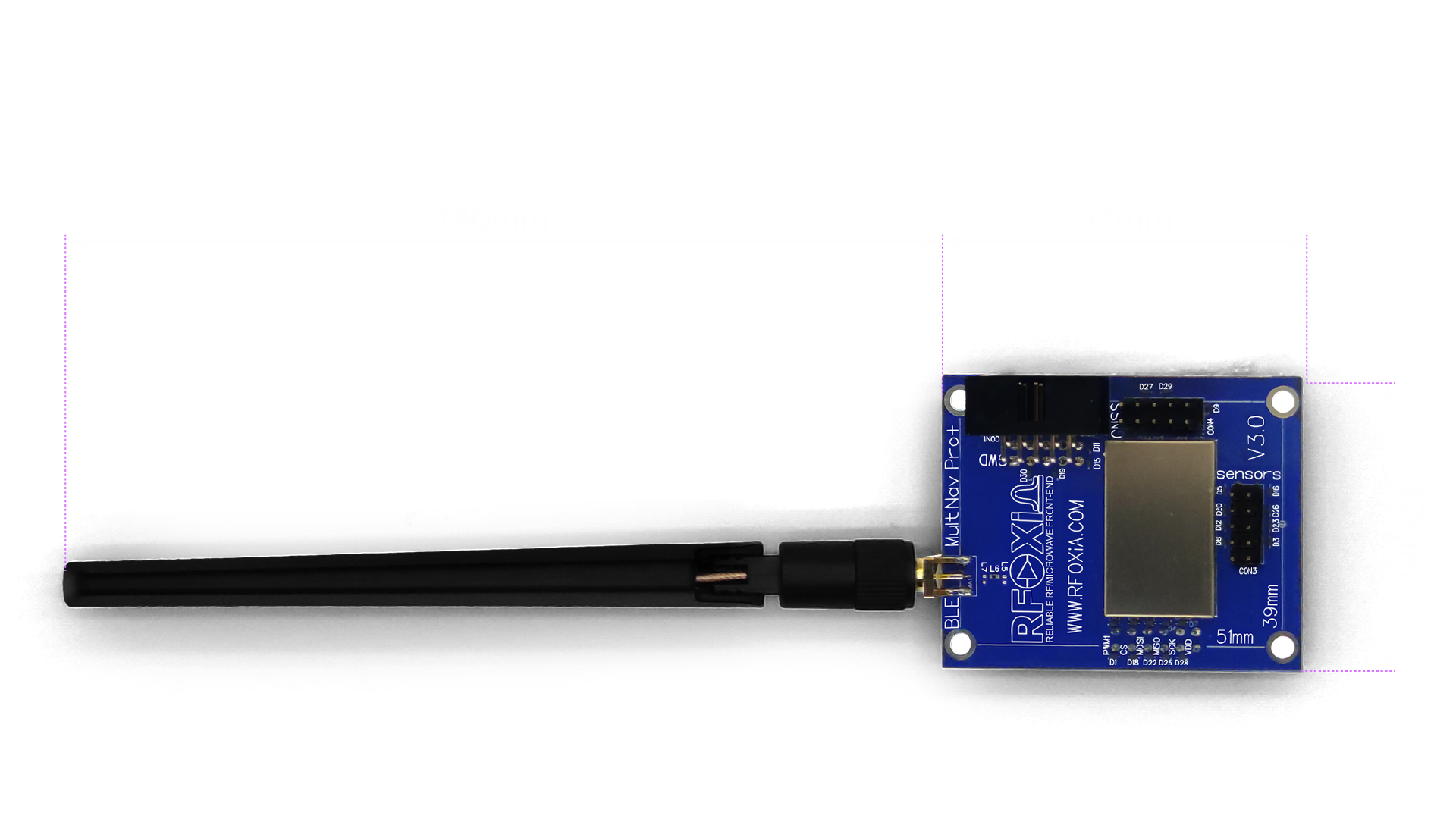
The MultiNav Pro+ measures 57mm x 47mm with a fixing frame of 54mm x 34mm featuring corner mounting holes for secure installation. The integrated high-gain chip antenna (140mm in length) provides exceptional signal performance without requiring an external antenna connector or additional components.
For drone builders, this size profile integrates cleanly into most frame designs. For robotics applications, the mounting holes allow direct chassis attachment. For field deployment in enclosures or custom hardware, the compact footprint leaves room for the rest of your system.
Weight and space are always at a premium on aerial platforms. The MultiNav Pro+ does not waste either.
Ecosystem Integration: More Than a Standalone Module
Most BLE modules are just that — a module. You receive a chip on a breakout board, and the integration work is entirely on you. Pinouts to figure out, libraries to find, protocols to design. The MultiNav Pro+ takes a fundamentally different approach.
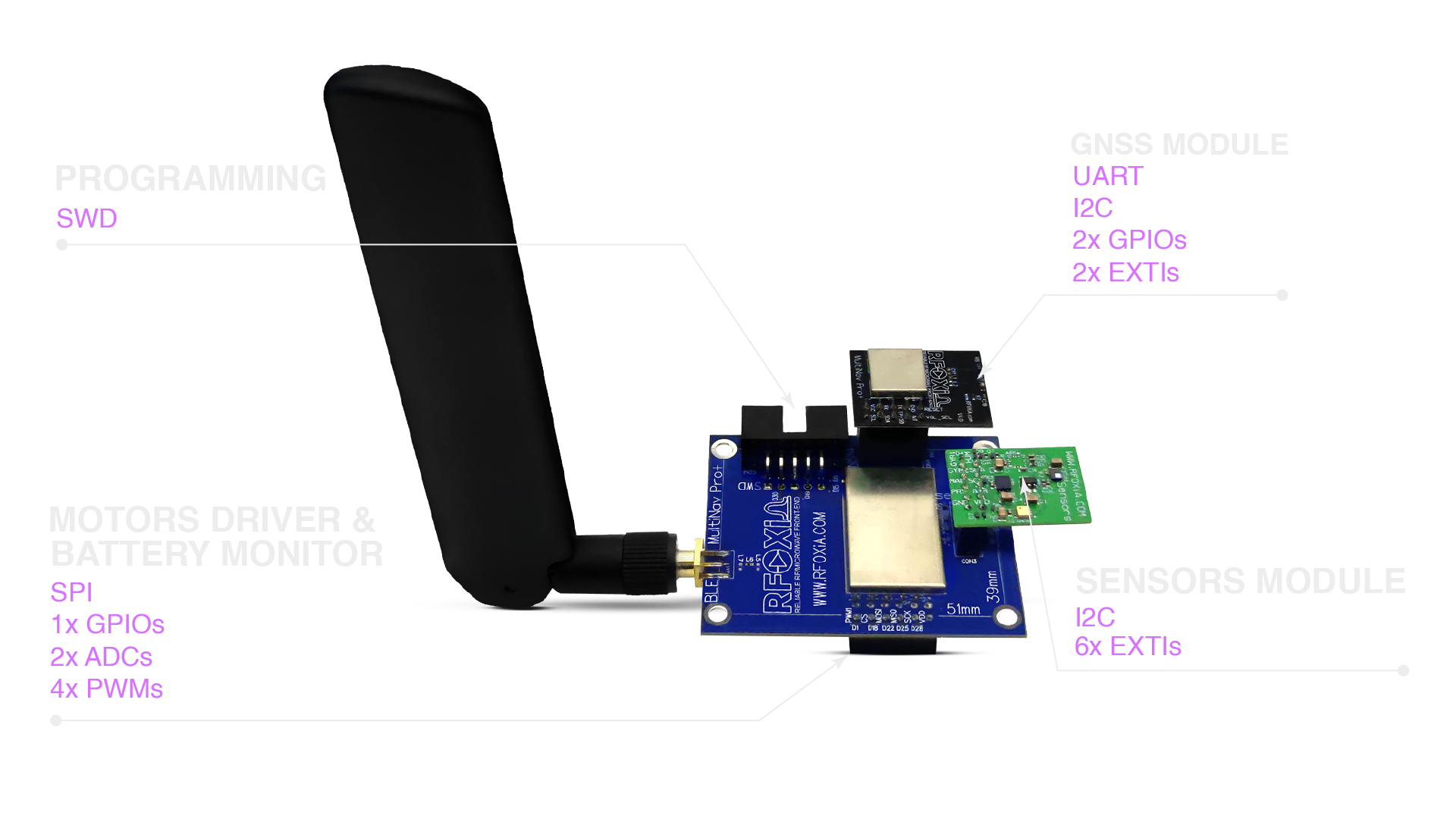
It is designed as the communications core of a complete hardware ecosystem. The four on-board interfaces — GNSS, Sensors, Motors and Battery Management, and Programming — connect directly to the other MultiNav Pro+ modules:
- GNSS Module: 1.5 meter accuracy, 18Hz fix rate — connect and stream real-time location data through the BLE link without any additional wiring complexity
- Sensors Module: Temperature, humidity, air pressure, air quality, accelerometer, gyroscope, magnetometer — seven sensors feeding into one unified data stream
- Power/Program Kit: Supercapacitor-based power management with 5-minute charge and 24-hour runtime — keeps your system running in the field
When deployed together as the Developer Bundle, these modules create a complete autonomous sensing and communication platform that would require significant custom engineering to replicate from commodity components. The MultiNav Pro+ BLE Module is the center of that ecosystem — the link between your drone or robot and the outside world.
Explore the full ecosystem at RFOXiA Long Range Bluetooth Module.
RFOXiA Connect App: Complete Control from Your Smartphone
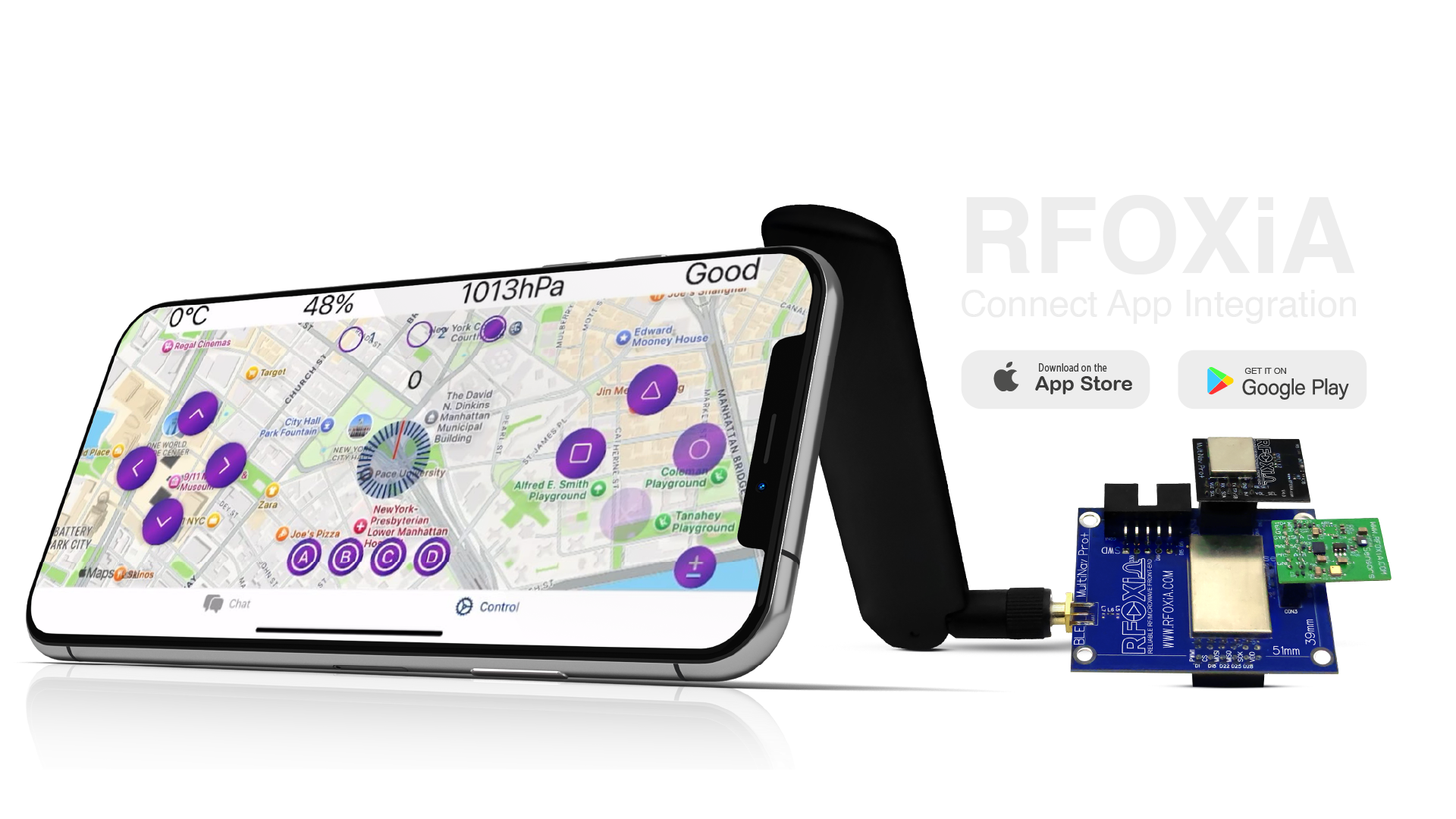
Hardware without software is incomplete. The RFOXiA Connect app (available on Android, iOS pending App Store approval) provides a purpose-built control interface that pairs directly with the MultiNav Pro+ BLE Module:
- PS5-style controller interface for intuitive drone and robot control
- Live map view with real-time GPS tracking from the connected GNSS module
- Sensor data display showing all environmental readings in real time
- Automation center for defining behaviors and waypoints
- Completely offline operation — no internet connection required, no cloud dependency, no latency from server round-trips
The app communicates through the BLE link at up to 20KM man-to-drone range. Everything you need to control, monitor, and automate your platform exists within the BLE data link — no cellular connection, no Wi-Fi hotspot, no external infrastructure of any kind.
For field operations, remote deployments, and situations where internet connectivity is unavailable or undesirable, this architecture is not just convenient — it is the only viable approach.
BLE Chat: Internet-Independent Communication
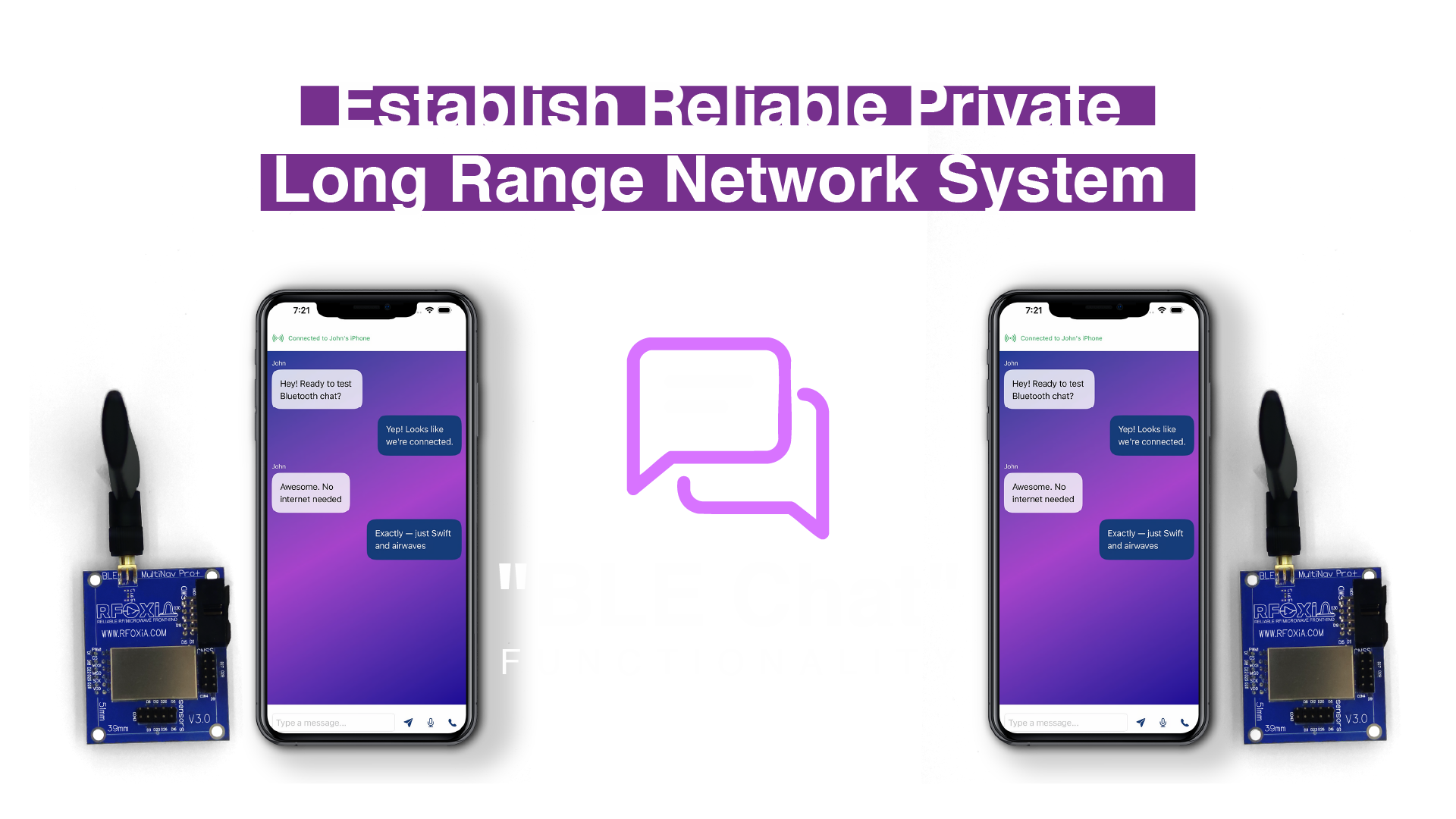
Beyond drone telemetry, the MultiNav Pro+ enables a capability that most wireless modules cannot approach: long-range, infrastructure-free communication between users.
BLE Chat uses the module's link to establish direct communication — text, data, and voice — between MultiNav Pro+ users without any internet connection, cellular towers, or external infrastructure. At ground level, two users can communicate over 5KM. With elevated modules, that range extends dramatically.
Applications include:
- Disaster response — when infrastructure is down, BLE Chat provides a reliable communication layer for first responders and field teams
- Remote expeditions — backcountry researchers, survey teams, and explorers operating beyond cellular coverage
- FPV race coordination — marshals, safety officers, and pilots coordinating at large events
- Construction and industrial sites — team communication in RF-challenging environments without relying on cellular infrastructure
This capability comes standard with every MultiNav Pro+ BLE Module — no additional hardware, no subscription, no ongoing cost.
Open Source and Fully Programmable
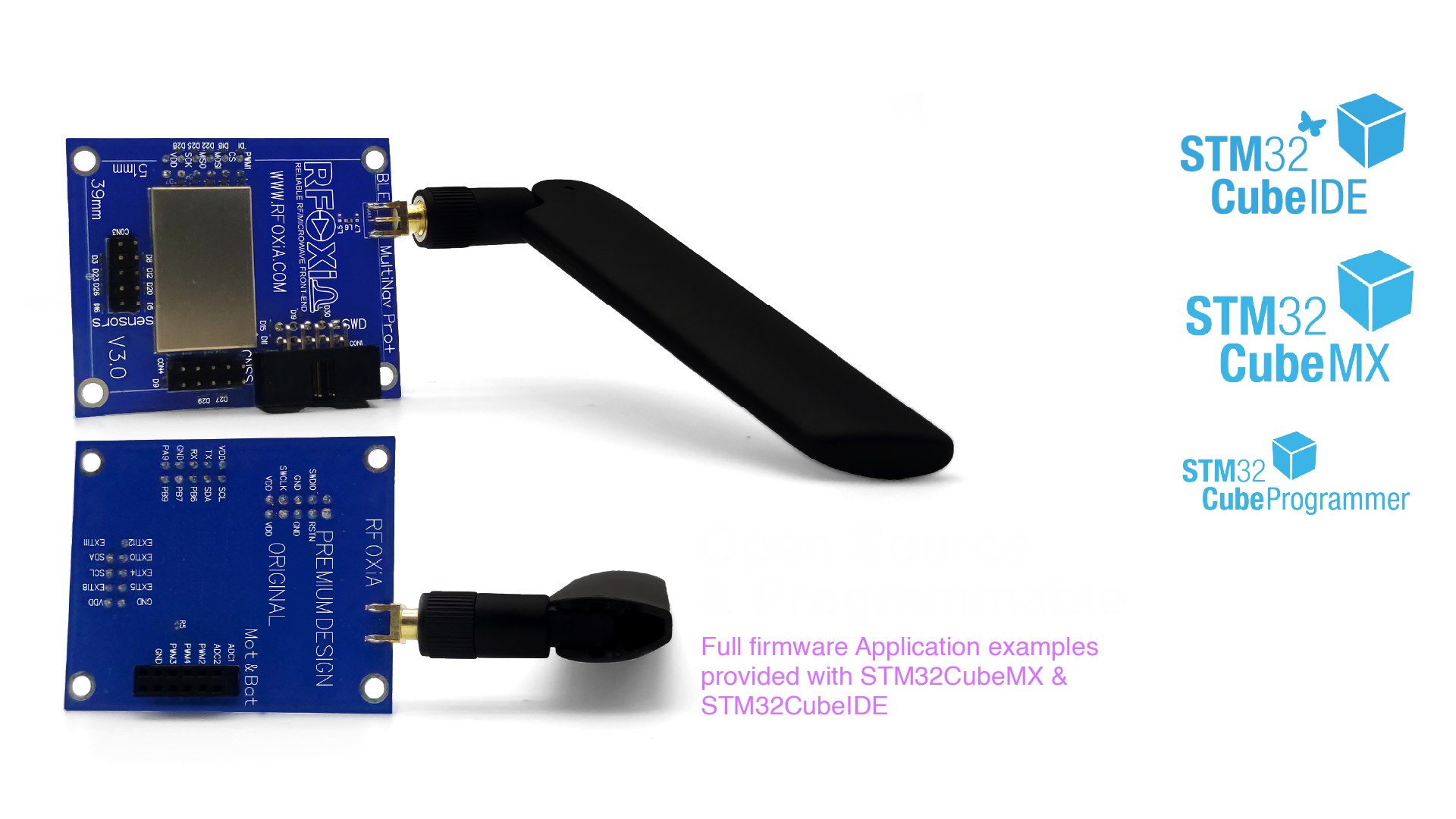
The MultiNav Pro+ is completely open source. The full firmware repository is available on GitHub at https://github.com/RFOXiA/MultiNav-Pro-Long-Range-BLE-Module-Firmware-STM32WB07, giving you complete access to the codebase, protocol implementation, and hardware integration examples.
Programming is available via the SWD interface through the integrated programming connector — compatible with ST-Link programmers and the RFOXiA Power/Program Kit. You can modify, extend, or completely replace the default firmware to suit your exact application requirements.
For developers who prefer to start from a description rather than from scratch, RFOXiA Club includes an AI Firmware Builder: describe your application in plain language, and the AI generates production-ready firmware with full source code. Complex custom implementations that would previously take months of embedded development work can be prototyped in hours.
Integrated RTC: Precision Timing When It Matters
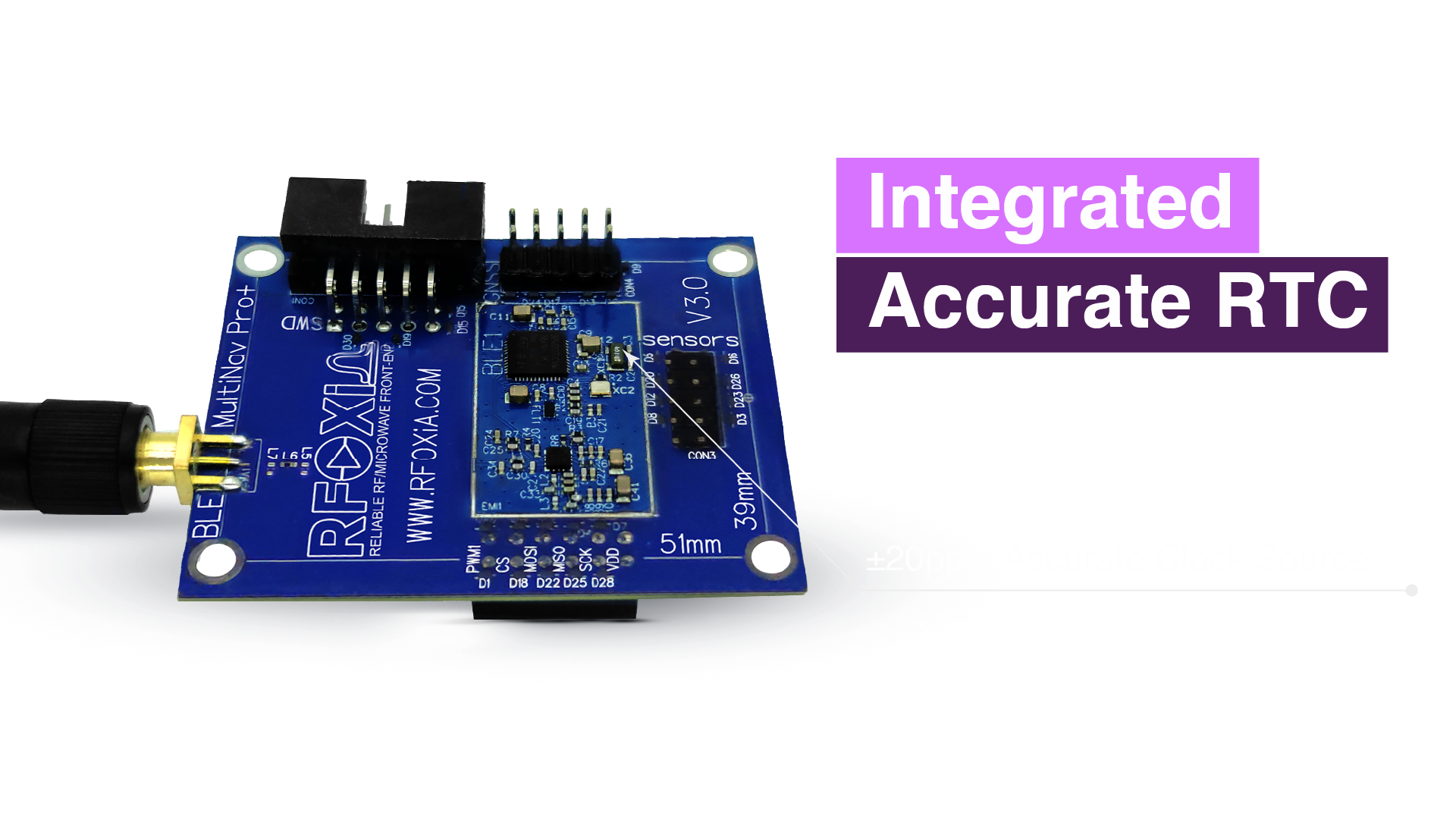
The MultiNav Pro+ includes an integrated RTC (Real-Time Clock) crystal that provides precise timing independent of the main processor clock. For drone telemetry applications, this matters more than it might initially seem.
Time-stamped telemetry data is essential for post-flight analysis, multi-vehicle coordination, and data logging. When you are correlating sensor readings with GPS position fixes and control inputs, microsecond-level timing accuracy is the difference between useful data and ambiguous noise. The integrated RTC ensures that every data point carries a trustworthy timestamp — synchronized across your deployment without requiring an internet time server.
FCC Certified and Ready to Deploy
The MultiNav Pro+ BLE Module carries FCC certification — not as a future roadmap item, but as a current product reality. FCC certification means:
- Legal for deployment in the United States without additional regulatory process
- Meets established RF emission standards for interference-free operation
- Accepted by major distributors and procurement processes that require regulatory compliance
- Credibility with enterprise and institutional buyers who require certified hardware
For drone builders and robotics engineers who need to deploy systems in regulated environments, FCC certification is not optional. The MultiNav Pro+ delivers it at $59 for two units.
Who Builds with the MultiNav Pro+?
The drone telemetry module Bluetooth capabilities of the MultiNav Pro+ serve a specific community of builders who have been underserved by the existing market:
Drone builders and FPV pilots who need reliable telemetry at distances beyond what standard modules support. Whether you are flying fixed-wing platforms on long-range missions or coordinating multi-drone operations, the MultiNav Pro+ provides the link margin to do it reliably.
Robotics engineers developing autonomous ground vehicles, underwater platforms, or remote-operated systems that need robust wireless communication beyond line-of-sight distances.
IoT developers deploying sensor networks in locations where cellular connectivity is unavailable or too expensive. A private long-range BLE network eliminates the ongoing cost of cellular data plans for remote monitoring applications.
Field researchers who need to maintain communication and data links across large field sites, agricultural operations, or environmental monitoring deployments without infrastructure investment.
Emergency response teams who cannot depend on existing infrastructure remaining operational and need robust communication alternatives.
Technical Specifications Summary
| Specification | Value |
|---|---|
| Ground-to-ground range | 5KM+ (module paired with smartphone) |
| Man-to-drone range | 15-20KM |
| Drone-to-drone range | 50KM+ |
| Data rate | 2Mbps |
| Processing core | STM32WB07CCV6 |
| Module dimensions | 57mm x 47mm |
| Fixing frame | 54mm x 34mm |
| Antenna | Integrated high-gain chip antenna, 140mm |
| Programming interface | SWD |
| Certification | FCC |
| Price | $59 (2 units) |
| Firmware | Open source on GitHub |
| App compatibility | iOS and Android (RFOXiA Connect) |
The Competitive Reality
There is no direct competitor for the MultiNav Pro+ at this price point. The market offers two alternatives:
Commodity BLE modules — $5 to $15, 80 to 100 meter range, no ecosystem, no app, no data network, no FCC compliance pathway for custom integration. Sufficient for consumer electronics. Completely insufficient for drone telemetry at any meaningful range.
Military and industrial long-range communication systems — $5,000 to $50,000+, military-grade performance, completely inaccessible to independent developers, research teams, or small companies.
The MultiNav Pro+ occupies the space between these two categories that previously had nothing in it. Professional performance. Maker price. FCC certified. Open source. App included. Ecosystem ready.
If you have been working around the limitations of commodity Bluetooth for your drone or robotics project, the MultiNav Pro+ is the module you have been waiting for. Visit the RFOXiA Long Range Bluetooth Module page to order or learn more.
Getting Started
The MultiNav Pro+ ships as two units for $59 — everything you need to establish a private, long-range BLE link between two platforms. Current inventory is in stock and ships from the United States.
For developers ready to build a complete autonomous platform, the Developer Bundle combines the BLE Module with the GNSS Module, Sensors Module, and Power/Program Kit for $199 — the only kit on the market integrating long-range wireless, precision positioning, environmental sensing, and professional power management in a single ecosystem.
Join RFOXiA Club for free and receive $10 in welcome credit toward your first purchase. The Club also provides access to the AI Firmware Builder, complete documentation, firmware examples, the developer community, and the data monetization network where your deployed sensors can earn daily rewards.
The drone telemetry module Bluetooth market has a new benchmark. The MultiNav Pro+ sets it.
Get the MultiNav Pro+ BLE Module and start building at the range you actually need.
Written by: Moamen Mohamed LinkedIn