
FPV Signal Dropout Long Range: Why It Happens and How to Eliminate It for Good
RFOXiA Long Range Bluetooth Module
FPV Signal Dropout Long Range Is the Silent Mission Killer Every Pilot Knows
You are 2 kilometers out, the footage is perfect, the flight is smooth — and then it happens. The feed freezes. The controller stutters. Your stomach drops before the drone does.
FPV signal dropout on long range flights is one of the most frustrating and dangerous problems in the drone building community. It is not just an inconvenience. It is a mission-ending, hardware-risking failure point that most pilots accept as inevitable. Most pilots are wrong.
This post breaks down exactly why FPV signal dropout on long range applications happens, what the hardware community has been doing wrong for years, and how a new generation of purpose-built long-range BLE modules is changing the equation entirely — delivering verified 50KM link distances at a price point that was unthinkable two years ago.
Why FPV Signal Dropout Happens: The Physics Nobody Explains Clearly
Before you can fix the problem, you need to understand it at the hardware level. FPV signal dropout on long range flights is almost never caused by one thing. It is a cascade of interacting failure points.
1. Receiver Sensitivity Limits
Every wireless module has a minimum received signal level below which it cannot decode data. This is expressed in dBm — a logarithmic unit. A module with -90 dBm sensitivity will lose link before a module with -100 dBm sensitivity, even using identical antennas and transmit power. Most commodity BLE modules on the market have receiver sensitivity in the -85 to -93 dBm range. That sounds reasonable until you calculate how quickly signal power drops over distance.
Free-space path loss at 2.4 GHz over 1 kilometer is approximately 100 dB. At 2 kilometers, it is 106 dB. At 5 kilometers, it is 114 dB. Standard commodity modules simply run out of sensitivity headroom long before you reach the ranges that serious FPV and autonomous drone applications demand.
2. Ground Reflections and Multipath Interference
When both the transmitter and receiver are close to the ground, the signal travels two paths simultaneously: the direct line-of-sight path and the reflected path off the ground surface. These two signals arrive at the receiver slightly out of phase and partially cancel each other. This multipath fading can cause signal drops of 20-30 dB at specific distances — turning a usable link into a dead one with no warning. This is a primary reason why ground-to-ground links experience much shorter effective range than elevated-to-ground or elevated-to-elevated configurations.
3. RF Front-End Design Quality
The RF front-end — the amplifier, filter, and antenna matching network between the chip and the antenna — determines how efficiently your module converts electrical signal into radiated power and vice versa. A poorly designed front-end wastes transmit power, misses weak incoming signals, and is vulnerable to interference from other 2.4 GHz sources. Most modules optimized for cost rather than performance cut corners here. The result is nominal range specs on paper that fall apart in real-world conditions.
4. Interference Density
The 2.4 GHz band is shared with Wi-Fi, microwave ovens, Bluetooth headphones, baby monitors, industrial equipment, and dozens of other drone systems at any busy flying site. Standard BLE modules have limited interference rejection capability. In dense RF environments, FPV signal dropout on long range links becomes more frequent, more unpredictable, and more dangerous.
5. Protocol Overhead and Latency
Some long-range solutions solve the sensitivity problem by compressing the data stream, reducing bandwidth, or introducing packet aggregation strategies that increase latency. For FPV drone control, latency matters enormously. A 200ms round-trip delay is the difference between a smooth correction and a crash on a fast-moving platform.
The Market Gap Nobody Filled (Until Now)
For years, the drone and FPV community has lived in a frustrating hardware gap. On one side: commodity BLE modules at $5-15, with real-world range caps of 80-100 meters. On the other side: military and industrial long-range RF systems starting at $5,000 and designed for use cases that have nothing to do with a builder in a field trying to push a drone to the horizon.
There was no middle ground. Builders either accepted the range limitations of cheap hardware, hacked together solutions with mismatched components, or spent money they did not have on systems they did not fully need.
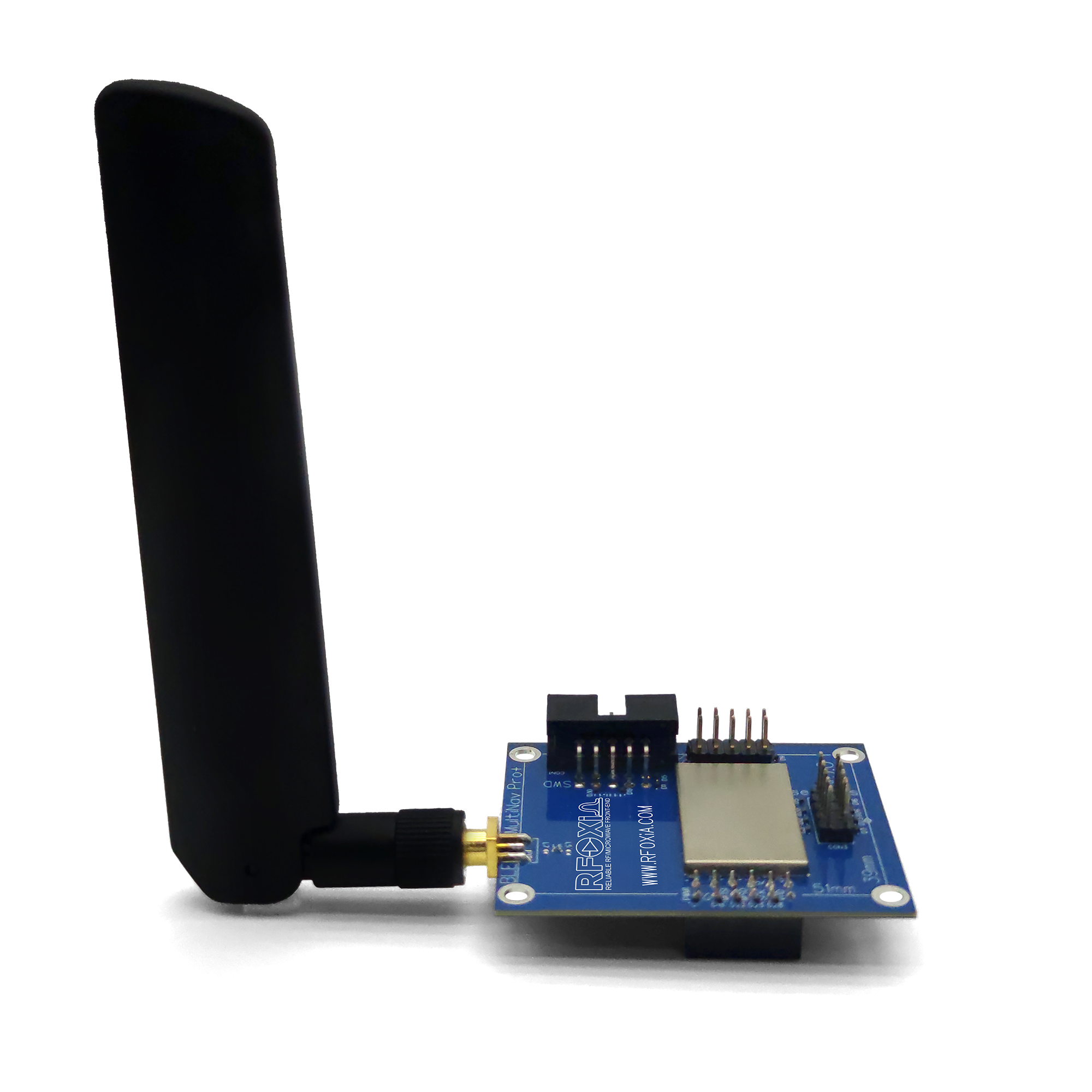
The MultiNav Pro+ BLE module from RFOXiA was built specifically to close that gap.
What Makes the MultiNav Pro+ Different: A Hardware-Level Breakdown
The MultiNav Pro+ BLE module is not a rebranded commodity chip with a marketing story layered on top. It is a purpose-engineered RF system built around the STM32WB07CCV6 processor with an optimized RF front-end, external amplifiers, and advanced receiver sensitivity tuning that pushes real-world performance to ranges that would have required $5,000+ hardware three years ago.
Here is what that means in practical terms:
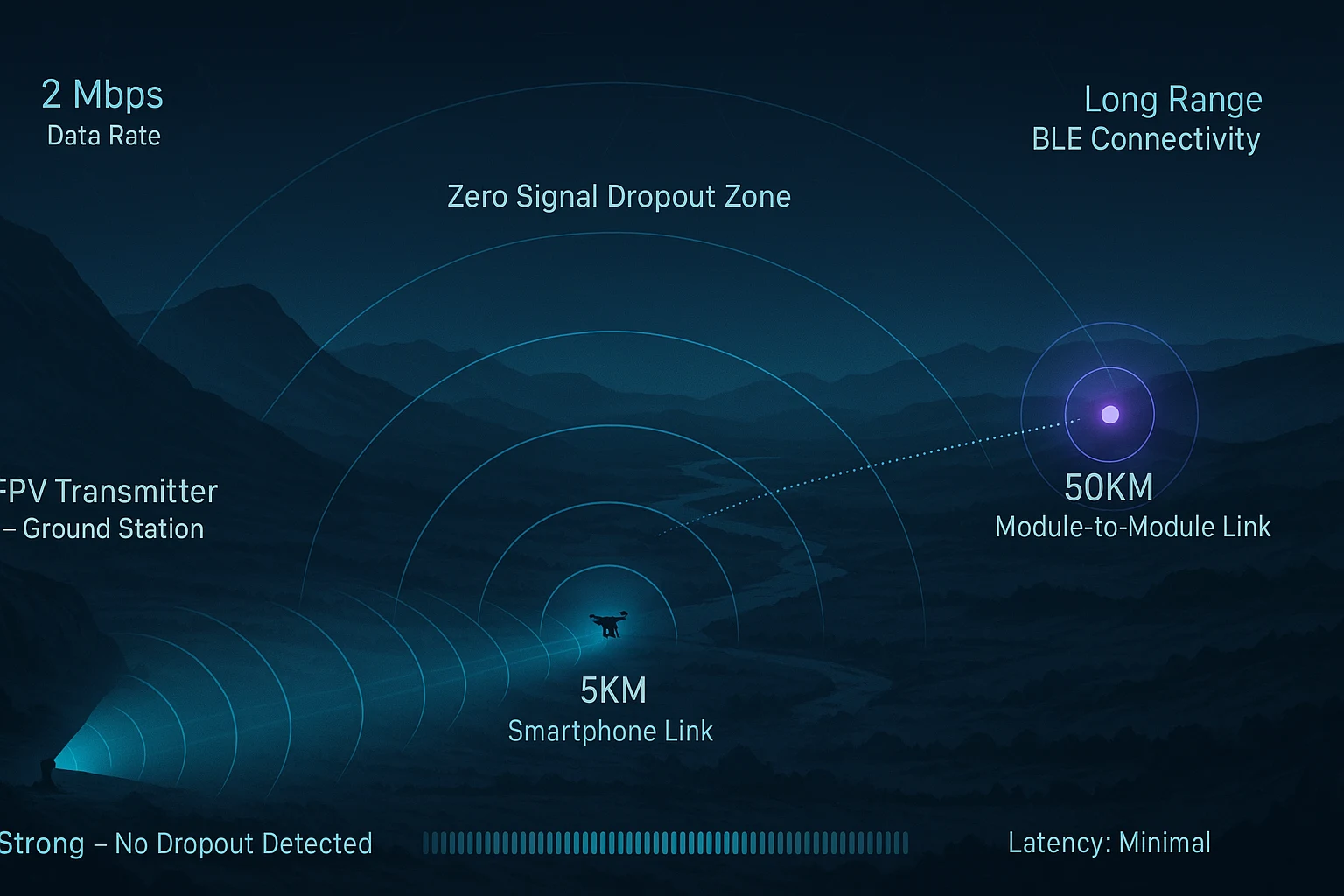
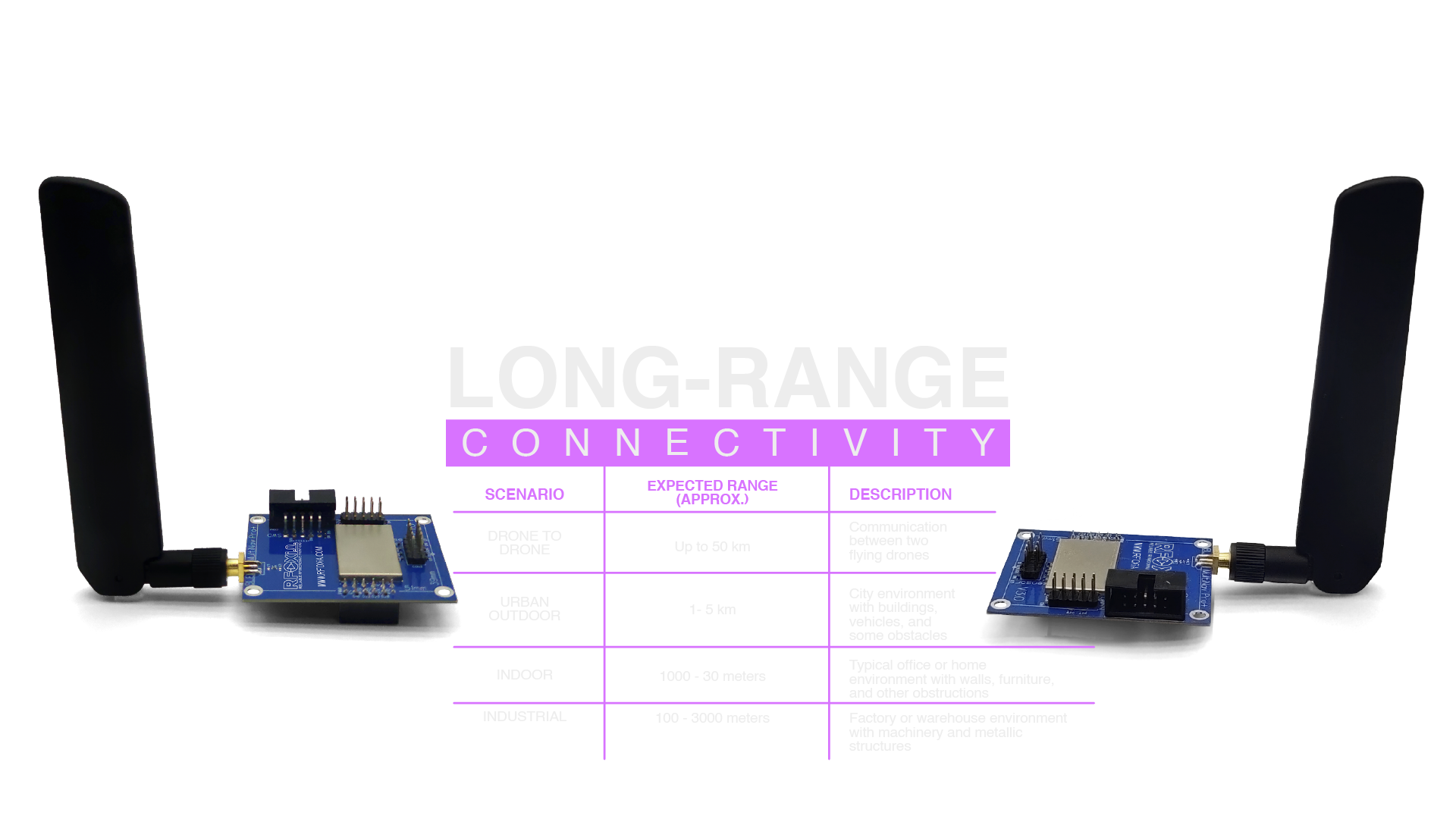
Ground-to-ground range: 5KM. When you pair a MultiNav Pro+ with your phone and the second unit is paired with another user's phone, both on the ground, the verified link distance is 5 kilometers. This alone puts every commodity BLE module to shame.
Man-to-drone range: 15-20KM. When the drone-mounted module gains altitude and eliminates ground reflection interference, the effective range extends to 15-20 kilometers. This is the configuration most FPV long-range pilots care about most.
Drone-to-drone range: 50KM. When both modules are airborne and ground reflections are eliminated entirely, verified link distance reaches 50 kilometers. This opens up relay networking, swarm communication, and infrastructure-free mesh coverage that was simply impossible with any accessible hardware before.
Data rate: 2 Mbps. Range means nothing if you sacrifice speed. The MultiNav Pro+ maintains 2 Mbps throughput across its link, ensuring that drone control commands, telemetry data, and sensor streams arrive with minimal latency.
FCC certified. Every module ships with full FCC certification. This is not a prototype. It is production hardware that you can legally operate in the United States and export through standard commercial channels.
Price: $59 for two units. Two FCC-certified long-range BLE modules capable of 50KM links for $59. That is the market disruption in one number.
The Processing Core Behind the Performance
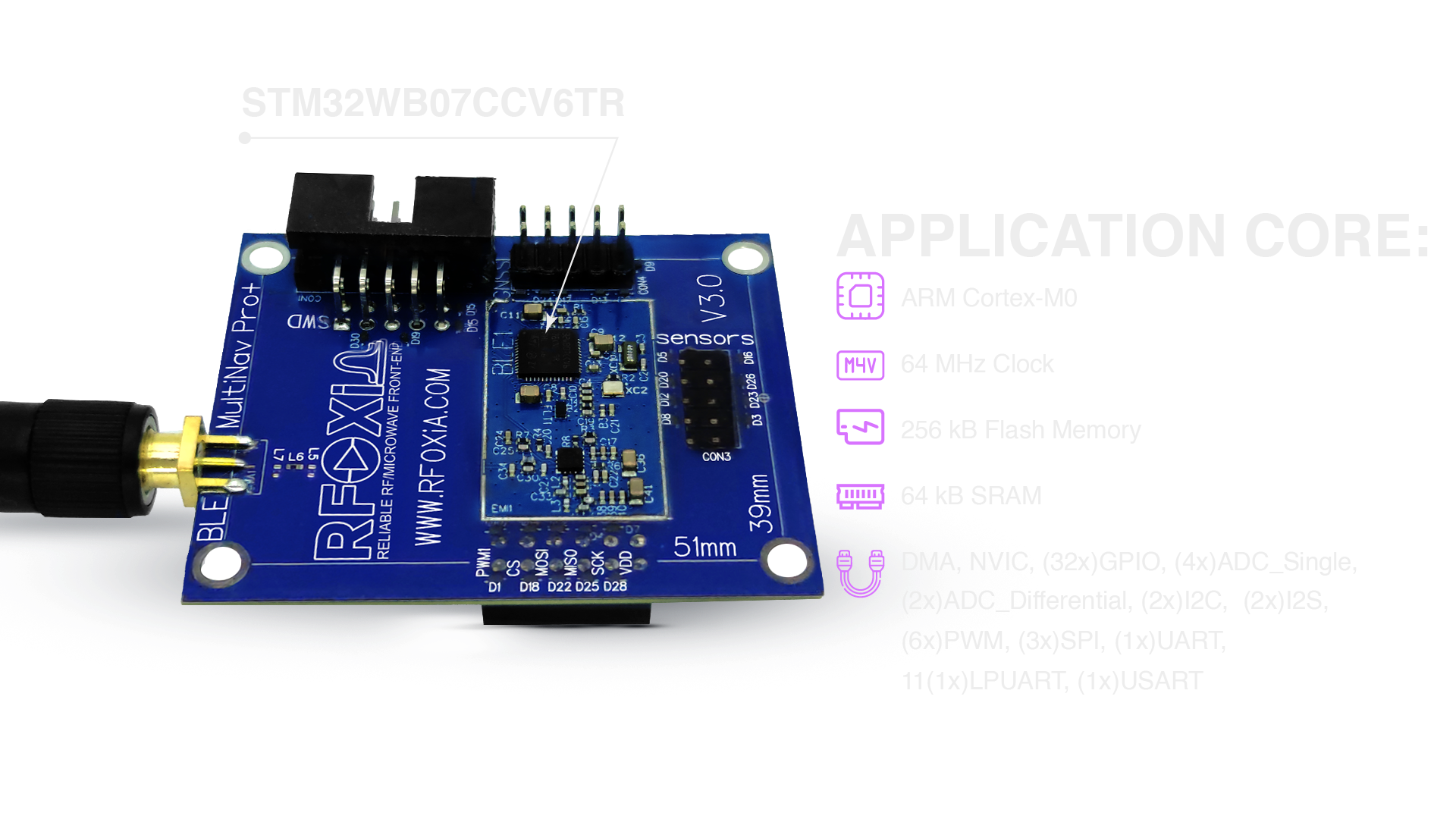
At the heart of the MultiNav Pro+ is the STM32WB07CCV6 — a dual-core wireless microcontroller from STMicroelectronics that manages both the BLE stack and user application code simultaneously. This architecture means the wireless protocol layer never competes with your application logic for processing cycles. The result is consistent, predictable performance even under heavy data loads — exactly what you need when you are depending on the link to maintain control of a $1,500 drone at 15 kilometers.
High-Speed Data: 2 Mbps Without Compromise
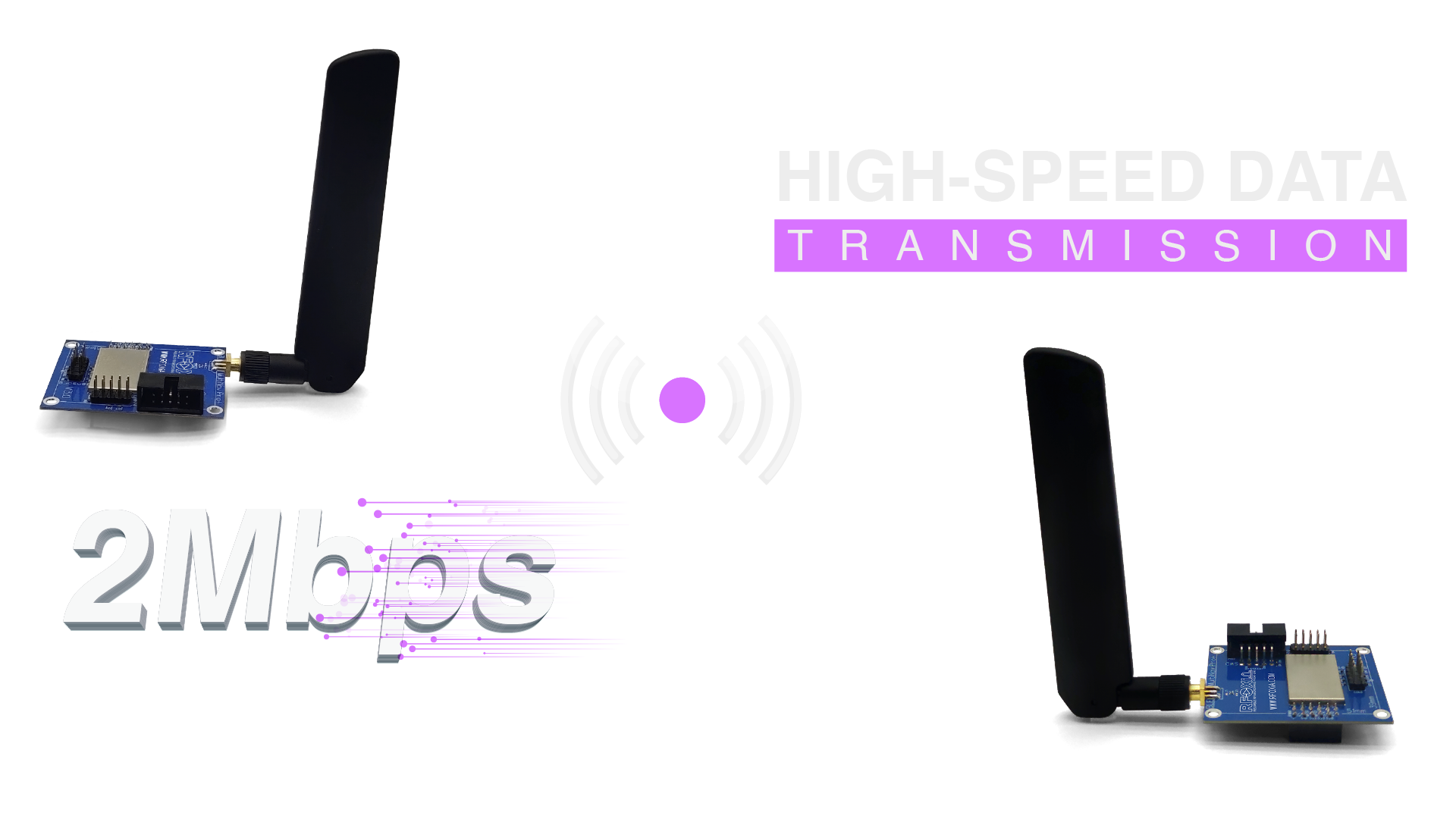
One of the common tradeoffs in long-range radio design is sacrificing data rate for range. Spread more energy over more time, and you can decode weaker signals — but your throughput drops to kilobits per second. The MultiNav Pro+ does not make that tradeoff. The 2 Mbps data rate is maintained across the link, which means:
- Real-time sensor telemetry without buffering
- Responsive control commands with sub-100ms round trips
- Multi-channel data streaming (position, attitude, environment) simultaneously
- Future compatibility with higher-bandwidth applications like compressed video telemetry
For drone builders integrating the MultiNav Pro+ into an autonomous system, this throughput headroom is not a luxury. It is the architecture that makes the whole platform work.
Eliminating FPV Signal Dropout: The Ecosystem Advantage
Solving FPV signal dropout on long range missions is not just about putting a better radio in your drone. It is about having a complete, integrated communication system that handles every layer of the problem.
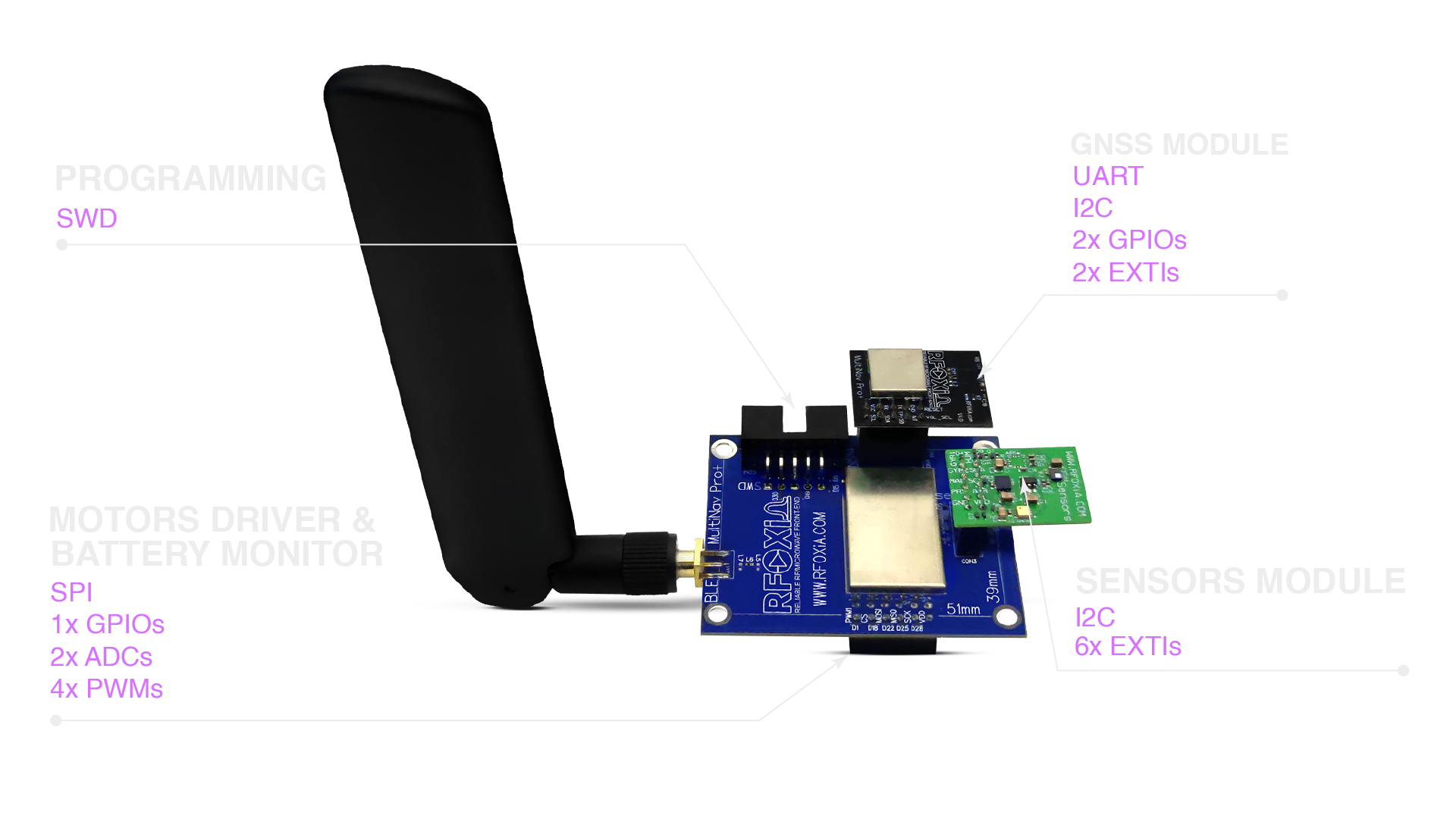
The MultiNav Pro+ BLE module is one component in the MultiNav Pro+ ecosystem. It is designed to connect directly with:
- MultiNav Pro+ GNSS Module — 1.5-meter accuracy, 18Hz fix rate, for real-time position tracking even at 15-20KM range
- MultiNav Pro+ Sensors Module — temperature, humidity, pressure, air quality, accelerometer, gyroscope, magnetometer — all seven sensors on one board
- Power/Program Kit — supercapacitor-based power system, 5-minute charge for 24-hour runtime, with integrated STLink programmer
This is not a collection of loosely compatible parts. These modules are designed to connect to each other through dedicated interfaces, creating a unified autonomous system platform that drone builders, robotics engineers, and field researchers can deploy in hours rather than weeks.
If you are serious about eliminating FPV signal dropout on long range flights, you need the full picture — not just a better radio chip.
Explore the RFOXiA Long Range Bluetooth Module and see how the complete ecosystem is built.
RFOXiA Connect: Your Mission Control at Any Range
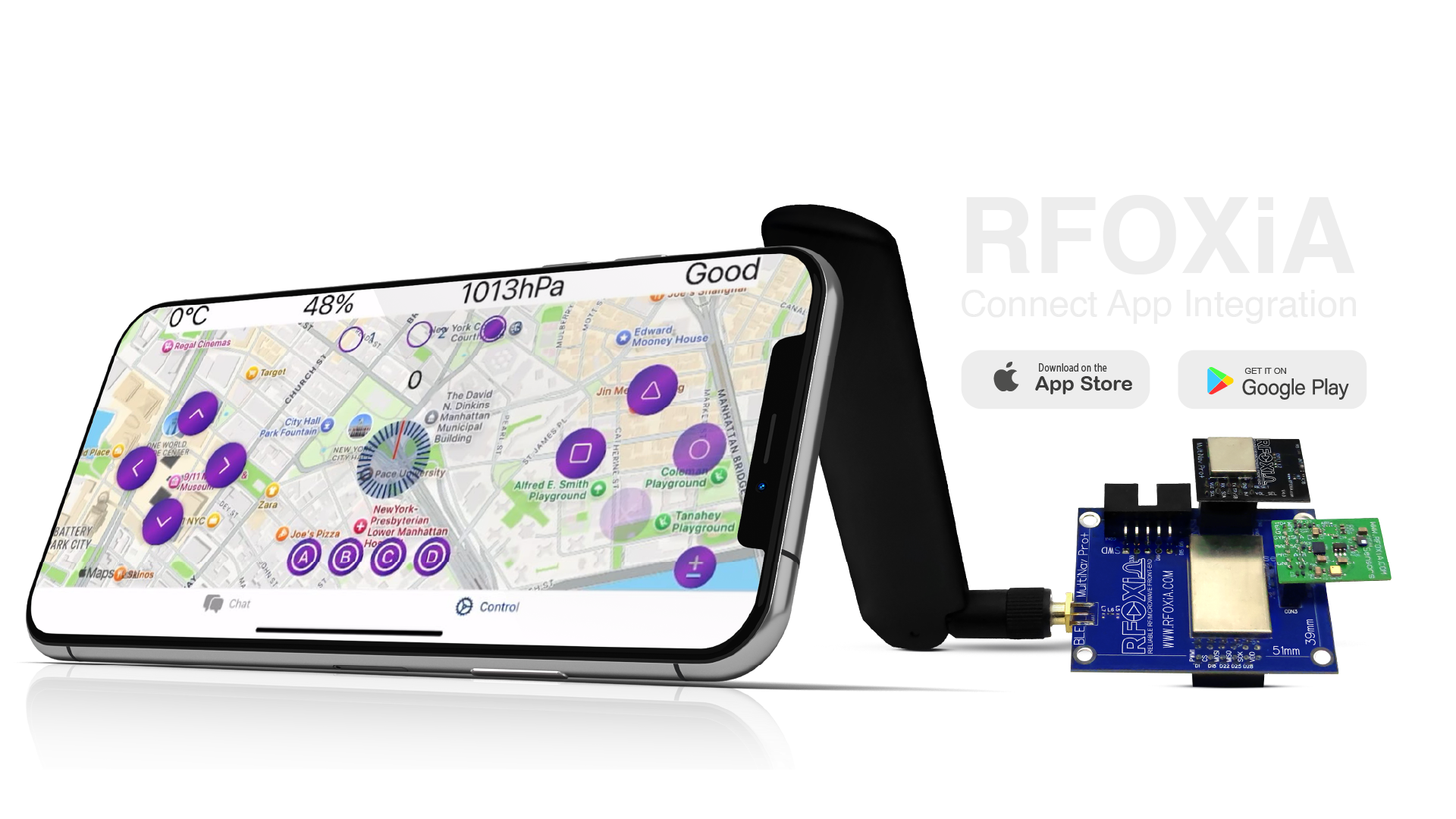
The MultiNav Pro+ BLE module pairs with the RFOXiA Connect app on iOS and Android. The app is not a minimal pairing utility — it is a full mission control interface built for serious operators:
- PS5-style controller interface for drone and robot control
- Live map with real-time GPS tracking sourced from the paired GNSS module
- Live sensor data display for all seven sensors
- Automation center for scripting and pre-programmed behavior
- No internet connection required — the entire system operates on the BLE link alone
At 20KM man-to-drone range, your phone becomes a professional ground station. At a $59 hardware cost.
BLE Chat: Communication When Infrastructure Fails
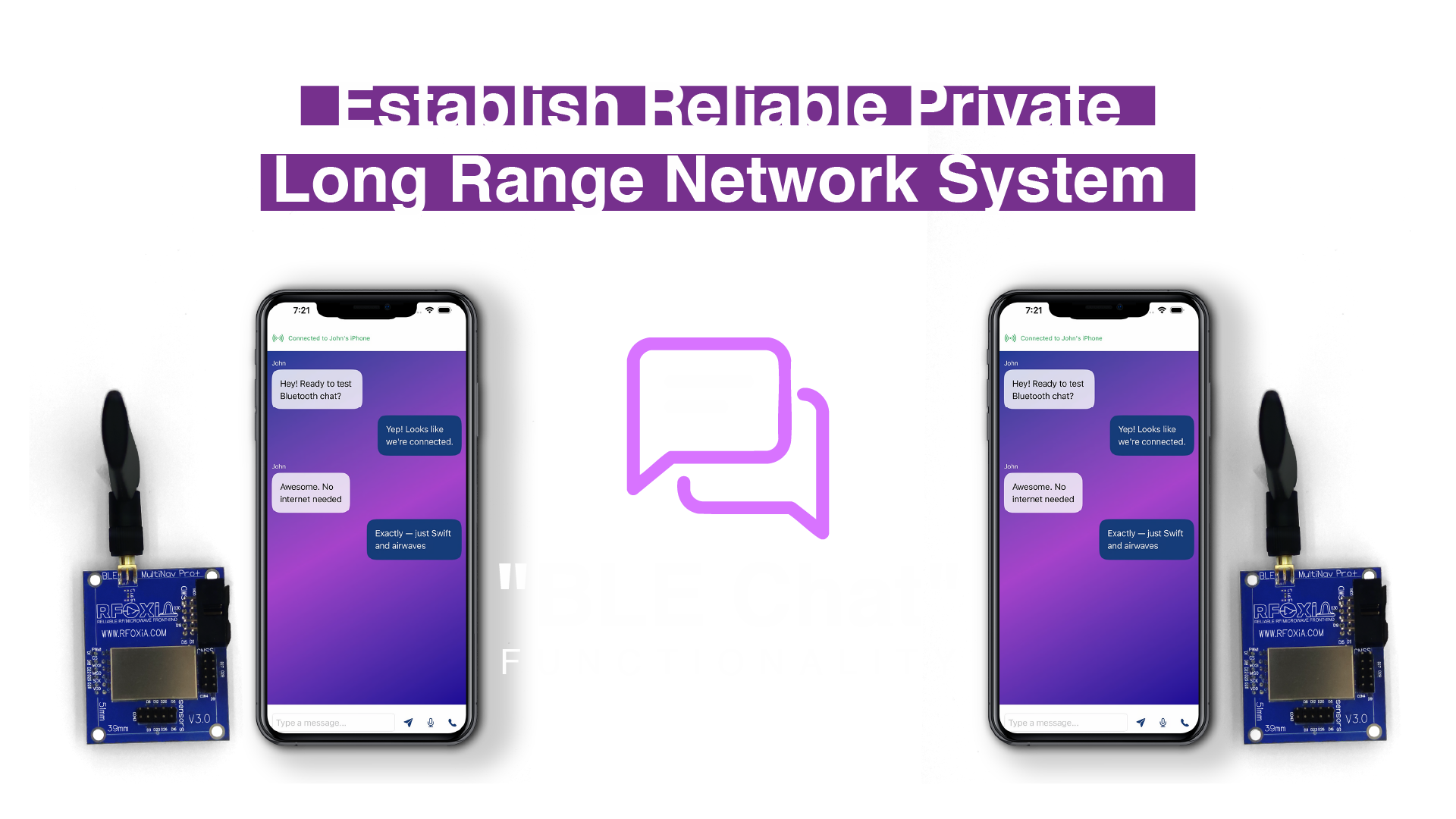
Beyond drone control, the MultiNav Pro+ BLE module enables something that most builders do not expect from a $59 radio: a complete internet-independent communication network between users.
The BLE Chat feature allows text, data, and voice communication between any two MultiNav Pro+ users within link range — no towers, no internet, no subscription. For field teams, disaster response operators, remote researchers, and multi-pilot operations, this turns the hardware into a communication infrastructure that does not depend on anything except physics.
This is especially relevant for long-range FPV operations where the pilot and a spotter may be separated by significant distance and cellular coverage is unreliable.
Compact Design, Maximum Integration
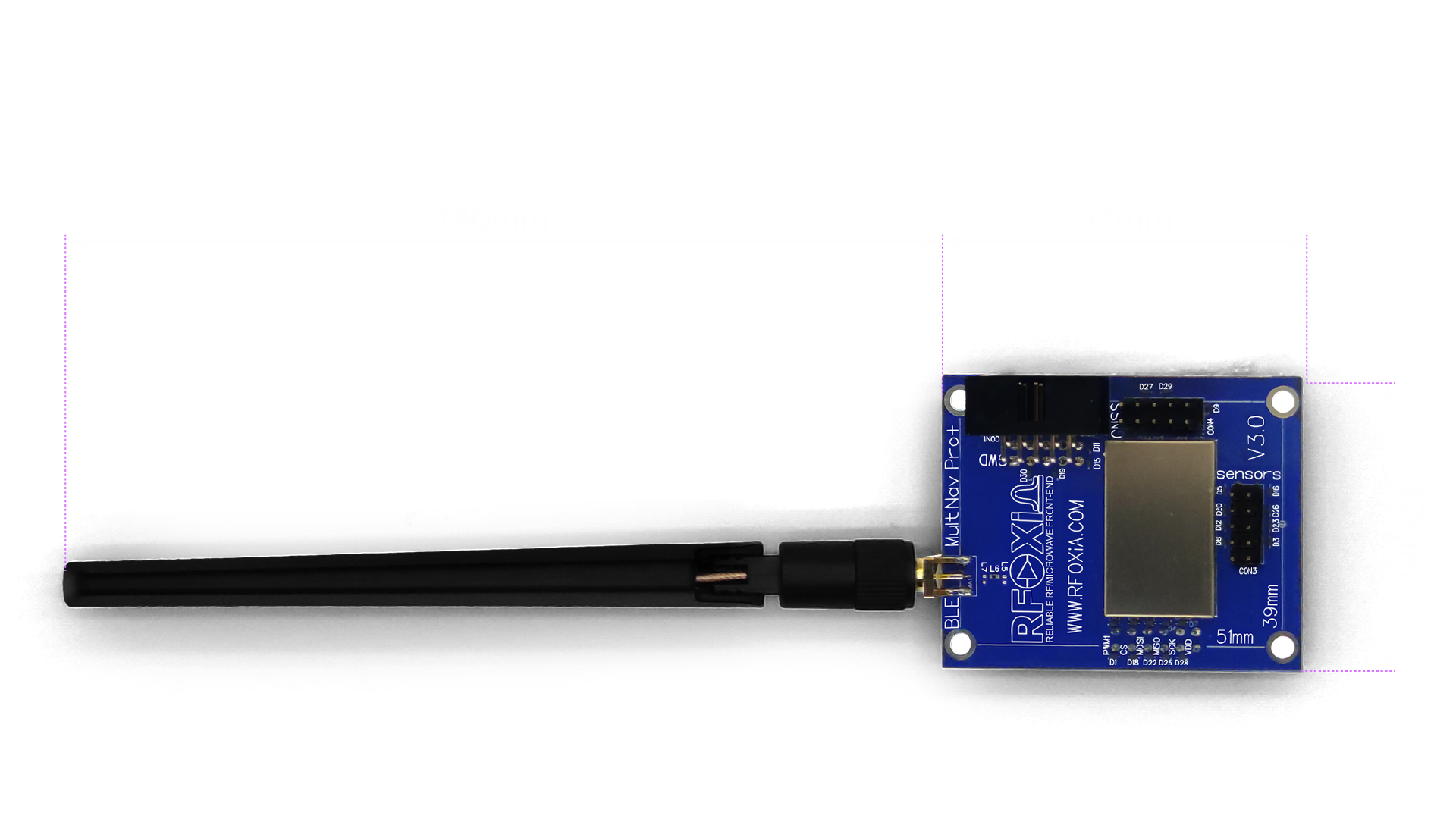
The MultiNav Pro+ BLE module measures 57mm x 47mm with a fixing frame footprint of 54mm x 34mm and corner mounting holes. The antenna length is 140mm. This form factor is designed to integrate cleanly into drone frames, enclosures, and field equipment without requiring significant mechanical compromise.
The integrated high-gain chip antenna eliminates the need for external antenna assemblies in most configurations. For maximum range applications, the SMA connector supports external antennas when the geometry of your platform benefits from them.
Every millimeter of the board layout is optimized for RF performance. The compact design is not a compromise — it is an engineering achievement.
Open Source, Fully Programmable
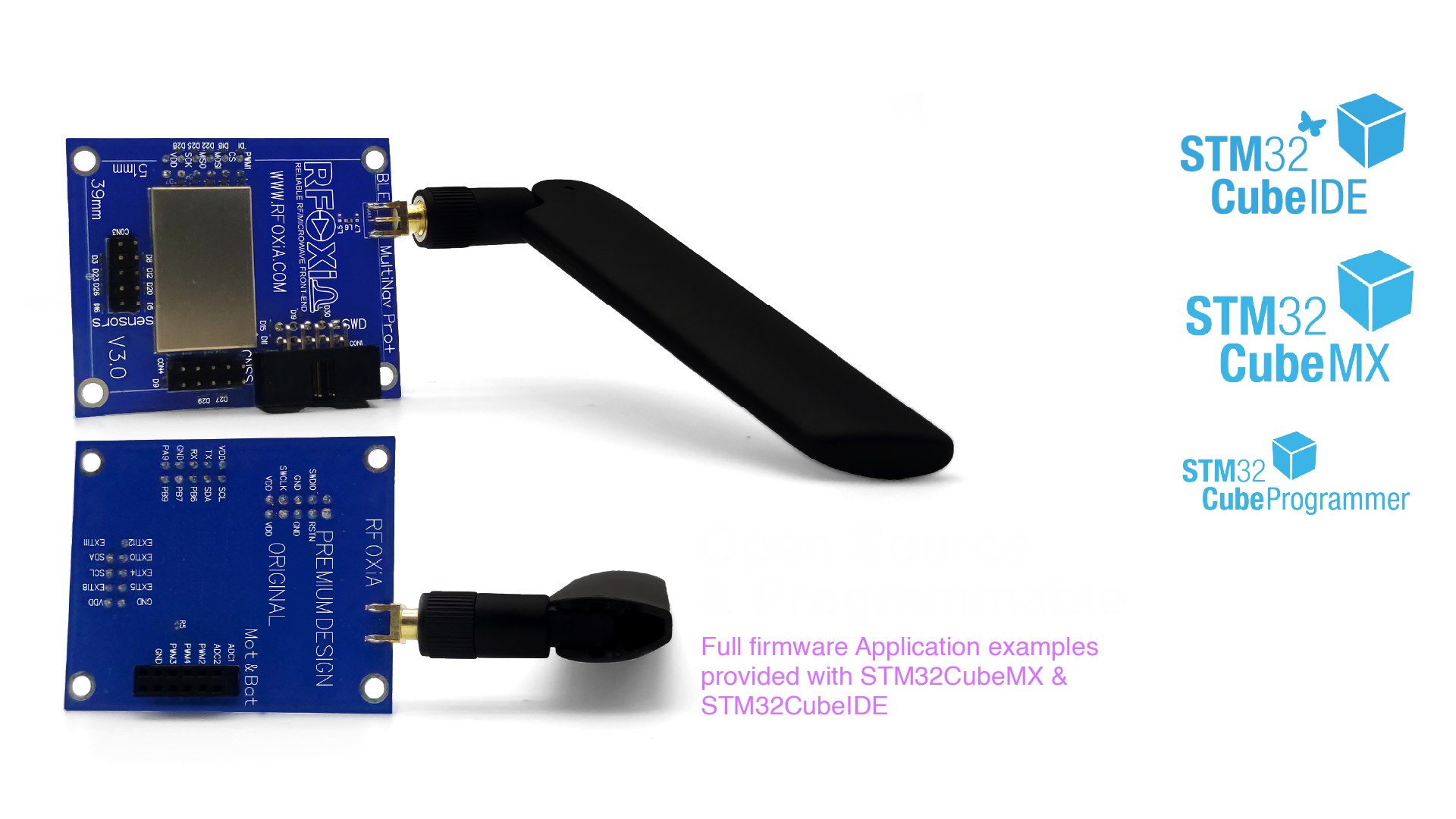
One of the most important differences between the MultiNav Pro+ and consumer-oriented drone radio products is that the MultiNav Pro+ is fully open source and programmable via SWD. The complete firmware source code is available on GitHub at https://github.com/RFOXiA/MultiNav-Pro-Long-Range-BLE-Module-Firmware-STM32WB07.
This means:
- You own your link. You can inspect every line of code that manages your wireless connection.
- You can modify the BLE stack behavior, add custom protocols, or implement proprietary data formats for specialized applications.
- The RFOXiA Club AI Firmware Builder lets you describe your application in plain language and generate production-ready custom firmware — reducing months of development to hours.
- The module is not locked to RFOXiA's app or platform. It is a platform you build on.
For engineers who have accepted FPV signal dropout on long range missions as inevitable because they could not modify the radio firmware to suit their protocol requirements — this changes everything.
Precision Timing: The RTC Advantage for Synchronized Systems
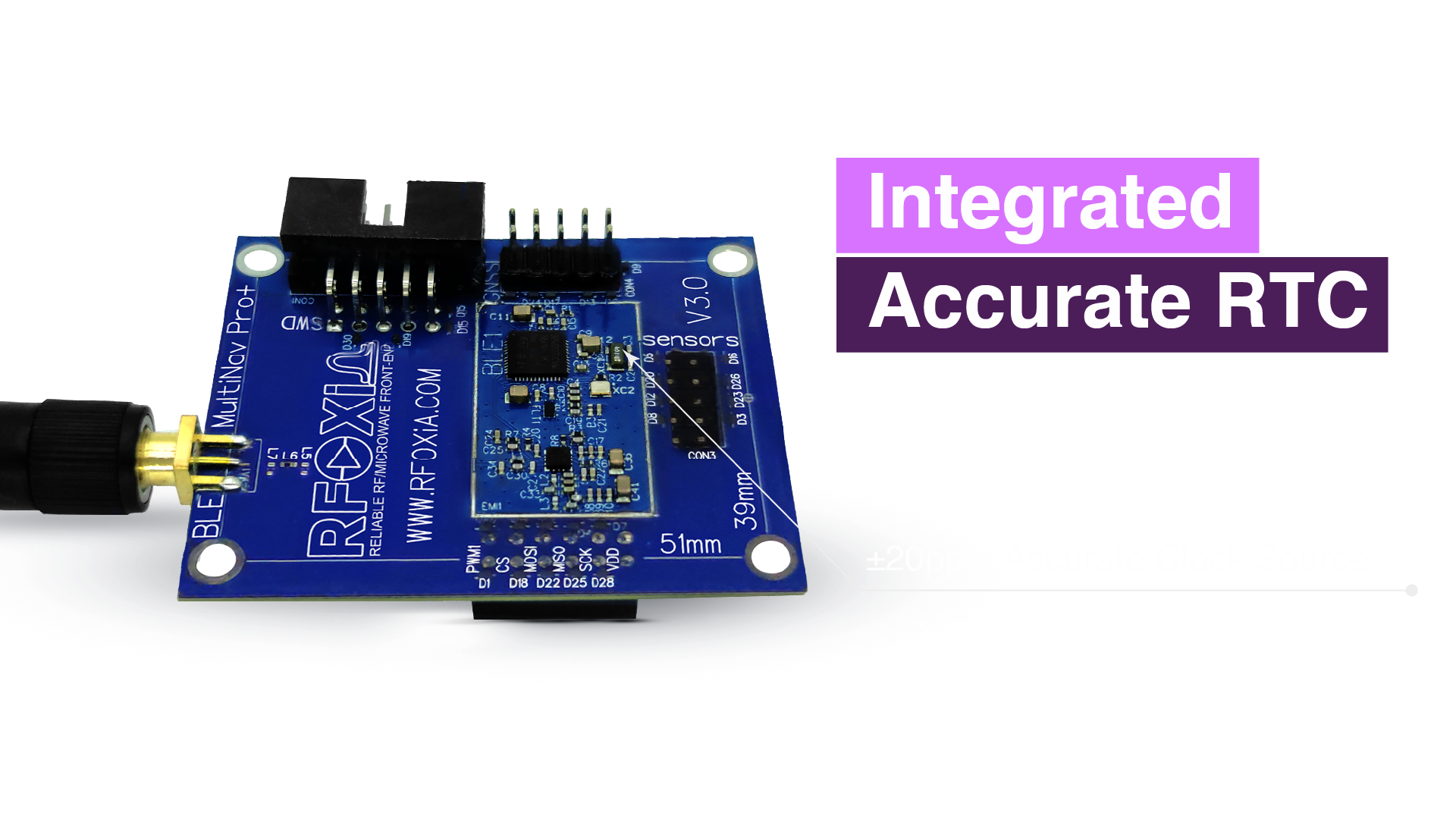
For autonomous drone systems, multi-robot coordination, and data logging applications, precise timing is not optional. The MultiNav Pro+ includes an integrated RTC crystal that provides accurate time reference independent of the BLE link or GPS signal.
This enables timestamp synchronization across distributed nodes, time-of-flight calculations, and precisely scheduled data collection — capabilities that matter when you are building a system that needs to do more than just fly a straight line.
Real-World Range vs. Spec Sheet Range: What the Numbers Mean
Every radio manufacturer publishes range numbers. Here is how to read them honestly.
The MultiNav Pro+ specifications are:
- 5KM ground-to-ground (both modules at ground level, paired with smartphones)
- 15-20KM man-to-drone (one module ground level, one module elevated on drone)
- 50KM drone-to-drone (both modules elevated, ground reflections eliminated)
These are real-world verified figures, not anechoic chamber measurements. The ground-to-ground number is conservative specifically because it accounts for multipath fading. The drone-to-drone number is achievable in real flight conditions because elevation eliminates the primary degradation mechanism.
Compare this to commodity BLE modules: 80-100 meters, real-world, at ground level. The gap is not 10x. It is 500x at the drone-to-drone configuration.
If you have been living with FPV signal dropout on long range attempts using standard BLE hardware, you now understand why. You were using a module that was never designed for this application.
The RFOXiA Long Range Bluetooth Module was.
Who the MultiNav Pro+ Is Built For
This module is not for someone who wants to fly a pre-built drone around the park. It is built for:
FPV pilots pushing range limits. If you are building long-range FPV wings, fixed-wing autonomous platforms, or any drone where the 100-meter BLE horizon is a ceiling you keep hitting — the MultiNav Pro+ is the hardware upgrade that removes that ceiling entirely.
Drone builders doing real work. Agricultural monitoring, infrastructure inspection, search and rescue support, cinematography at distance — applications where the link has to be there, every time, at every kilometer.
Robotics engineers. Ground vehicles, underwater ROVs, any platform where reliable long-range wireless control and telemetry are the difference between a functional system and an expensive paperweight.
IoT developers. Remote sensor networks, environmental monitoring, smart agriculture, industrial telemetry — anywhere that infrastructure is absent and the data still has to get through.
Researchers. Universities, field scientists, environmental agencies — anyone who needs verified data from remote locations at ranges that commodity hardware cannot reach.
FPV Signal Dropout Long Range: The Complete Solution Summary
FPV signal dropout on long range missions is a hardware problem with a hardware solution. Here is the complete picture:
| Problem | Root Cause | MultiNav Pro+ Solution |
|---|---|---|
| Dropout at 500m | Receiver sensitivity limit | Advanced RF front-end, -100dBm+ sensitivity |
| Multipath fading | Ground reflections | Elevation-aware link planning, 5KM ground verified |
| Latency under load | Protocol overhead | 2Mbps throughput, dedicated BLE core |
| Interference dropout | Poor RF filtering | Optimized front-end design, FCC certified |
| No firmware control | Closed hardware | Fully open source, SWD programmable |
| High cost of alternatives | Market gap | $59 for two FCC-certified modules |
Every single failure mode that causes FPV signal dropout on long range flights is addressed at the hardware design level in the MultiNav Pro+.
Getting Started: Two Modules, One Solution
The MultiNav Pro+ BLE module ships as a pair — two FCC-certified long-range modules for $59. You have everything you need to establish a 5KM ground link or a 20KM aerial link immediately.
For builders ready to go further, the Developer Bundle combines the BLE module pair with the GNSS module, Sensors module, and Power/Program Kit for a complete autonomous system platform at $199.
The RFOXiA Club gives you access to the AI Firmware Builder, complete documentation, the developer community, and $10 in welcome credits the moment you sign up — no hardware required to start.
If FPV signal dropout on long range flights has been limiting what you build and how far you fly, the solution is available today. FCC certified. In stock. Ready to ship.
See the full specifications and order your modules at the RFOXiA Long Range Bluetooth Module product page.
RFOXiA — Democratizing Connectivity and Computing Power.
Written by: Moamen Mohamed LinkedIn