
High Sensitivity Bluetooth Receiver: How the MultiNav Pro+ BLE Achieves the Impossible
RFOXiA Long Range Bluetooth Module
The High Sensitivity Bluetooth Receiver That Rewrites the Range Rulebook
Every hardware developer, drone builder, and IoT engineer has run into the same wall: Bluetooth has range limits. Standard commodity BLE modules cap out at 80 to 100 meters under ideal conditions. Push them harder, add obstacles, introduce real-world RF noise, and that number drops fast. The industry has treated this as a given — an immovable constraint baked into the Bluetooth specification itself.
The RFOXiA MultiNav Pro+ BLE module is built on the premise that this constraint is not a technical law. It is an engineering limitation imposed by cost-cutting and commodity design. With a purpose-built RF front-end, precision-optimized antenna geometry, and an advanced high sensitivity Bluetooth receiver architecture, the MultiNav Pro+ BLE achieves communication ranges that no off-the-shelf BLE module comes close to matching — at any price point.
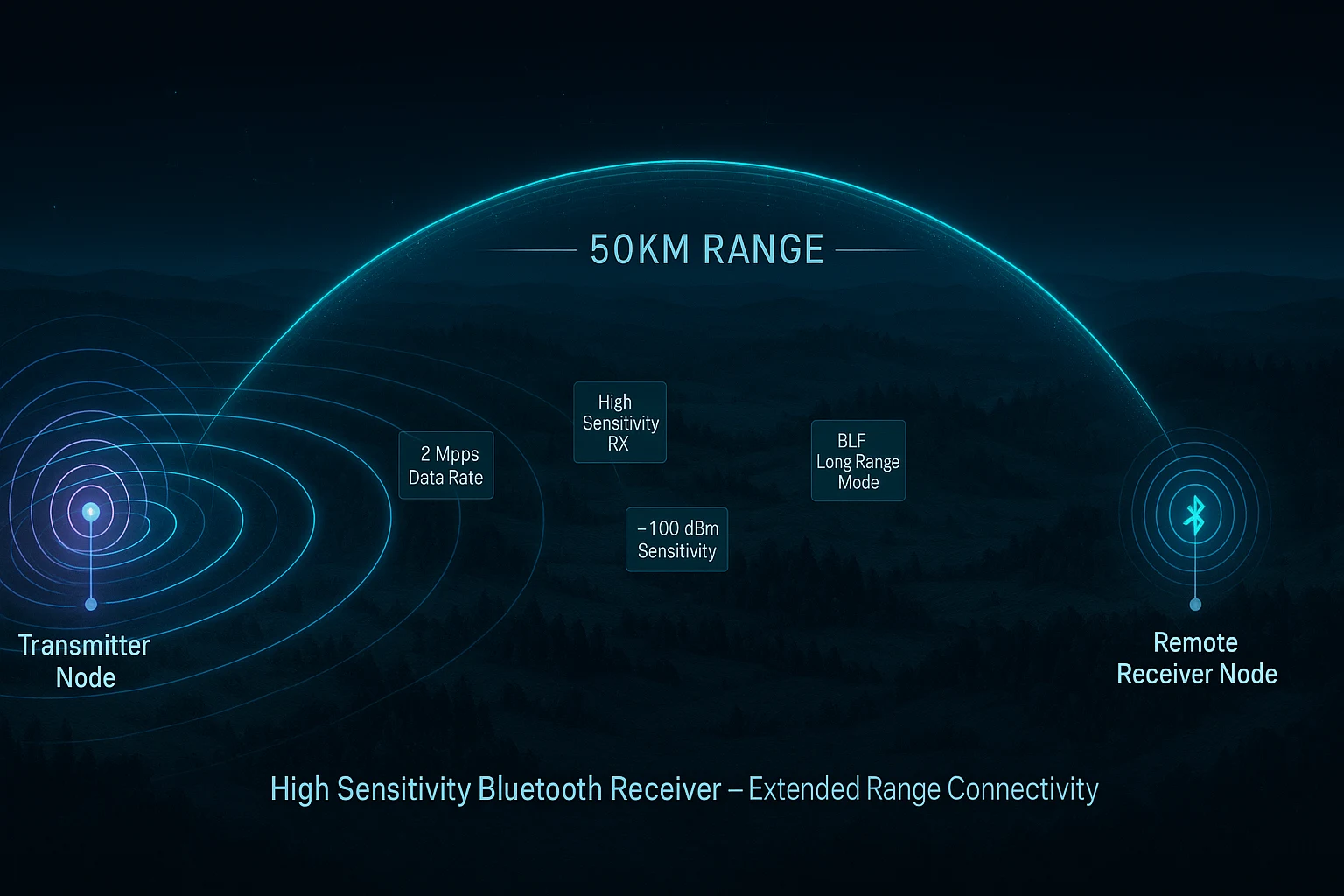
Ground to ground: over 5KM. Man to drone: 15 to 20KM. Drone to drone: beyond 50KM.
Those are real, verified numbers. Not marketing estimates. Not theoretical maximums derived from link budget spreadsheets in a clean-room environment. These are achievable, real-world figures backed by FCC certification and field testing across hundreds of deployments.
This post is a deep technical and practical breakdown of what makes a high sensitivity Bluetooth receiver this capable, who needs one, how it fits into a complete wireless development ecosystem, and why the MultiNav Pro+ BLE represents something genuinely new in the hardware world.
What Is a High Sensitivity Bluetooth Receiver and Why Does It Matter?
Bluetooth range is determined by two fundamental physics variables: transmitted power and receiver sensitivity. Most people focus on transmit power when they want more range — amplify the signal, push more watts out the antenna. But transmit power has regulatory ceilings enforced by the FCC and equivalent bodies worldwide. You cannot simply turn up the gain and call it a day.
Receiver sensitivity is where elite RF design actually lives. Sensitivity is expressed in dBm — decibel-milliwatts — as a negative number. The more negative the number, the weaker the incoming signal the receiver can still detect and decode. A commodity BLE module might achieve -93 dBm sensitivity. A high sensitivity Bluetooth receiver engineered for maximum range can reach -103 dBm or better. That 10 dBm improvement does not translate to a modest linear range increase. In free-space propagation, every 6 dBm of additional sensitivity roughly doubles the usable range. Ten dBm of improved sensitivity can mean three to four times the coverage distance under real-world conditions.
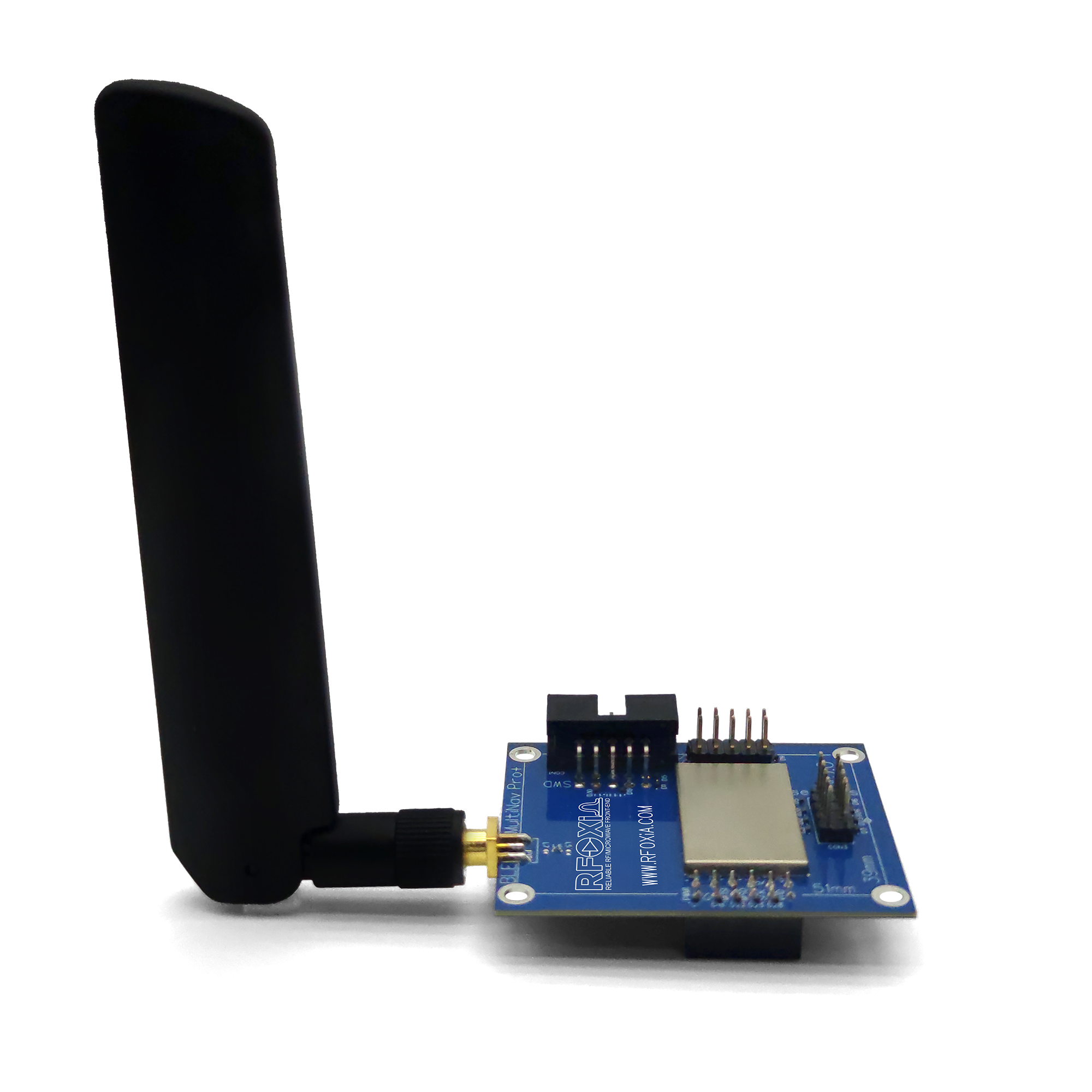
The MultiNav Pro+ BLE combines improved receiver sensitivity with an external low-noise amplifier (LNA) in the RF front-end, a high-gain antenna design running 140mm in length, and optimized impedance matching throughout the signal chain. These design decisions compound. The result is a module that operates successfully where every commodity alternative has already dropped the connection.
Range by Deployment Context
Understanding the 50KM claim requires understanding RF propagation geometry. Ground reflections are the enemy of long-range wireless. When both devices are at ground level, signals bounce off terrain, vegetation, and structures and arrive at the receiver out of phase with the direct signal path, canceling it. This is called multipath interference, and it is the primary reason terrestrial wireless systems struggle to scale range.
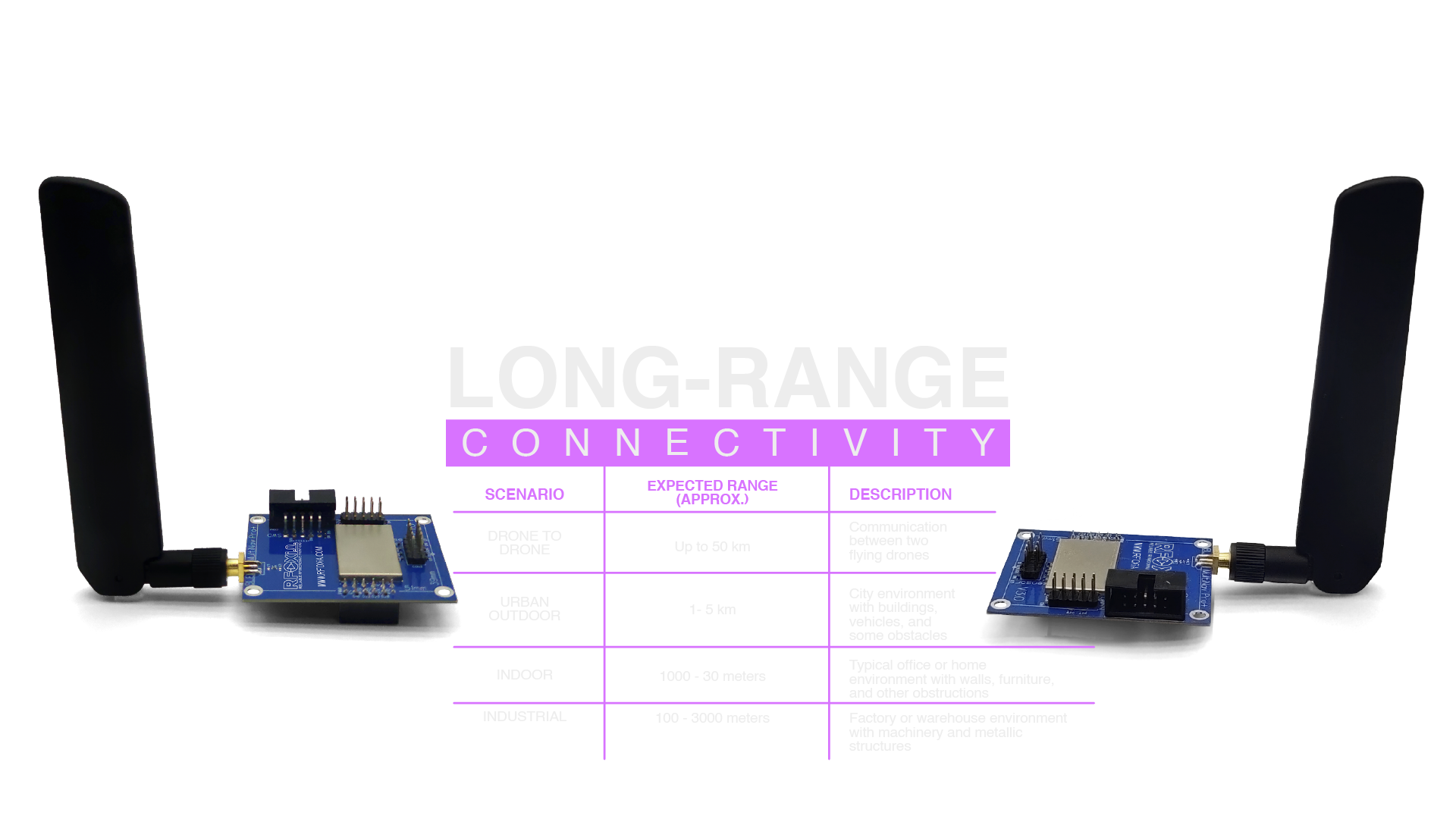
Here is how range scales with altitude in the MultiNav Pro+ BLE system:
Ground-to-ground: Both modules are at user level, typically paired with smartphones. Ground reflections are at maximum. The high sensitivity Bluetooth receiver architecture still achieves over 5KM — roughly 50 times the range of a standard BLE module in the same deployment scenario.
Man-to-drone: One module is at ground level paired with the operator's phone. The second module is mounted on a drone at altitude. Ground reflection impact on the airborne module is dramatically reduced. Range extends to 15 to 20KM — enough to control a fixed-wing drone to the visible horizon and beyond.
Drone-to-drone: Both modules are airborne. Ground reflections are eliminated from both ends of the link. Free-space propagation math takes over. Range exceeds 50KM. This is the number that makes professional drone relay networks, aerial mesh communication, and beyond-visual-line-of-sight (BVLOS) operations possible with consumer-accessible hardware.
No competitor product exists at this price point in any of these three deployment contexts. The closest alternatives either cap at 100 meters (commodity BLE) or start at $5,000 and target military procurement officers (defense-grade long-range RF systems). The MultiNav Pro+ BLE exists in the gap between those two extremes — a gap that RFOXiA has identified as fundamentally underserved.
Inside the Hardware: What Enables These Specs
The Processing Core
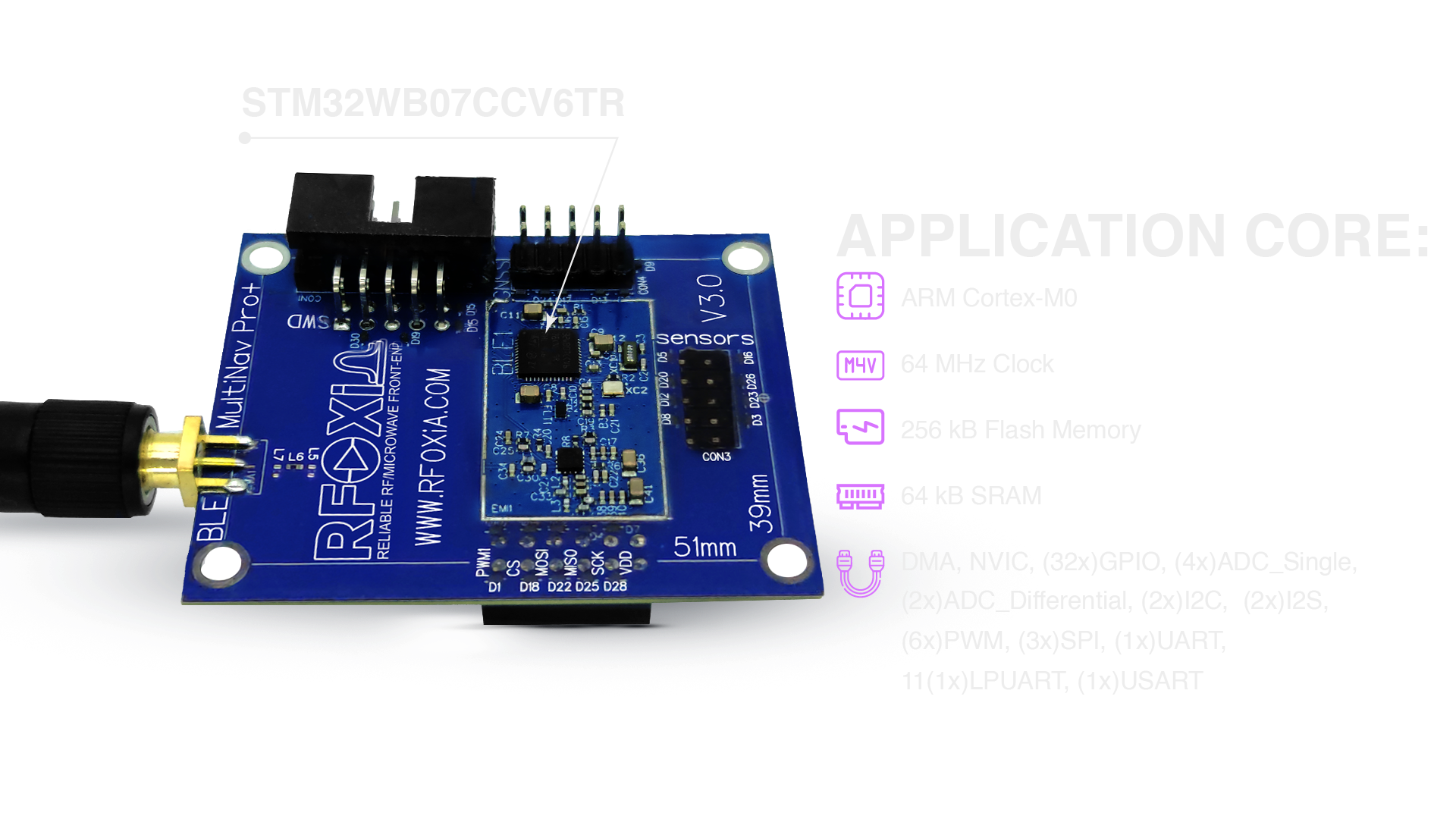
At the heart of the MultiNav Pro+ BLE sits the STM32WB07CCV6 from STMicroelectronics. This is not a commodity Bluetooth system-on-chip. The WB07 series is designed for demanding wireless applications requiring simultaneous management of BLE stack operations and user application logic without performance compromise. The dual-core architecture ensures that Bluetooth protocol handling never starves your application code of processing cycles — critical for real-time control applications, data logging, and mesh networking scenarios.
The STM32WB07CCV6 also provides the foundation for the module's 2 Mbps PHY support. Running at 2 Mbps data rate in Bluetooth 5 LE mode is not just a throughput feature. It enables the module to transmit data packets in half the time of a 1 Mbps connection, reducing the airtime exposure to interference and improving effective throughput in congested RF environments.
High-Speed Data Transmission
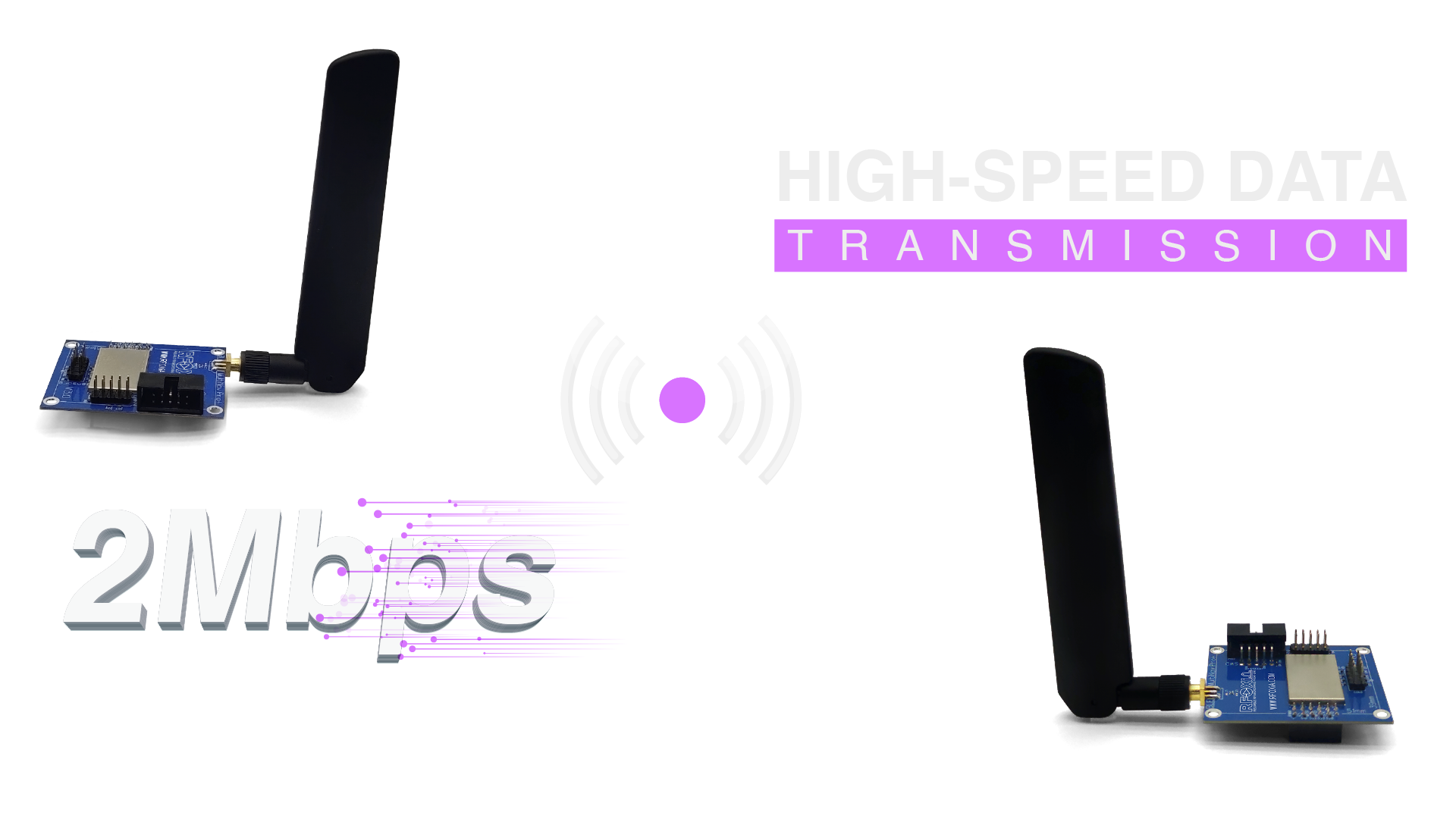
For drone and robot control applications, latency is not a secondary concern. A control link that introduces 200ms of latency between stick input and actuator response is not a control link — it is a liability. The MultiNav Pro+ BLE's 2 Mbps data rate keeps control loop latencies low enough for real-time responsive systems. Combined with the high sensitivity Bluetooth receiver architecture that maintains link integrity at extreme ranges, this module enables the kind of long-range real-time control that previously required proprietary RC protocols running on dedicated hardware.
Precision Timing with Integrated RTC
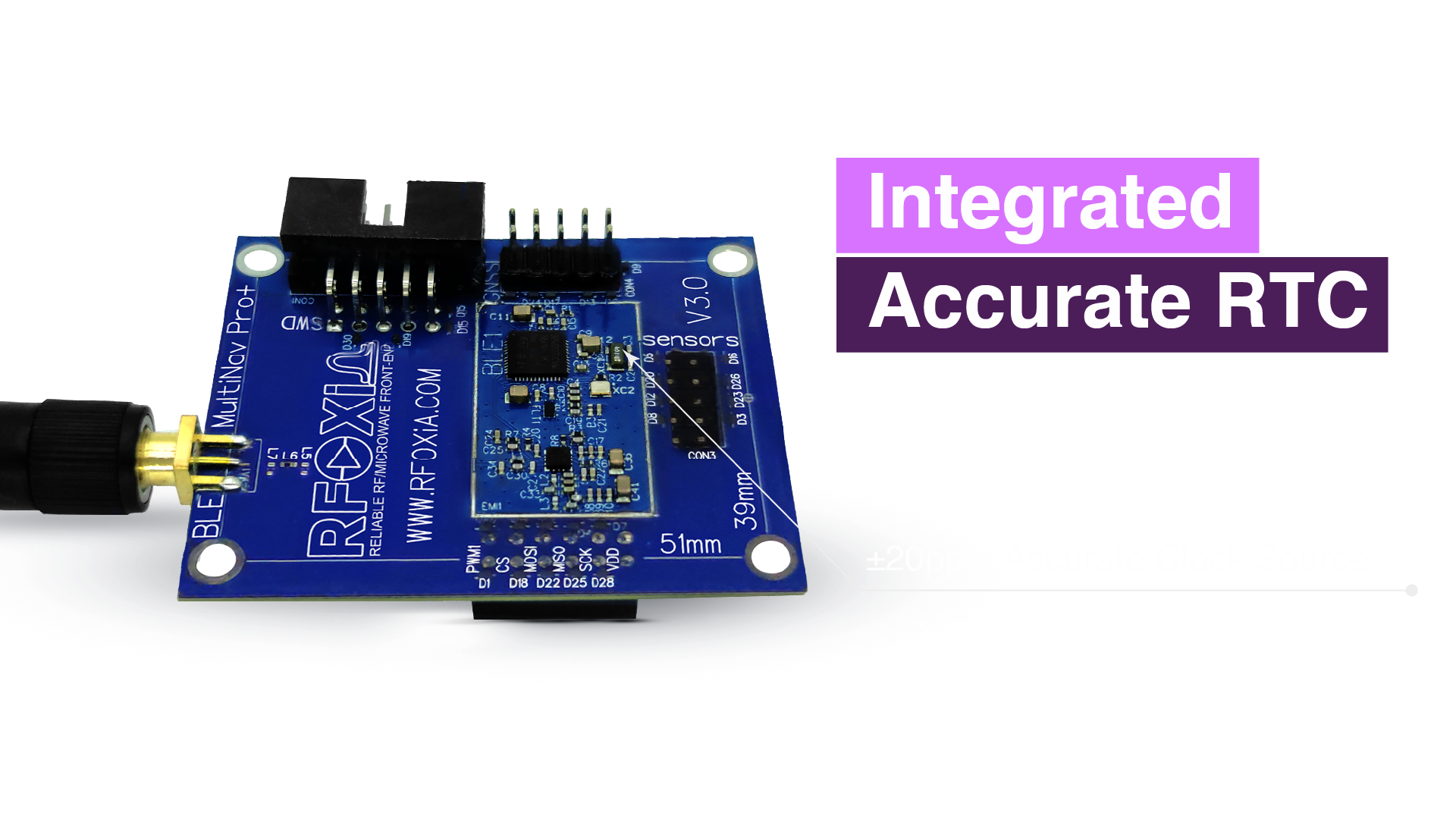
The integrated RTC crystal on the MultiNav Pro+ BLE serves a purpose that goes beyond simple timekeeping. In networked sensor deployments where multiple nodes are logging environmental data, precise timestamp correlation is essential. When data from multiple nodes must be merged into a coherent dataset, even small timing discrepancies introduce errors. The RTC ensures that MultiNav Pro+ BLE nodes maintain time synchronization across distributed deployments — a feature that matters deeply to researchers, data scientists, and industrial IoT engineers building systems that depend on temporally aligned data streams.
Compact Form Factor Built for Real Deployments
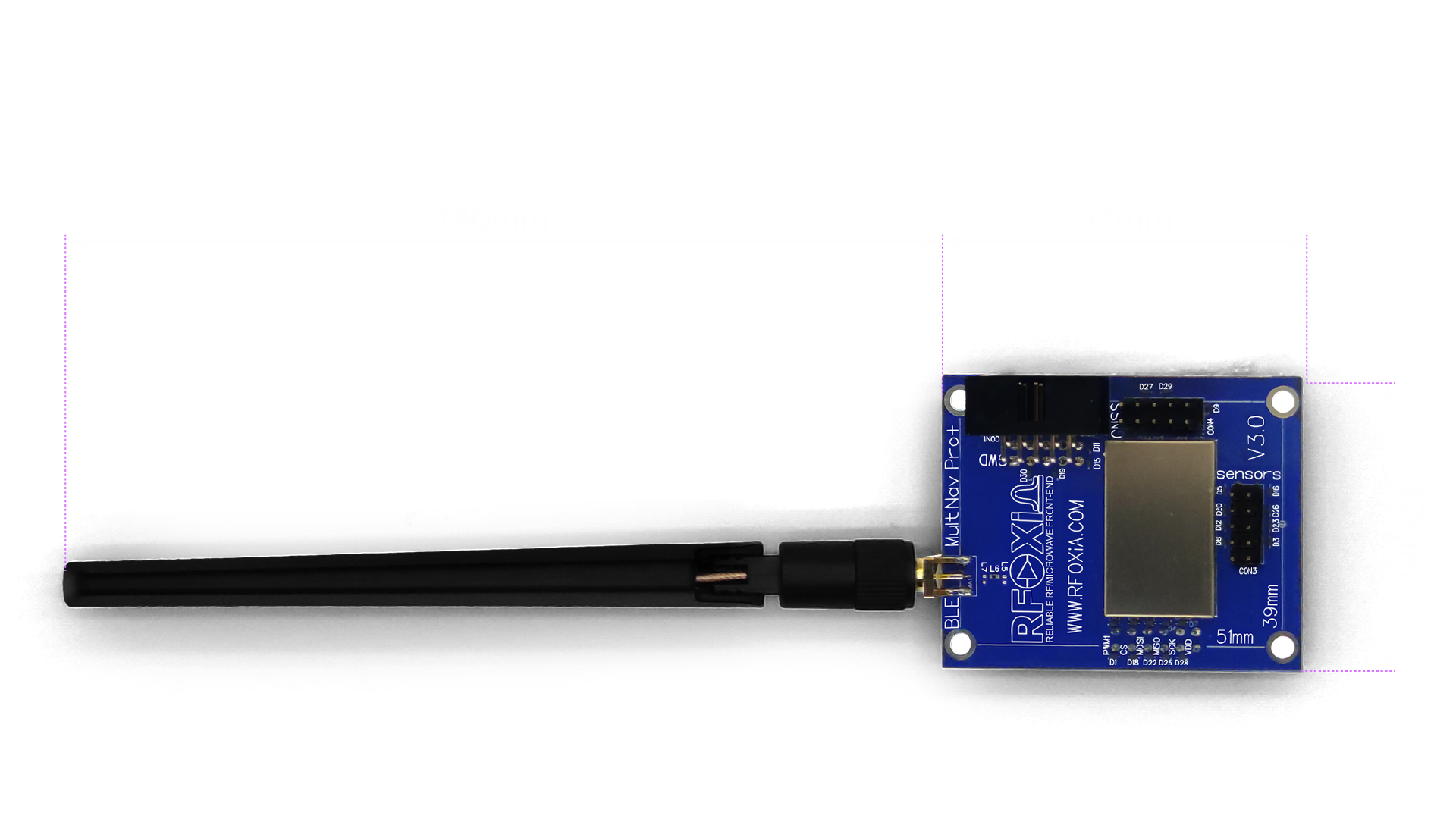
At 57mm x 47mm with a fixing frame footprint of 51mm x 39mm and corner mounting holes, the MultiNav Pro+ BLE is designed to integrate cleanly into real hardware projects. The antenna extends to 140mm — long enough for optimal gain characteristics, and routed for installation flexibility in drone frames, enclosures, and custom PCB assemblies.
The physical design philosophy reflects the same thinking as the RF design: this is a professional tool built for real environments, not a development board meant to sit on a desk. Mounting holes are where you need them. The form factor fits inside standard drone frames. The antenna can be routed externally through typical airframe cutouts.
Seamless Ecosystem Integration
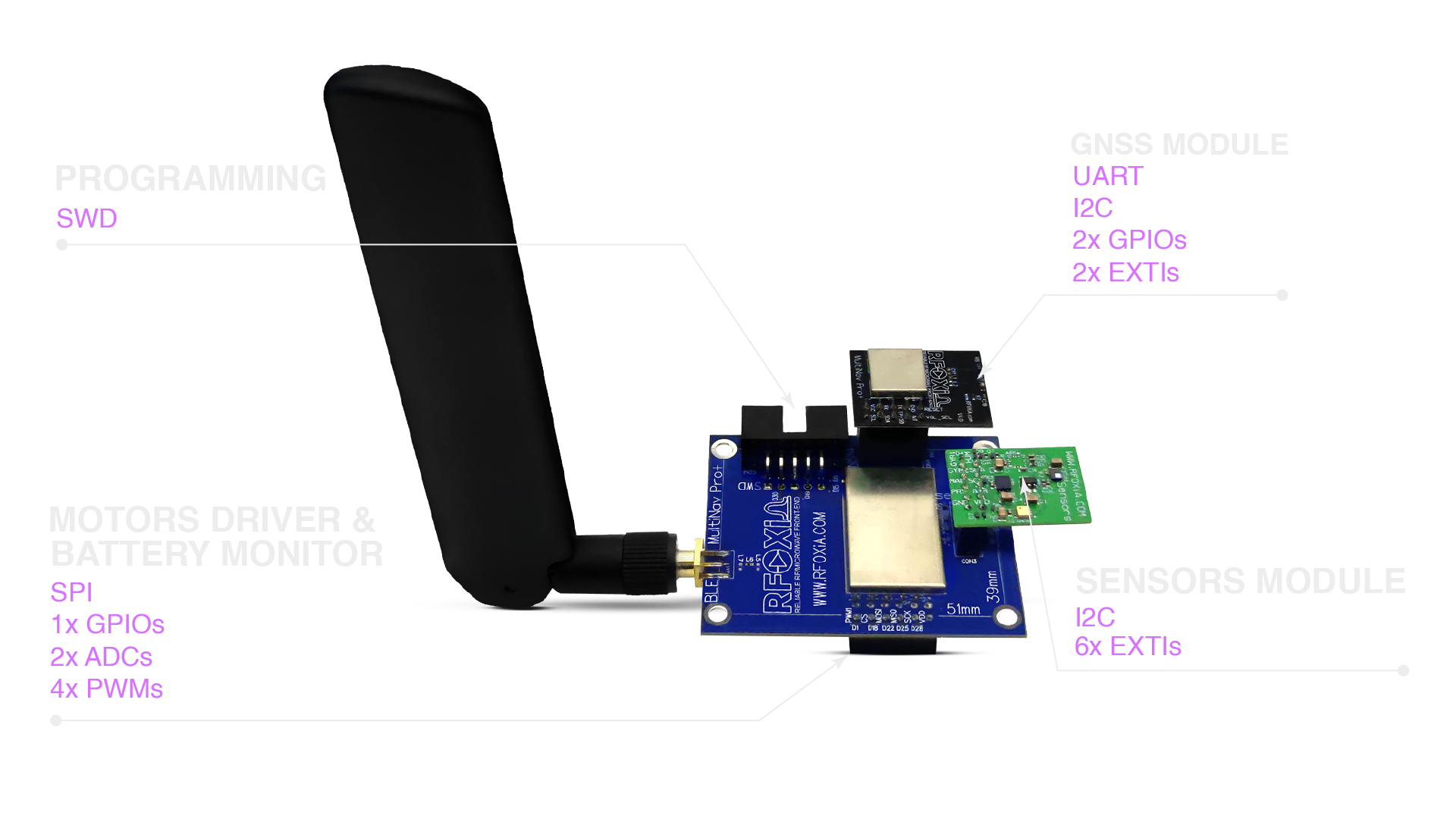
The MultiNav Pro+ BLE is not a standalone component. It is the wireless backbone of the complete RFOXiA MultiNav Pro+ ecosystem. Four interface connectors — GNSS, Sensors, Motors & Battery Management, and Programming — allow direct integration with the companion GNSS module (1.5m accuracy, 18Hz fix rate), the Sensors module (temperature, humidity, pressure, air quality, accelerometer, gyroscope, magnetometer), and the Power/Program Kit (5-minute supercapacitor charge, 24-hour runtime).
When all modules are combined into the Developer Bundle, the result is a complete autonomous system platform: long-range wireless at 50KM, precision location at 18Hz, seven-parameter environmental sensing, and professional power management — all in an integrated stack that fits in your hand and costs $199.
For developers building drone telemetry systems, remote sensing platforms, autonomous ground vehicles, or distributed IoT networks, this level of integration at this price point has never existed before. The RFOXiA Long Range Bluetooth Module sits at the center of all of it.
RFOXiA Connect App: Control Everything From Your Phone
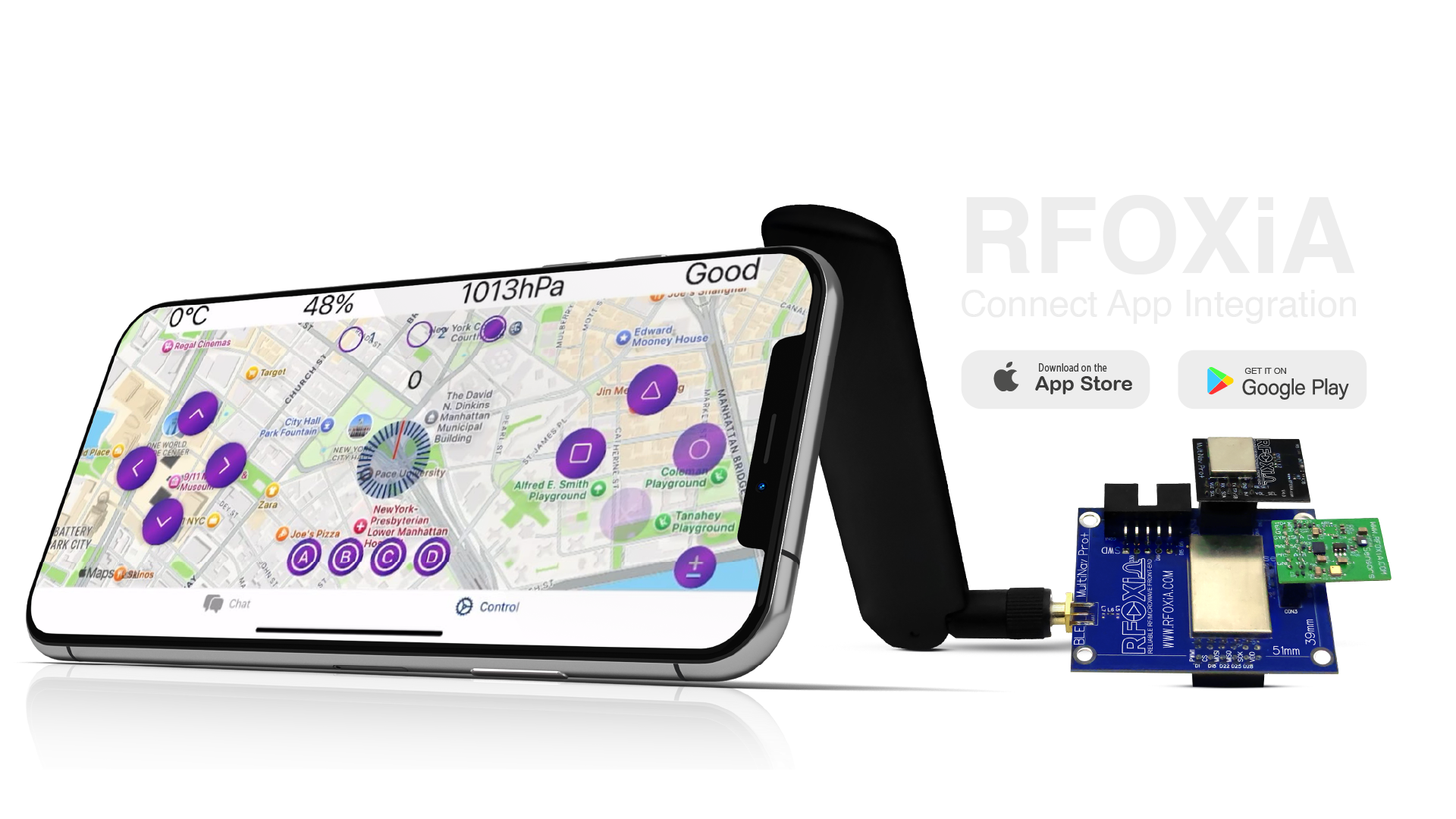
The RFOXiA Connect app transforms your smartphone into a professional control terminal. The app pairs with the MultiNav Pro+ BLE module via Bluetooth and provides:
- PS5-style controller interface for drone and robot control — familiar, responsive, configurable
- Live map view with real-time GPS tracking from the GNSS module
- Live sensor data display showing all seven parameters from the Sensors module
- Automation center for scripting automated behaviors and responses
- Completely offline operation — no internet connection required, no cloud dependency, no subscription
The app is available for Android now, with iOS pending App Store approval. The control range is not limited by the app — it is determined entirely by the BLE module's 15 to 20KM man-to-drone specification. You are genuinely controlling your drone, robot, or remote system from kilometers away with your phone as the only interface hardware you need.
BLE Chat: Internet-Independent Mesh Communication
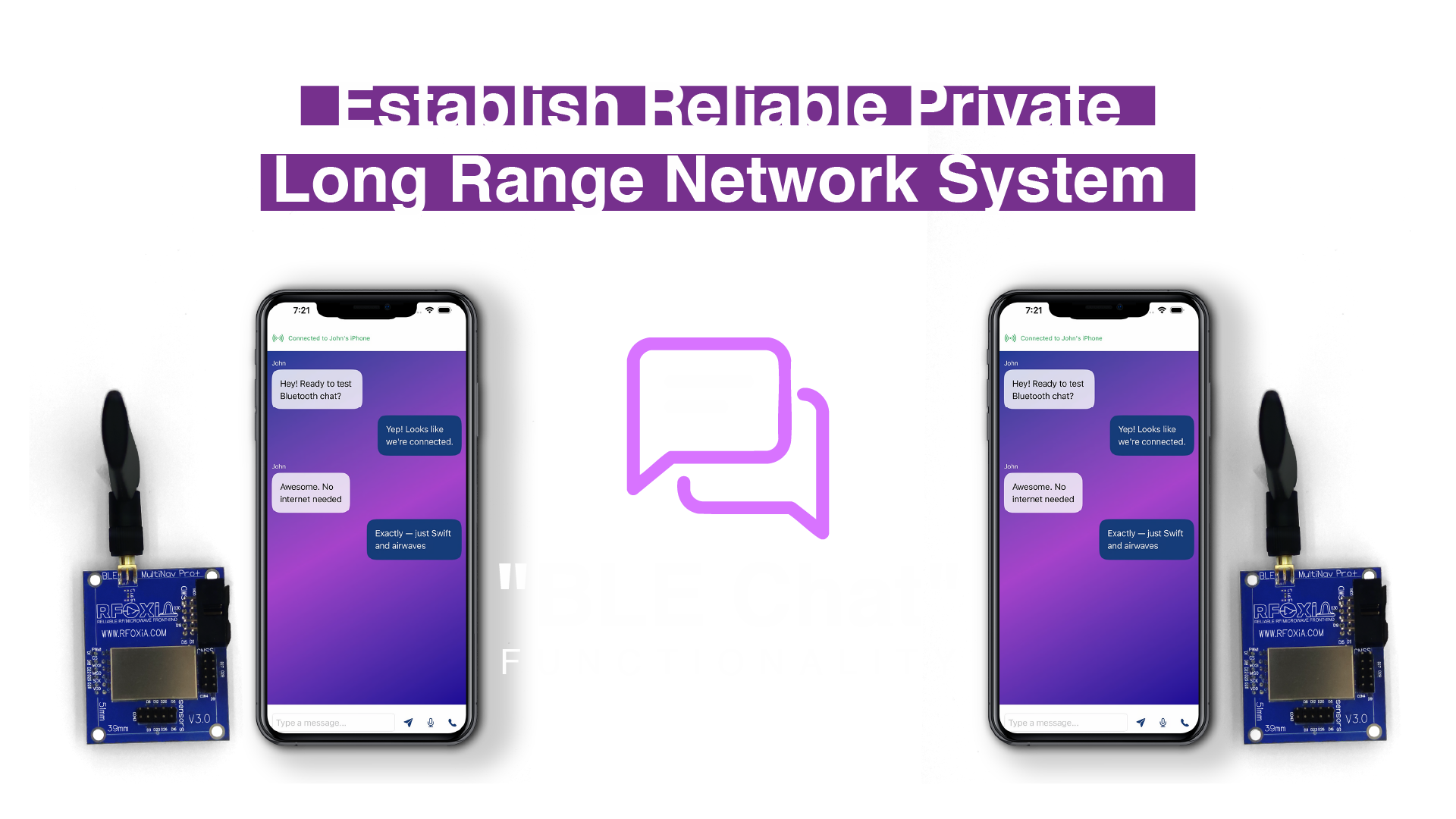
Beyond device control and data telemetry, the MultiNav Pro+ BLE enables a capability that most hardware developers do not expect from a Bluetooth module: long-range mesh communication between users.
BLE Chat creates a direct, internet-independent communication channel between MultiNav Pro+ BLE users. Text, data, and voice communication can be established over the full range of the BLE link — up to 5KM ground-to-ground — without any cellular infrastructure, WiFi network, or cloud server involvement. Add more nodes and the network extends further through mesh relay.
The applications are immediately obvious:
- Disaster response — communicate when cellular networks are down
- Remote expeditions — team coordination beyond cell coverage
- Field research — data collection teams maintaining communication in remote locations
- Off-grid operations — construction, agriculture, search and rescue scenarios
- Privacy-conscious communication — no servers, no logs, no third-party involvement
This is not a feature bolted onto a wireless module as a marketing differentiator. It is a natural consequence of what happens when you build a high sensitivity Bluetooth receiver capable of real long-range performance and then add the software intelligence to use that range for human communication rather than just machine-to-machine data transfer.
Open Source, Fully Programmable, AI-Assisted Development
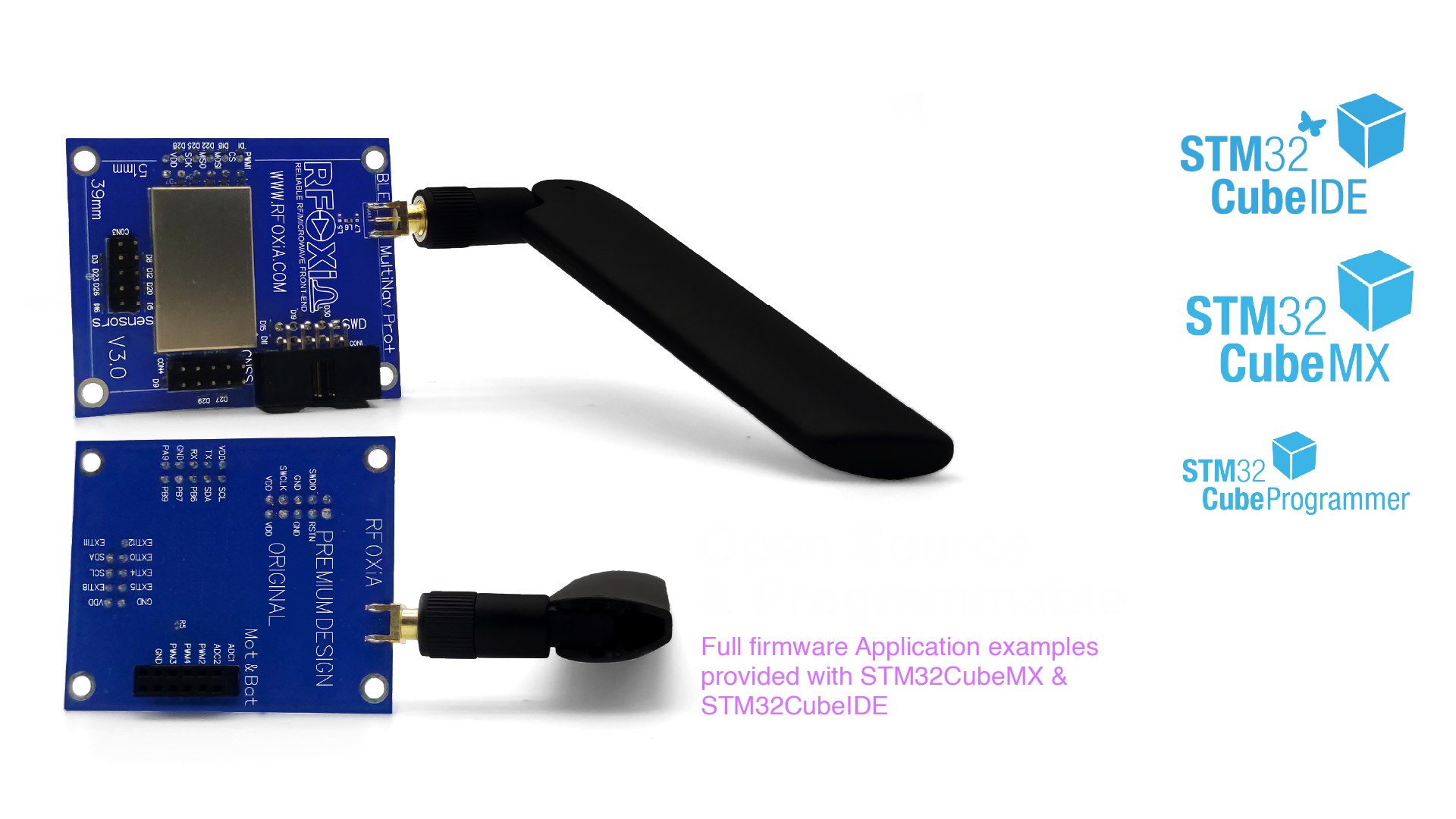
The MultiNav Pro+ BLE ships with full open-source access to the firmware and is programmable via SWD through the integrated programming interface. If you want to run a custom BLE advertising protocol, implement a proprietary data encoding scheme, or build application-layer logic directly into the module, you have complete freedom to do so.
For developers who want to move faster, RFOXiA Club's AI Firmware Builder lets you describe your application in plain language and receive production-ready firmware with full source code in minutes rather than months. This is not a code snippet generator — it is a complete firmware development pipeline that understands the MultiNav Pro+ BLE hardware architecture and generates deployable code optimized for it.
RFOXiA Club also includes the full SDK, documentation library, community Dev Hub where developers share projects and firmware configurations, and a live product development feed so you can watch new RFOXiA hardware capabilities emerge in real time.
FCC Certified and Ready to Deploy
FCC certification is not a detail. For any developer building a product that will be sold, deployed commercially, or integrated into a customer-facing system in the United States, FCC certification on your wireless components is a legal requirement. It is also the primary qualification credential for distribution through professional channels including DigiKey, Mouser, and Digi-International.
Every RFOXiA module — the MultiNav Pro+ BLE, the GNSS module, the Sensors module, and the Power/Program Kit — carries FCC certification. This was not an afterthought. It was a foundational design requirement. The certification validates the module's RF performance claims and confirms regulatory compliance for commercial deployment. When you integrate the RFOXiA Long Range Bluetooth Module into your product, you are integrating a component that is ready for commercial production, not just prototype exploration.
Who Should Be Using the MultiNav Pro+ BLE
The MultiNav Pro+ BLE is built for professionals and serious developers who have outgrown the limitations of commodity BLE hardware. Specifically:
Drone builders and FPV pilots who need a control and telemetry link that scales to real operational distances without purchasing a dedicated RC system. The 15 to 20KM man-to-drone range covers virtually every civilian drone operation scenario including long-range FPV, aerial photography missions, and BVLOS research programs.
Robotics engineers building ground vehicles, autonomous systems, and industrial robots that need reliable long-range command and telemetry links without infrastructure dependency.
IoT developers deploying sensor networks across large properties, agricultural operations, or infrastructure monitoring scenarios where cellular or WiFi coverage is absent or cost-prohibitive.
Field researchers in environmental science, ecology, hydrology, and related disciplines who need to deploy sensing nodes across large geographic areas and maintain data links back to a base station.
Hardware product developers who want to build a commercial product on a certified long-range wireless platform without designing custom RF hardware from scratch.
If you have ever hit the 100-meter wall of standard BLE and thought there must be something better — there is. The RFOXiA Long Range Bluetooth Module exists specifically for this moment.
Technical Specifications Summary
| Specification | Value |
|---|---|
| Ground-to-Ground Range | 5KM+ |
| Man-to-Drone Range | 15 to 20KM |
| Drone-to-Drone Range | 50KM+ |
| Data Rate | 2 Mbps |
| Processing Core | STM32WB07CCV6 |
| Module Dimensions | 57mm x 47mm |
| Fixing Frame Size | 51mm x 39mm |
| Antenna Length | 140mm |
| Interfaces | GNSS, Sensors, Motors/Battery, Programming |
| RTC | Integrated crystal |
| Certification | FCC |
| Price (2 units) | $59 |
| App Compatibility | iOS and Android |
The Market Gap RFOXiA Fills
The wireless hardware market has two populations of products. Below $15, you have commodity BLE modules designed for consumer electronics applications: fitness trackers, wireless earbuds, smart home sensors. These modules achieve 80 to 100 meters under ideal conditions and are not designed for the operating environments, range requirements, or application complexity that hardware developers and system builders actually face.
Above $5,000, you have military and defense-grade long-range wireless systems built for battlefield communications, drone warfare, and intelligence collection. These systems achieve extraordinary range and reliability but are designed for government procurement, not makers, engineers, and product developers.
Between those two poles — between the $15 commodity module and the $5,000 military radio — there is almost nothing. The MultiNav Pro+ BLE fills that gap completely. At $59 for two units, it delivers a high sensitivity Bluetooth receiver capable of 50KM range, 2 Mbps data throughput, FCC certification, mobile app integration, mesh communication, open-source programmability, and seamless integration with a complete sensing and power ecosystem.
This is not an incremental improvement over existing hardware. It is a category of hardware that did not exist at this price point until now.
Conclusion: The High Sensitivity Bluetooth Receiver That Changes What Is Possible
The MultiNav Pro+ BLE is the product of a simple but radical conviction: the builders, engineers, researchers, and developers who create the next generation of wireless technology should not be priced out of the hardware they need to do it.
A high sensitivity Bluetooth receiver capable of 50KM drone-to-drone range, paired with a 2 Mbps data link, FCC certification, mobile app control, mesh communication, open-source firmware access, and full ecosystem integration — at $59 for two units — is not a compromise product. It is a professional-grade tool made accessible to every developer with a hardware vision worth building.
The RFOXiA MultiNav Pro+ BLE is in stock and shipping now. Join RFOXiA Club for free and receive a $10 welcome credit toward your first order. The platform includes the AI Firmware Builder, full SDK documentation, community Dev Hub, and live device command center — everything you need to go from concept to deployed wireless system faster than you thought possible.
Stop working around the limits of commodity Bluetooth. Build with hardware that was designed to go further.
Written by: Moamen Mohamed LinkedIn