
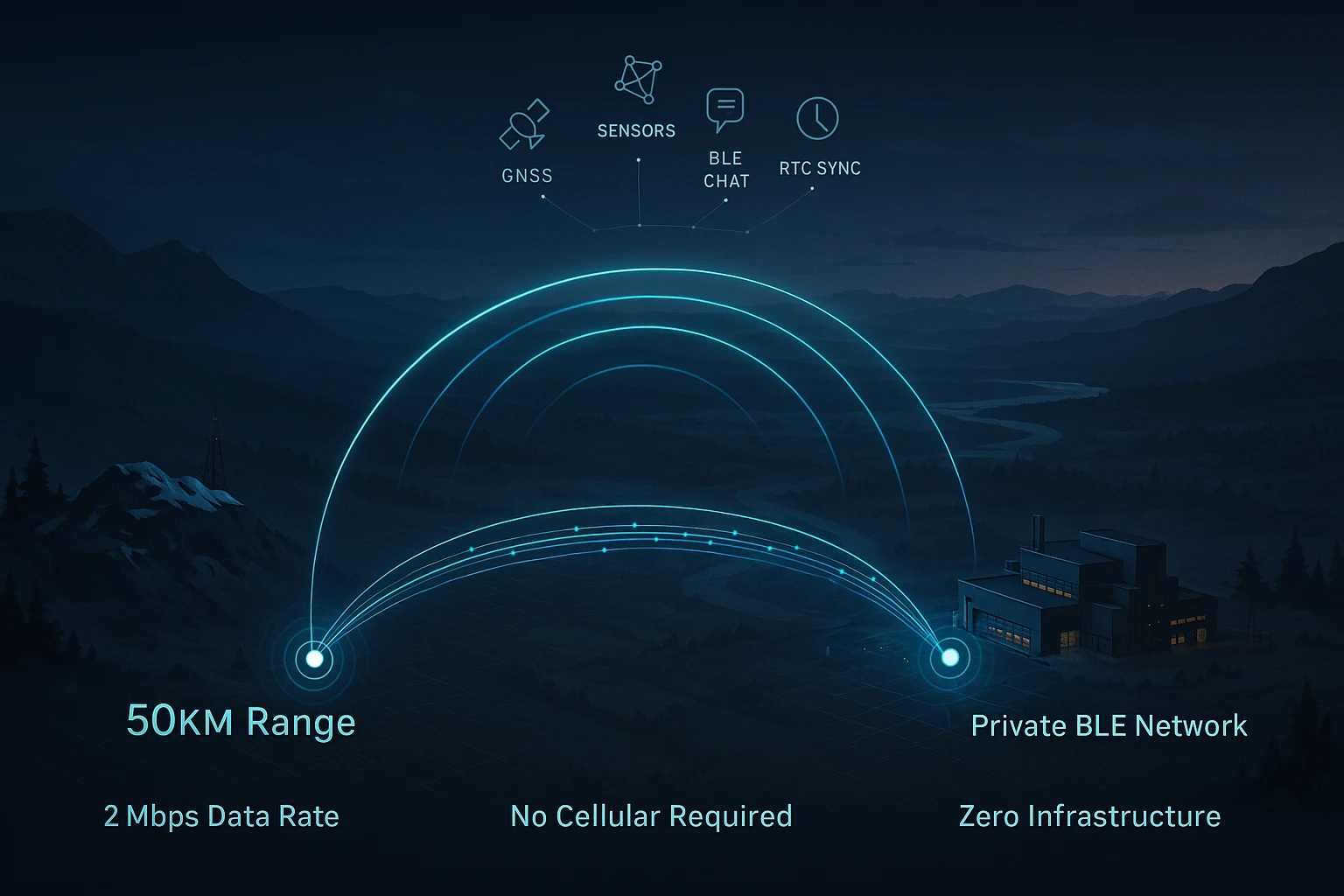
Long Range Wireless Without Cellular: How 50KM Bluetooth Is Now a Reality
RFOXiA Long Range Bluetooth Module
The Freedom of Long Range Wireless Without Cellular Infrastructure
For decades, developers, drone builders, field researchers, and IoT engineers have faced the same frustrating constraint: reliable long-range wireless communication required cellular towers, licensed radio infrastructure, or military-grade hardware with price tags that put it firmly out of reach for anyone without a government budget.
The assumption was simple — if you wanted range beyond 100 meters over Bluetooth, you needed a SIM card, a cellular plan, and the infrastructure to support it. If you wanted to go further without cellular, you were looking at proprietary industrial radio systems starting at $5,000 and climbing steeply from there.
That assumption is now wrong.
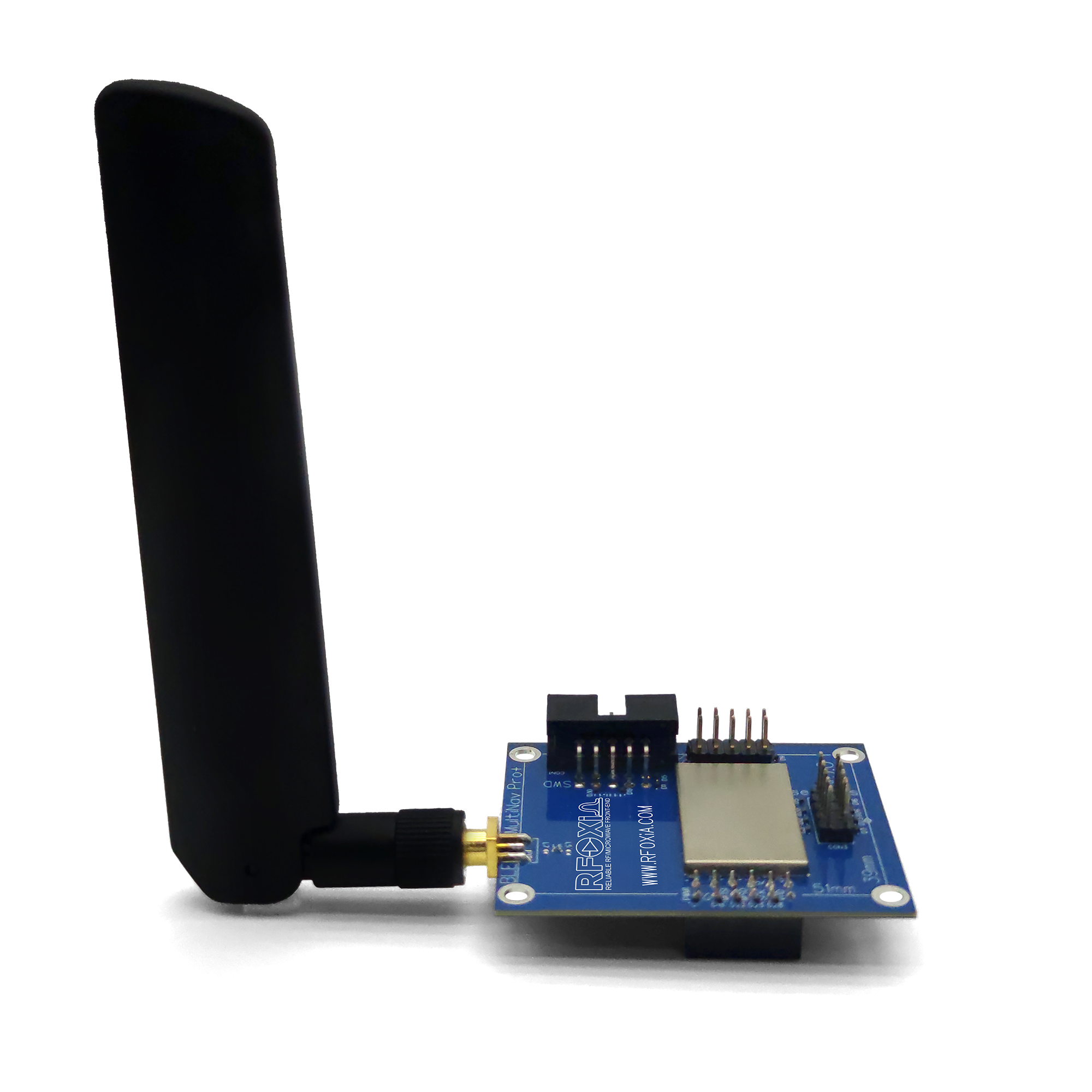
The RFOXiA MultiNav Pro+ BLE Module achieves long range wireless without cellular infrastructure — reaching 5KM ground-to-ground when paired with a smartphone, 15–20KM in man-to-drone deployments, and a staggering 50KM when two modules are deployed airborne on drones. All of this over standard Bluetooth Low Energy. All of it FCC certified. Two units for $59.
This post is a deep technical and practical breakdown of how that's possible, who needs it, and why it represents a fundamental shift in what builders and field professionals can deploy without cellular dependency.
Why "Long Range Wireless Without Cellular" Is the Right Frame
Before diving into the hardware, it's worth being precise about what the phrase "long range wireless without cellular" actually means — because it encompasses several distinct problems that engineers and field teams encounter:
1. No cellular coverage zones. Rural deployments, mountain operations, maritime environments, and remote agricultural land routinely fall outside LTE/5G coverage. Cellular-dependent IoT devices simply fail in these locations.
2. Cost of cellular connectivity at scale. A sensor node paying $2–10/month per SIM across hundreds of deployment points generates subscription costs that make IoT economics unworkable for most organizations.
3. Latency introduced by cellular routing. Control applications — drone flight, robotic systems, real-time actuator commands — cannot tolerate the round-trip latency of data routing through cellular towers and back-end servers. Direct peer-to-peer radio links are inherently lower latency.
4. Privacy and infrastructure independence. Sensitive field communications — disaster response teams, security operations, field research — benefit from communication channels that do not pass through third-party infrastructure.
5. Regulatory simplicity. BLE operates in unlicensed spectrum. No frequency license, no spectrum auction, no regulatory approval beyond FCC certification of the device itself.
The MultiNav Pro+ BLE Module solves all five of these problems simultaneously with a single piece of hardware.
How 50KM BLE Range Is Actually Achieved
Scepticism is warranted here — and healthy. Standard commodity BLE modules achieve 80–100 meters under ideal conditions. How does the MultiNav Pro+ reach 50KM on the same radio standard?
The answer is a combination of RF engineering decisions that commodity modules simply don't make because they optimize for cost, not performance.
1. Optimized RF Front-End Design
The MultiNav Pro+ integrates external RF amplification on both the transmit and receive paths. Standard BLE modules route directly from the SoC radio output to the antenna. The MultiNav Pro+ adds a dedicated power amplifier (PA) on transmit and a low-noise amplifier (LNA) on receive, dramatically extending both the transmission power and the receiver sensitivity.
2. Advanced Receiver Sensitivity
Range in radio systems is not just about how loud you transmit — it's equally about how quietly you can listen. The MultiNav Pro+ achieves exceptional receiver sensitivity, meaning it can detect and decode signals at power levels far below what standard modules can process. This matters enormously at long range, where signal strength follows an inverse-square law decay.
3. STM32WB07CCV6 Processing Core
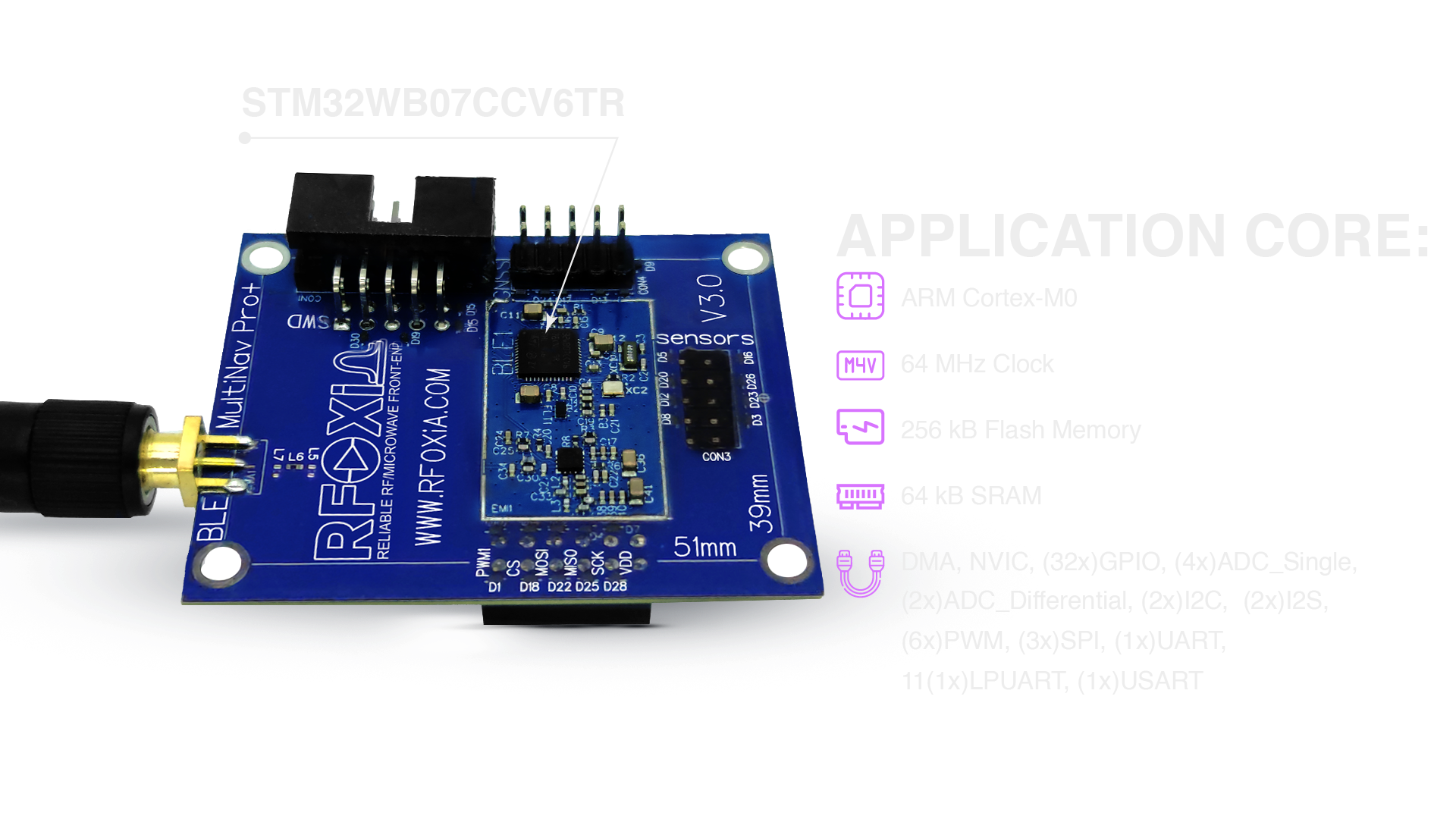
At the heart of the MultiNav Pro+ is the STM32WB07CCV6 — a dual-core wireless microcontroller from STMicroelectronics. This processor manages the BLE stack independently from the application layer, ensuring that communication performance doesn't degrade when the application processor is under load. The result is consistent radio performance even in computationally intensive deployments.
4. High-Gain Chip Antenna Design
The integrated high-gain chip antenna with 140mm antenna length is specifically engineered for long-range performance. Unlike commodity modules with minimal antenna optimization, the MultiNav Pro+ antenna design is tuned for maximum gain in the 2.4GHz band, contributing meaningfully to the overall link budget.
5. Physical Geometry and Deployment
Range figures across different deployment scenarios illustrate something important about radio physics:
- 5KM ground-to-ground — both modules at human height, subject to ground absorption and Fresnel zone obstruction
- 15–20KM man-to-drone — one module elevated on a UAV, significantly reducing ground reflection losses
- 50KM drone-to-drone — both modules airborne, with ground reflections eliminated entirely and unobstructed line-of-sight
These are not marketing numbers. They reflect the physics of how elevation affects RF propagation.
Real-World Applications: Who Needs Long Range Wireless Without Cellular
Drone Builders and FPV Pilots
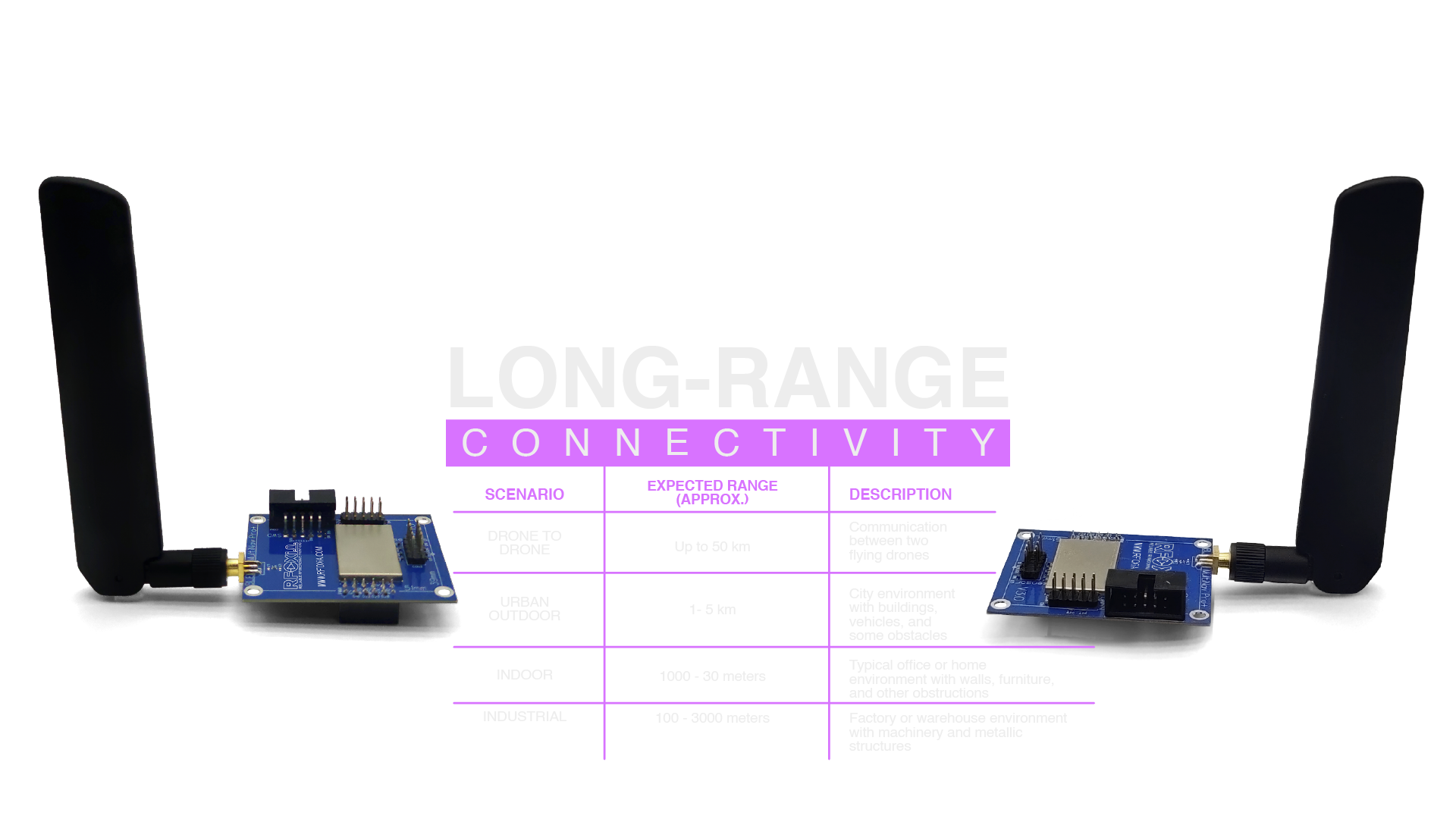
The drone community has long operated at the intersection of range anxiety and regulatory constraint. Long-range fixed-wing and multirotor pilots routinely push beyond the range of consumer RC links. The MultiNav Pro+ provides a BLE-based control and telemetry link capable of exceeding the range of most consumer systems — without the cost of proprietary long-range RC systems and without cellular dependency.
For FPV pilots, the combination of 2Mbps data rate and sub-millisecond local latency means the link can carry real-time control commands and telemetry simultaneously without the jitter and round-trip delay of cellular routing.
Robotics Engineers
Ground-based robotics deployments — agricultural robots, inspection platforms, autonomous ground vehicles — frequently operate in agricultural land, industrial facilities, and outdoor environments where cellular coverage is unreliable or absent. The MultiNav Pro+ provides a stable, high-bandwidth control link that operates entirely independently of cellular infrastructure.
IoT Field Deployments
Remote sensor networks — weather stations, soil monitoring arrays, water quality sensors, wildlife tracking systems — need to relay data back to a base station over distances that cellular networks either don't cover or make economically unviable at scale. Long range wireless without cellular solves this directly: one gateway module connected to a base station, multiple remote sensor nodes communicating over BLE at distances up to 5KM.
Disaster Response and Field Teams
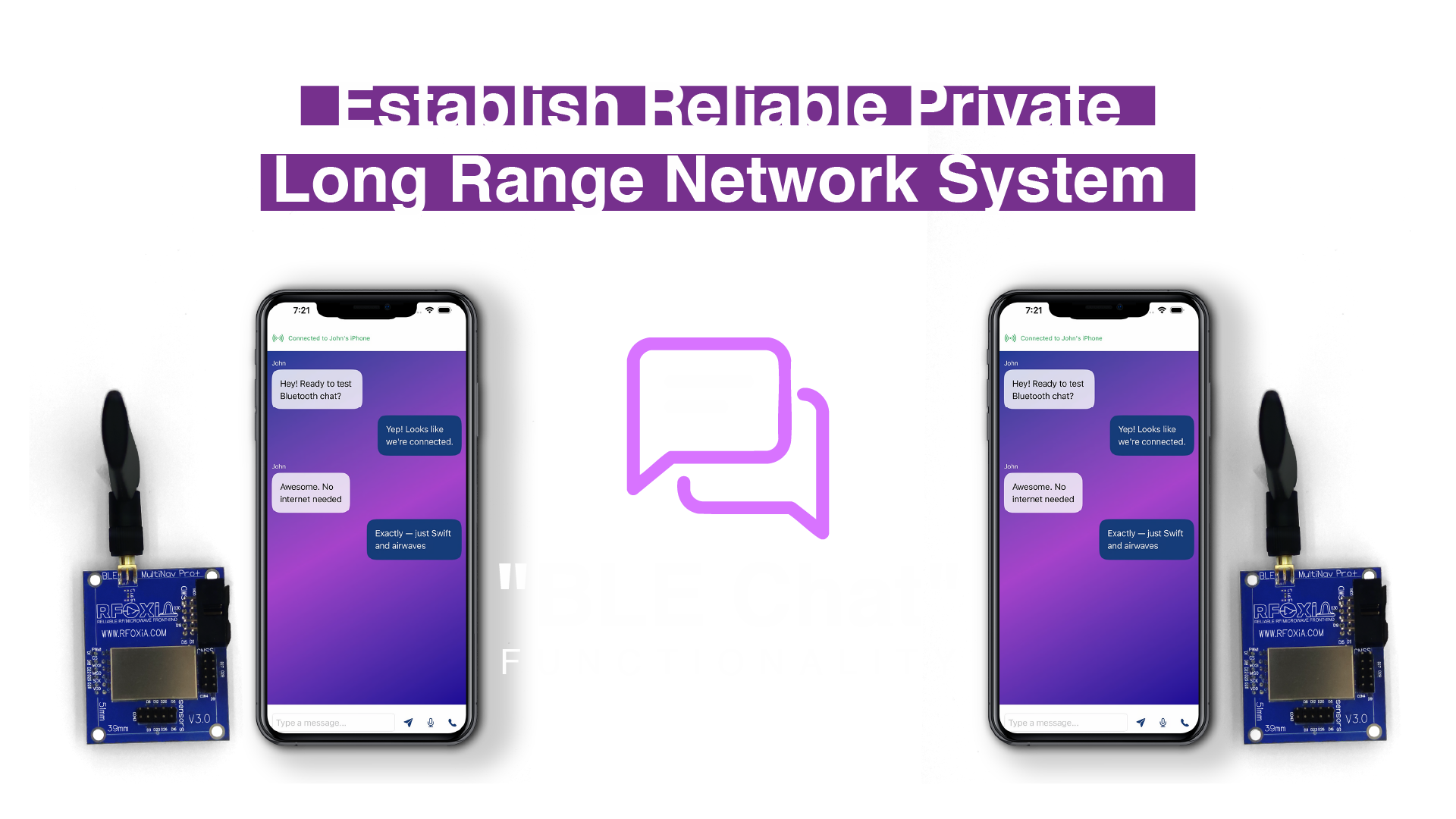
The BLE Chat functionality built into the MultiNav Pro+ ecosystem enables direct, internet-independent communication between field team members — text, data, and voice — over distances that cover most tactical field operation areas. In disaster response scenarios where cellular infrastructure is damaged or overwhelmed, this capability is operationally critical. No SIM card, no tower, no subscription — just direct radio communication between team members.
Researchers and Survey Teams
Geological survey teams, environmental researchers, and field scientists operating in remote terrain need data relay capability that extends beyond the range of standard Bluetooth and doesn't depend on cellular networks that may not exist at their study sites. The MultiNav Pro+ bridges that gap.
The Full Ecosystem: More Than a Module
The MultiNav Pro+ is not sold as a standalone radio module that developers figure out on their own. It is the RF backbone of a complete integrated development ecosystem.
RFOXiA Connect App
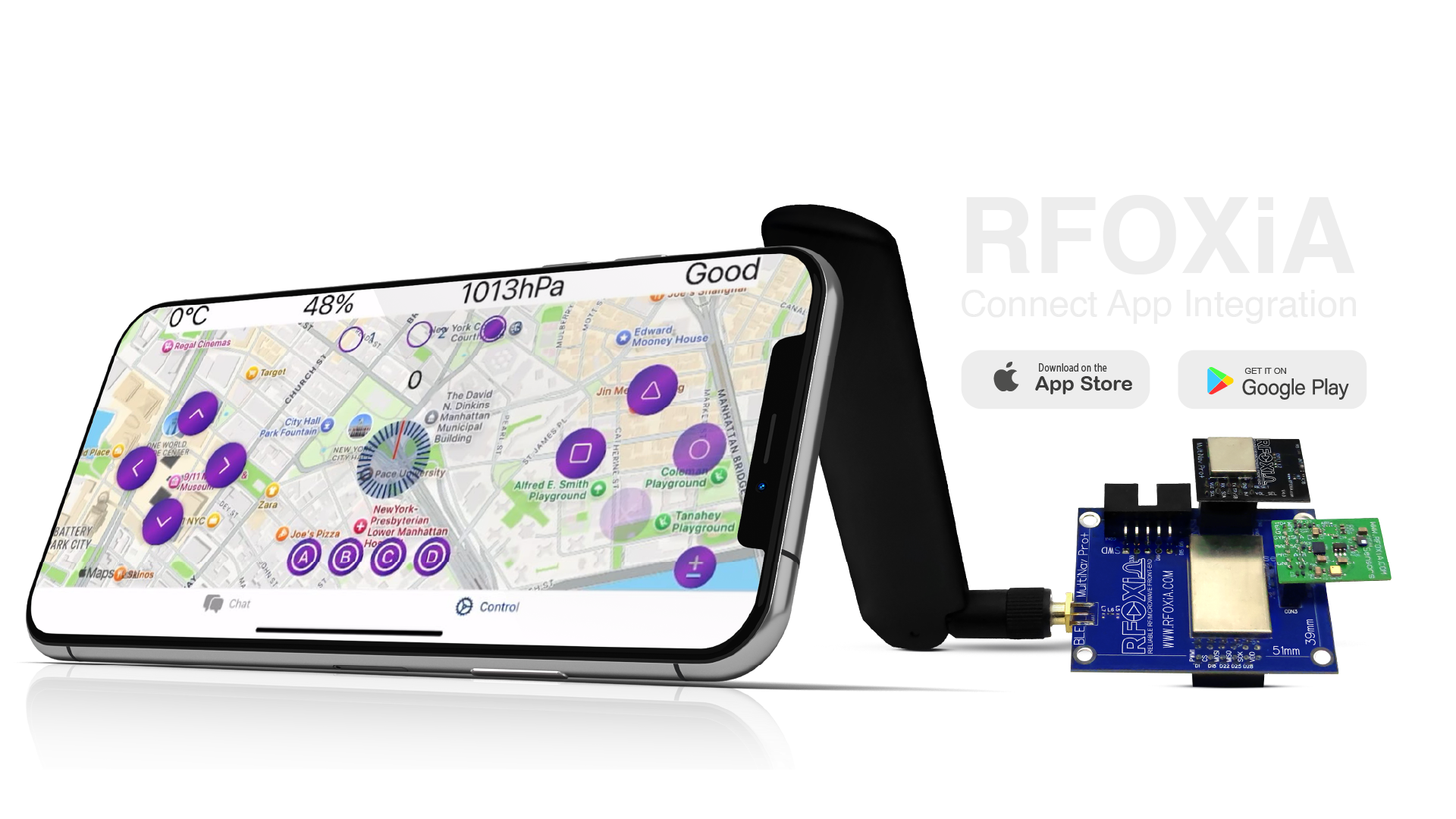
The RFOXiA Connect app (iOS and Android) provides an immediate, no-code interface for controlling and monitoring MultiNav Pro+ deployments. The app features a PS5-style controller interface for drone and robot control, a live map with real-time GPS tracking, live sensor data visualization, and an automation center for scripted control sequences. The entire app works without internet connectivity — control and monitoring happen directly over the BLE link to the module.
Seamless Module Integration
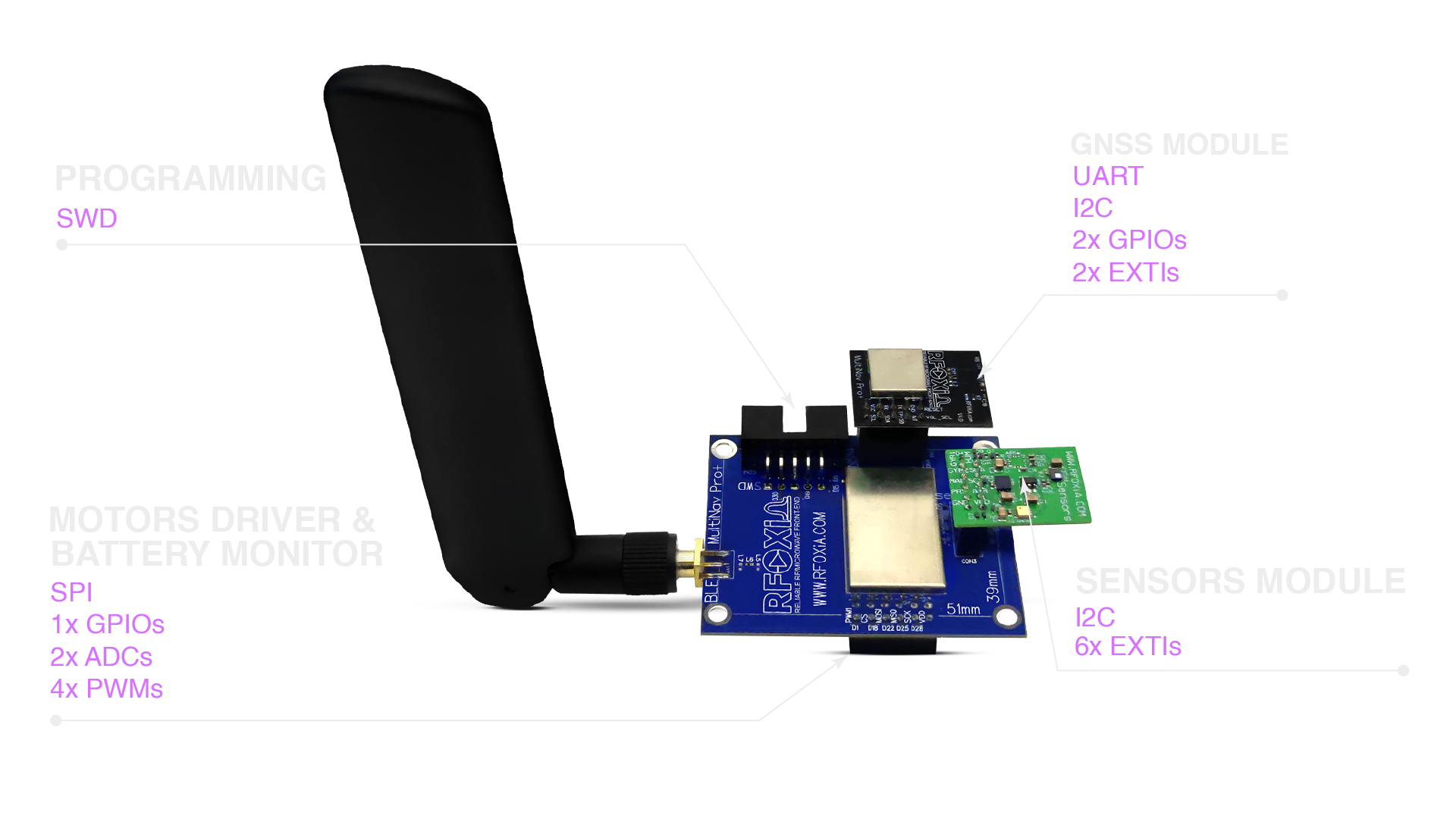
The MultiNav Pro+ BLE Module is designed for seamless integration with the companion modules in the MultiNav Pro+ ecosystem:
- GNSS Module — 1.5m accuracy, 18Hz fix rate precision positioning
- Sensors Module — temperature, humidity, air pressure, air quality, accelerometer, gyroscope, magnetometer
- Power/Program Kit — supercapacitor-based power system, 5-minute charge, 24-hour runtime
All four interfaces on the BLE module — GNSS, Sensors, Motors & Battery Management, and Programming — are designed to connect directly to companion modules without additional wiring or interface boards. The complete Developer Bundle combines all four modules into a unified platform for autonomous systems at $199.
For developers ready to explore the full ecosystem, the RFOXiA Long Range Bluetooth Module page provides full specifications, interface documentation, and purchasing options.
High-Speed Data Transmission
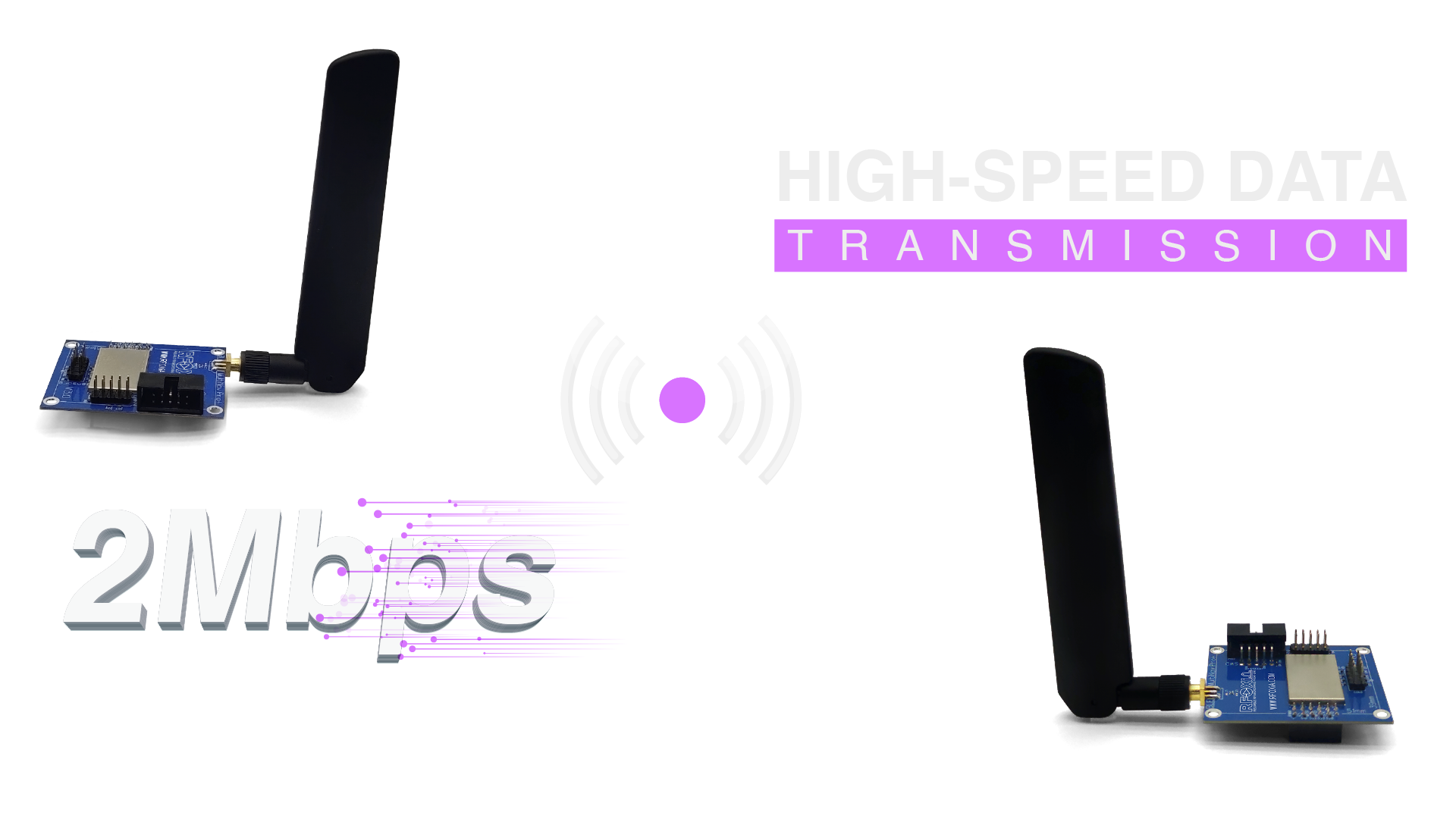
At 2Mbps data rate, the MultiNav Pro+ is not a slow telemetry-only radio link. This bandwidth is sufficient for simultaneous transmission of control commands, GPS coordinates, multi-sensor telemetry streams, and compressed audio data. For drone control applications specifically, 2Mbps over a direct BLE link provides the responsive, low-latency communication that flight control demands.
Open Source, Programmable, and Developer-First
Full Firmware Access
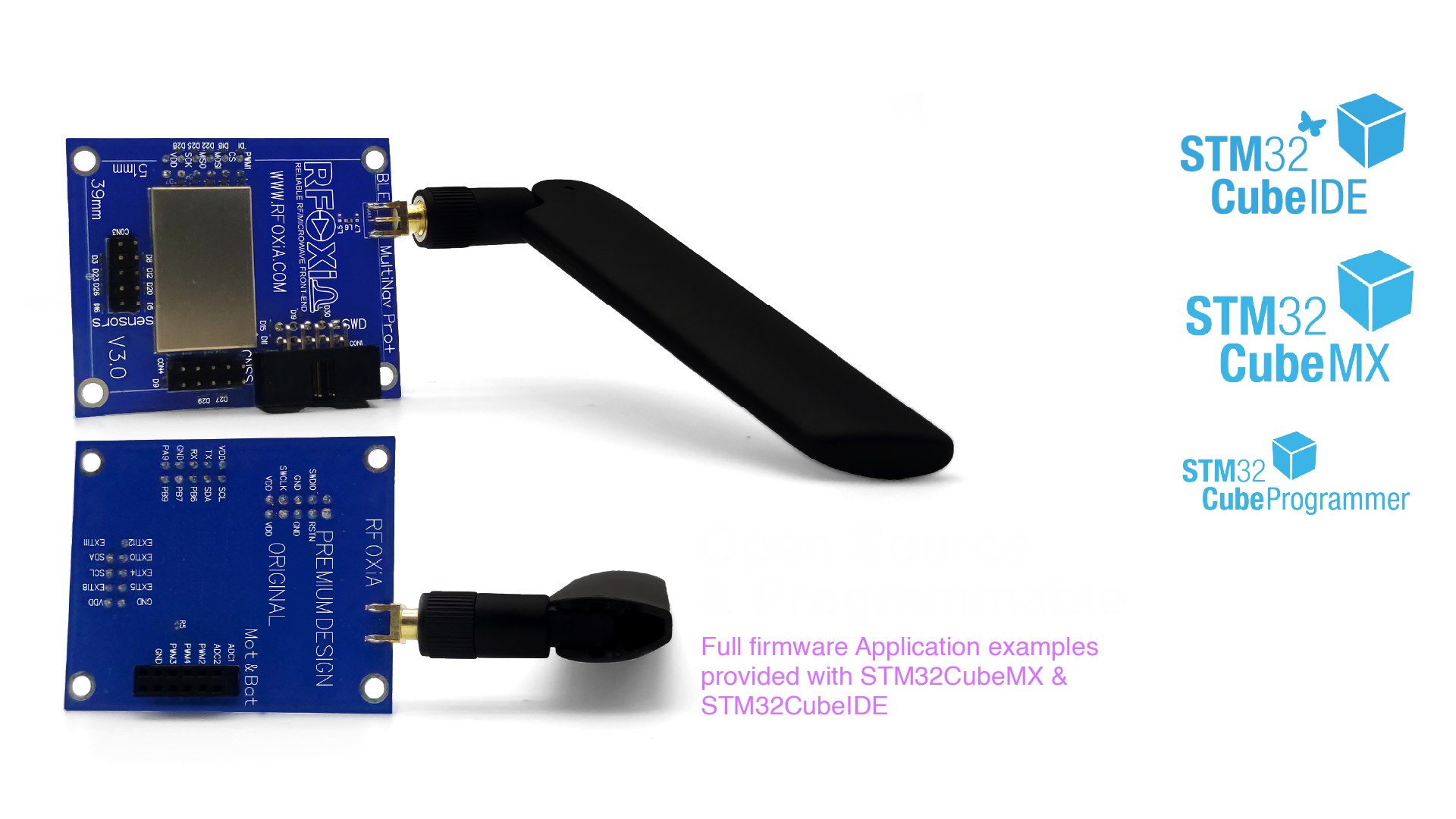
The MultiNav Pro+ firmware is fully open source and available on GitHub. Developers have complete access to the firmware source code and can customize module behavior to any application requirement via SWD programming through the integrated STLink programmer interface in the Power/Program Kit. This is not a locked black-box module — it is a professional development platform that respects developer autonomy.
The GitHub repository at https://github.com/RFOXiA/MultiNav-Pro-Long-Range-BLE-Module-Firmware-STM32WB07 contains the complete firmware codebase for developers who want to build on, modify, or extend the default functionality.
AI Firmware Development
For developers who want to build custom firmware without starting from scratch, the RFOXiA Club Dev Hub includes an integrated AI Firmware Builder. Describe your application in plain language — "I need to stream GPS coordinates and temperature data from a remote sensor node to a base station every 5 seconds" — and the AI generates complete, production-ready firmware with full source code. What previously required months of embedded development time can now be accomplished in hours.
Integrated RTC for Time-Critical Applications
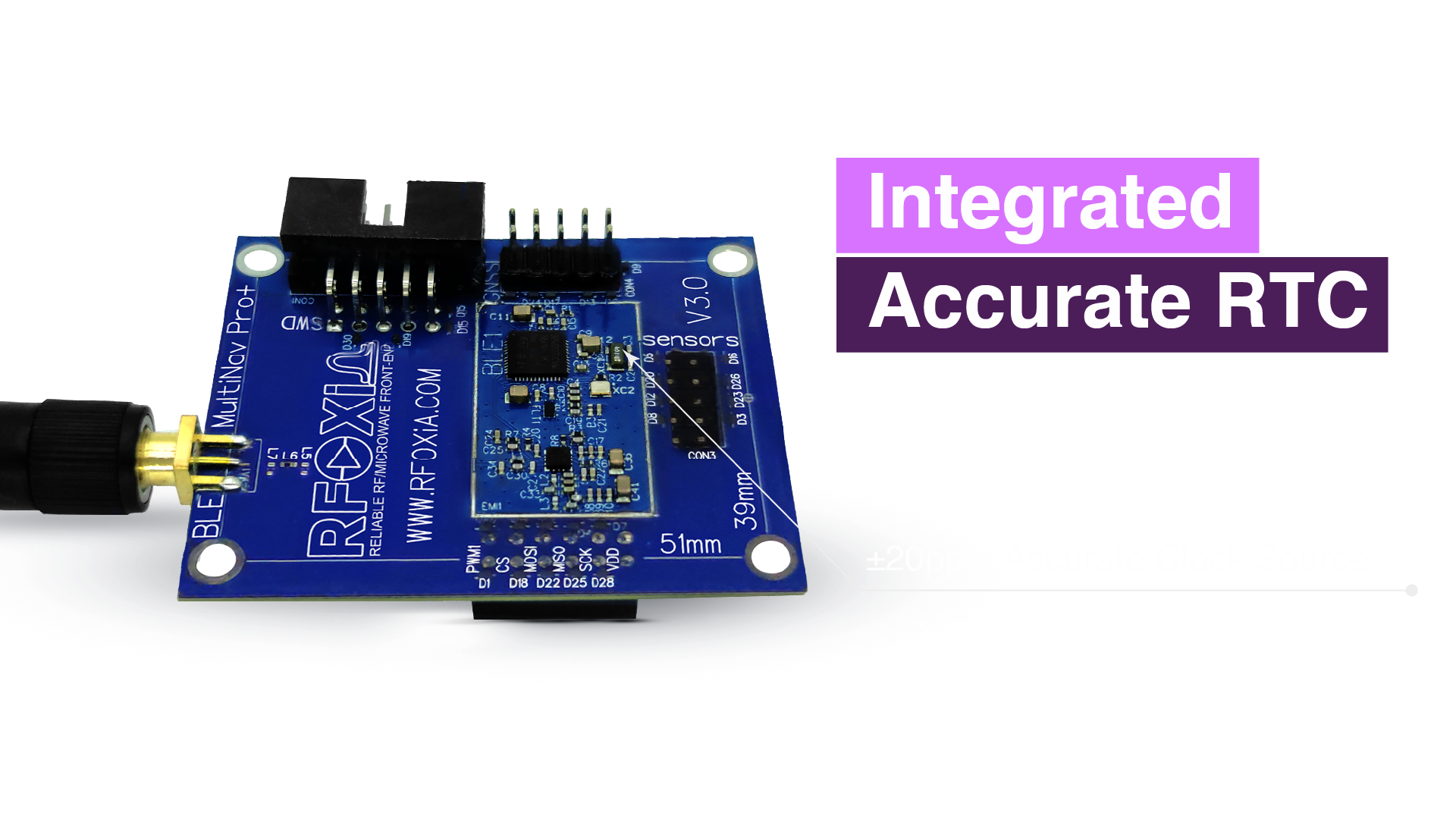
Precise timing is non-negotiable in applications like synchronized sensor arrays, time-stamped data logging, and navigation systems where coordinate accuracy depends on timing precision. The MultiNav Pro+ integrates an accurate RTC crystal directly on the module, providing reliable time reference without external components.
Compact Form Factor for Space-Constrained Deployments
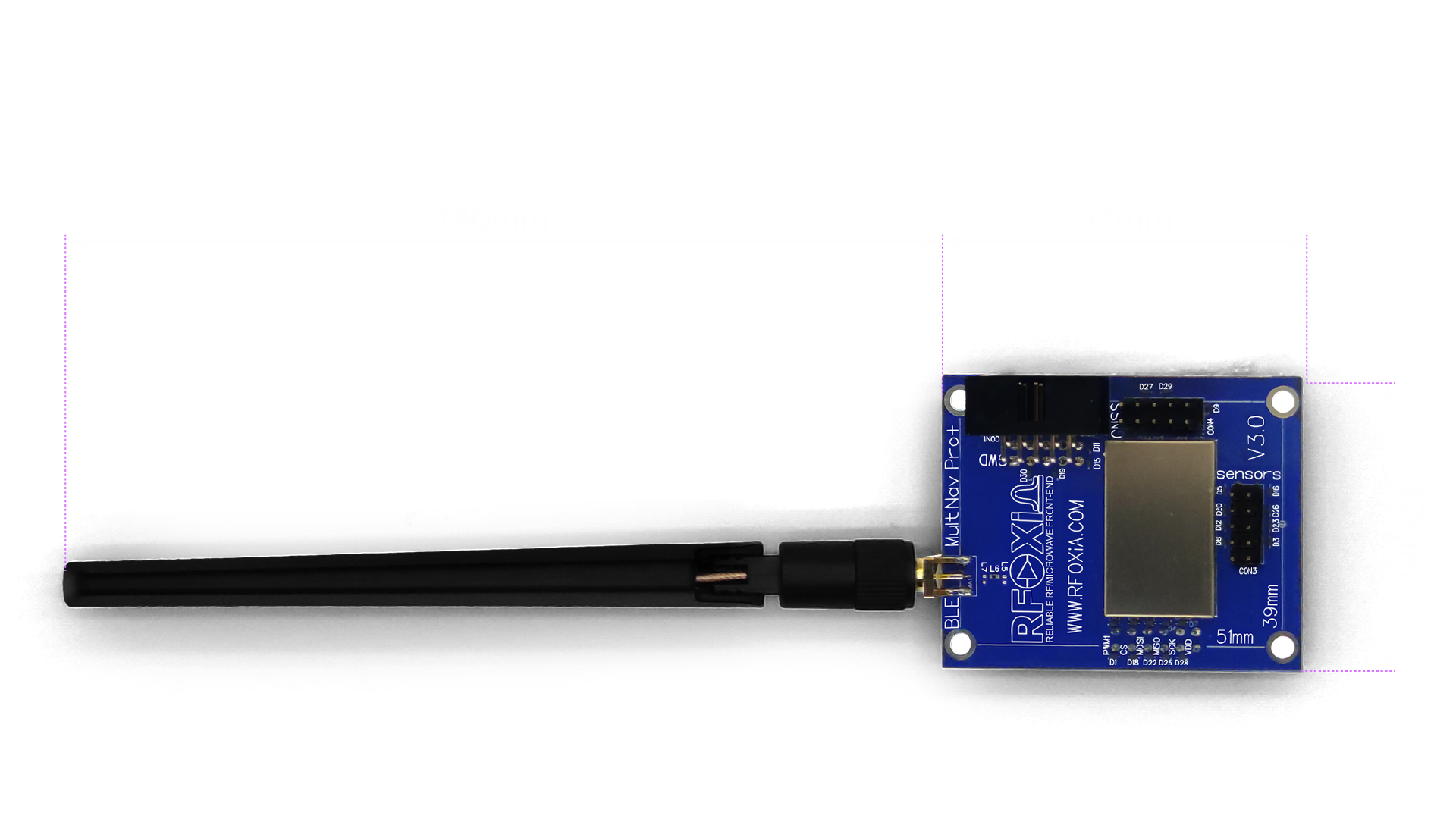
At 57mm × 47mm with a fixing frame size of 54mm × 34mm and corner mounting holes, the MultiNav Pro+ is engineered for integration into space-constrained systems — drone frames, compact IoT enclosures, robotics platforms, and wearable field equipment. The compact form factor does not come at the cost of RF performance; the antenna design achieves its gain characteristics within these physical constraints.
FCC Certification: Why It Matters
FCC certification is not a minor administrative detail. It is the difference between a prototype that operates in a lab and a product that can be legally deployed in the United States, sold through major distributors, and integrated into commercial products.
The MultiNav Pro+ BLE Module carries FCC certification — as do all four MultiNav Pro+ modules. This means:
- Legal operation in the 2.4GHz unlicensed band in the US
- Eligibility for major distributor channels (DigiKey, Mouser, Digi-International distributors)
- Regulatory documentation available for OEM integrators
- No additional end-user regulatory burden for US-based deployment
For commercial IoT deployments and product development teams evaluating the module as an OEM component, FCC certification is a prerequisite. The MultiNav Pro+ meets it.
Competitive Context: The Market Gap This Fills
Understanding the MultiNav Pro+ requires understanding the market gap it occupies:
Commodity BLE modules (Silicon Labs, Nordic, Chinese commodity suppliers): 80–100m range, $5–15 per unit, no ecosystem, no app, no long-range capability. These are the correct choice for in-building IoT and personal area network applications. They are not viable for any application requiring long range wireless without cellular.
Military and industrial long-range systems: 150KM+ range, exceptional performance, $5,000–$50,000+ per unit, export-controlled, no maker ecosystem. Appropriate for defense and heavy industry. Not accessible to the builder, researcher, or commercial IoT developer community.
The MultiNav Pro+ occupies the position between these two extremes: professional-grade long range wireless without cellular dependency, at $59 for two units, with FCC certification, open-source firmware, and a complete software ecosystem.
No direct competitor currently exists at this price point with these specifications.
Getting Started: From Unboxing to 50KM
The MultiNav Pro+ is designed to be operational within minutes of unboxing:
- Pair with phone — Connect via the RFOXiA Connect app. Ground-to-ground range is immediately available up to 5KM.
- Mount to drone — Secure to airframe using the integrated mounting holes. Man-to-drone range extends to 15–20KM.
- Deploy dual-airborne — With two modules on separate UAVs, the 50KM range envelope opens.
- Customize firmware — Access the open-source firmware on GitHub or use the AI Firmware Builder in RFOXiA Club to build application-specific behavior.
- Integrate companion modules — Connect GNSS, Sensors, and Power/Program Kit modules through the native interfaces.
For developers ready to eliminate cellular dependency from their wireless projects, the RFOXiA Long Range Bluetooth Module is available now at $59 for two FCC-certified units.
The Data Network Dimension
For builders who deploy the full MultiNav Pro+ ecosystem with the Sensors Module, there is an additional dimension beyond connectivity: the RFOXiA data network. Verified outdoor sensor deployments — confirmed via GPS and cross-referenced against reference data sources — earn daily rewards of $0.08–$0.40 per day depending on location scarcity and network tier.
This means the hardware pays for itself over time while contributing to a growing network of hyper-local environmental data that serves agricultural technology companies, smart city operators, insurance firms, logistics companies, and research institutions.
The long range wireless without cellular capability is what makes this economically viable at remote deployment sites — no cellular SIM required to stream verified data back to the network.
Conclusion: The Infrastructure-Independent Future of Wireless
The assumption that long-range wireless communication requires cellular infrastructure is one of the most expensive constraints in the maker, drone, robotics, and field IoT communities. It limits deployment locations, drives up operational costs, introduces latency, creates privacy exposure, and puts range capability out of reach for independent developers and small teams.
The MultiNav Pro+ BLE Module is a direct technical refutation of that assumption. Fifty kilometers of range over standard Bluetooth Low Energy, at $59 for two FCC-certified units, with a complete mobile app, open-source firmware, AI-assisted development platform, and a hardware ecosystem that integrates GNSS, environmental sensing, and professional power management.
Long range wireless without cellular is not a future capability. It ships today.
Explore the full specifications and order the RFOXiA Long Range Bluetooth Module directly from RFOXiA.
MultiNav Pro+ BLE Module is FCC certified and ships from the United States. Open-source firmware is available at github.com/RFOXiA. RFOXiA Club membership, including $10 welcome credit and AI Firmware Builder access, is free at rfoxia.com.
Written by: Moamen Mohamed LinkedIn