
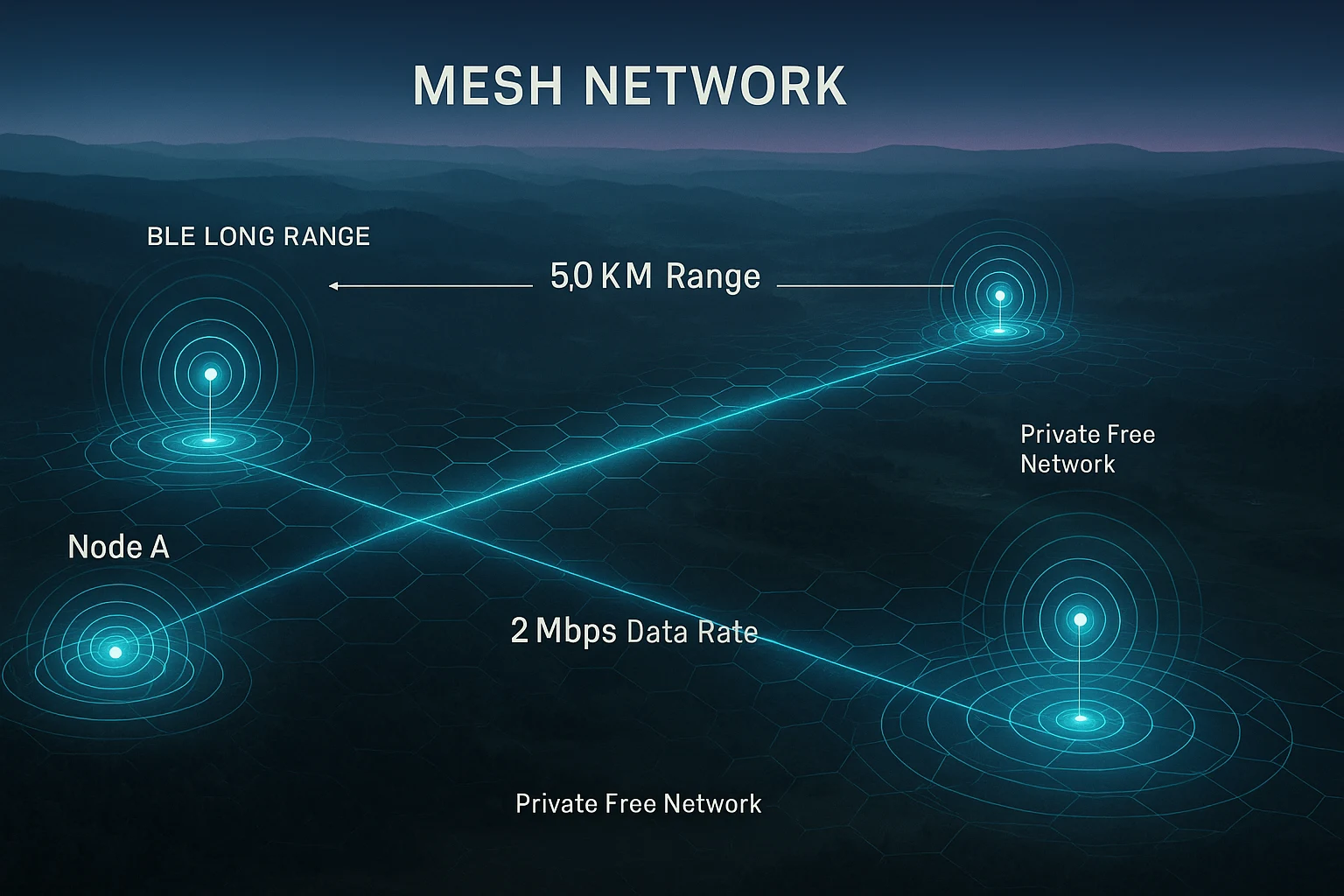
Mesh Network Bluetooth Module: The 50KM Long-Range BLE Revolution
RFOXiA Long Range Bluetooth Module
Why Every Serious Builder Needs a Mesh Network Bluetooth Module That Actually Reaches
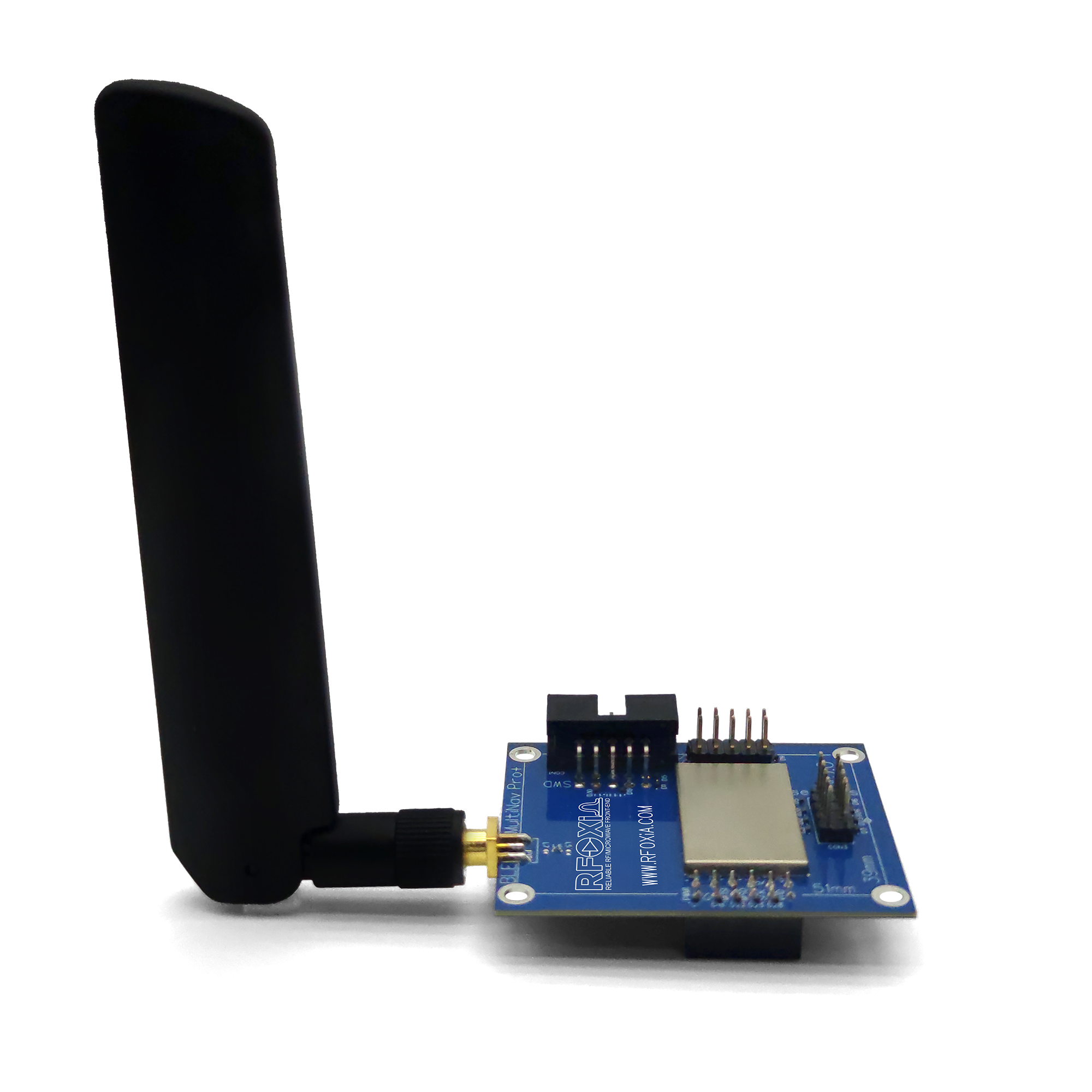
If you have spent any time building wireless systems — whether for drones, robotics, remote IoT deployments, or field research — you already know the frustration. You find a Bluetooth module that looks promising on a datasheet, integrate it into your design, head out into the field, and watch it fall apart at 80 meters. The promise of "long range" in the commodity BLE world is, at best, optimistic. At worst, it is an outright lie.
The problem is structural. Standard BLE modules — the kind you find on breakout boards and in generic IoT kits — are designed for consumer electronics. They are built to connect your earbuds to your phone, your fitness tracker to your wrist, your smart bulb to your router. They are not designed for 5-kilometer ground links, 20-kilometer man-to-drone telemetry, or 50-kilometer drone-to-drone data links. That gap in the market — between the $5 commodity module and the $5,000 military-grade radio — is exactly where the MultiNav Pro+ BLE module from RFOXiA lives.
And when you extend that capability across multiple nodes, what you get is something far more powerful than a simple point-to-point radio: you get a true mesh network Bluetooth module ecosystem that can blanket large geographic areas with private, internet-independent wireless coverage.
This guide covers everything you need to know — the hardware, the architecture, the real-world applications, and why the MultiNav Pro+ is the only mesh network Bluetooth module worth serious consideration at this price point.
What Makes a Mesh Network Bluetooth Module Different?
Before we get into the specifics of the MultiNav Pro+, it is worth establishing what separates a genuine mesh network Bluetooth module from the commodity alternatives that flood the market.
A standard BLE module handles one thing: a short-range point-to-point or point-to-multipoint connection. Your phone talks to a sensor. That sensor talks back. End of story. The range is constrained by the module's output power, receiver sensitivity, and antenna design — and in commodity hardware, all three are optimized for cost, not performance.
A mesh network Bluetooth module operates differently. Each node in the network can relay data through adjacent nodes, extending the effective range of the system far beyond the reach of any individual radio. Combine that mesh topology with hardware that already achieves extraordinary range on a single hop, and you have a fundamentally different class of communication tool.
The MultiNav Pro+ achieves:
- 5KM ground-to-ground range (module paired to smartphone, communicating with a second smartphone-paired module)
- 15–20KM man-to-drone range (smartphone on the ground, module on the drone)
- 50KM drone-to-drone range (both modules airborne, ground reflections eliminated)
Deploy multiple nodes across that architecture and you have a mesh network Bluetooth module system capable of covering territory that no commodity hardware can touch — at a price point that doesn't require a military procurement budget.
The MultiNav Pro+ BLE Module: Hardware That Earns Its Specifications
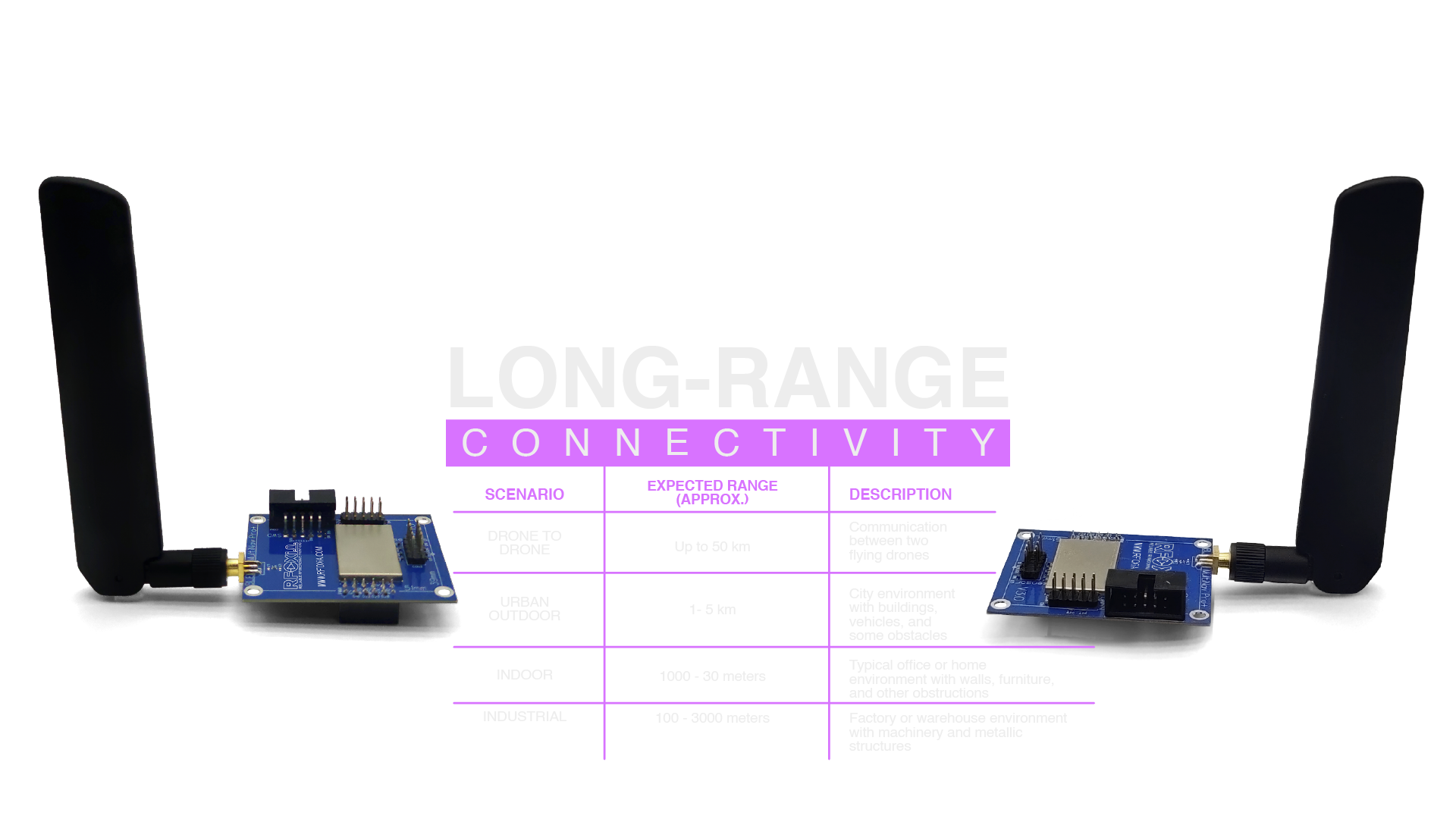
Range claims are easy to make. Hardware that delivers them is not. Here is how the MultiNav Pro+ earns its numbers.
RF Front-End Architecture
The module's range performance comes from a combination of three engineering decisions that commodity modules simply do not make:
- External RF amplifiers — dedicated power amplification on the transmit path, pushing signal strength beyond what integrated SoC radios can achieve
- Advanced receiver sensitivity — the module is tuned to detect signals at power levels where commodity receivers produce only noise
- Optimized antenna design — an integrated high-gain chip antenna with a 140mm antenna element, calibrated for maximum signal capture
This is not marketing math. These are the measurable, repeatable results of deliberate RF engineering. The MultiNav Pro+ is FCC certified — meaning these performance claims have survived regulatory scrutiny, not just a lab bench.
The STM32WB07CCV6 Processing Core
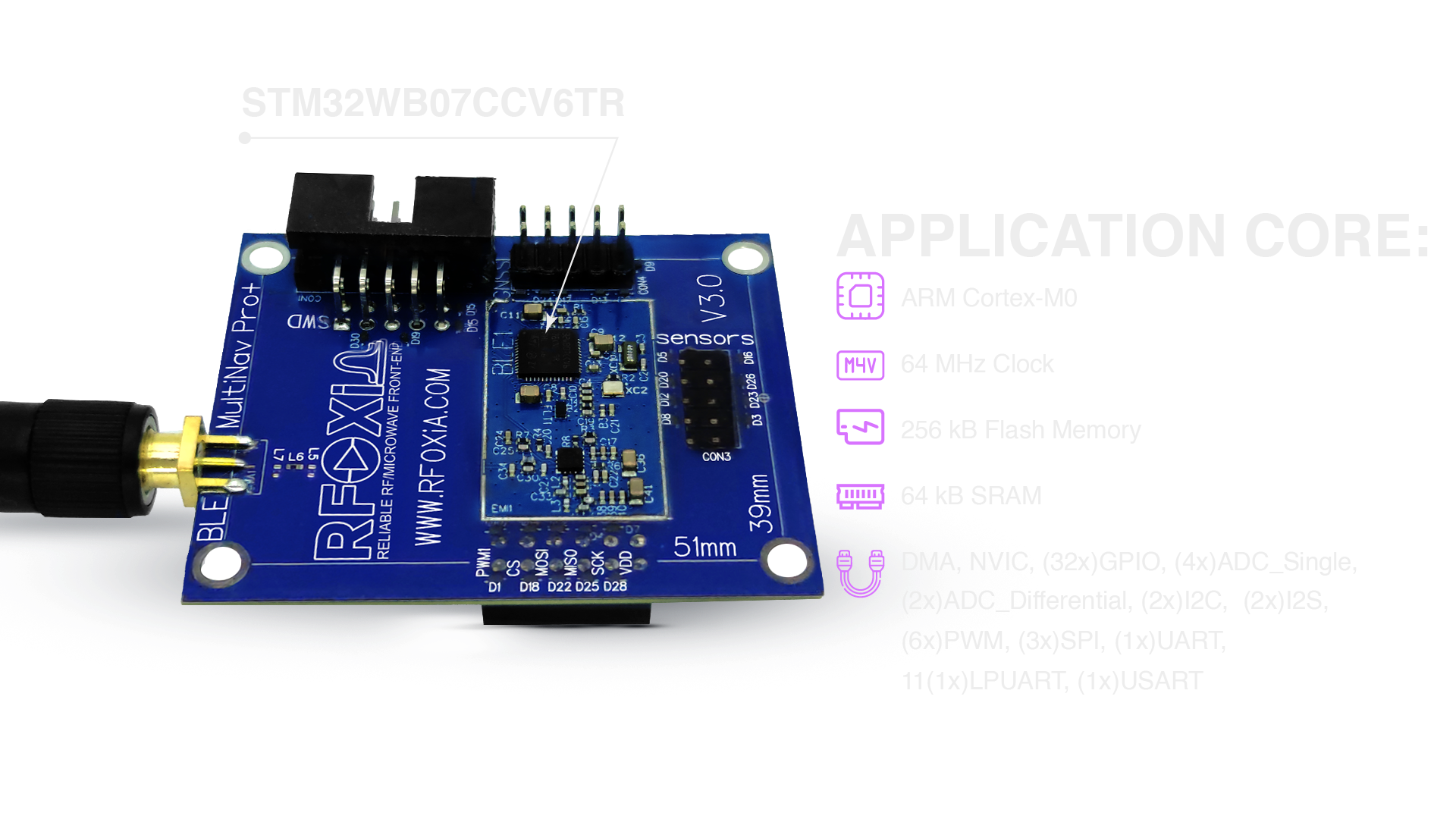
At the heart of the MultiNav Pro+ is the STM32WB07CCV6 — STMicroelectronics' dual-core wireless microcontroller purpose-built for Bluetooth applications. The architecture separates the BLE stack processing from user application code, which means your firmware gets dedicated compute resources without competing with the radio stack.
The practical result: 2 Mbps data rate with minimal latency. Whether you are streaming real-time sensor telemetry from a drone, sending control commands to a ground robot, or running multi-node mesh communication across a field deployment, the processing headroom is there.
High-Speed Data Transmission
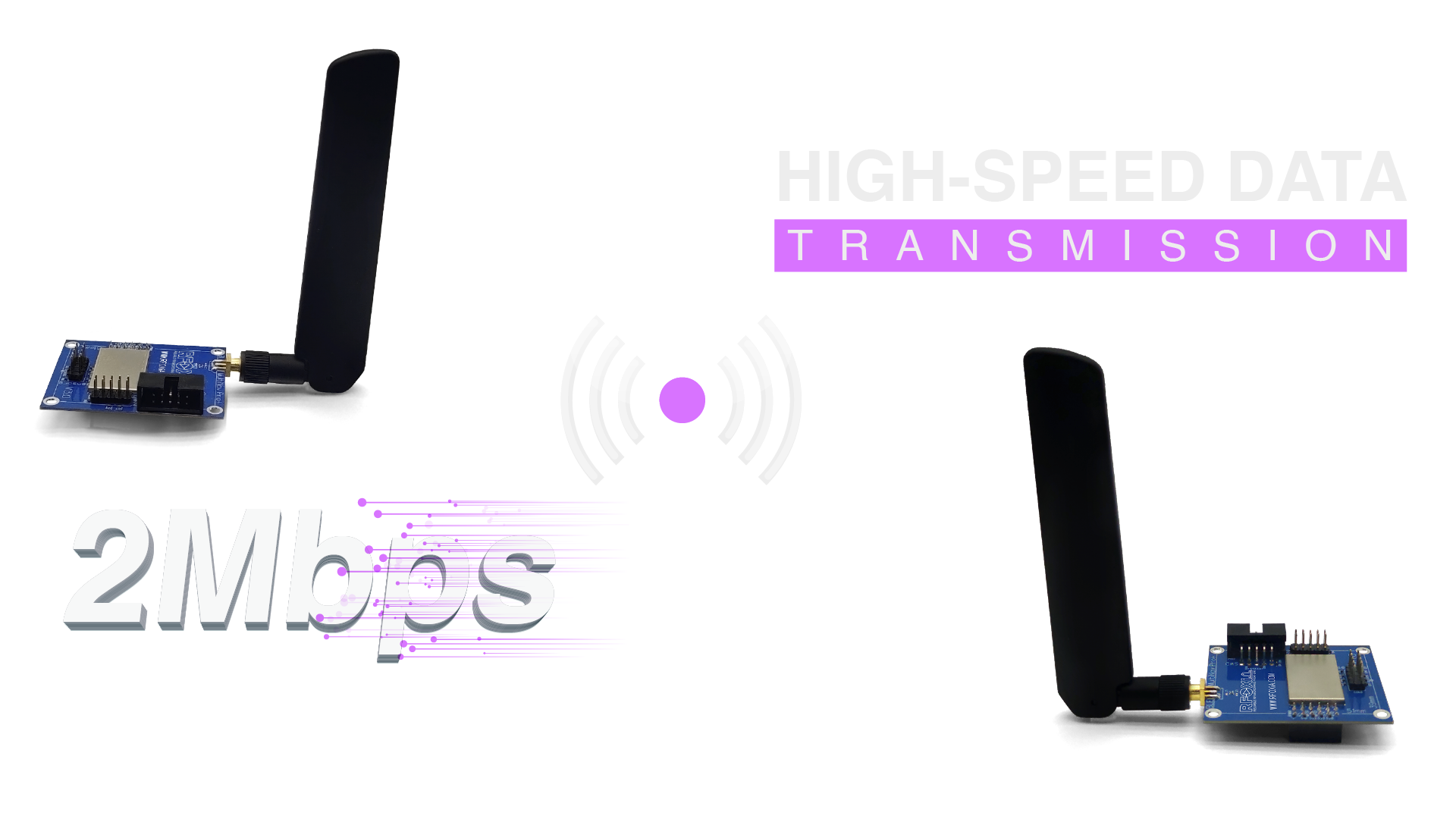
The 2 Mbps data rate matters because range alone is not enough. A slow, high-latency link is a liability in control applications. When you are flying a drone at 20km, you need telemetry data arriving fast enough to be actionable. The MultiNav Pro+ delivers throughput that handles live sensor streams, GPS coordinates, and control signals simultaneously — without the packet loss and latency that plague lower-end modules under load.
Application Interfaces: Built to Integrate
One of the engineering decisions that sets the MultiNav Pro+ apart from competing modules is its deliberate attention to integration. The module exposes four distinct hardware interfaces:
- GNSS interface — direct connection to the MultiNav Pro+ GNSS module for precision location data
- Sensors interface — connection to the environmental sensors module (temperature, humidity, pressure, air quality, accelerometer, gyroscope, magnetometer)
- Motors and Battery Management interface — designed for drone and robotics applications requiring direct motor control and power system monitoring
- Programming interface — SWD access for firmware development and customization
This interface architecture is why the MultiNav Pro+ functions not just as a standalone mesh network Bluetooth module, but as the wireless backbone of a complete developer ecosystem.
Seamless Ecosystem Integration
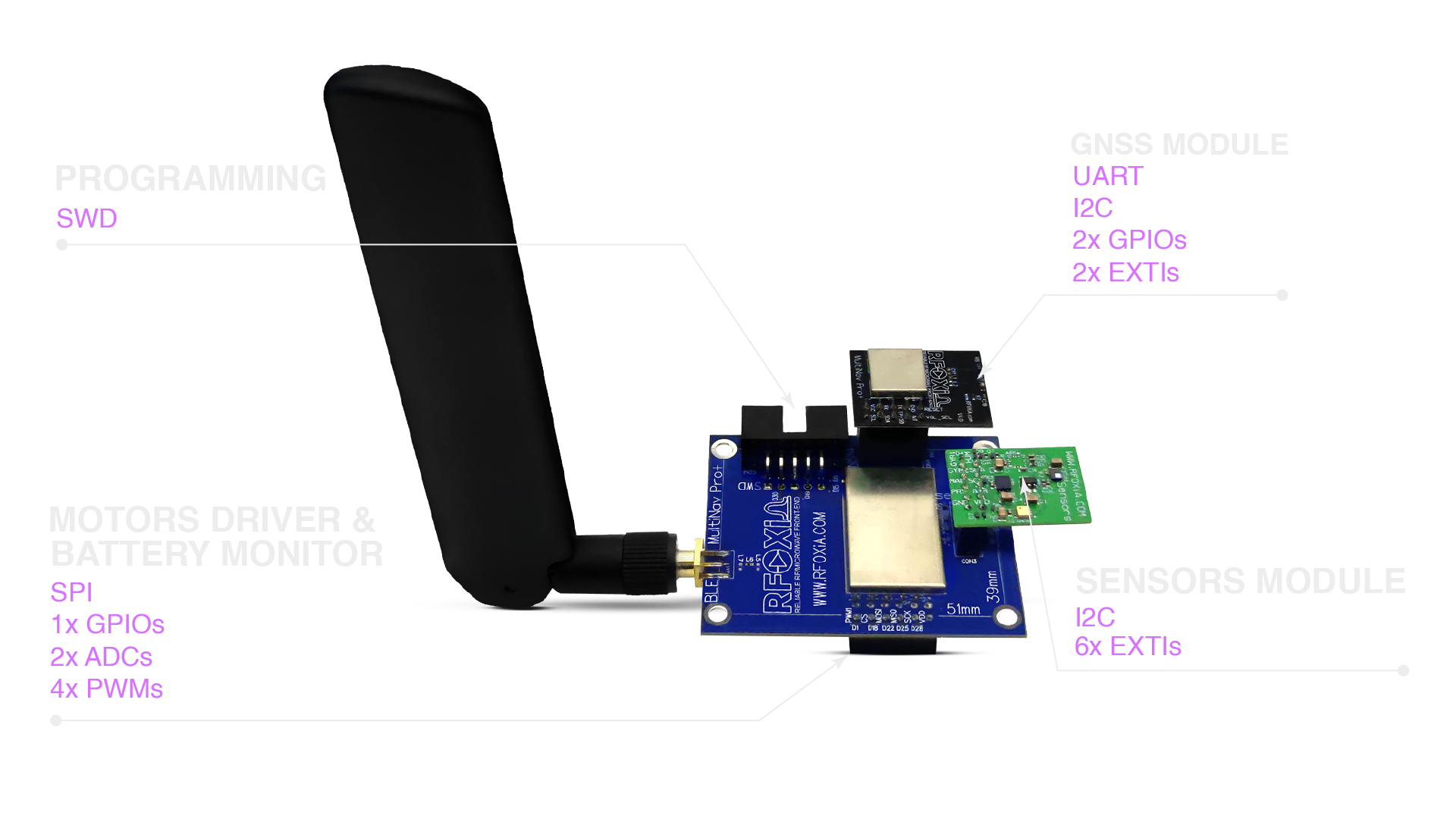
The MultiNav Pro+ BLE module is designed to work natively with the rest of the RFOXiA hardware stack:
- MultiNav Pro+ GNSS Module — 1.5-meter accuracy, 18Hz fix rate, optimized for fast-moving platforms
- MultiNav Pro+ Sensors Module — seven environmental sensors in one compact board
- Power/Program Kit — supercapacitor-based power system, 5-minute charge, 24-hour runtime, integrated STLink programmer
When combined, these modules form the Developer Bundle — the only commercially available kit that integrates long-range BLE, precision GPS, multi-sensor environmental monitoring, and professional power management in a single connected ecosystem. It is a platform designed for builders who are serious about what they build.
If you are ready to explore what the complete ecosystem can do for your project, the RFOXiA Long Range Bluetooth Module is where to start.
The RFOXiA Connect App: Your Mesh Network Control Center
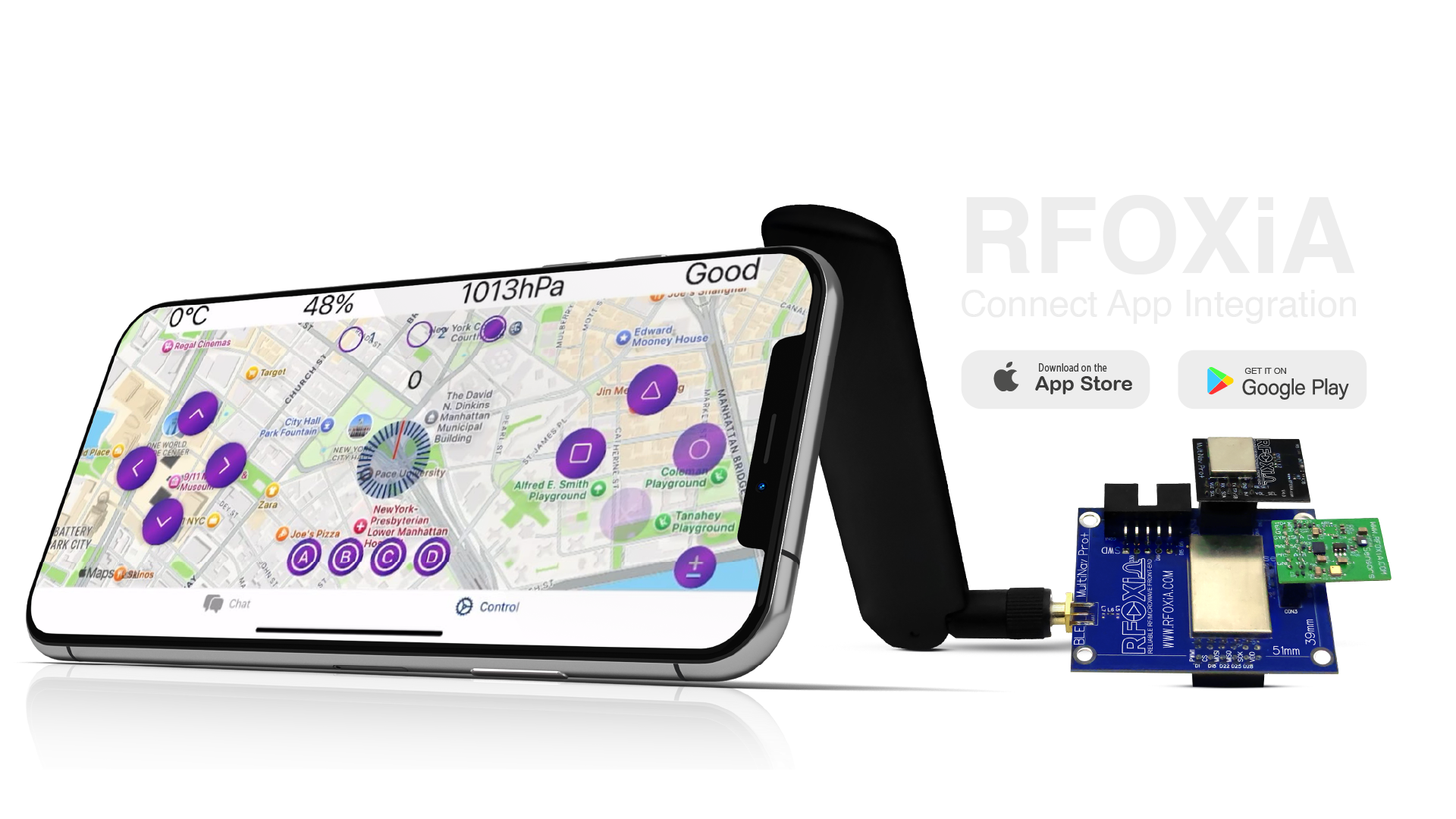
Hardware capability is only half the story. The RFOXiA Connect app (iOS and Android) transforms the MultiNav Pro+ from a module into an operational control system.
Control Screen features:
- PS5-style controller interface for drone and robot operation
- Live map with real-time GPS tracking from paired GNSS module
- Live sensor data display from connected Sensors module
- Works completely without internet — the BLE link is the network
This last point deserves emphasis. The RFOXiA Connect app does not route your control signals through a cloud server. There is no latency introduced by internet round-trips. There is no dependency on cell towers or WiFi infrastructure. Your phone and your drone are connected directly, through the BLE link, at whatever range the hardware supports.
For applications where infrastructure cannot be assumed — remote field operations, disaster response scenarios, wilderness expeditions, construction sites in early development — this is not a nice-to-have feature. It is essential.
BLE Chat: Internet-Independent Mesh Communication
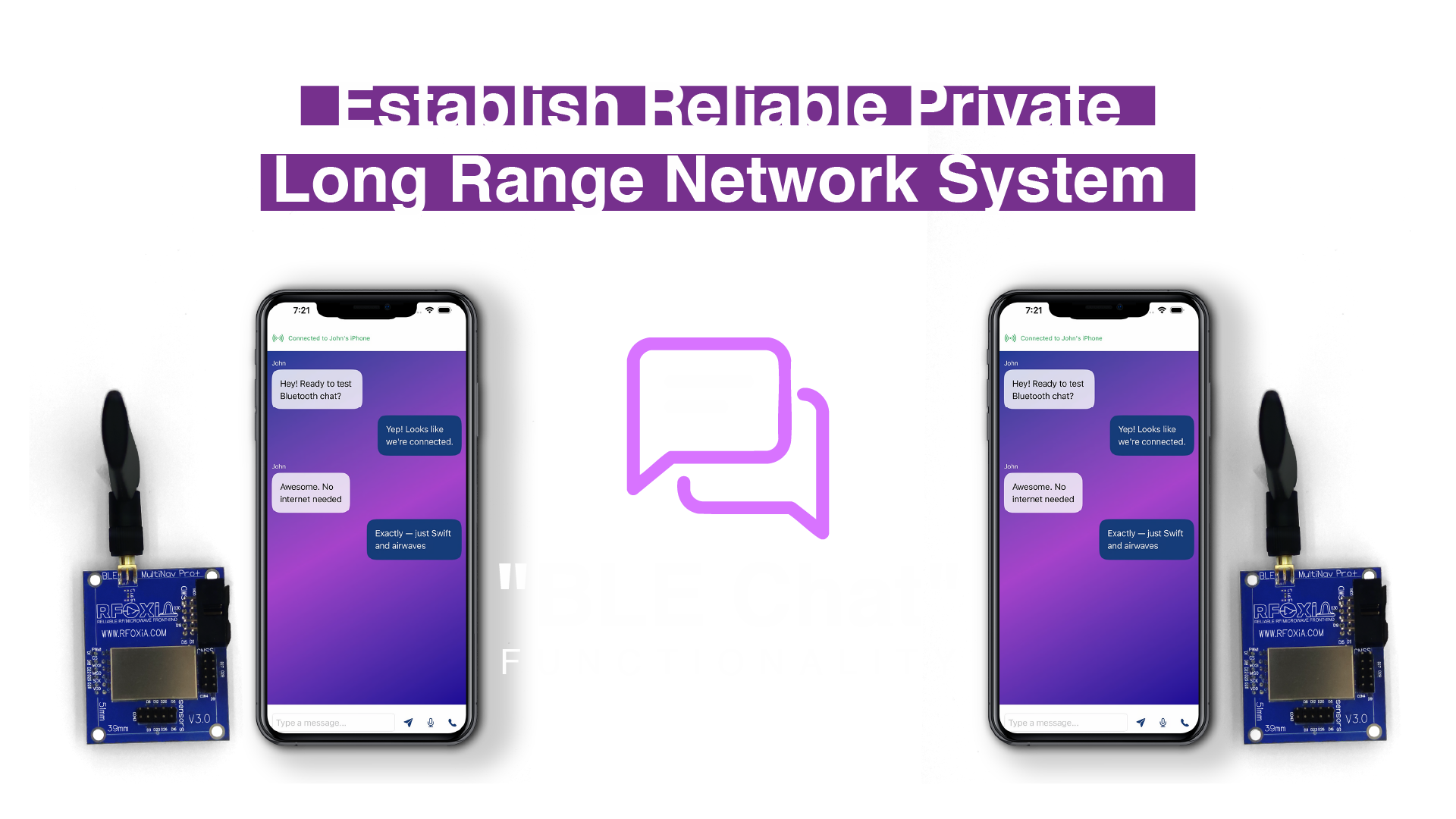
The MultiNav Pro+ includes a feature called BLE Chat — a direct, internet-independent communication channel between multiple MultiNav Pro+ users.
This is where the mesh network Bluetooth module concept becomes practically significant. Multiple BLE modules deployed across a geographic area — whether on drones, on vehicles, or carried by field personnel — can form a communication mesh. Text, data, and voice communication flows through the network without any internet dependency, without any cell tower dependency, without any subscription fee.
Real-world applications for this capability:
- Search and rescue operations in areas without cellular coverage
- Field research teams working across large remote sites
- Drone swarm coordination where individual units relay data between ground and distant nodes
- Industrial monitoring across facilities where WiFi infrastructure is impractical
- Emergency preparedness deployments where existing infrastructure may be unavailable
The BLE Chat mesh network Bluetooth module architecture turns individual nodes into a self-organizing communication system. Each MultiNav Pro+ becomes both an endpoint and a relay — the fundamental definition of a mesh network.
Compact, Durable, and Field-Ready
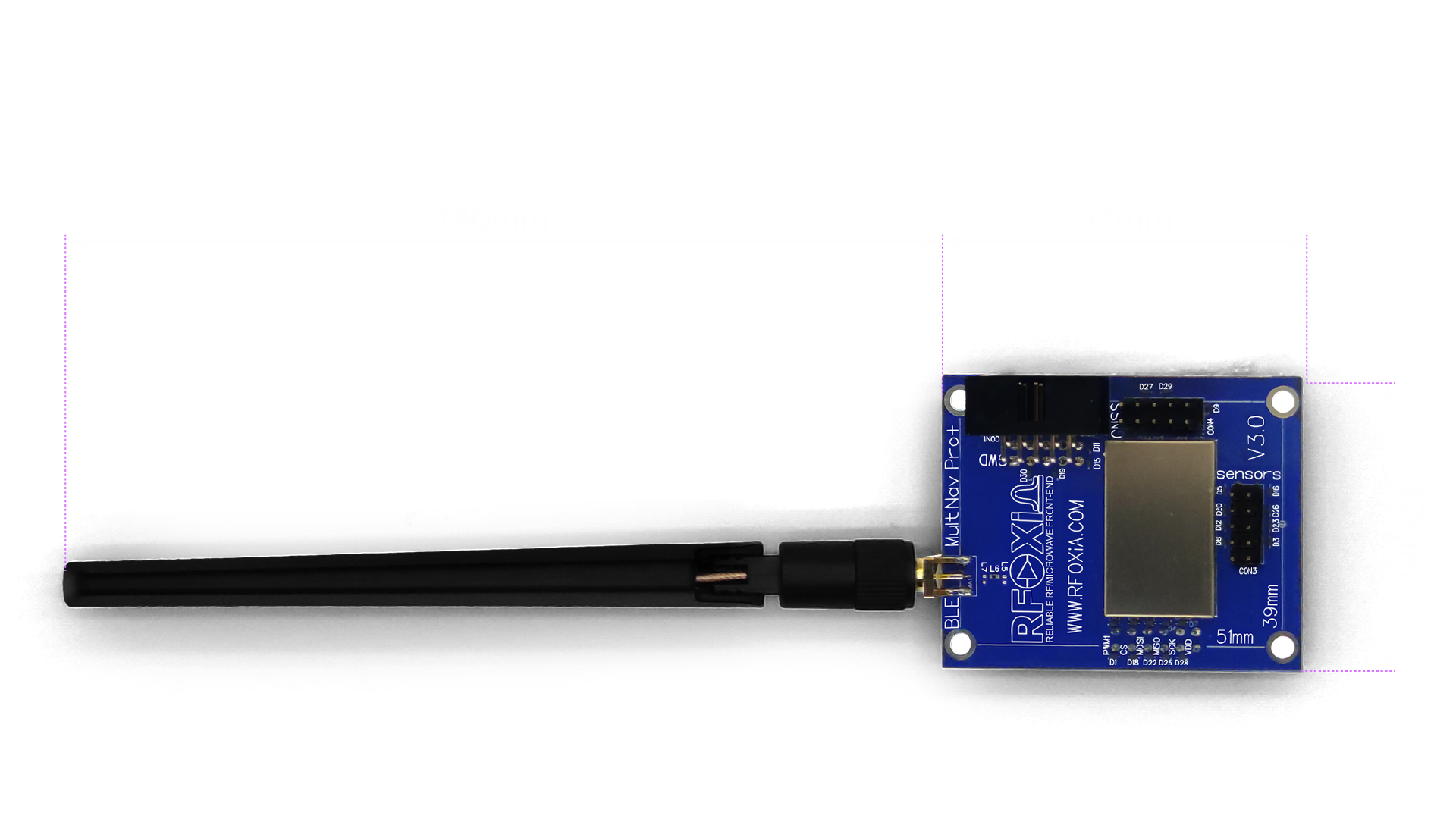
Long-range capability in a laboratory is one thing. Long-range capability in a system that actually gets used — mounted to drones, carried into the field, integrated into enclosures — requires physical design that survives real conditions.
The MultiNav Pro+ BLE module measures 57mm x 47mm with a fixing frame size of 51mm x 39mm and corner mounting holes. The antenna element is 140mm. This form factor is deliberately compact: small enough to fit into space-constrained drone frames and robotics enclosures, robust enough to tolerate the vibration and handling that field deployments involve.
The four-corner mounting system allows rigid mechanical integration without relying on adhesive or friction-fit solutions — the right approach for anything that moves at speed.
Open Source and Fully Programmable
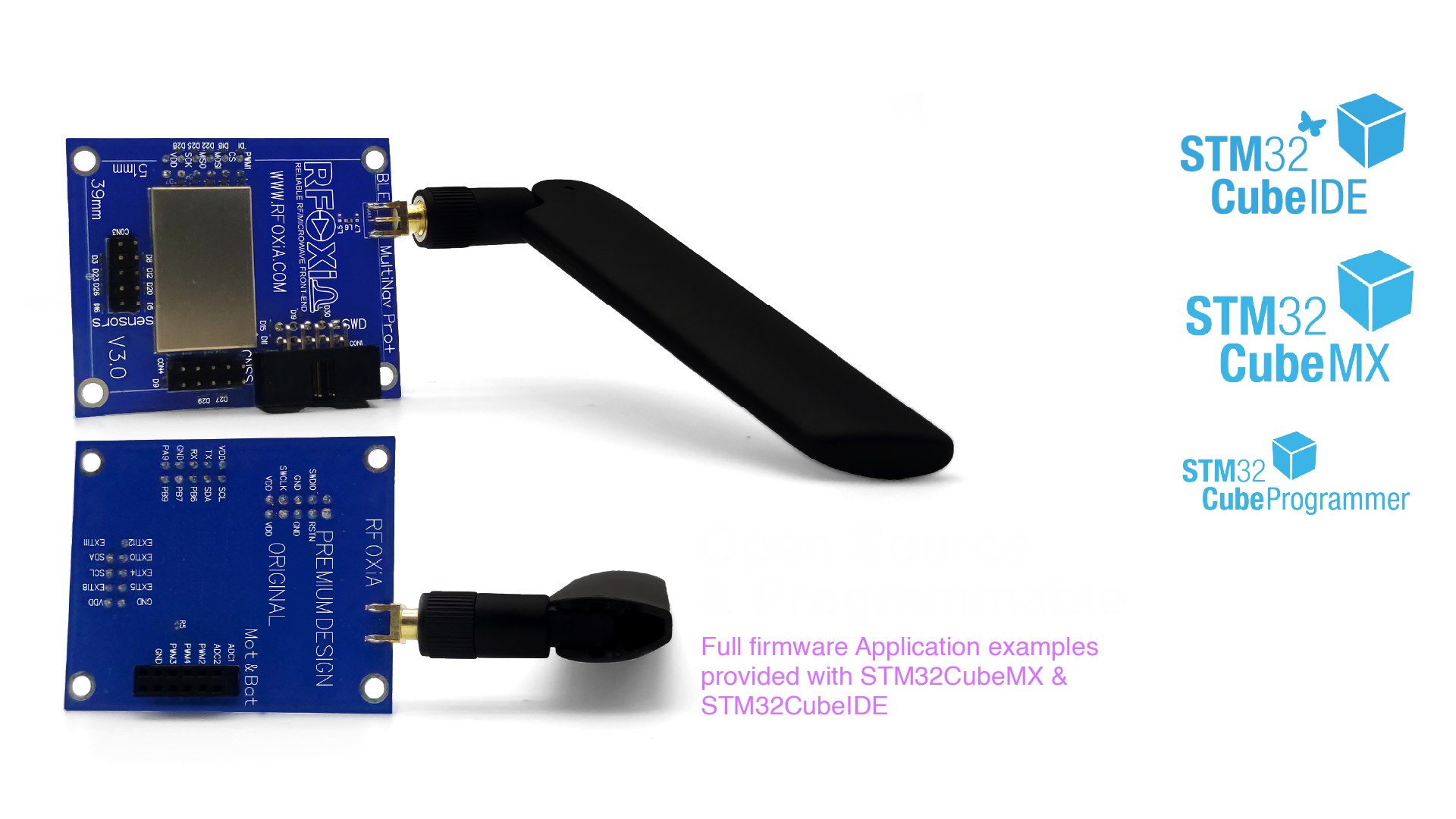
The MultiNav Pro+ firmware is fully open source, available on GitHub at github.com/RFOXiA/MultiNav-Pro-Long-Range-BLE-Module-Firmware-STM32WB07. Programming access is via SWD through the integrated programming interface.
For developers who want to customize behavior — custom BLE profiles, proprietary mesh protocols, application-specific data handling — the full source code is available, modifiable, and re-flashable through the SWD interface.
For developers who want to build custom firmware without spending weeks on BLE stack implementation, the RFOXiA AI Firmware Builder (available inside RFOXiA Club) generates production-ready firmware from plain-language descriptions. Describe your application. The AI writes the firmware. You review, customize, and flash.
This combination — open source hardware, programmable via SWD, with an AI firmware development platform — collapses the development timeline from months to days for most wireless applications.
Precision Timing: The Integrated RTC
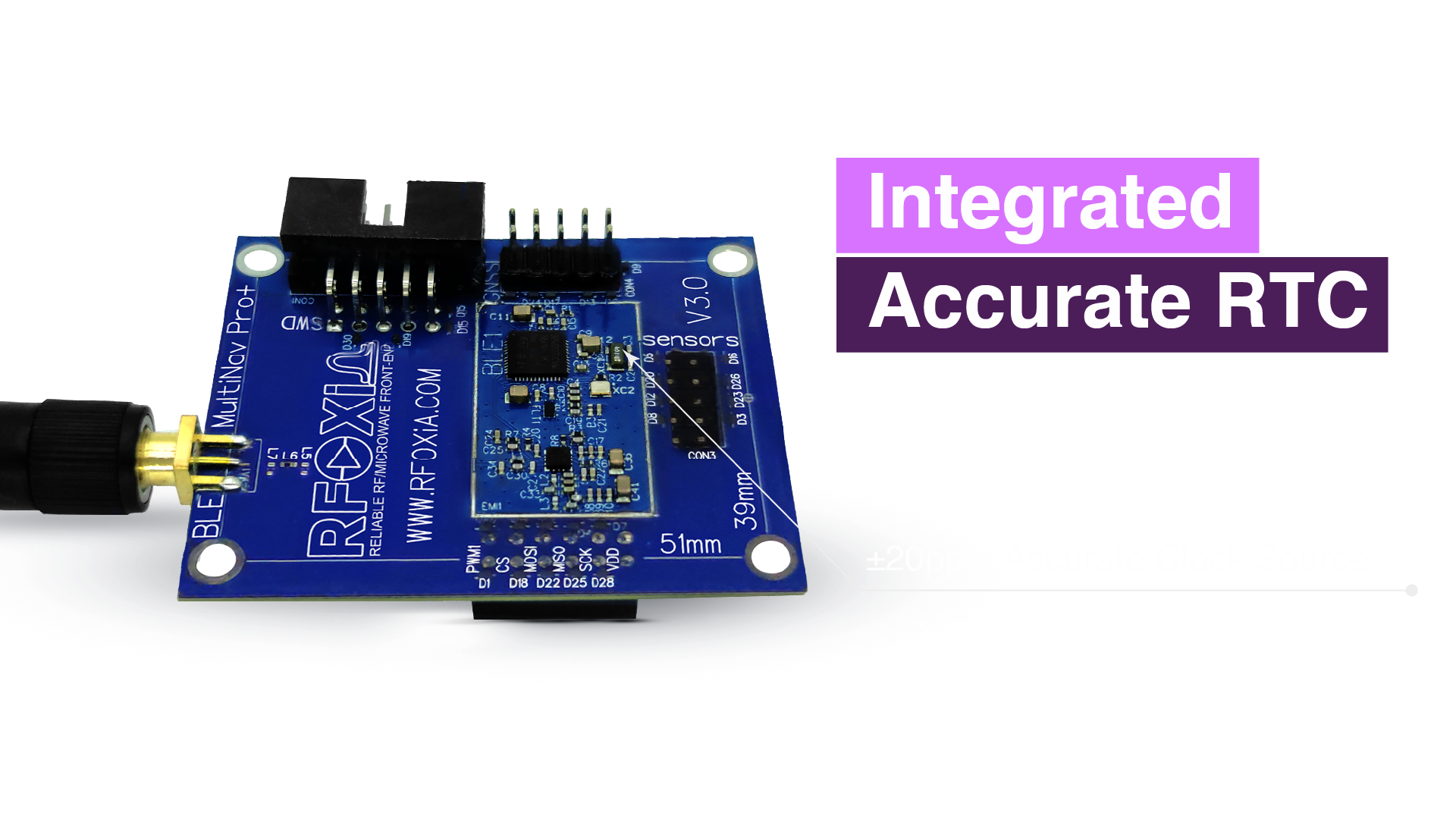
In mesh network deployments, synchronization is not optional — it is foundational. Nodes that cannot agree on time cannot coordinate channel access, cannot timestamp data reliably, and cannot implement time-division communication schemes that prevent packet collisions across the mesh.
The MultiNav Pro+ integrates an accurate RTC crystal directly on the module. This provides the timing reference that mesh network Bluetooth module architectures require, without depending on external time sources or GPS timing signals (though the GNSS module can provide those too when available).
For navigation applications, data logging with accurate timestamps, and multi-node synchronized deployments, the integrated RTC is an engineering detail that matters in practice.
Who Is the MultiNav Pro+ Built For?
The MultiNav Pro+ BLE module is not a hobbyist toy and it is not a $5,000 military radio. It occupies a specific and largely uncontested position: professional-grade wireless hardware at maker-accessible prices.
The target builder is someone who:
- Builds drones or FPV aircraft and needs a telemetry and control link that works beyond line-of-sight range
- Develops robotics systems that need to operate across large sites without infrastructure dependency
- Deploys remote IoT networks where cellular connectivity is unavailable or cost-prohibitive
- Conducts field research requiring reliable data links across distances that commodity hardware cannot cover
- Builds emergency communication systems that need to function when existing infrastructure fails
- Develops autonomous vehicle systems requiring mesh coordination between multiple units
For any of these builders, the combination of 50KM maximum range, 2Mbps data rate, mesh network Bluetooth module capability, FCC certification, and a complete connected ecosystem — priced at $59 for two units — represents a market position with no direct competition.
Competitive Reality: Why Nothing Else Compares
The wireless hardware market has two ends:
Commodity BLE modules (Silicon Labs, Nordic, Chinese manufacturers): $5–15, 80–100 meter range, no ecosystem, no app, no mesh capability beyond what you engineer yourself from scratch. These are built for consumer electronics, not professional wireless systems.
Military and industrial long-range radios (DTC BluSDR, Taisync, aerospace-grade hardware): 150km+ range, military-grade ruggedization, $5,000–$50,000+. Inaccessible to independent builders, researchers, or small companies.
The MultiNav Pro+ as a mesh network Bluetooth module sits between these extremes — achieving specs that commodity hardware cannot approach, at prices that professional systems cannot match. The FCC certification means it ships to US customers without regulatory risk. The open-source firmware means you own your implementation. The RFOXiA ecosystem means you have a platform to build on, not just a module to integrate.
The RFOXiA Long Range Bluetooth Module product page has full technical documentation, pricing, and inventory status.
RFOXiA Club: The Platform Behind the Hardware
Every MultiNav Pro+ purchase comes with access to RFOXiA Club — a full developer platform that includes:
- Dev Hub — community projects, technical discussions, firmware examples
- AI Firmware Builder — describe your application, get production-ready firmware
- Command Center — live device control and data streaming visualization
- Resources — documentation, SDK access, tutorials
- Data Network — deploy a Sensors module, stream verified environmental data, earn daily rewards
New signups receive $10 in welcome credit toward hardware purchases. The data network rewards program allows deployed sensor nodes to earn between $0.08 and $0.40 per day based on location scarcity and data quality — turning a hardware deployment into a passive income contribution.
Technical Specifications Summary
| Specification | Value |
|---|---|
| Maximum Range (drone-to-drone) | 50KM |
| Maximum Range (man-to-drone) | 15–20KM |
| Maximum Range (ground-to-ground) | 5KM |
| Data Rate | 2 Mbps |
| Processing Core | STM32WB07CCV6 |
| Antenna | Integrated high-gain chip antenna, 140mm |
| Module Dimensions | 57mm x 47mm |
| Fixing Frame | 51mm x 39mm with corner mounting holes |
| Interfaces | GNSS, Sensors, Motors/Battery, Programming (SWD) |
| RTC | Integrated crystal |
| Firmware | Open source, GitHub available |
| Certification | FCC certified |
| Price | $59 (2 units) |
| App | RFOXiA Connect (iOS and Android) |
Getting Started with Your Mesh Network Bluetooth Module
Deploying the MultiNav Pro+ as a mesh network Bluetooth module system is straightforward:
- Order two or more MultiNav Pro+ units — the base $59 package includes two modules, which is sufficient for a point-to-point link. Additional nodes extend the mesh.
- Download RFOXiA Connect — available on Android now, iOS pending App Store approval. The app works in simulation mode without hardware, so you can explore the interface immediately.
- Sign up for RFOXiA Club — claim your $10 welcome credit and access the AI Firmware Builder and community Dev Hub.
- Flash your firmware — use the default open-source firmware for standard BLE Chat and control applications, or use the AI Firmware Builder to generate custom firmware for your specific application.
- Deploy your mesh — mount modules to drones, robots, or fixed nodes. Configure the BLE Chat mesh network. Begin operating at ranges no commodity hardware can reach.
For the complete ecosystem — BLE module, GNSS, sensors, and power management — the Developer Bundle at $199 (after credits) is the fastest path to a fully operational long-range wireless platform.
Explore the full product details and current inventory at the RFOXiA Long Range Bluetooth Module store page.
Conclusion
The gap between what builders need and what the market offers in wireless hardware has been real, measurable, and frustrating for years. Commodity BLE modules deliver 80 meters and call it long range. Military hardware delivers the performance that serious applications require, at prices that exclude everyone except defense contractors.
The MultiNav Pro+ as a mesh network Bluetooth module is a direct answer to that gap. Fifty kilometers of range. Two megabits per second of throughput. A complete integration ecosystem. An AI firmware development platform. FCC certification. Open-source firmware. A mobile control app that works without the internet. All of it at $59 for two units.
This is what democratizing wireless technology actually looks like — not a spec sheet compromise, not a feature-reduced consumer product, but professional-grade hardware engineered for the builders who need it most.
If you are building at the edge of what wireless can do, the MultiNav Pro+ is your module.
Written by: Moamen Mohamed LinkedIn