
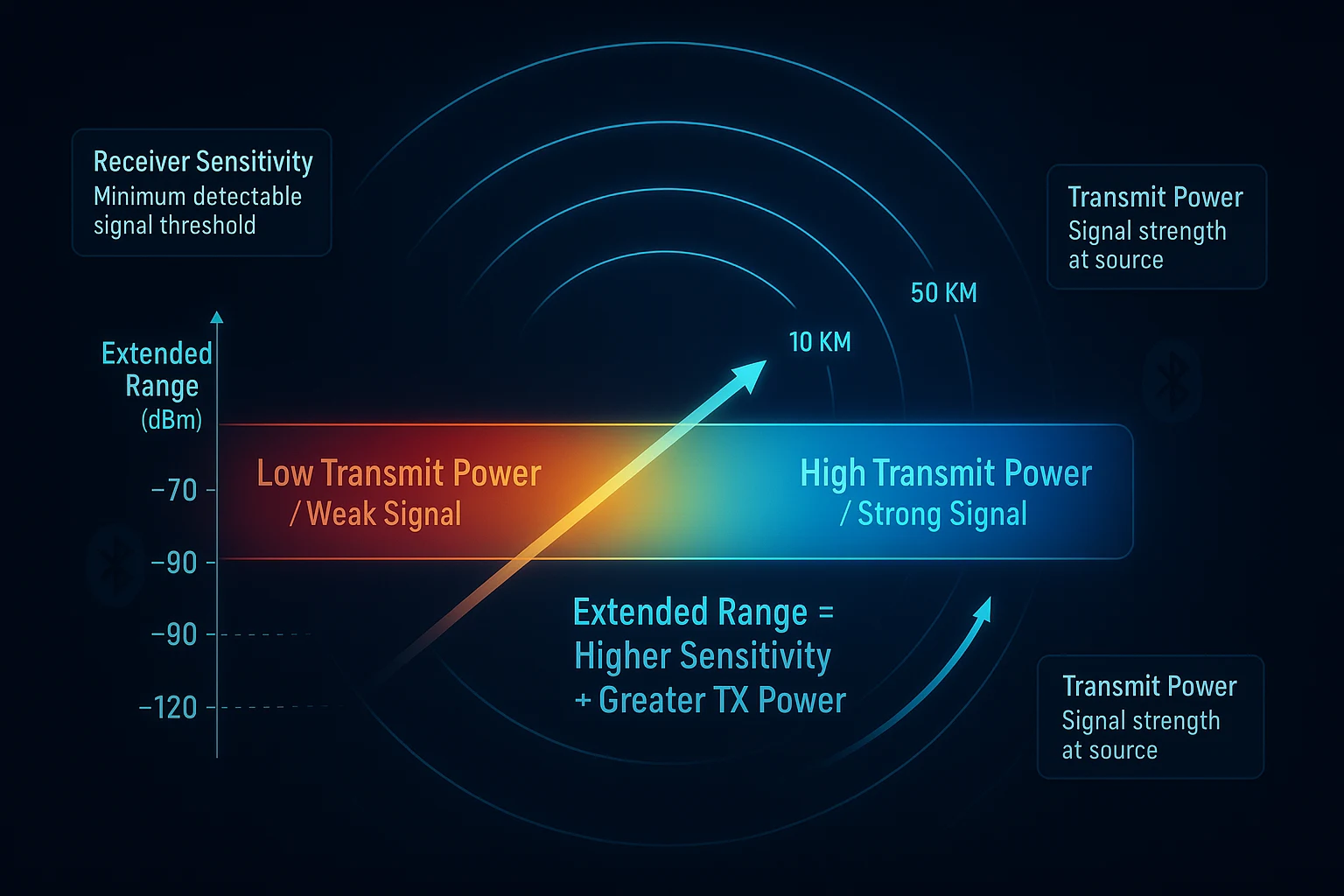
Receiver Sensitivity vs Transmit Power Bluetooth: What Really Determines Range
RFOXiA Long Range Bluetooth Module
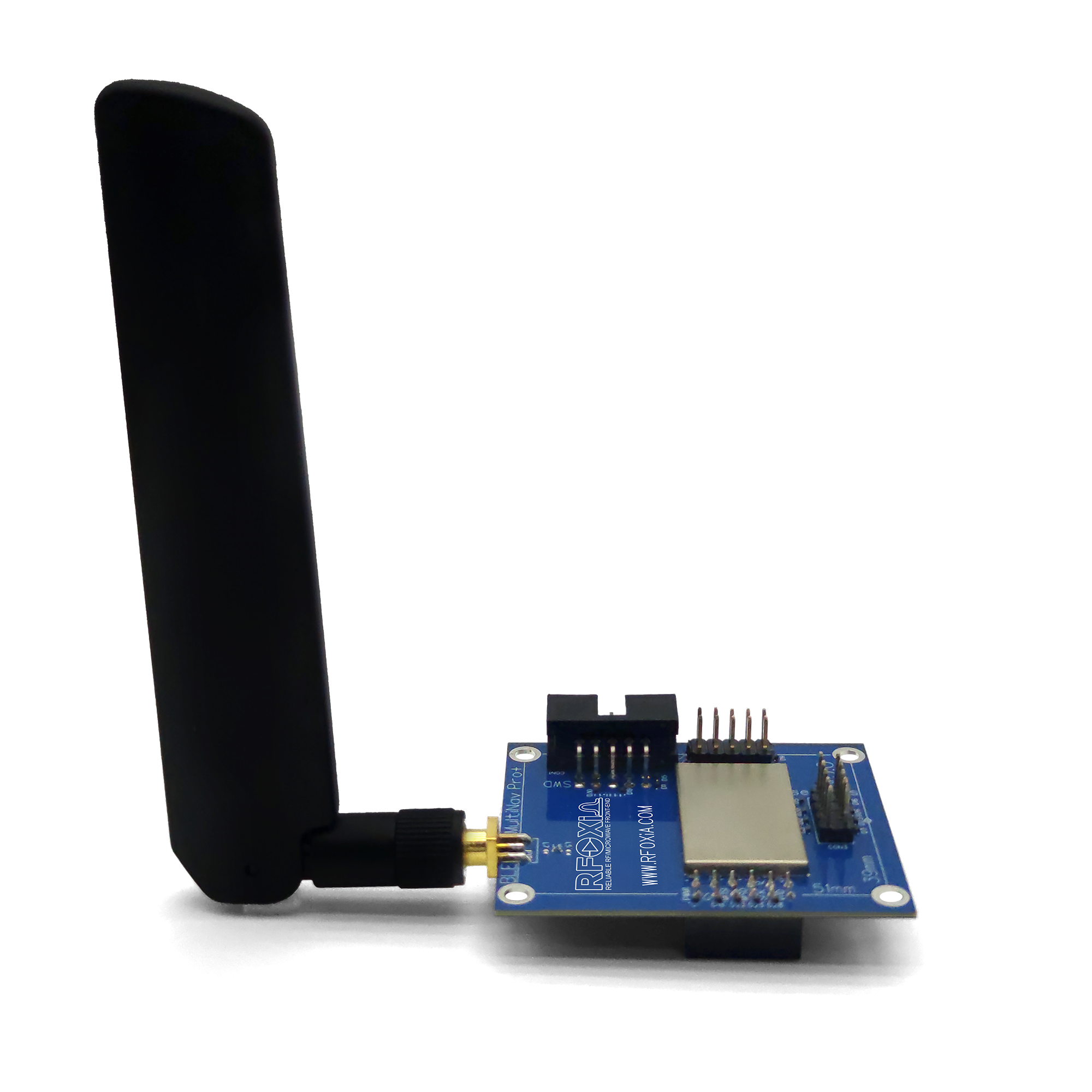
Receiver Sensitivity vs Transmit Power Bluetooth — The Question Every Developer Gets Wrong
When engineers first try to extend the range of a Bluetooth system, they almost always reach for the same lever: turn up the transmit power. It makes intuitive sense. More power equals more signal, right? But seasoned RF engineers know that this instinct is only half the story — and often the less important half.
The real determinant of wireless range in any Bluetooth link budget comes down to two numbers working together: how loudly your transmitter shouts, and how quietly your receiver can hear. Understanding the relationship between receiver sensitivity vs transmit power bluetooth is the single most important concept for any developer trying to push BLE beyond the 100-meter wall that commodity modules slam into.
This article breaks down that relationship in detail, explains why most off-the-shelf BLE modules fail at range, and shows exactly how the RFOXiA Long Range Bluetooth Module achieves what no commodity module can — over 50KM of verified BLE communication.
What Is a Link Budget and Why Does It Define Your Range?
Before diving into receiver sensitivity vs transmit power bluetooth individually, you need to understand how they interact inside what RF engineers call a link budget.
A link budget is a calculation of all the gains and losses a radio signal experiences as it travels from transmitter to receiver. In its simplest form:
Maximum Path Loss = TX Power (dBm) − Receiver Sensitivity (dBm) + Antenna Gain (dBi) − Cable Losses (dB)
Once you know your maximum tolerable path loss, you can calculate the maximum distance your signal can travel before it falls below the noise floor — using the Friis transmission equation or free-space path loss models.
The critical insight here is that both TX power and receiver sensitivity contribute equally to the link budget. Improving receiver sensitivity by 3 dB gives you exactly the same range extension as increasing transmit power by 3 dB — but the two levers have very different practical implications for power consumption, regulatory limits, and system complexity.
Transmit Power: The Loud Shouter
Transmit power (TX power) is measured in dBm — decibels relative to one milliwatt. The Bluetooth specification defines several TX power classes:
- Class 3: 1 mW (0 dBm) — approximately 10 meter range in ideal conditions
- Class 2: 2.5 mW (4 dBm) — approximately 30-50 meters
- Class 1: 100 mW (20 dBm) — approximately 100-300 meters in open air
Most consumer BLE chips operate at +4 to +8 dBm. High-performance chips with integrated power amplifiers reach +20 dBm. The Bluetooth SIG defines a maximum TX power of +20 dBm for standard BLE operation, and regulatory bodies like the FCC impose their own limits depending on frequency band and antenna gain.
This is the first wall developers hit: you can only turn up TX power so far before regulation stops you. In the 2.4 GHz band in the USA, FCC regulations generally limit conducted output power, and any additional EIRP (Effective Isotropic Radiated Power) from antenna gain must be factored against those limits.
So if transmit power is capped by regulation, what's left? The other side of the equation — receiver sensitivity.
Receiver Sensitivity: The Quiet Listener
Receiver sensitivity is the minimum signal power level that a receiver can detect and decode with an acceptable error rate. It's typically expressed in dBm as a negative number — and the more negative (lower) that number, the better your receiver is at hearing faint signals.
For standard BLE chips:
- Typical consumer BLE: −90 to −95 dBm sensitivity
- High-performance BLE: −98 to −103 dBm sensitivity
- Advanced low-noise front-end designs: −105 dBm and below
Here's where the math gets powerful. Every 6 dB improvement in receiver sensitivity doubles your communication range in free space, because path loss increases by 6 dB every time distance doubles (in the far field). So moving from −95 dBm to −107 dBm sensitivity — a 12 dB improvement — can theoretically quadruple your range without touching TX power at all.
This is why serious long-range RF designs invest heavily in the receive chain: low-noise amplifiers (LNAs), careful PCB layout to minimize noise coupling, shielding, and sometimes dedicated RF front-end ICs that sit between the antenna and the SoC.
Receiver Sensitivity vs Transmit Power Bluetooth: Which Should You Optimize First?
The answer from professional RF engineers is almost always: optimize receive sensitivity first, then maximize TX power within regulatory limits.
Why? Because:
- Regulation caps TX power — you can't simply buy more range by burning more watts
- Improving sensitivity reduces power consumption — a more sensitive receiver can decode weak signals without the remote needing to blast harder
- Sensitivity improvements are architectural — they require better IC selection, better PCB design, and better RF front-ends. This is harder to copy than simply setting a TX power register to maximum
- The gain is symmetric — a better receiver helps in both directions. When your device receives better, the remote device effectively appears to transmit with more power from your system's perspective
Why Commodity BLE Modules Fail at Long Range
Most commodity BLE modules — the ones you find for $5-15 on AliExpress or from generic module manufacturers — are built to meet a cost target, not a range target.
They typically:
- Use the integrated RF front-end of the BLE SoC with no external LNA
- Have PCB layouts optimized for minimum board space, not RF performance
- Use chip antennas or PCB trace antennas with 0 to −3 dBi gain
- Operate at maximum 8 dBm TX power with receiver sensitivity around −90 to −95 dBm
- Achieve real-world ranges of 50-100 meters in open air, less in urban environments
These specs are perfectly adequate for the use cases they're designed for — connecting a heart rate monitor to a phone, a keyboard to a laptop, headphones to a device. But for developers who need to control a drone at 5KM, monitor a remote IoT sensor array, or build infrastructure-free mesh communication, commodity modules simply cannot perform.
How the MultiNav Pro+ BLE Module Solves the Range Problem
The RFOXiA MultiNav Pro+ BLE module was engineered from the ground up to address both sides of the receiver sensitivity vs transmit power bluetooth equation simultaneously — within FCC regulatory compliance.
Advanced RF Front-End Design
The MultiNav Pro+ incorporates external RF amplifier stages that most modules omit entirely. On the transmit side, a power amplifier (PA) boosts the signal before it reaches the antenna. On the receive side, a low-noise amplifier (LNA) sits at the antenna port and amplifies incoming signals before they reach the SoC's receive chain — dramatically improving effective receiver sensitivity.
This front-end architecture is what separates professional-grade RF hardware from commodity BLE modules. The LNA reduces the noise figure of the receive chain, meaning the receiver can detect and decode signals that would be completely invisible to a standard commodity module.
The STM32WB07CCV6 Processing Core
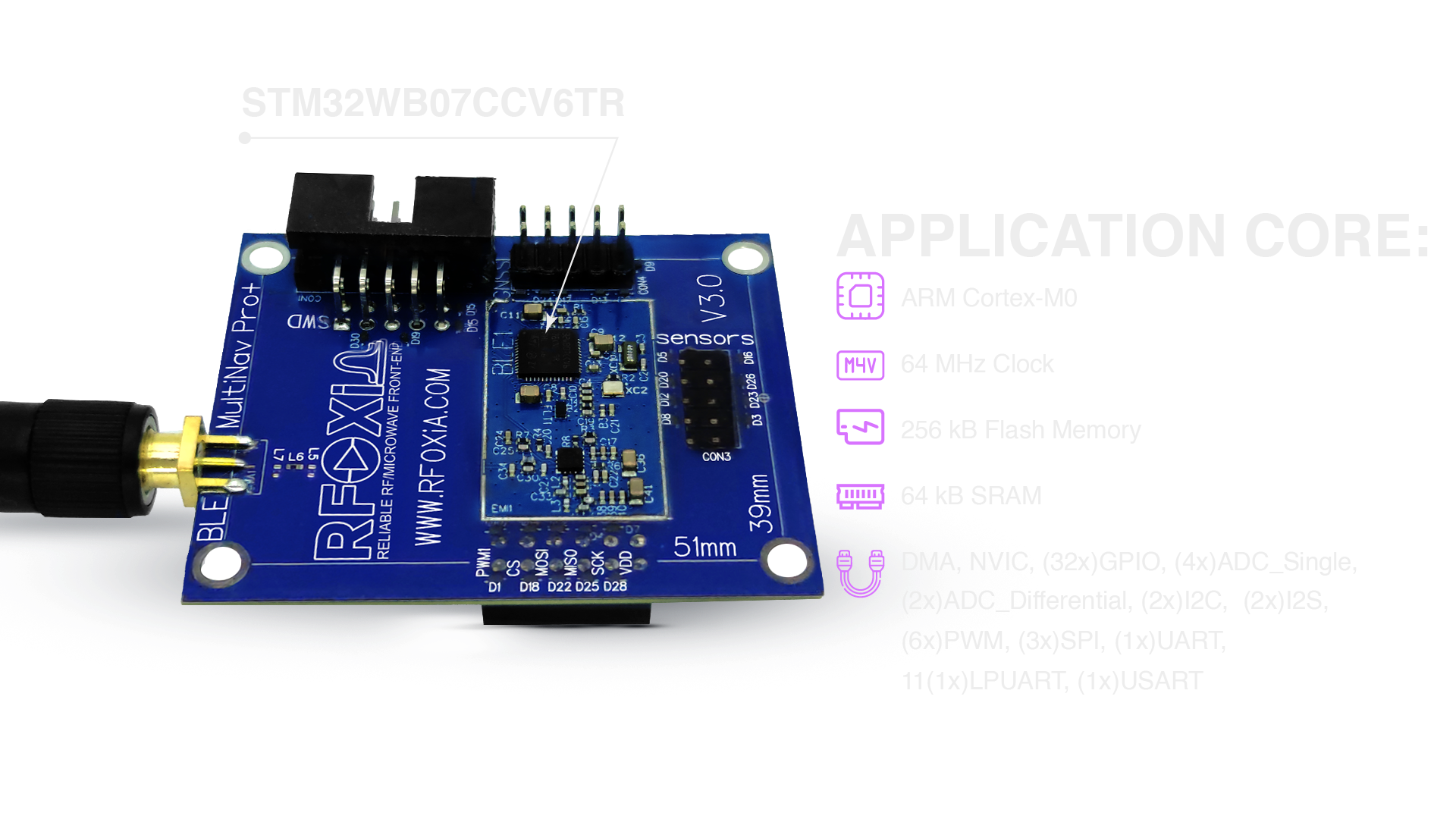
At the heart of the MultiNav Pro+ is the STM32WB07CCV6 from STMicroelectronics — a dual-core wireless SoC that manages both the BLE protocol stack and user applications simultaneously. This isn't a commodity BLE chip. It's a professional-grade wireless processor that provides:
- Dedicated RF subsystem with optimized BLE stack
- High-performance ARM Cortex-M0+ application core
- Low-noise receive architecture with excellent sensitivity floor
- Hardware-accelerated encryption for secure communications
- Flexible power management for field deployment scenarios
The STM32WB07's RF performance, combined with the external front-end components RFOXiA adds around it, creates a receive chain that achieves sensitivity figures well beyond what the chip can deliver alone.
High-Gain Integrated Antenna
The MultiNav Pro+ features a high-gain chip antenna with an antenna length of 140mm — significantly larger than the tiny antennas found on compact commodity modules. The module dimensions of 57mm × 47mm allow for proper antenna clearance and ground plane sizing, both of which critically affect radiated performance.
Antenna gain directly adds to EIRP on the transmit side and improves capture area on the receive side. A well-designed antenna that delivers even 3 dBi of gain over a dipole reference is worth the same range improvement as a 3 dB improvement in receiver sensitivity or a doubling of TX power.
Real-World Range: What the Numbers Mean
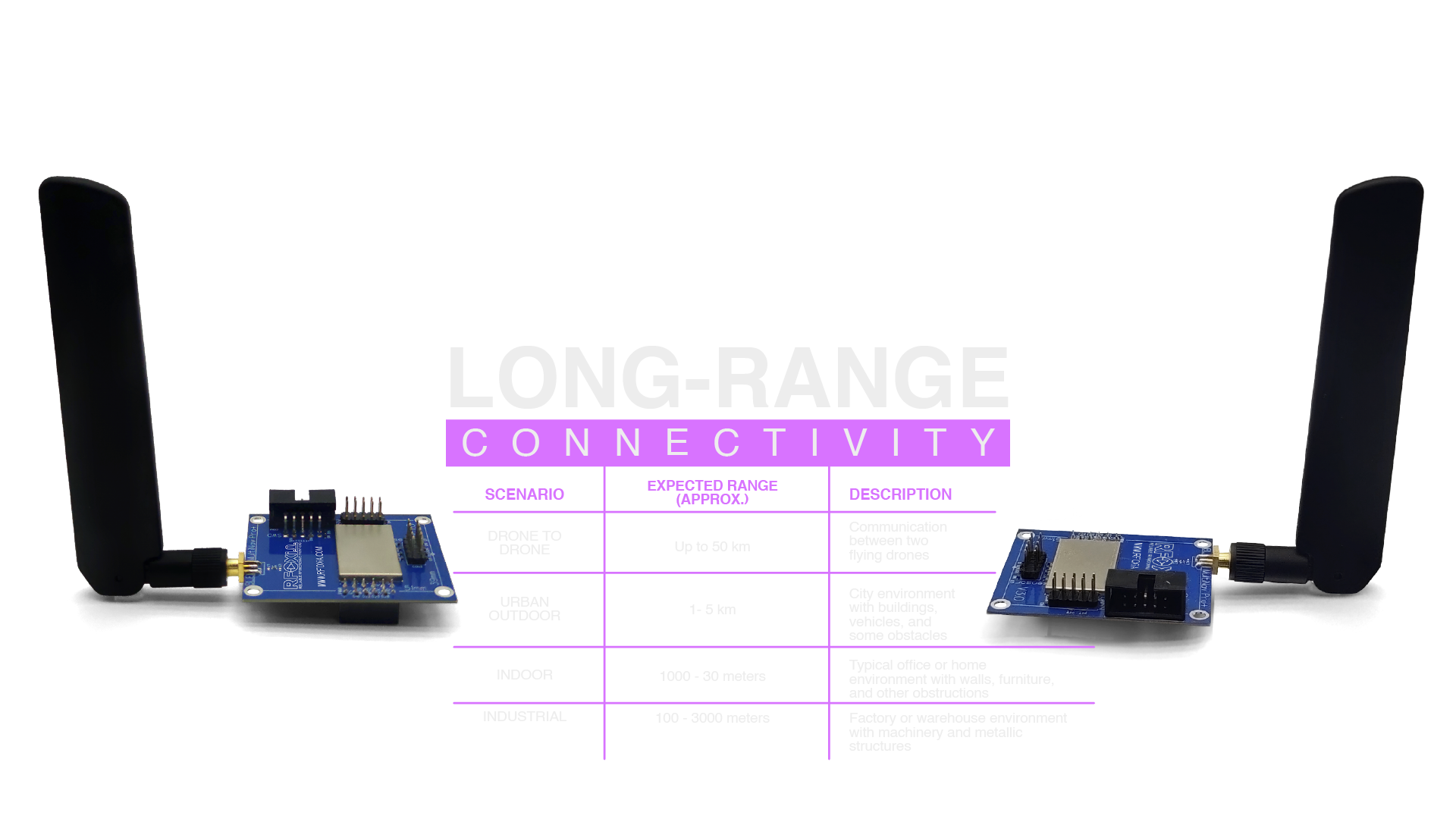
The combination of optimized TX power, improved receiver sensitivity, and high-gain antenna design produces range figures that are genuinely difficult to believe if you've only ever worked with commodity BLE:
- Ground-to-ground (phone-to-phone via modules): 5KM
- Man-to-drone (phone paired with module, module on drone): 15-20KM
- Drone-to-drone (both modules airborne, no ground reflection): 50KM
The drone-to-drone scenario achieves the highest range because ground reflections and multipath interference are eliminated at altitude. The free-space path loss model applies cleanly, and the full link budget advantage of the MultiNav Pro+ front-end design can be realized without environmental penalty.
These numbers represent a 500x range improvement over commodity BLE modules — achieved through engineering, not magic. Understanding receiver sensitivity vs transmit power bluetooth as a system-level problem — rather than a simple power knob — is what makes these results possible.
2 Mbps Data Rate: Why Speed and Range Aren't Mutually Exclusive
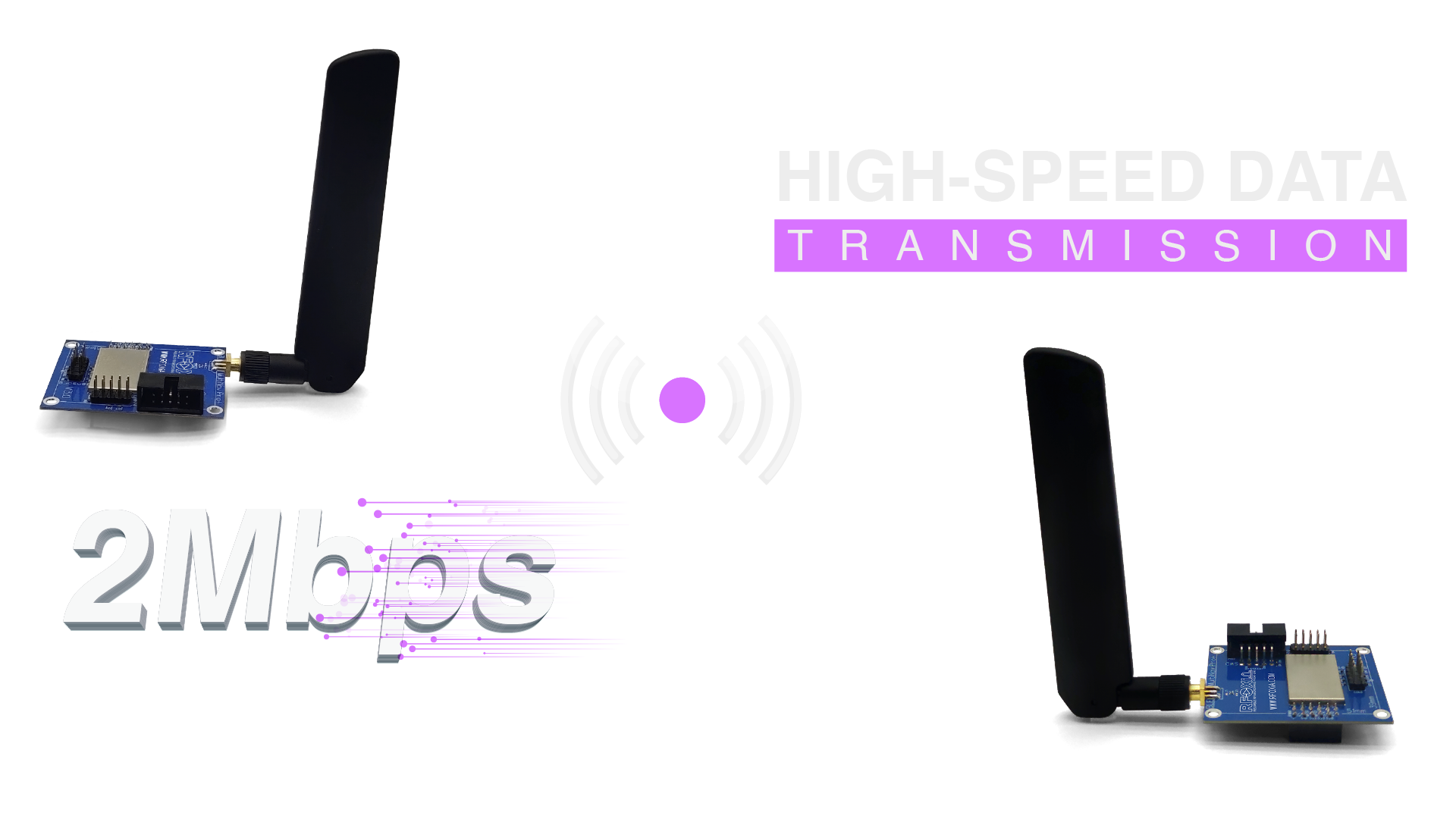
A common misconception in wireless design is that you must sacrifice data rate for range — that long-range links require slow, narrow bandwidth modes. The MultiNav Pro+ BLE module disproves this at 2 Mbps.
This data rate enables:
- Real-time drone telemetry — flight controller data, attitude, GPS position, battery voltage
- Live video metadata streaming — not full video, but all the control and sensor data that accompanies it
- High-frequency sensor data — IMU data at full sample rates, environmental sensor arrays
- Responsive actuator control — sub-millisecond command latency for flight control inputs
For drone builders and robotics engineers, 2 Mbps at 20KM range fundamentally changes what's possible with BLE as a control and telemetry link.
Seamless Ecosystem Integration
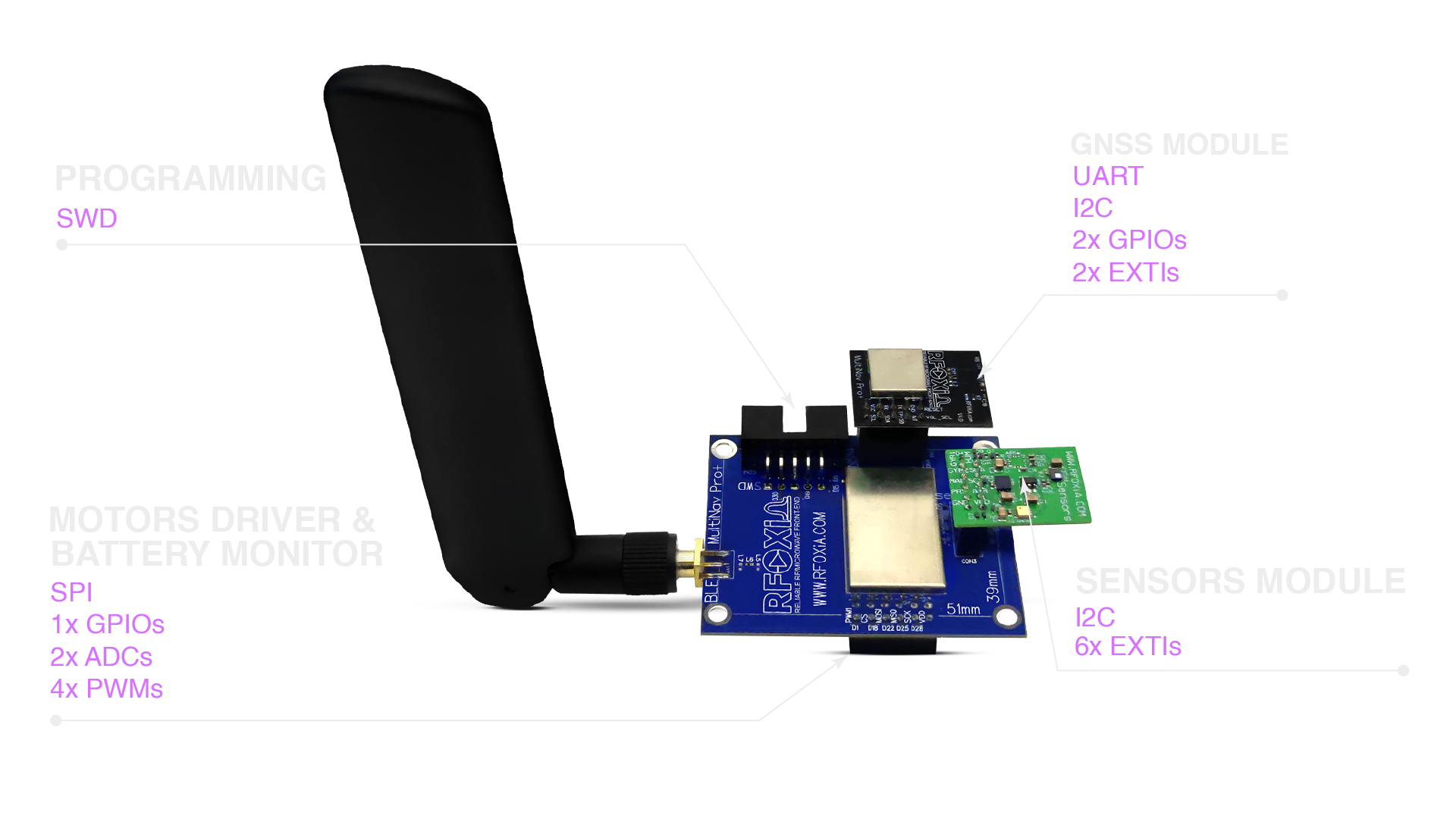
The MultiNav Pro+ BLE module is designed as part of a complete hardware ecosystem, not a standalone component. It integrates directly with:
- MultiNav Pro+ GNSS Module — 1.5m accuracy, 18Hz fix rate for fast-moving platforms
- MultiNav Pro+ Sensors Module — 7 environmental sensors in one board
- Power/Program Kit — supercapacitor power with 5-minute charge, 24-hour runtime
Four distinct hardware interfaces — GNSS, Sensors, Motors & Battery Management, and Programming — are built into the BLE module to enable clean integration without rats-nest wiring. This architecture means your drone, robot, or IoT node can carry a complete sensing, navigation, power management, and communications stack in a compact, professional package.
If you're ready to see what serious long-range BLE looks like in practice, the RFOXiA Long Range Bluetooth Module ships today at $59 for two units — an extraordinary value for FCC-certified hardware at these specifications.
RFOXiA Connect App: System Control at Your Fingertips
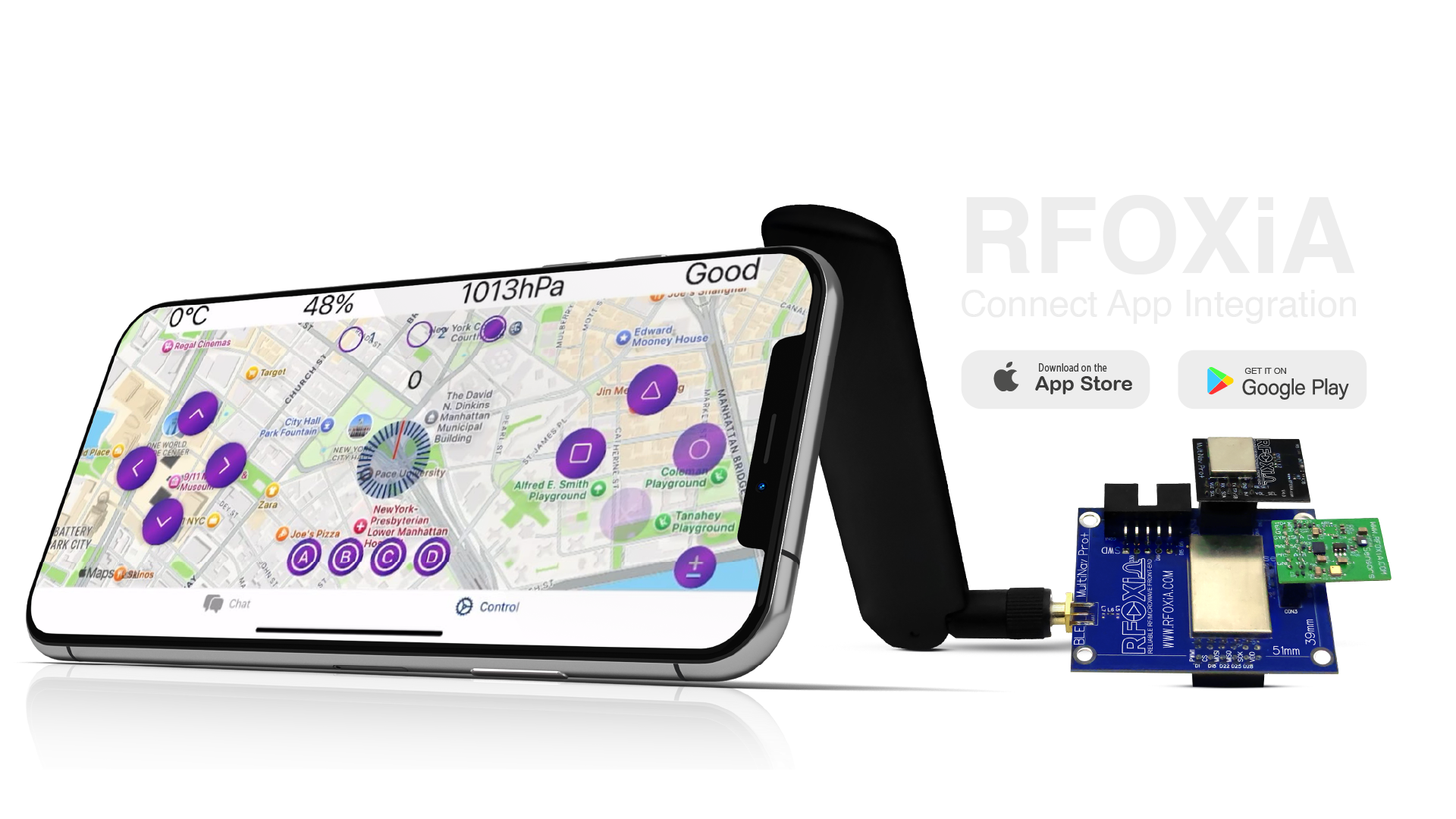
Hardware without software is only half the story. The RFOXiA Connect app (Android live, iOS pending App Store approval) provides a complete control and monitoring interface that leverages the full range of the BLE module:
- PS5-style controller interface for intuitive drone and robot control
- Live map with real-time GPS tracking — updated at up to 18Hz when paired with the GNSS module
- Live sensor data display — environmental readings in real time
- Completely internet-independent operation — the app communicates through the BLE modules, not cloud servers
This last point is critical for field applications. When you're operating a drone at 15KM in a location without cellular coverage, your control link cannot depend on internet infrastructure. The MultiNav Pro+ and RFOXiA Connect provide a self-contained wireless system that works anywhere.
BLE Chat: Infrastructure-Free Communication
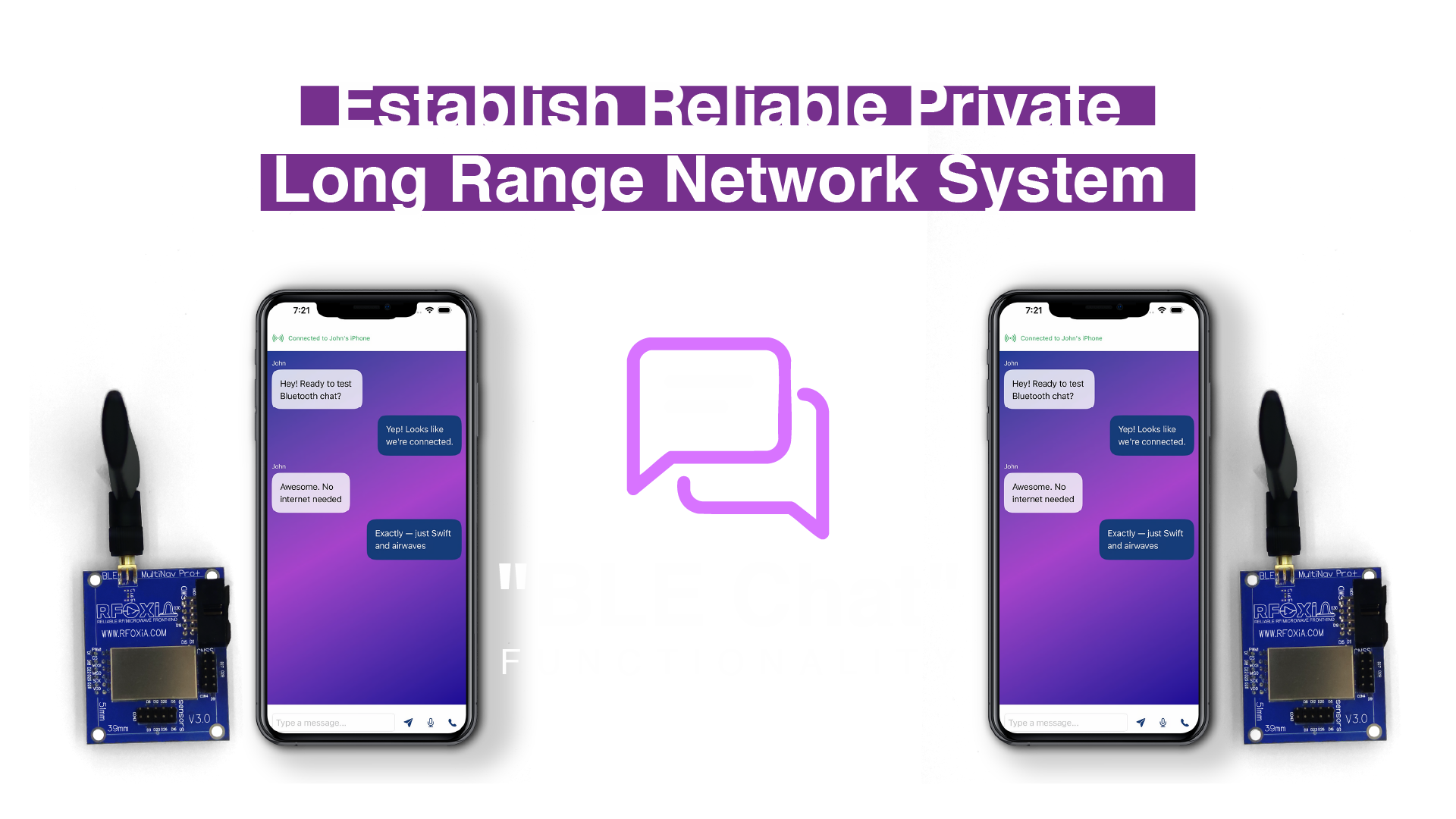
Beyond drone and robot control, the MultiNav Pro+ BLE module enables a capability that has significant value for field teams, researchers, and emergency responders: direct, internet-independent mesh communication.
The BLE Chat functionality lets multiple MultiNav Pro+ users communicate — text, data, and voice — using the modules themselves as communication nodes, without any cellular network, Wi-Fi infrastructure, or satellite link. This is the same principle as a mesh radio network, but implemented in FCC-certified Bluetooth hardware at a fraction of traditional mesh radio costs.
Applications include:
- Disaster response — communication when cellular infrastructure is down
- Remote expeditions — team coordination in wilderness or maritime environments
- Field research teams — sensor network coordination without internet dependency
- Off-grid industrial monitoring — facilities beyond cellular coverage
Compact Form Factor for Real-World Deployment
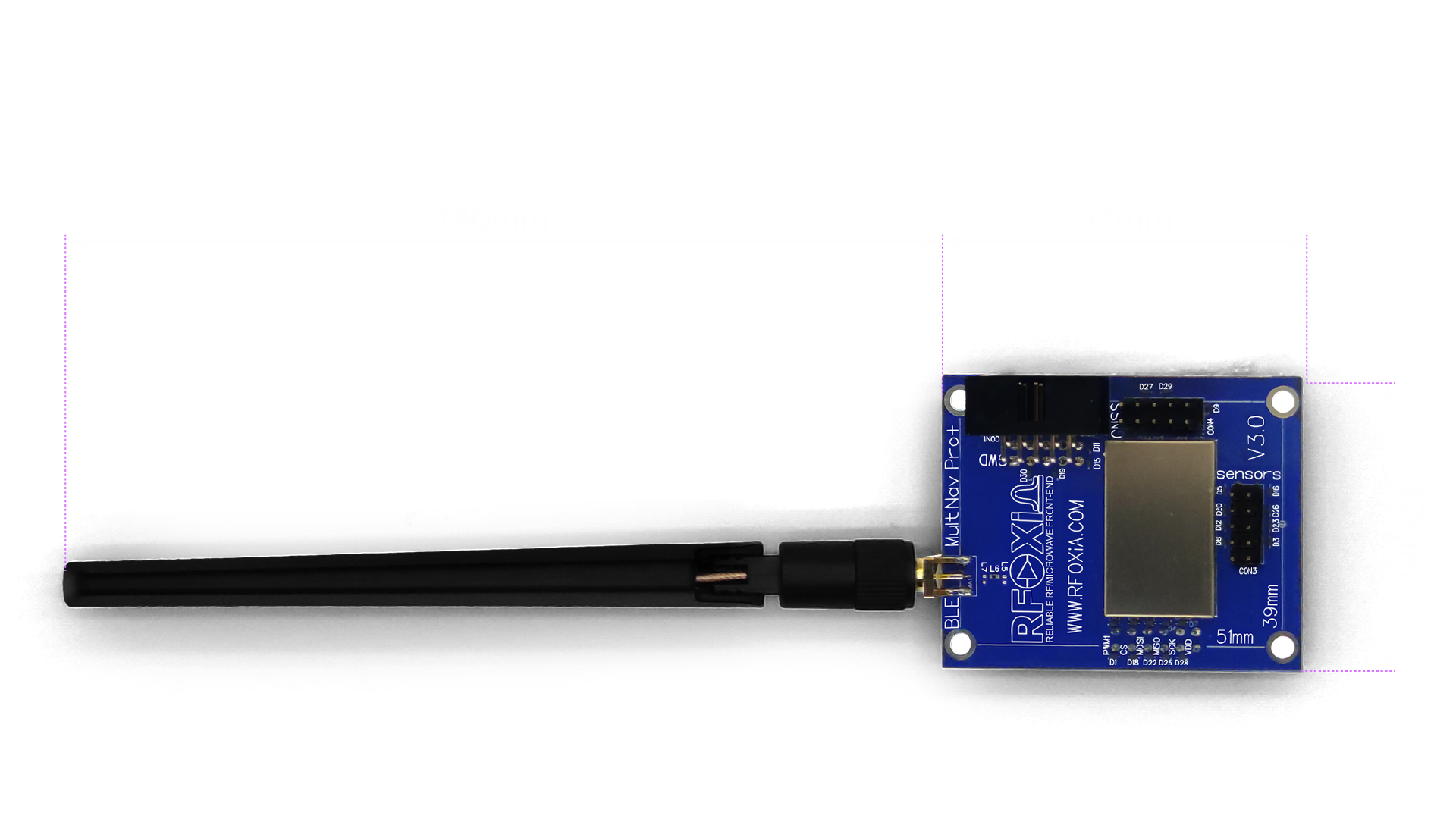
Achieving 50KM range doesn't require a massive, impractical radio system. The MultiNav Pro+ BLE module measures just 57mm × 47mm, with a fixing frame size of 54mm × 34mm featuring corner mounting holes for secure installation in any chassis.
This compact footprint means the module integrates into:
- FPV drone frames with space constraints
- Robotics platforms where weight and volume matter
- Portable field sensor nodes
- UAV payloads
- Research instrumentation
The engineering challenge of delivering professional RF performance in a compact, mount-ready form factor is one that RFOXiA has solved through careful PCB design and component selection — the same skills that enable the range performance.
Open Source Firmware and Programmability
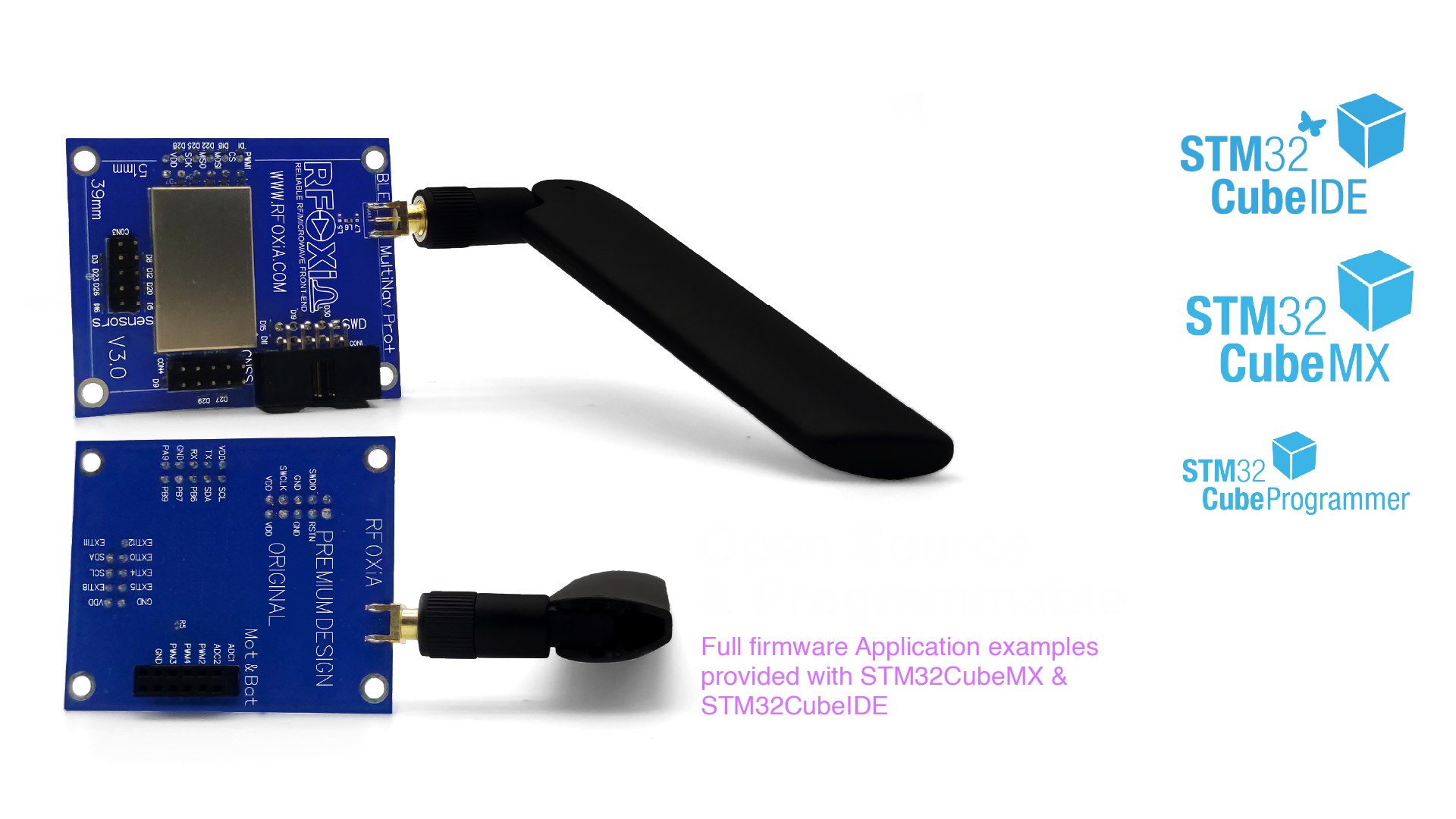
The MultiNav Pro+ BLE module is fully open-source and programmable via SWD interface. The complete firmware source is available on GitHub at github.com/RFOXiA/MultiNav-Pro-Long-Range-BLE-Module-Firmware-STM32WB07, giving developers full access to customize behavior for their specific application.
For developers who want to move faster, the RFOXiA Club platform includes an AI Firmware Builder — describe your application in plain language, and the AI generates complete, production-ready firmware with full source code. This reduces firmware development time from months to hours, dramatically lowering the barrier to building custom wireless applications on the MultiNav Pro+ platform.
Precision Timing: The Integrated RTC
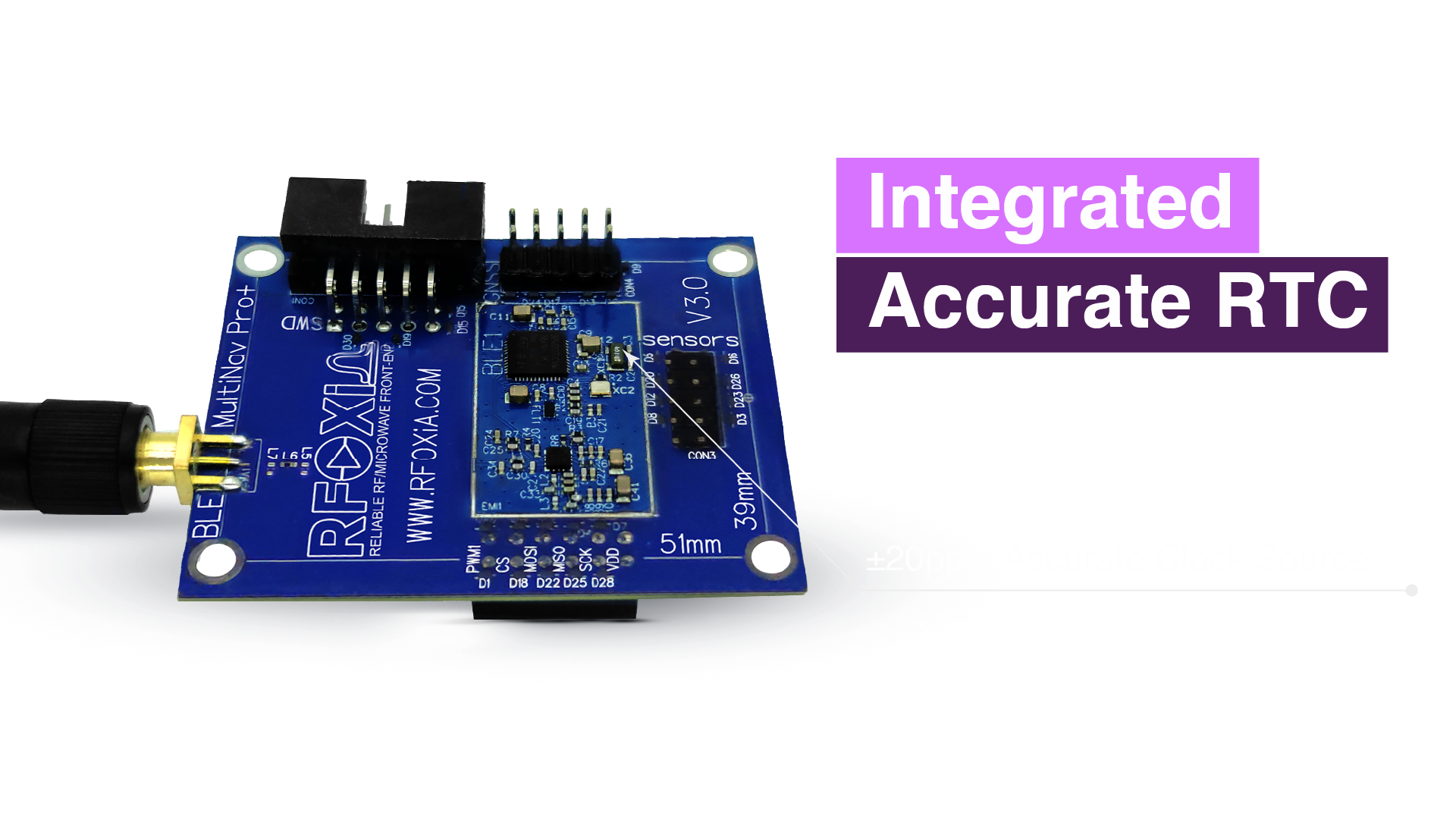
For time-sensitive applications — synchronized sensor sampling, navigation state machines, scheduled wake/sleep cycles for power management — the MultiNav Pro+ includes an integrated RTC crystal that provides precise timing independent of the BLE radio state.
This is particularly valuable in applications where the module operates in low-power sleep modes between transmission windows, needing to wake at precise intervals to maintain synchronized communication with a remote station. Accurate RTC enables duty-cycled operation that can dramatically extend battery or supercapacitor runtime without sacrificing communication reliability.
FCC Certification: Why It Matters for Your Project
Every RFOXiA module — including the MultiNav Pro+ BLE — is FCC certified. This certification matters for several practical reasons:
- Legal deployment in the USA — uncertified intentional radiators cannot be legally operated or marketed in the US
- Distributor access — major distributors like DigiKey and Mouser require FCC certification for RF modules
- Customer integration — your customers may need to verify FCC compliance of components they integrate into their own products
- Credibility — FCC certification requires documented testing of actual radiated emissions, providing third-party validation of RF performance claims
FCC-certified hardware at this price point and these specifications is genuinely rare. The certification process is expensive and time-consuming, which is why most low-cost modules avoid it — limiting them to prototyping and hobbyist contexts. The MultiNav Pro+ is field-deployable in commercial and research applications from day one.
The Market Gap the MultiNav Pro+ Fills
Understanding receiver sensitivity vs transmit power bluetooth at an engineering level reveals why the market gap the MultiNav Pro+ occupies is so significant:
- Commodity BLE modules ($5-15): ~90 dBm sensitivity, no external LNA, no PA, 50-100m range. Adequate for consumer electronics, not for professional wireless applications.
- Industrial/military long-range radio systems ($5,000-50,000+): Excellent sensitivity, high TX power, extreme range. Inaccessible to makers, startups, researchers, and small-scale drone operators.
- MultiNav Pro+ BLE ($59 for 2 units): Professional RF front-end with LNA, optimized PA, high-gain antenna, FCC certified, full ecosystem integration, 5KM ground-to-ground and 50KM drone-to-drone. No direct competitor exists at this price point with these specifications.
This is not marketing positioning. It is a straightforward consequence of the engineering choices made in the MultiNav Pro+ design — choices that require real RF expertise and manufacturing relationships to execute, and that commodity module manufacturers have no incentive to make.
Conclusion: Engineering Range, Not Just Turning Up Power
The debate between receiver sensitivity vs transmit power bluetooth is ultimately a debate about RF engineering sophistication. Turning up TX power is easy — every developer can do it with a single register write. Achieving genuinely low receiver sensitivity requires architectural decisions, component selection expertise, PCB layout discipline, and the manufacturing capability to build it reliably and cost-effectively.
The MultiNav Pro+ BLE module represents what happens when you treat both sides of the link budget as first-class engineering problems — and build an entire ecosystem around the resulting hardware capability. 50KM drone-to-drone range. 2 Mbps data rate. FCC certified. Open source. Integrated with a complete sensor, GNSS, power, and application platform.
If your project needs wireless range that commodity BLE simply cannot deliver — and you need it at a price that doesn't require a military budget — the RFOXiA Long Range Bluetooth Module is the hardware you've been waiting for.
$59 for two FCC-certified units. In stock. Ready to ship.
Explore the full MultiNav Pro+ ecosystem at rfoxia.com and join RFOXiA Club for $10 in free credits toward your first order.
Written by: Moamen Mohamed LinkedIn