
What Is Receiver Sensitivity Bluetooth? The Hidden Spec Behind Extraordinary Range
RFOXiA Long Range Bluetooth Module
What Is Receiver Sensitivity Bluetooth — And Why Does It Determine Everything About Your Wireless Range?
If you have ever wondered why two Bluetooth modules with the same frequency band and the same transmit power produce wildly different real-world ranges, the answer almost always comes down to one specification that most manufacturers bury in their datasheets: receiver sensitivity.
Understanding what receiver sensitivity Bluetooth means is not just an academic exercise. It is the single most important number that separates a commodity $5 BLE module that tops out at 80 meters from a professional-grade module capable of communicating over 50 kilometers. If you are building drones, robots, remote IoT deployments, or any wireless system where range and reliability matter, this guide will give you the foundational knowledge to make decisions that actually work in the field.
The Fundamentals: What Is Receiver Sensitivity in Bluetooth?
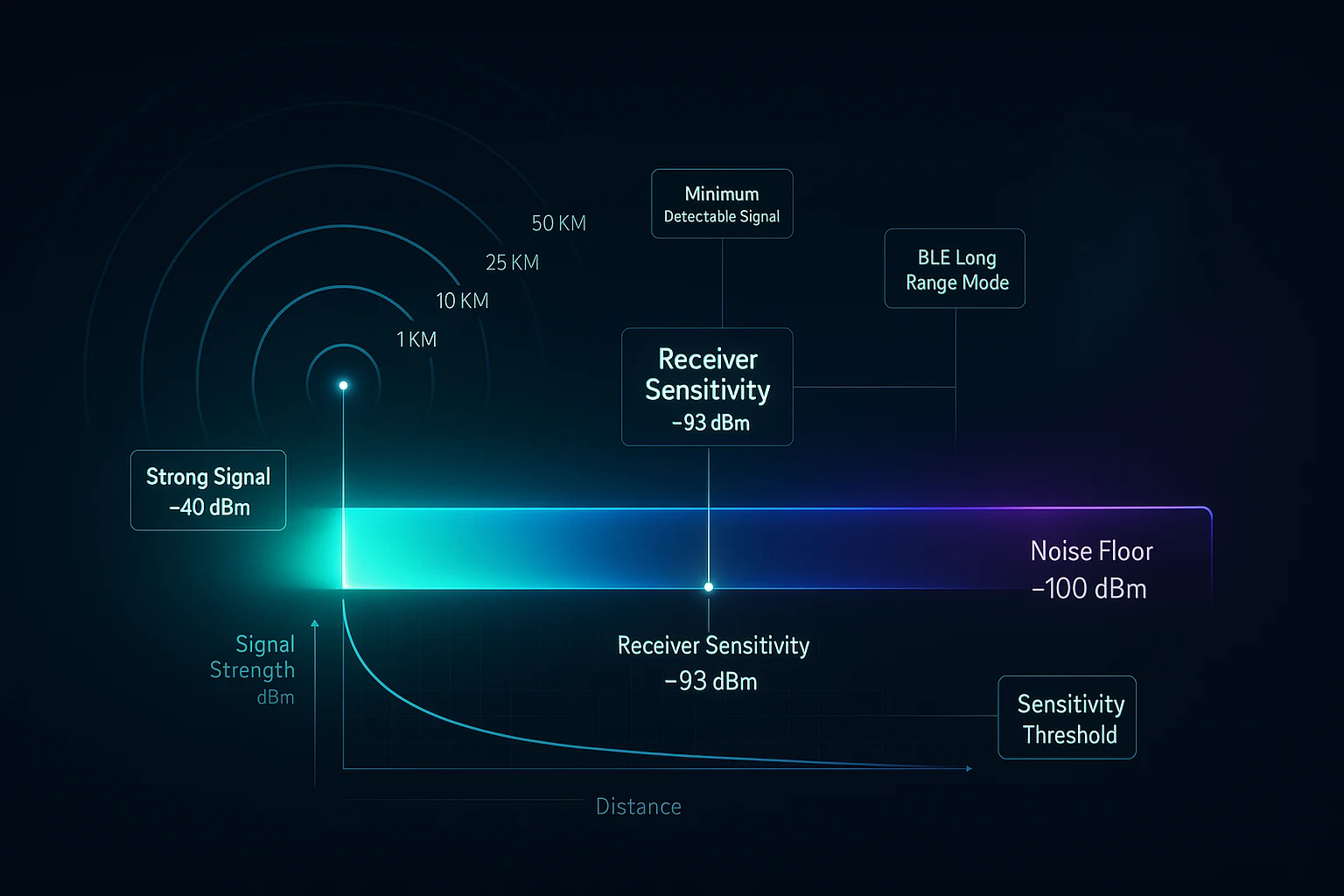
Receiver sensitivity is the minimum signal power level — measured in dBm (decibels relative to one milliwatt) — that a radio receiver can reliably detect and decode. The more negative this number, the better. A receiver with -100 dBm sensitivity can detect signals far weaker than a receiver with -80 dBm sensitivity.
Here is a simple way to think about it: transmit power determines how loudly your module shouts. Receiver sensitivity determines how quietly it can hear. Range is not just about shouting louder — it is about listening better.
In practical Bluetooth systems, the link budget determines maximum theoretical range. The link budget formula is:
Link Budget (dB) = TX Power (dBm) − Receiver Sensitivity (dBm)
A module transmitting at +8 dBm with receiver sensitivity of -104 dBm has a link budget of 112 dB. A module transmitting at +4 dBm with receiver sensitivity of -80 dBm has a link budget of 84 dB. That 28 dB difference in link budget translates to a massive difference in real-world range — often by a factor of 10 to 100 depending on terrain and environment.
This is why receiver sensitivity Bluetooth specifications matter so profoundly. Two modules that look similar on paper — same frequency, similar power consumption, similar form factor — can perform orders of magnitude differently based on this single number.
How Receiver Sensitivity Is Measured and Why It Matters
Receiver sensitivity is typically measured at a specific bit error rate (BER), usually 0.1% or lower. The Bluetooth specification defines sensitivity thresholds at various data rates:
- 1 Mbps (BLE 1M PHY): Minimum sensitivity of -70 dBm per the spec, but modern chips achieve -96 dBm to -106 dBm
- 2 Mbps (BLE 2M PHY): Slightly lower sensitivity due to higher bandwidth requirement
- 125 Kbps (Coded PHY / Long Range): Sensitivity improves significantly, enabling maximum range scenarios
The gap between the Bluetooth specification minimum and what advanced modules actually achieve is enormous. Most commodity modules implement the chip's radio with minimal supporting circuitry, achieving sensitivities around -90 to -95 dBm. Professional RF designs that add low-noise amplifiers (LNAs), carefully tuned matching networks, and optimized antenna systems can push this to -104 dBm or better.
Every 6 dB improvement in receiver sensitivity doubles the communication range in free space. Going from -95 dBm to -107 dBm — a 12 dB improvement — theoretically quadruples range. Combined with higher transmit power from an RF front-end amplifier, the range multiplication becomes dramatic.
Why Most Bluetooth Modules Fail at Long Range
The reason commodity Bluetooth modules top out at 80 to 100 meters is not a fundamental limitation of Bluetooth technology. It is a cost and design decision. When a manufacturer is optimizing for $3 bill-of-materials cost, they implement the radio section with the absolute minimum required circuitry. The result is a module that meets the Bluetooth specification but makes no attempt to approach the theoretical maximum performance of the underlying radio technology.
The typical commodity BLE module architecture looks like this:
- SoC with integrated RF front-end
- Simple chip antenna or PCB trace antenna
- No external LNA on receive path
- No external power amplifier on transmit path
- Minimal RF filtering
- Basic impedance matching
This gets the product shipping quickly at low cost. It also means your IoT sensor stops communicating the moment you walk around a corner, and your drone loses connection well before it reaches its mechanical range limit.
Professional long-range Bluetooth design takes a completely different approach:
- High-performance BLE SoC with advanced receive path
- External low-noise amplifier to boost incoming signal before noise corrupts it
- External power amplifier for increased transmit output
- High-gain antenna system optimized for the deployment scenario
- Careful PCB layout to minimize noise that degrades receiver sensitivity
- Bandpass filtering to reject interference
The result of this engineering investment is the kind of receiver sensitivity Bluetooth performance that enables ranges previously impossible with standard BLE hardware.
The Role of the RF Front-End in Receiver Sensitivity
The RF front-end is the hardware block between the antenna and the radio SoC. In a properly designed long-range module, this is where the magic happens.
On the receive path: The incoming signal from the antenna is extremely weak after traveling any significant distance. Before this signal reaches the SoC's analog-to-digital converters, it passes through a low-noise amplifier. The LNA boosts the signal while adding minimal noise of its own — characterized by its noise figure (NF), typically 1 to 3 dB for a quality LNA. This amplification improves the signal-to-noise ratio entering the SoC's demodulator, effectively improving the system's receiver sensitivity Bluetooth performance by the LNA gain minus its noise figure.
On the transmit path: A power amplifier boosts the SoC's output from its native level (typically +0 to +6 dBm) to a much higher output (+10 to +20 dBm) before the signal reaches the antenna. Higher transmit power directly increases the link budget from the transmit side.
The antenna: A high-gain antenna concentrates radiated energy in useful directions. A 5 dBi antenna provides 5 dB of effective gain over an isotropic radiator, which contributes directly to the effective isotropic radiated power (EIRP) and improves the effective receive sensitivity in the favored direction.
When these elements work together — LNA improving receive sensitivity, PA increasing transmit power, high-gain antenna improving both — the cumulative effect on range is multiplicative, not additive.
Real-World Range: Ground, Air, and Why They Are Different
When evaluating what receiver sensitivity Bluetooth specifications mean for your application, the deployment environment matters as much as the hardware spec. Understanding how propagation works in different scenarios explains why the MultiNav Pro+ achieves different range figures in different configurations.
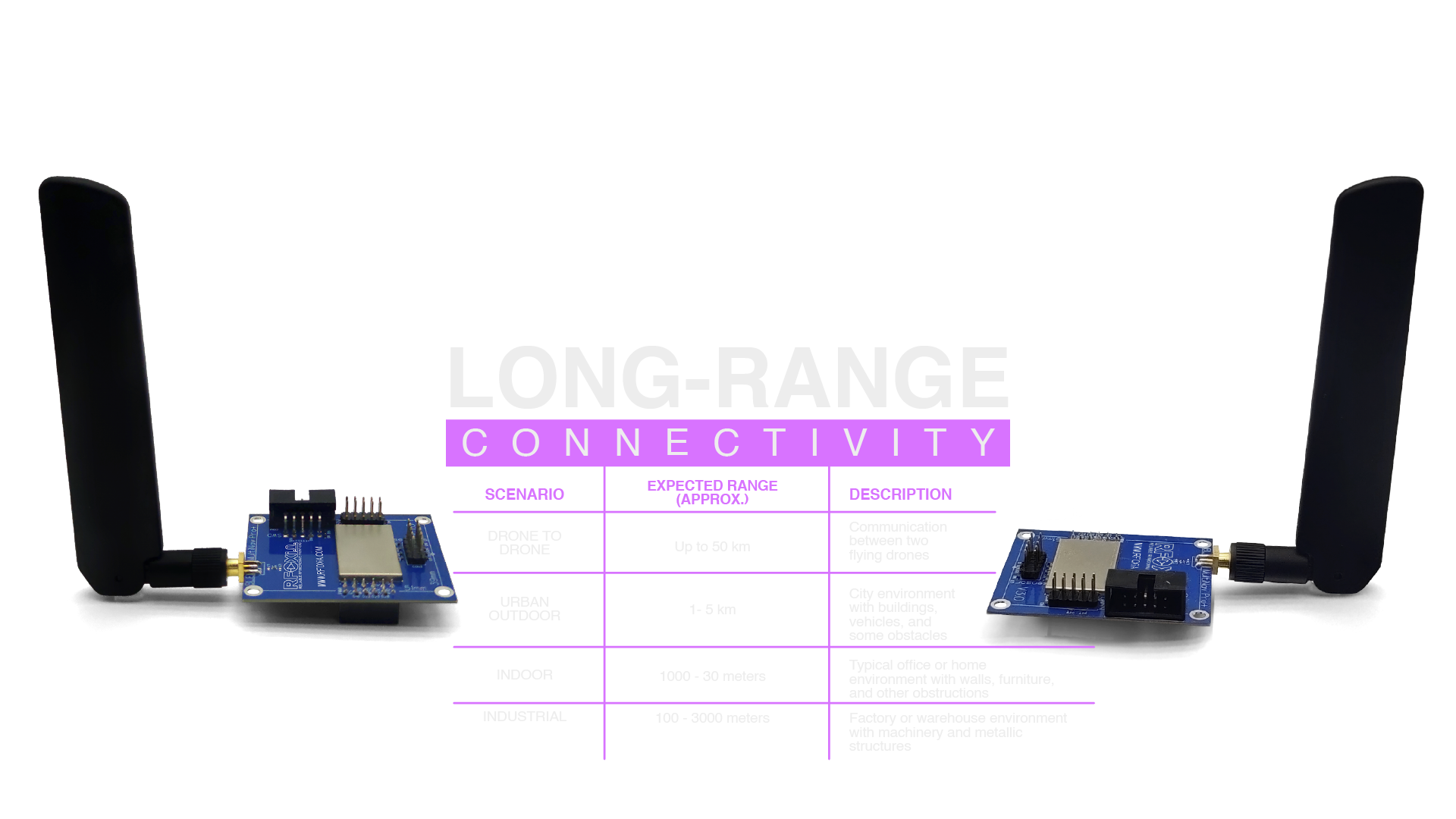
Ground-to-ground (5km): When both radios are at ground level, the link suffers from ground reflections that cause multipath fading, obstacles that cause diffraction losses, and the near-earth propagation environment that attenuates signals faster than free-space models predict. Even with excellent receiver sensitivity, ground-level communication is limited by these environmental factors. The MultiNav Pro+ achieves over 5km ground-to-ground — roughly 50 times the range of commodity modules in the same scenario.
Ground-to-drone (15-20km): When one radio is elevated on a drone, ground reflections are dramatically reduced for the airborne radio. The drone antenna has line-of-sight to a much larger area. The propagation environment improves substantially, and receiver sensitivity Bluetooth performance can approach free-space theoretical maximums. This is why the same hardware achieves 15 to 20km ground-to-drone versus 5km ground-to-ground.
Drone-to-drone (50km): With both radios elevated, ground reflections are nearly eliminated for both ends of the link. Both radios benefit from low-noise airborne propagation. The link budget of the system is fully utilized against the free-space path loss, and the combination of excellent receiver sensitivity and high-gain antennas produces the 50km maximum range specification.
The STM32WB07: A Processing Core Built for Long-Range BLE
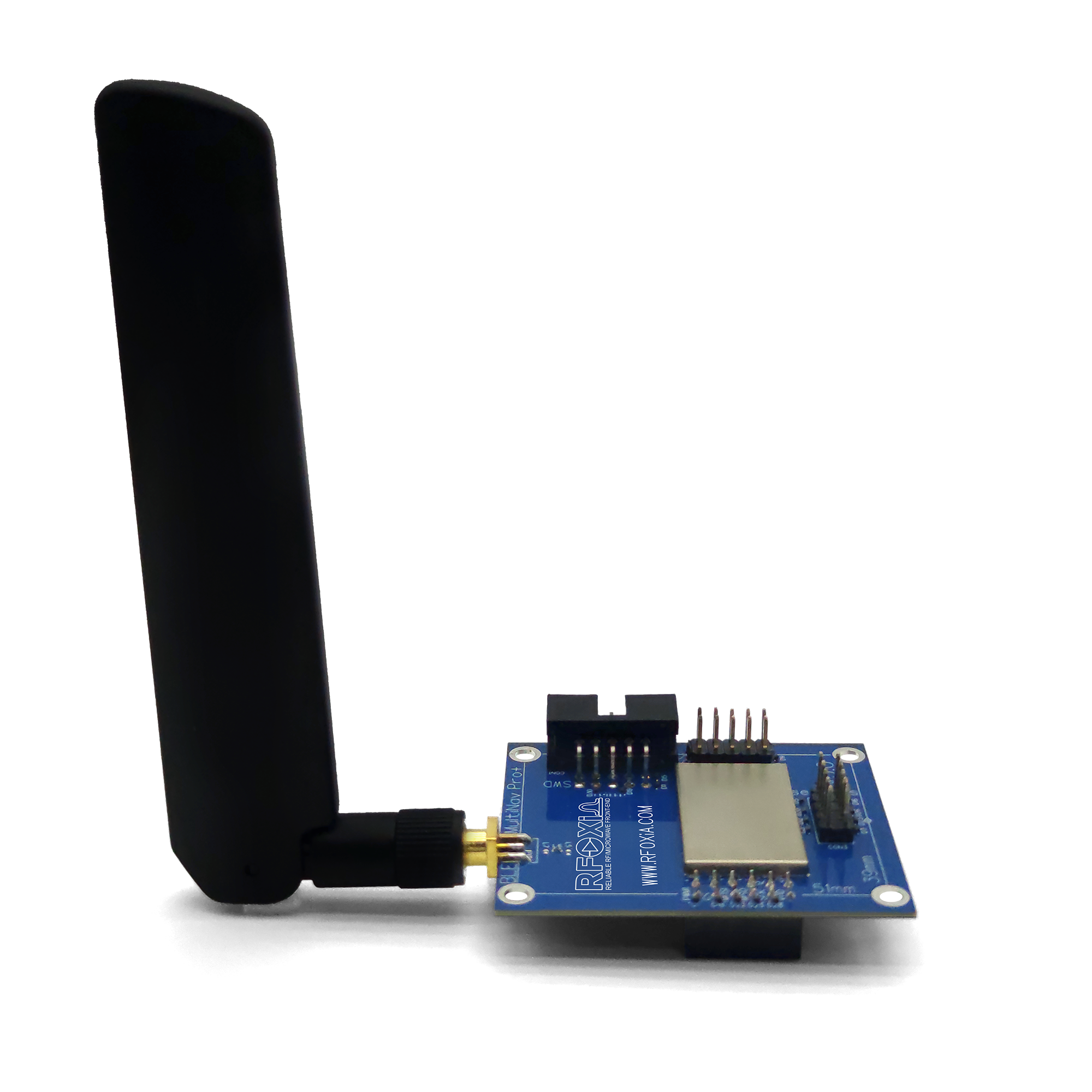
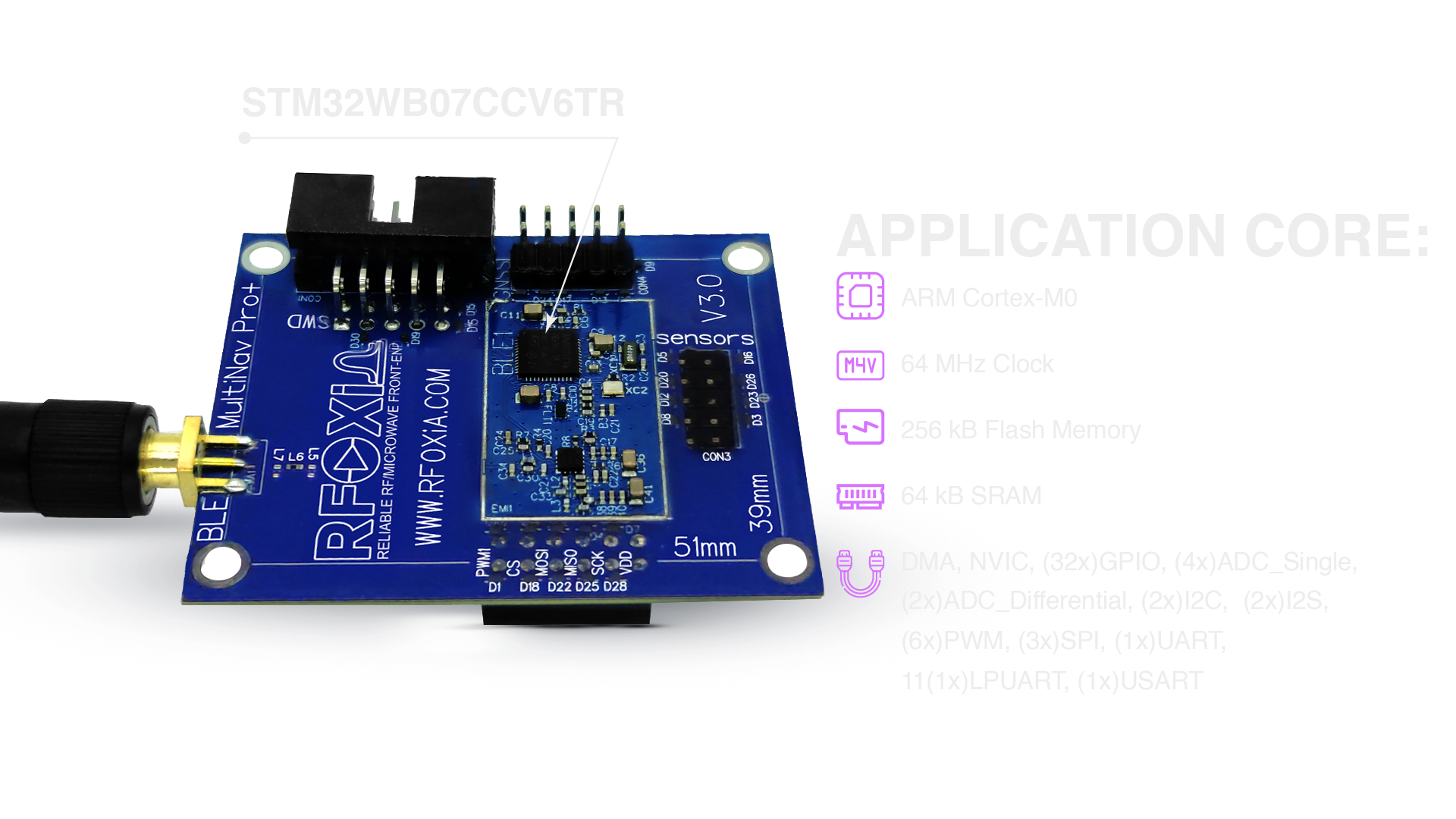
Achieving exceptional receiver sensitivity Bluetooth performance is not only about external RF circuitry. The radio SoC at the heart of the system matters enormously. The MultiNav Pro+ BLE module is built around the STM32WB07CCV6, a dual-core wireless microcontroller from STMicroelectronics that was specifically designed for high-performance Bluetooth Low Energy applications.
The STM32WB07 features a dedicated RF core that handles the complete Bluetooth stack — protocol processing, scheduling, and radio management — independently from the application processor. This separation ensures that the RF subsystem can maintain optimal timing and sensitivity without competition from application code. The result is more consistent receiver sensitivity Bluetooth performance under real application loads, which matters when your drone control system is simultaneously processing GPS data, sensor readings, and control commands while maintaining a 15km communication link.
The application processor handles user code, sensor fusion, GNSS parsing, and application logic. The RF core handles BLE stack management. Both operate concurrently without the compromises that come from single-core architectures.
Data Rate, Sensitivity, and the 2 Mbps Trade-Off
A commonly misunderstood aspect of receiver sensitivity Bluetooth specifications is the relationship between data rate and sensitivity. Higher data rates require higher signal-to-noise ratios for reliable demodulation, which means sensitivity is slightly worse at higher data rates.
For maximum range applications, Coded PHY at 125 Kbps provides the best sensitivity — some implementations achieve -110 dBm or better at this rate. The trade-off is data rate: 125 Kbps is adequate for telemetry and control commands but cannot handle video streaming.
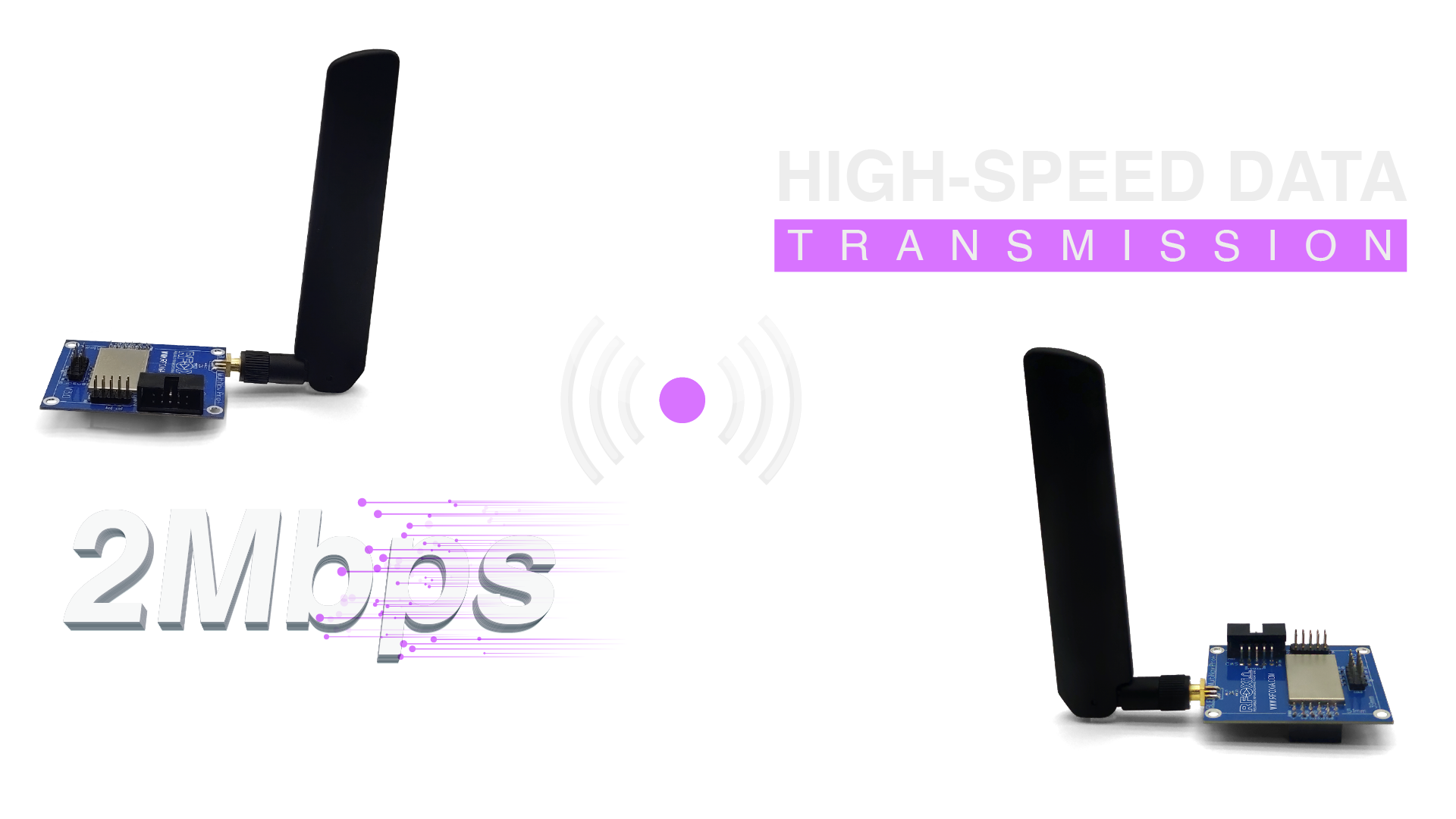
The MultiNav Pro+ operates at 2 Mbps — a deliberate design choice that balances range and throughput for real-world developer applications. At 2 Mbps, the module handles drone control commands with ultra-low latency, sensor data streaming with bandwidth to spare, and real-time bidirectional communication with the RFOXiA Connect app. The receiver sensitivity at 2 Mbps still delivers the exceptional range figures the module is designed for, because the RF front-end engineering compensates for the sensitivity trade-off inherent in higher data rates.
For developers who need maximum possible range at lower data rates, the open-source firmware and SWD programmability allow custom PHY configuration. This flexibility is one of the MultiNav Pro+'s core design philosophies.
BLE Chat: Internet-Independent Long-Range Communication
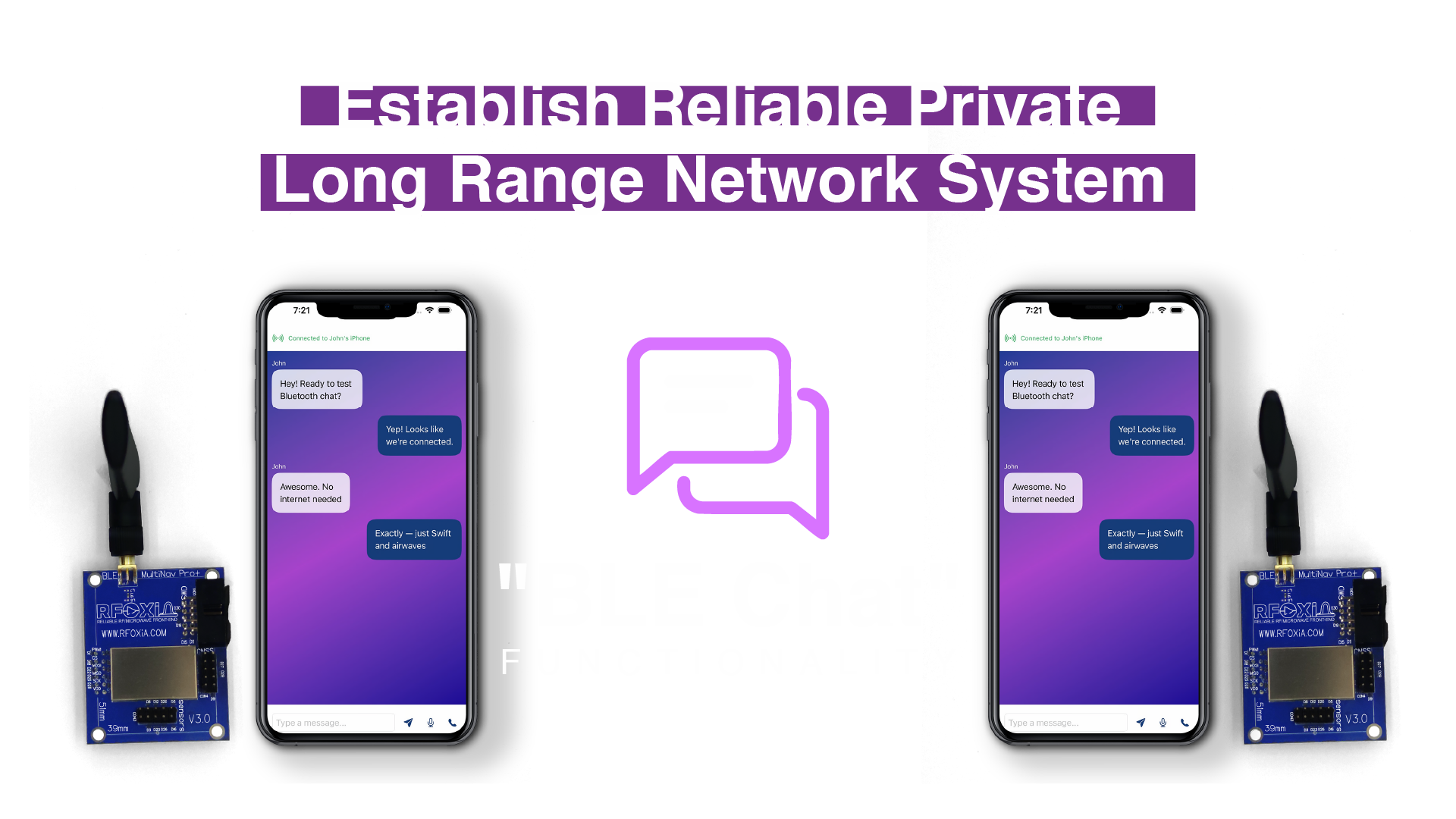
One of the most compelling demonstrations of what exceptional receiver sensitivity Bluetooth enables — beyond raw range — is the BLE Chat functionality built into the MultiNav Pro+ ecosystem.
Conventional wireless communication systems rely on cellular towers, internet infrastructure, and third-party services. When infrastructure fails — in disaster zones, remote expeditions, search and rescue operations, or military field deployments — communication fails too.
With receiver sensitivity Bluetooth performance that achieves 5km ground-to-ground range, the MultiNav Pro+ enables a completely different communication paradigm. Two users with MultiNav Pro+ modules paired to their smartphones can exchange text messages, data, and voice communications over distances that far exceed any conventional Bluetooth system — without towers, without internet, without subscriptions.
For drone operations teams, field researchers, agricultural operators, and emergency responders, this is not a novelty feature. It is mission-critical communication infrastructure that fits in a pocket and costs $59 for two modules.
The RFOXiA Connect App: Turning Receiver Sensitivity Into Real-World Capability
Hardware specifications mean nothing without software that translates them into usable applications. The RFOXiA Connect app — available for Android now and iOS pending App Store approval — is built to extract the full value from the MultiNav Pro+'s receiver sensitivity Bluetooth performance.
The Control screen presents a PS5-style controller interface for drone and robot operation, with a live map showing real-time GPS tracking from the GNSS module and live sensor data from the Sensors module. The entire control system operates over the BLE link — which means it operates at the full 15 to 20km range the module achieves in man-to-drone configuration. No internet connection required.
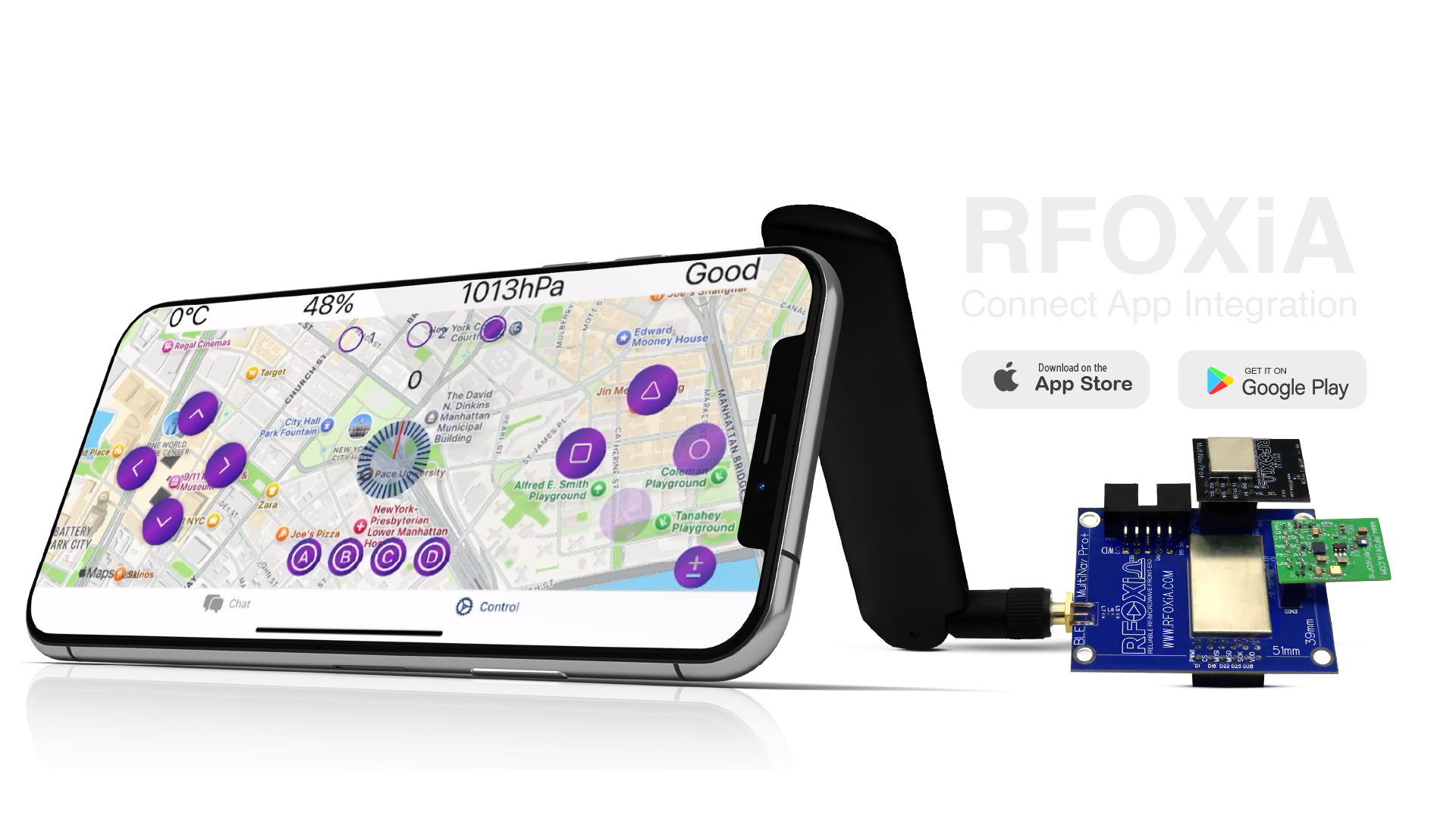
The Chat screen enables the mesh communication capability described above. Multiple RFOXiA users become nodes in a resilient, infrastructure-free communication network.
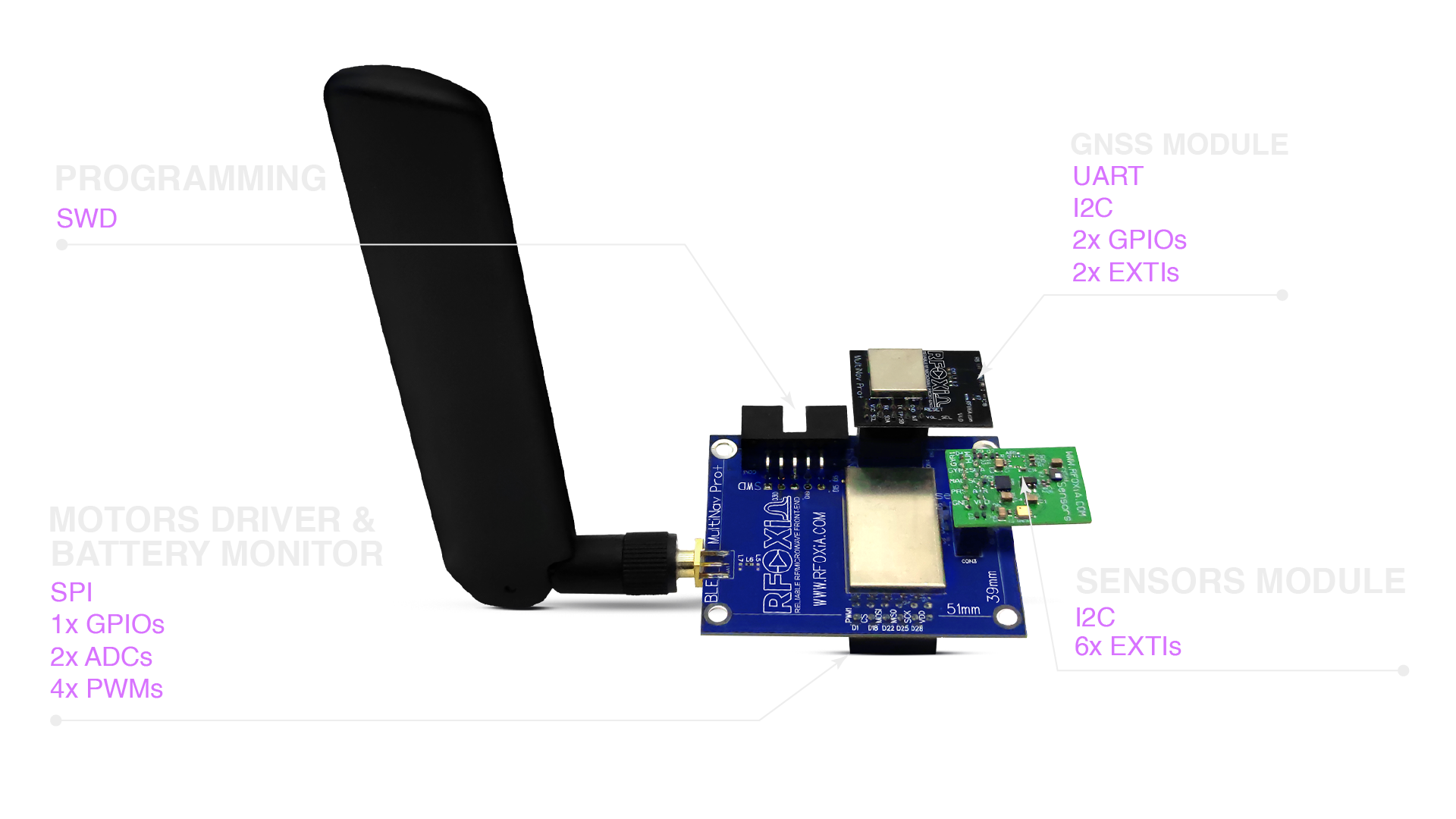
For developers building custom applications, the RFOXiA Long Range Bluetooth Module integrates with custom firmware through four interface connectors — GNSS, Sensors, Motors and Battery Management, and Programming — making it the foundation for complete autonomous systems rather than a standalone radio module.
Compact Form Factor, Maximum Performance
Achieving exceptional receiver sensitivity Bluetooth performance historically required large, expensive hardware. Military communication systems that achieve comparable ranges cost tens of thousands of dollars and weigh kilograms. The MultiNav Pro+ delivers professional-grade receiver sensitivity and range in a 57mm x 47mm module that weighs grams and costs $59 for two units.
The fixing frame — 54mm x 34mm with corner mounting holes — is designed for easy integration into drone frames, robot chassis, enclosures, and prototyping boards. The 140mm antenna is designed for optimal performance in the 2.4GHz band where BLE operates. The entire physical design reflects a philosophy of maximum capability in minimum space.
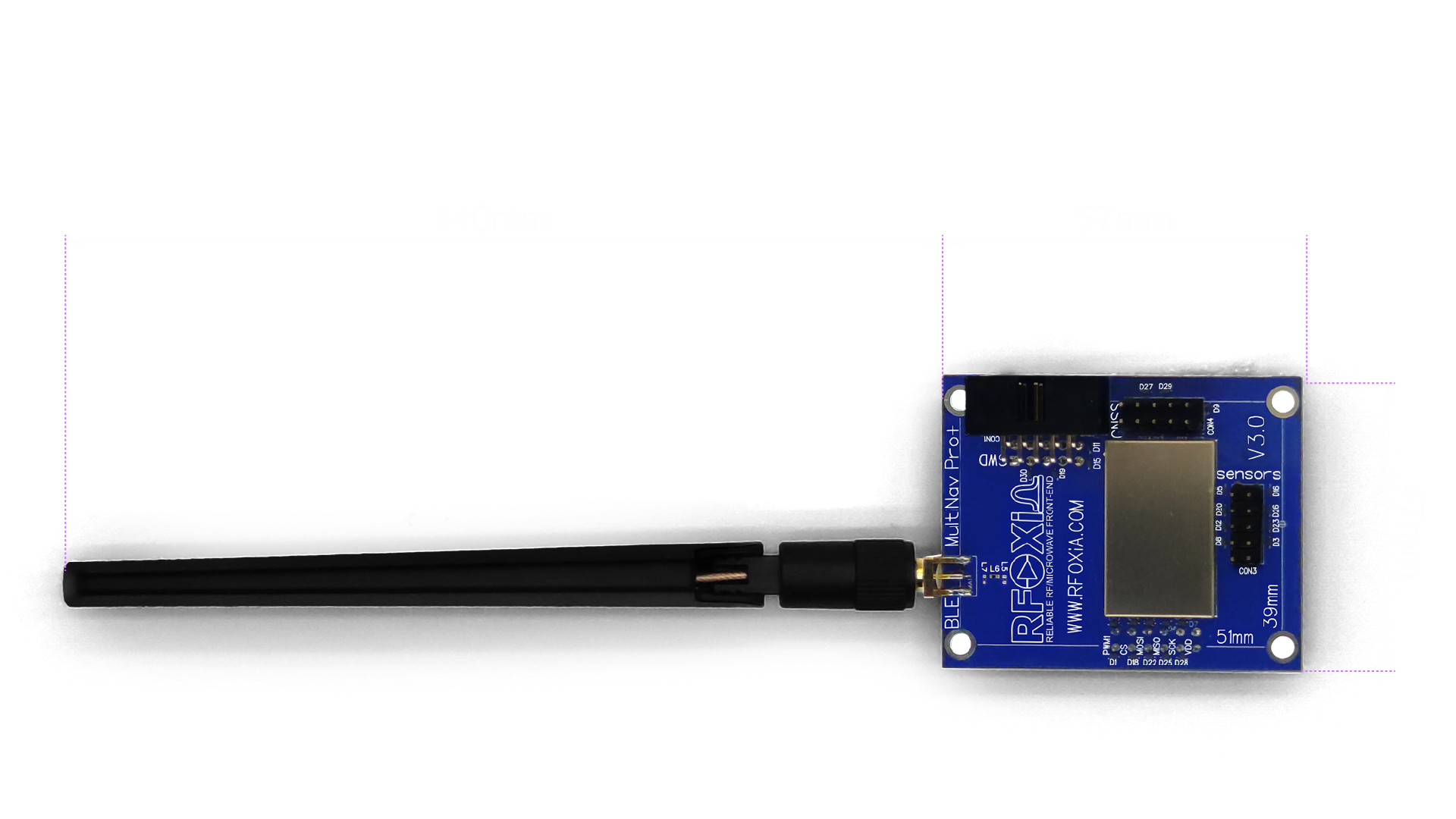
For drone builders specifically, where every gram matters and frame real estate is limited, this form factor makes the difference between a module that fits in a design and one that requires compromises.
Precision Timing: The RTC Crystal and Synchronized Systems
Long-range wireless systems serving drone navigation, sensor networks, and time-sensitive control applications require precise timing for synchronization. The MultiNav Pro+ integrates an RTC crystal that provides accurate time reference independent of the wireless link.
In practice, this means multi-node deployments can synchronize data collection across distributed sensor networks, navigation systems can timestamp position and sensor data accurately for post-processing, and time-division communication schemes can be implemented for interference avoidance in dense deployments.
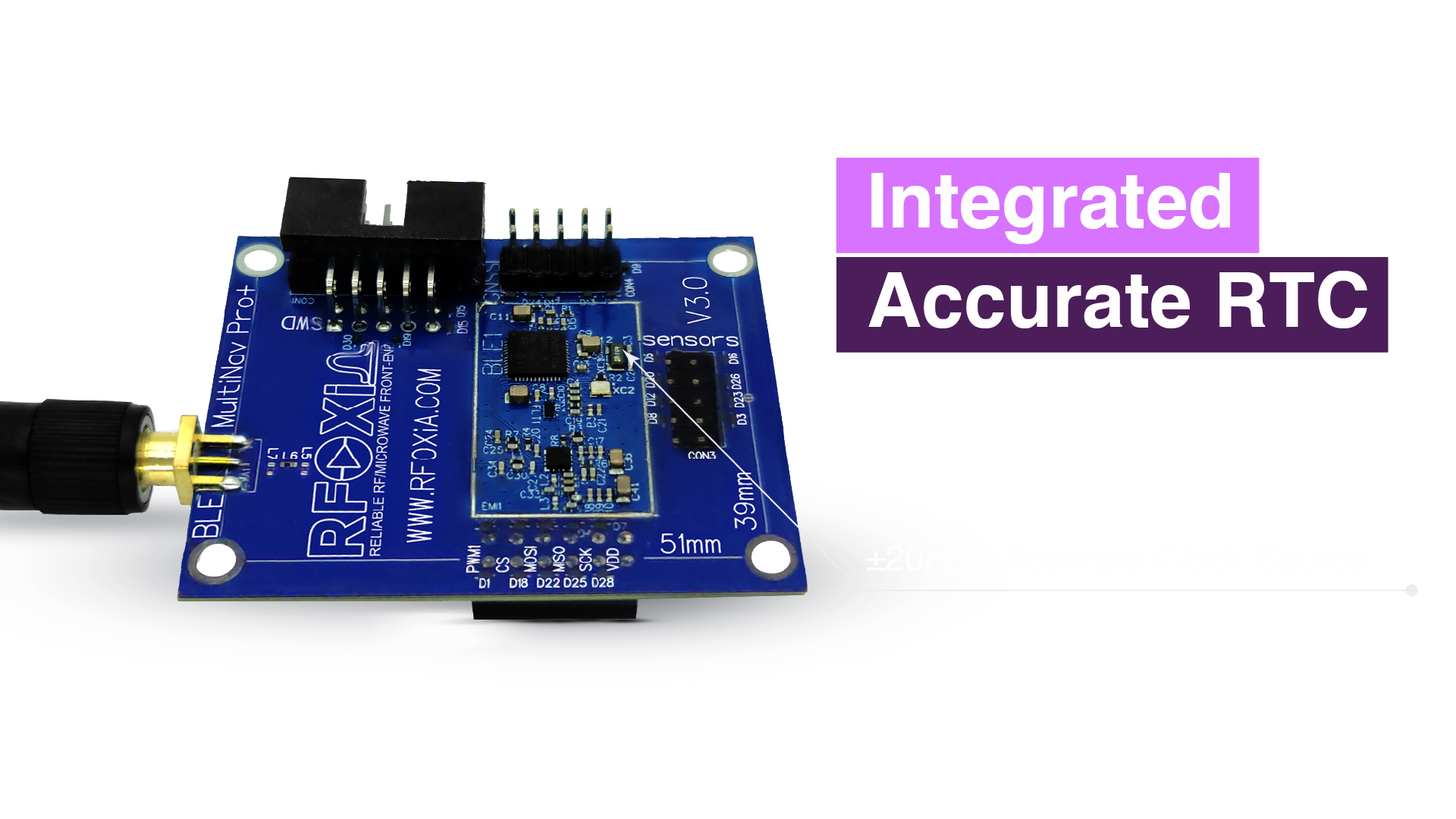
For researchers deploying sensor networks across large areas — where understanding what is receiver sensitivity Bluetooth means in the context of distributed systems — this timing capability is the difference between data that can be correlated and data that cannot.
FCC Certification: The Credential That Matters
The MultiNav Pro+ BLE module is FCC certified. For developers, this means legal operation in the United States without additional certification burden on your end product (under certain conditions). For distributors, it means immediate qualification for mainstream electronics distribution channels. For professional customers, it means the hardware has been tested and verified to meet radiation and interference standards.
FCC certification is not trivial to obtain — it requires laboratory testing, documentation, and meeting specific power and spurious emission limits. The fact that the MultiNav Pro+ passes FCC certification while achieving exceptional receiver sensitivity Bluetooth performance is a testament to the quality of the RF design. Poorly designed modules often fail FCC testing precisely because their RF sections are not properly controlled.
Open Source Firmware: Receiver Sensitivity in Your Hands
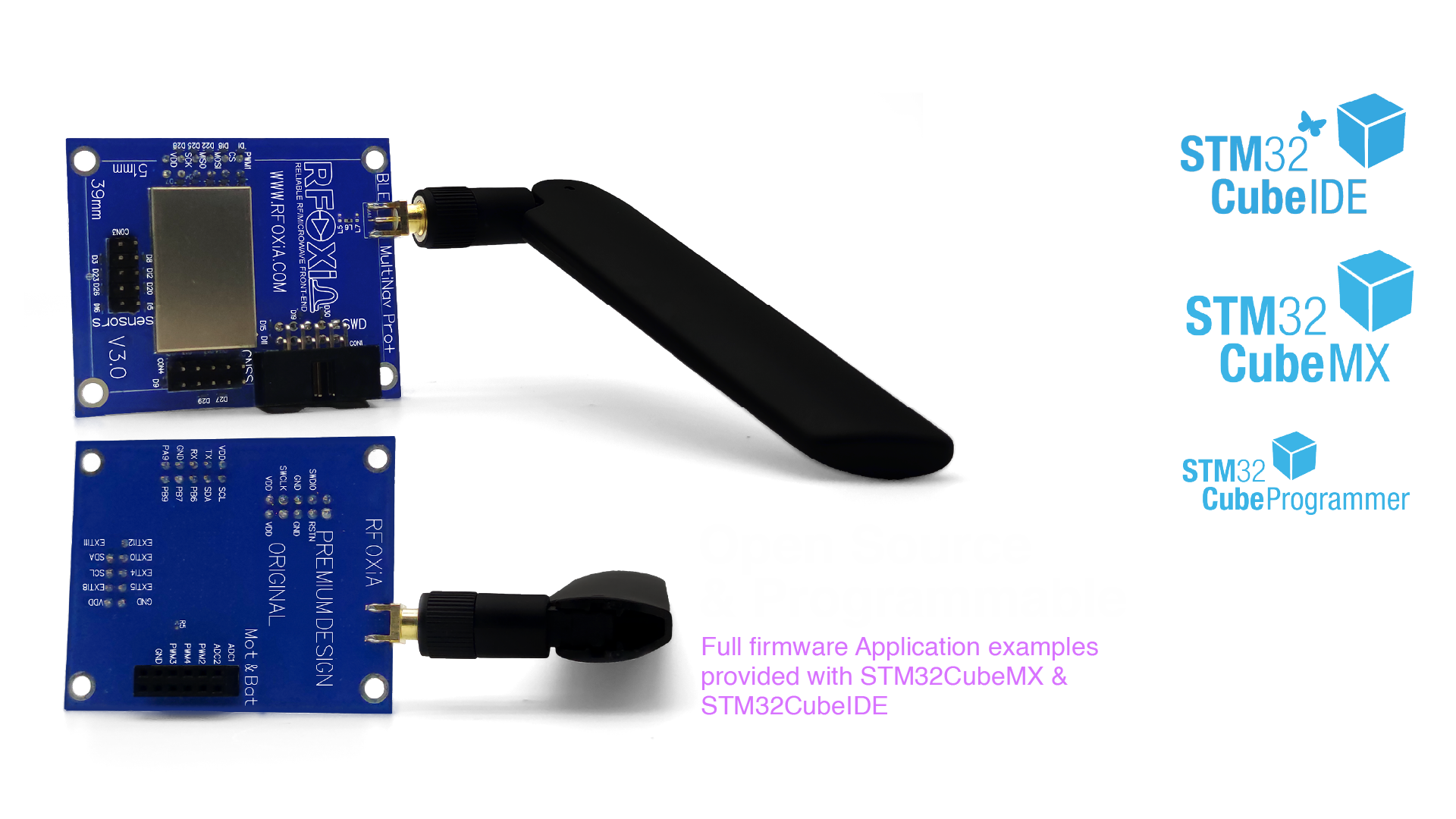
The complete firmware for the MultiNav Pro+ is open source and available on GitHub. For developers who want to understand, modify, or extend the radio configuration, this means full access to the BLE stack configuration, PHY settings, power management, and communication protocols that produce the module's receiver sensitivity Bluetooth performance characteristics.
The repository at github.com/RFOXiA/MultiNav-Pro-Long-Range-BLE-Module-Firmware-STM32WB07 provides a foundation that experienced firmware developers can customize for specialized applications — custom data rates, alternative PHY configurations, proprietary protocols built on top of the BLE stack — all while preserving the hardware's fundamental receiver sensitivity advantage.
For developers who prefer not to write firmware from scratch, the RFOXiA Club AI Firmware Builder generates production-ready firmware from plain-language descriptions, dramatically reducing development time without requiring deep RF expertise.
Who Needs This Level of Receiver Sensitivity in Bluetooth Applications?
Understanding what is receiver sensitivity Bluetooth becomes immediately practical when you map it to real applications:
FPV drone pilots and builders: Operating at ranges beyond 1km requires receiver sensitivity that commodity BLE cannot provide. The MultiNav Pro+ enables control, telemetry, and GPS tracking at ranges that previously required proprietary RC systems.
Robotics engineers: Ground robots operating in GPS-denied environments, agricultural robots covering large fields, and inspection robots in industrial facilities all benefit from reliable long-range wireless communication that does not depend on WiFi infrastructure.
IoT developers: Remote sensor deployments in agricultural fields, environmental monitoring stations, and infrastructure monitoring applications need communication range that reaches the gateway without requiring intermediate nodes. Better receiver sensitivity means fewer nodes and lower deployment cost.
Researchers: Academic and commercial researchers deploying sensor networks need range, reliability, and data integrity. The MultiNav Pro+'s receiver sensitivity combined with the GNSS module and Sensors module creates a complete research-grade data collection platform.
Emergency response teams: Infrastructure-independent communication at 5km ground-to-ground range is operationally significant for disaster response coordination, search and rescue, and field team communication.
For any of these applications, the RFOXiA Long Range Bluetooth Module offers a combination of receiver sensitivity, data rate, ecosystem integration, and price point that no alternative product matches.
Comparing Receiver Sensitivity Bluetooth Performance Across Market Segments
To make the receiver sensitivity comparison concrete, consider three market segments:
Commodity BLE modules ($5-15):
- Receiver sensitivity: -90 to -95 dBm typical
- TX power: 0 to +4 dBm typical
- Link budget: 94-99 dB
- Real-world range: 50-100m
- Ecosystem: None
RFOXiA MultiNav Pro+ ($59 for 2):
- Receiver sensitivity: Professional-grade with RF front-end enhancement
- TX power: Amplified output
- Link budget: Sufficient for 50km drone-to-drone
- Real-world range: 5km ground, 15-20km ground-to-drone, 50km drone-to-drone
- Ecosystem: Complete — app, AI firmware, data network, community
Military/industrial systems ($5,000-50,000):
- Receiver sensitivity: State of the art
- TX power: Maximum legally permitted
- Link budget: Supports 150km+
- Real-world range: 150km+
- Ecosystem: Proprietary, closed, expensive
The gap between commodity modules and the MultiNav Pro+ is enormous in performance. The gap between the MultiNav Pro+ and military systems is enormous in price. RFOXiA occupies the space between these worlds — professional performance at maker-accessible pricing.
The Complete Ecosystem: Beyond Receiver Sensitivity
Receiver sensitivity is the foundational specification that makes long-range BLE possible. But the MultiNav Pro+ is not just a radio module — it is the communications layer in a complete wireless development ecosystem.
Paired with the GNSS Module (1.5m accuracy, 18Hz fix rate), the BLE module provides location-aware communication for navigation and tracking applications. Paired with the Sensors Module (temperature, humidity, pressure, air quality, accelerometer, gyroscope, magnetometer), it becomes an environmental monitoring and data collection platform. Powered by the Power/Program Kit (supercapacitor-based, 5-minute charge, 24-hour runtime), the complete stack operates in field deployments without battery anxiety.
All of this is available as the Developer Bundle — and if you are serious about building wireless systems, the RFOXiA Long Range Bluetooth Module is where that journey starts.
Conclusion: Receiver Sensitivity Is the Specification That Changes Everything
What is receiver sensitivity Bluetooth? It is the number that determines whether your wireless system works at 80 meters or 50 kilometers. It is the specification that separates a commodity module from a professional tool. It is the engineering achievement that makes the MultiNav Pro+ possible — and the reason no other product at this price point comes close to matching it.
For builders, engineers, researchers, and developers who need wireless range that actually matches their ambitions, receiver sensitivity Bluetooth performance is not a footnote in a datasheet. It is the entire story.
The MultiNav Pro+ BLE module — with its optimized RF front-end, professional-grade receiver sensitivity, 2 Mbps data rate, complete software ecosystem, and FCC certification — is the answer to that story.
Two modules. $59. Up to 50km.
Build something that reaches further.
Written by: Moamen Mohamed LinkedIn