
Why Does Bluetooth Lose Signal — And What You Can Do About It
RFOXiA Long Range Bluetooth Module
Why Does Bluetooth Lose Signal: The Complete Technical Guide for Developers and Builders
If you have ever been mid-flight on a drone, monitoring a remote sensor deployment, or controlling a robot across a field and suddenly lost your wireless link — you already know the frustration. The question that follows is almost always the same: why does Bluetooth lose signal?
It is one of the most searched questions in the maker, IoT, and drone communities — and for good reason. Standard Bluetooth modules fail at ranges that serious applications demand. Most commodity BLE modules tap out at 80 to 100 meters under ideal conditions. Put a wall, a person, a vehicle, or a patch of humid air between transmitter and receiver, and that drops even further.
This post is the complete answer. We will cover every real reason why Bluetooth loses signal, what the physics actually says, and how modern hardware engineering has pushed BLE range to ranges that once seemed impossible — including the RFOXiA MultiNav Pro+, which achieves over 50KM drone-to-drone and 5KM ground-to-ground using standard Bluetooth technology.
The Physics Behind Bluetooth Signal Loss
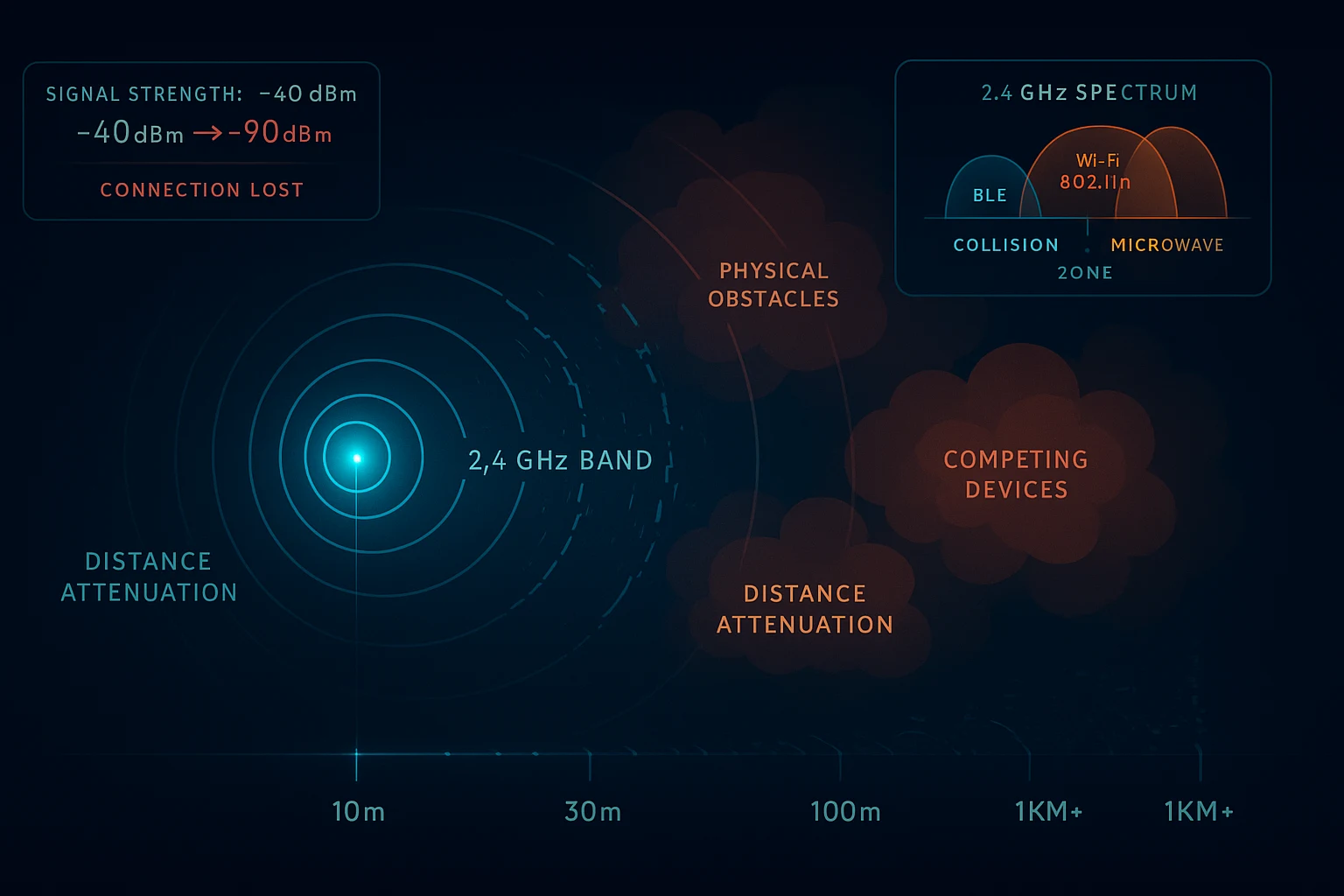
Before diving into specific causes, it helps to understand what Bluetooth actually is at a physical level. Bluetooth Low Energy operates in the 2.4 GHz ISM band — the same unlicensed spectrum shared by Wi-Fi, Zigbee, microwave ovens, and dozens of other wireless technologies. The signal propagates as electromagnetic radiation, and like all RF signals, it obeys the inverse square law: power decreases proportionally to the square of distance.
Double the distance, and signal power drops to one quarter. Triple the distance, and it drops to one ninth. This is why range is so brutally constrained when transmit power is low and receiver sensitivity is poor — which describes almost every commodity BLE module on the market.
But distance alone does not tell the full story. There are six distinct categories of signal loss that every Bluetooth developer needs to understand.
1. Free-Space Path Loss (Distance)
This is the baseline loss that occurs even in a perfect vacuum with no obstacles. At 2.4 GHz, free-space path loss over 100 meters is approximately 80 dB. Over 1 kilometer, it reaches around 100 dB. Over 10 kilometers, you are looking at 120 dB of loss.
Most commodity BLE modules transmit at 0 dBm (1 milliwatt) and have receiver sensitivity around -90 dBm — giving them a link budget of roughly 90 dB. Do the math and you quickly see why 100 meters is the practical ceiling for standard modules.
The MultiNav Pro+ was engineered to break this ceiling. With a powerful RF front-end, external amplifiers, and a high-sensitivity receiver, the link budget is dramatically extended — enabling distances that standard modules cannot approach.
2. Multipath Interference and Ground Reflections
This is one of the most underappreciated answers to the question of why does Bluetooth lose signal. When a radio wave travels from transmitter to receiver, it rarely takes a single direct path. It reflects off buildings, the ground, vehicles, trees, and other surfaces. These reflected copies of the signal arrive at the receiver at slightly different times and phases.
When two copies arrive 180 degrees out of phase, they cancel each other — this is called destructive interference, and it can cause a near-complete signal null even at short distances. This is why you can sometimes get better range by moving a few centimeters — you have shifted out of a null zone.
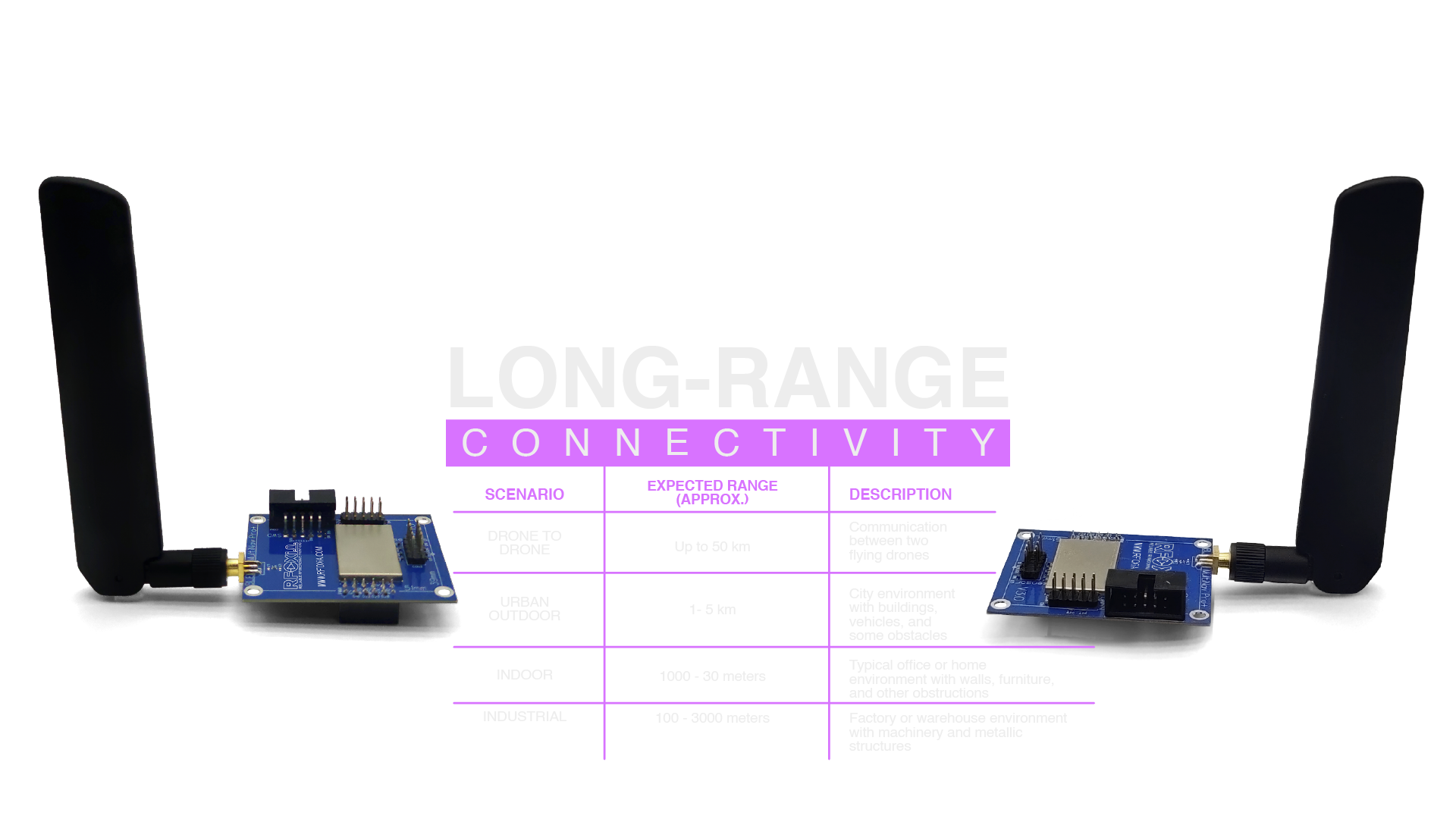
This is also why drone-to-drone range dramatically exceeds ground-to-ground range. When both modules are elevated, ground reflections are eliminated. The MultiNav Pro+ achieves 5KM ground-to-ground, 15-20KM man-to-drone, and over 50KM drone-to-drone — and that progression is not a coincidence. It directly reflects the elimination of ground multipath at altitude.
3. Absorption and Attenuation Through Materials
Different materials absorb RF energy at different rates. Here is a practical summary of what degrades your Bluetooth signal:
- Concrete and brick walls: 10–15 dB loss per wall
- Metal surfaces: Near-complete reflection and blockage
- Human bodies: 3–5 dB loss (water-rich tissue absorbs 2.4 GHz effectively — this is how microwave ovens work)
- Vegetation and trees: 5–20 dB depending on density and moisture
- Water bodies: Near-complete absorption at the surface
- Glass: Relatively low loss, but metallic coatings add significant attenuation
For indoor applications, every wall your signal passes through costs you range. For outdoor drone or field applications, terrain features and vegetation become the dominant loss factor. Understanding the material environment of your deployment is critical to predicting real-world range.
4. RF Interference in the 2.4 GHz Band
The 2.4 GHz ISM band is shared, unlicensed spectrum. In urban and suburban environments, it is extremely congested:
- Wi-Fi networks (802.11b/g/n/ax) occupy large chunks of this band
- Other BLE devices are constantly advertising
- Zigbee networks share the same spectrum
- Baby monitors, cordless phones, and microwave ovens generate wideband noise
Bluetooth handles this with adaptive frequency hopping — it changes channels 1600 times per second to avoid occupied channels. But in extremely congested environments, the noise floor rises and effective link budget shrinks. This answers why does Bluetooth lose signal in crowded Wi-Fi environments even at close range.
For field deployments away from dense infrastructure, this is rarely the limiting factor. For urban maker projects and industrial deployments in factories or warehouses full of Wi-Fi access points, it is a significant concern.
5. Antenna Orientation and Polarization Mismatch
This is a cause most developers discover the hard way. Antennas have a radiation pattern — a three-dimensional map of where they transmit and receive best. Most BLE modules use omnidirectional chip antennas, which transmit in a toroidal pattern (think of a donut shape). There are nulls directly above and below the antenna.
If your drone is directly overhead with a chip antenna pointing straight down, and your ground controller has a chip antenna pointing straight up, both are pointing their nulls at each other. Signal loss can be severe.
Polarization matters equally. A vertically polarized transmitting antenna connecting to a horizontally polarized receiving antenna introduces approximately 20 dB of additional loss — this alone can reduce range by a factor of 10.
The MultiNav Pro+ addresses this with a high-gain chip antenna specifically designed for the long-range RF front-end. Knowing your antenna orientation and ensuring matched polarization in your deployment is not optional — it is engineering discipline.
6. Transmit Power Limitations and Regulatory Constraints
Bluetooth operates under regulatory power limits set by the FCC (in the United States), CE (in Europe), and equivalent bodies globally. In the 2.4 GHz band, maximum EIRP (Effective Isotropic Radiated Power) is limited to +30 dBm (1 watt) in the US under FCC Part 15.
Most commodity BLE modules transmit at 0 dBm (1 milliwatt) to minimize power consumption and meet the lowest common denominator. They leave 30 dB of legal headroom on the table — that is a factor of 1000 in transmit power — purely as a design choice.
FCC certification is not just a compliance checkbox — it is proof that a module has been tested and verified to operate within legal power limits while actually achieving its claimed performance. This is why FCC certification matters when evaluating long-range BLE hardware. The MultiNav Pro+ is fully FCC certified, meaning every performance claim has been validated through legitimate testing.
How the MultiNav Pro+ Solves All Six Problems
Understanding why Bluetooth loses signal makes it immediately clear why standard modules fail at range — and why the MultiNav Pro+ was engineered differently from the ground up.
Extended link budget: The RF front-end and external amplifiers dramatically increase transmit power and receiver sensitivity, attacking the free-space path loss problem directly.
Altitude-optimized deployment: The 50KM drone-to-drone specification takes advantage of the physics — at altitude, multipath and ground reflections are eliminated.
High-gain antenna: The integrated high-gain chip antenna ensures maximum energy is directed where it matters, reducing the polarization and gain losses that plague commodity modules.
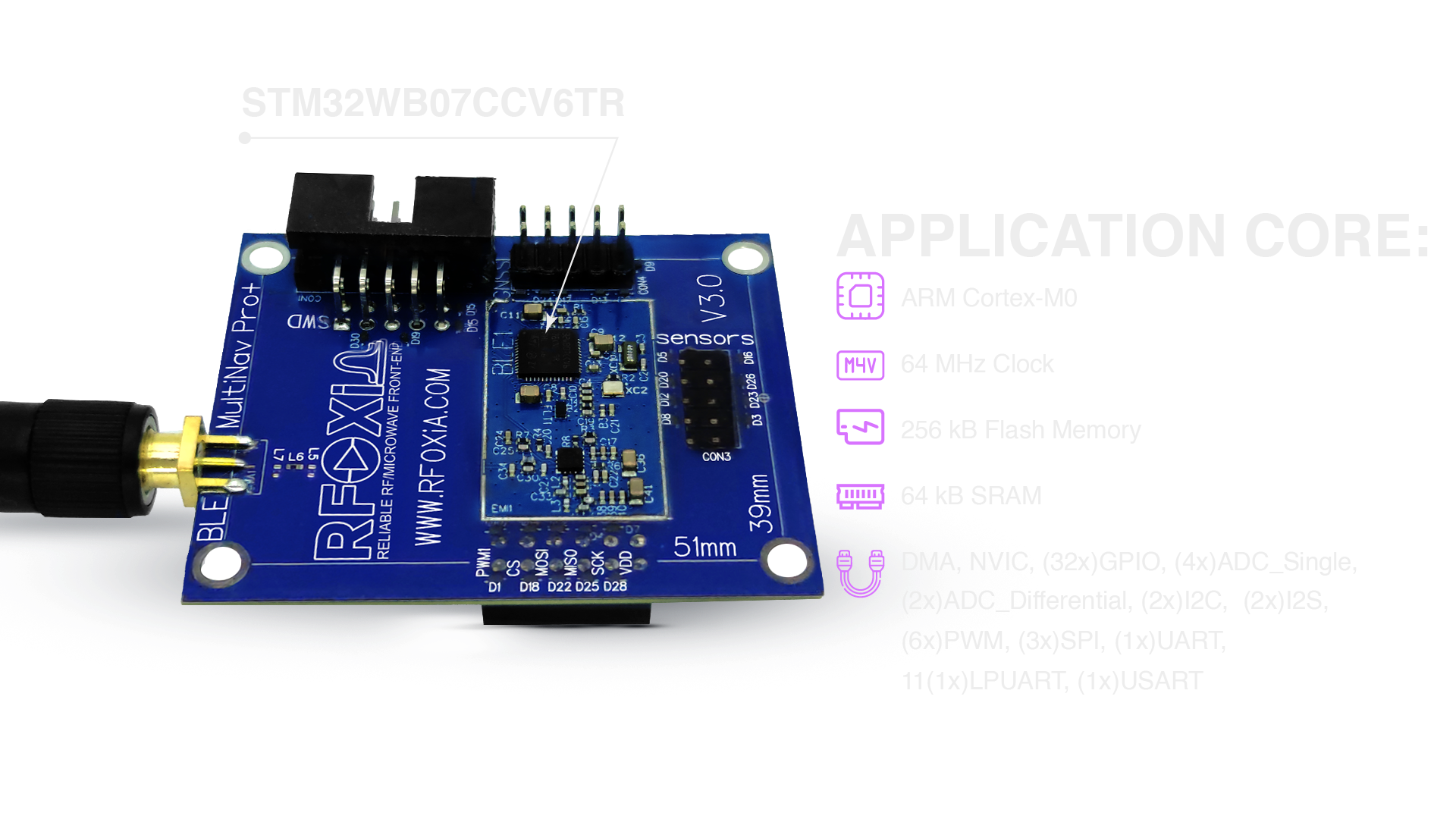
STM32WB07CCV6 processing core: The powerful SoC manages the BLE stack, adaptive frequency hopping, and user applications simultaneously — ensuring the radio layer is always optimized.
FCC certified: Legal, tested, ready to deploy in professional and commercial applications without compliance risk.
If you are building anything that demands reliable long-range wireless — drone control, remote monitoring, mesh communication — the RFOXiA Long Range Bluetooth Module was built specifically to solve every problem described above.
Real-World Range: What to Actually Expect
Range specifications always come with caveats, and honest engineering means being specific about conditions. Here is what the MultiNav Pro+ actually delivers across different deployment scenarios:
| Deployment Scenario | Range |
|---|---|
| Ground-to-ground (both modules at 1.5m height) | 5KM |
| Man-to-drone (one module on drone at altitude) | 15–20KM |
| Drone-to-drone (both modules airborne) | 50KM+ |
These figures represent real RF physics. The progressive improvement from ground to drone reflects the elimination of multipath interference, not marketing inflation.
For comparison, commodity BLE modules from major silicon vendors (Nordic, Silicon Labs) achieve 80–100 meters in ideal conditions, 20–30 meters through a single interior wall, and fail entirely in challenging environments. The MultiNav Pro+ operates at ranges these modules cannot approach at any setting.
The Complete Ecosystem: Beyond Just a Module
Solving the signal loss problem is only the beginning. What you do with reliable long-range Bluetooth connectivity is where the real value emerges.
RFOXiA Connect App
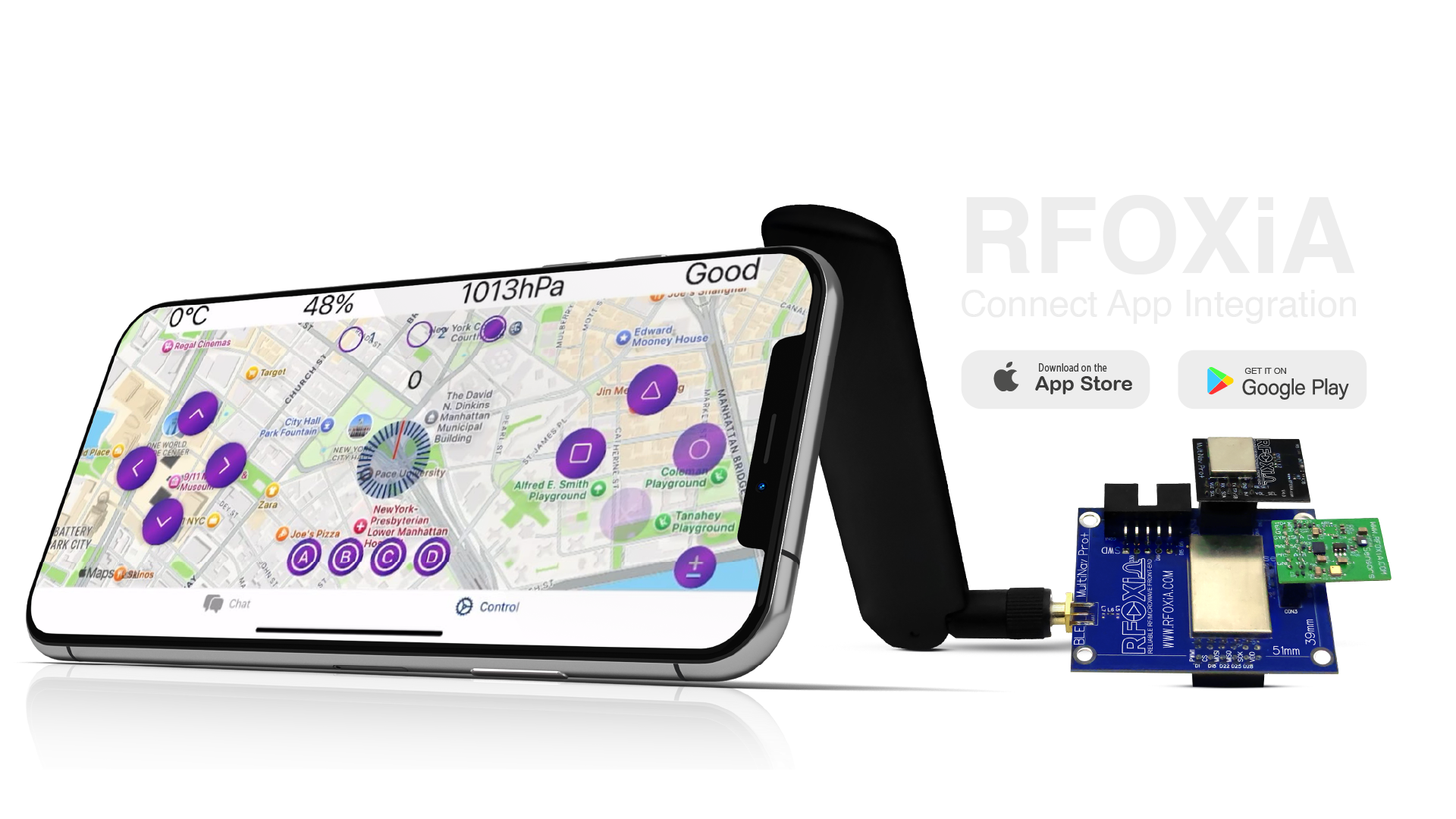
The MultiNav Pro+ pairs with the RFOXiA Connect app on iOS and Android. The app provides a PS5-style controller interface for drone and robot control, a live map with real-time GPS tracking, and live sensor data display — all operating completely without internet connection. At up to 20KM man-to-drone range, this is a drone control and monitoring platform that requires no infrastructure at all.
BLE Chat — Internet-Independent Communication
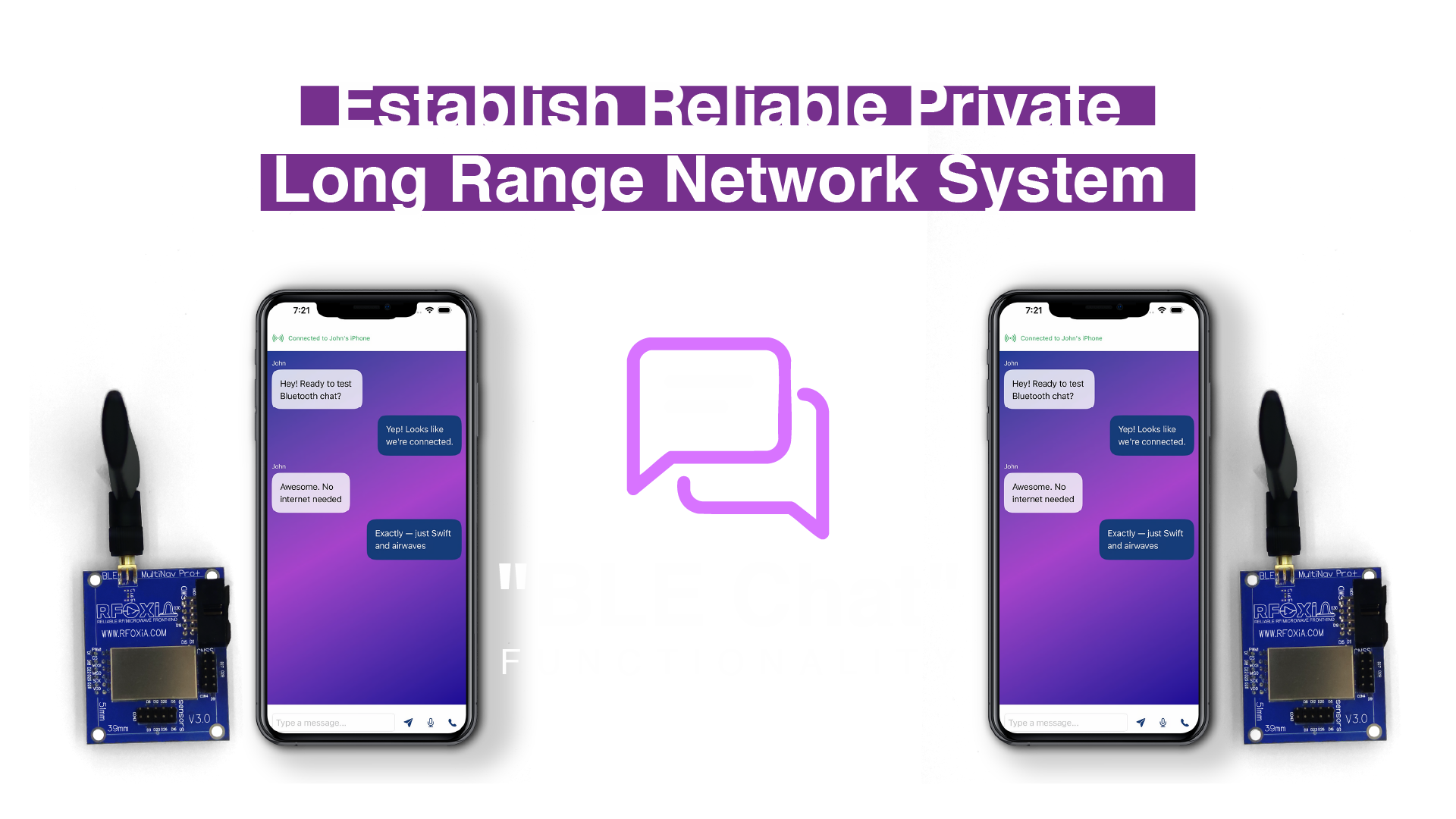
The MultiNav Pro+ supports direct BLE Chat between users — text, data, and voice communication that requires no internet connection, no cell towers, and no infrastructure of any kind. For disaster response teams, remote expeditions, field researchers, and military-adjacent applications, this is a capability that previously required expensive dedicated hardware.
Seamless Ecosystem Integration
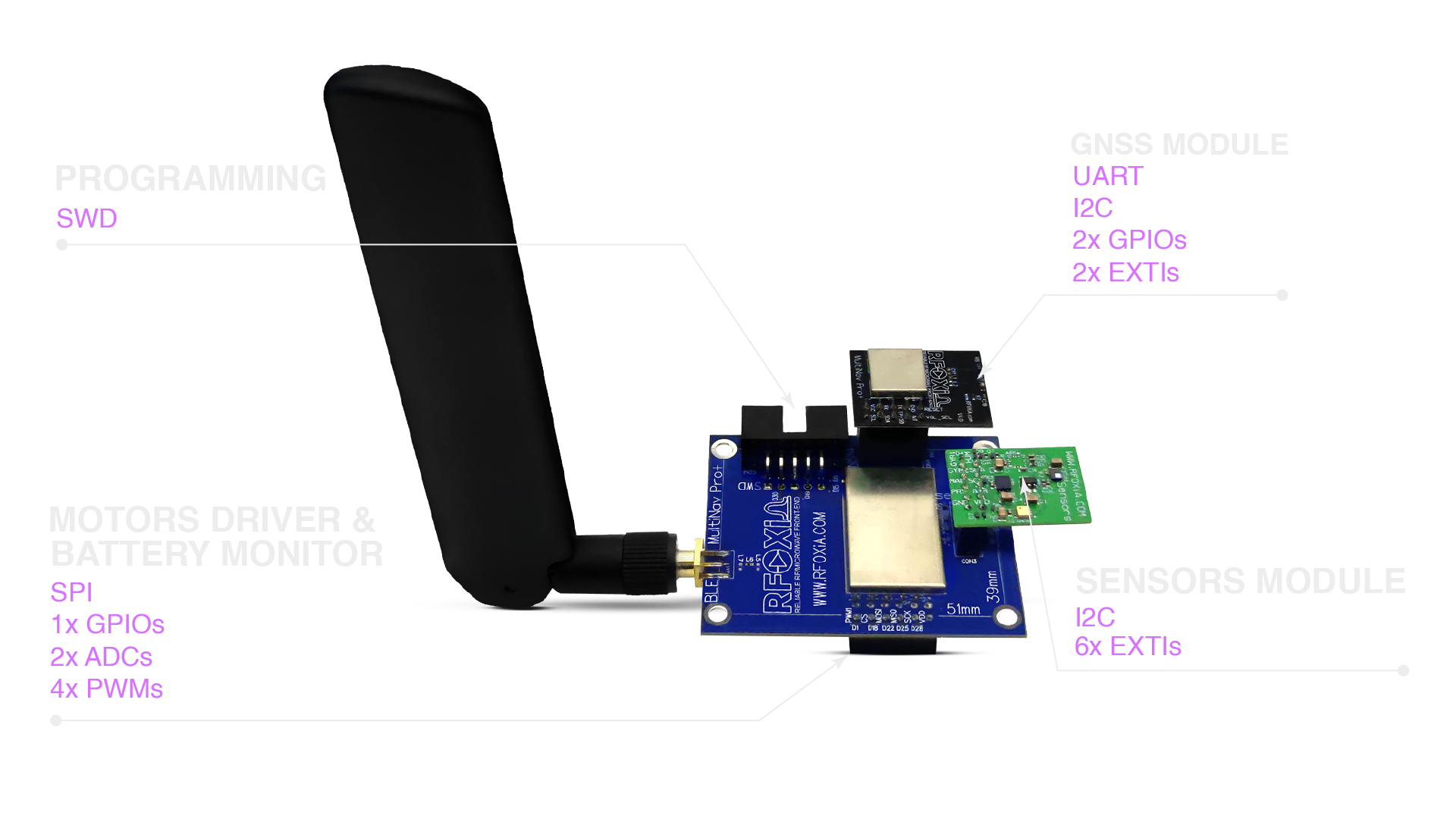
The MultiNav Pro+ is designed to integrate directly with the other modules in the MultiNav Pro+ ecosystem — GNSS for precision positioning, Sensors for environmental monitoring, and the Motor/Battery Management module for power and actuation control. Together they form a complete autonomous systems platform.
Open Source and Fully Programmable
Every line of firmware is open source and available on GitHub. Full SWD programmability means you own your hardware completely — no black boxes, no locked firmware, no vendor lock-in. The AI Firmware Builder on RFOXiA Club lets you describe your application in plain language and generates production-ready firmware in minutes.
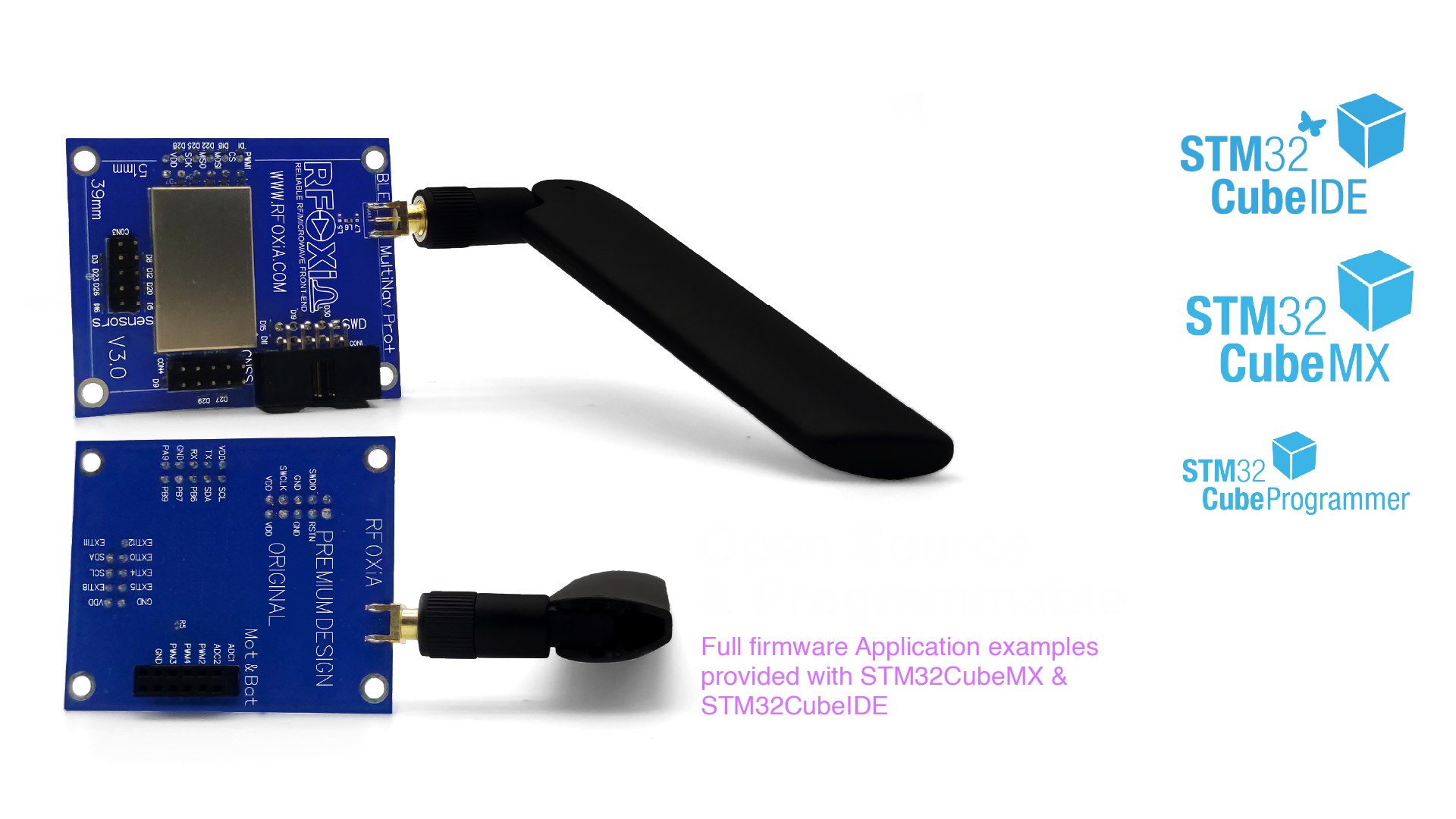
Compact Form Factor for Space-Constrained Builds
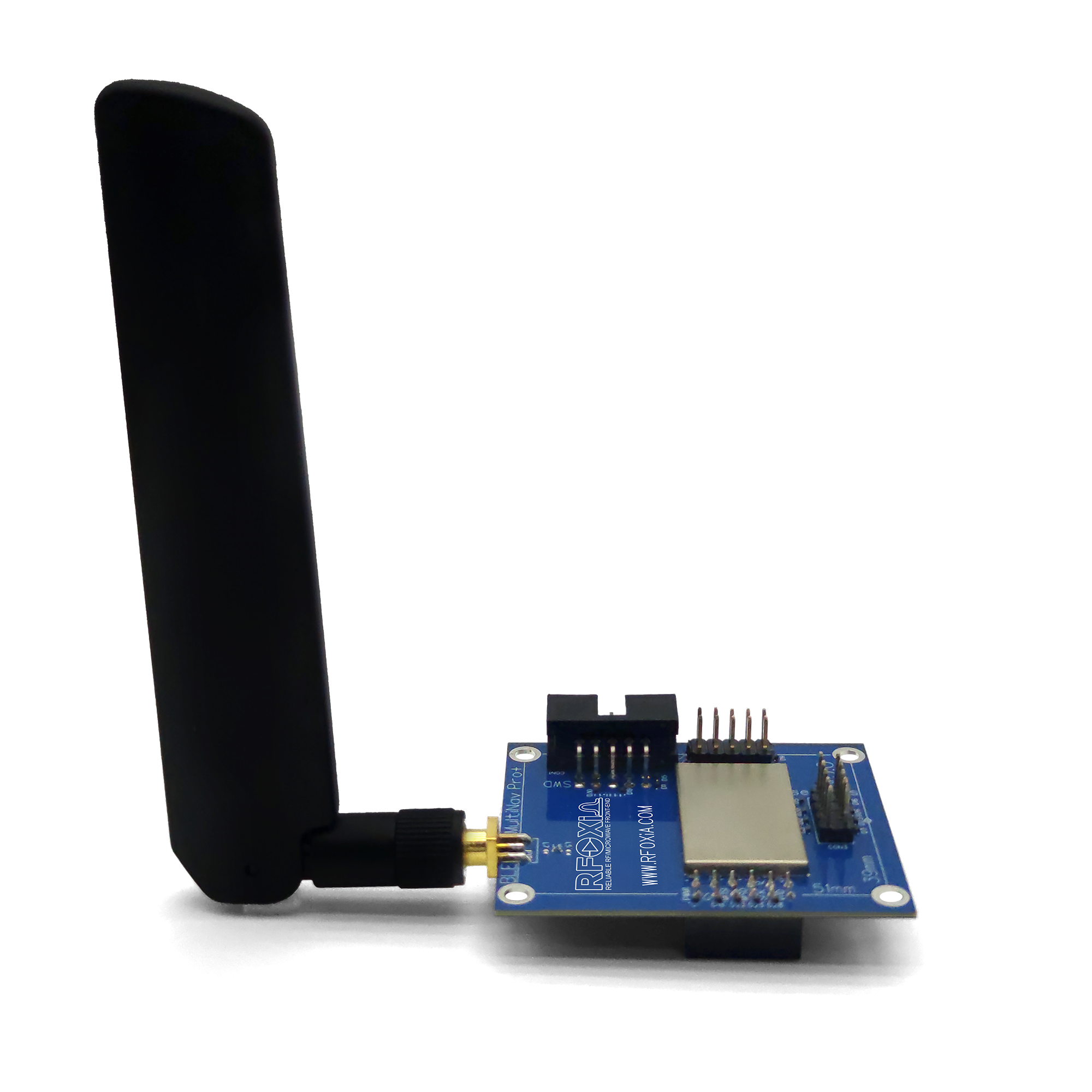
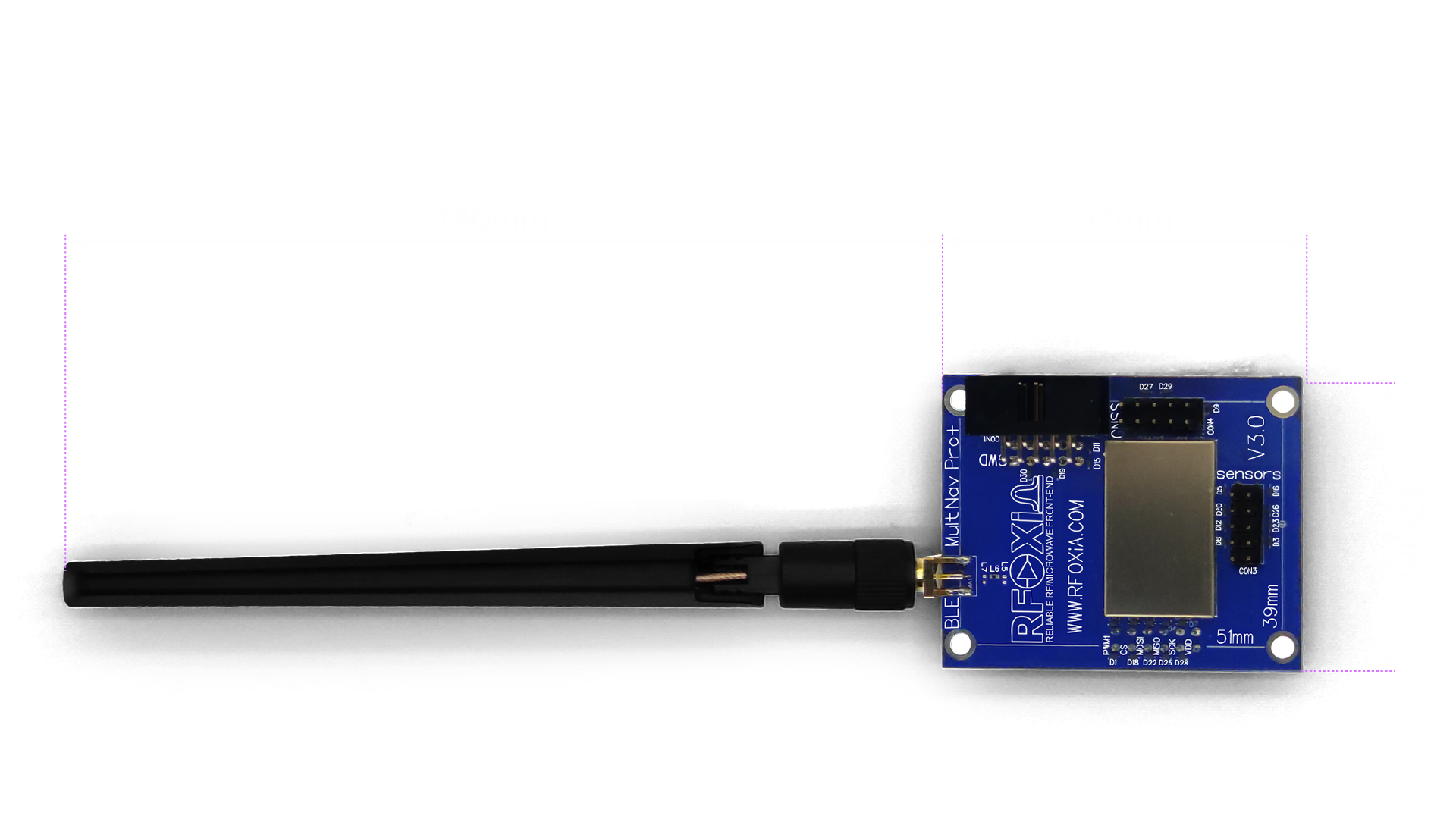
Long-range capability means nothing if the module does not fit your build. The MultiNav Pro+ measures 57mm × 47mm with a fixing frame size of 54mm × 34mm and corner mounting holes for secure installation. The antenna length is 140mm. For drone frames, robotics platforms, and embedded field hardware, this form factor integrates cleanly.
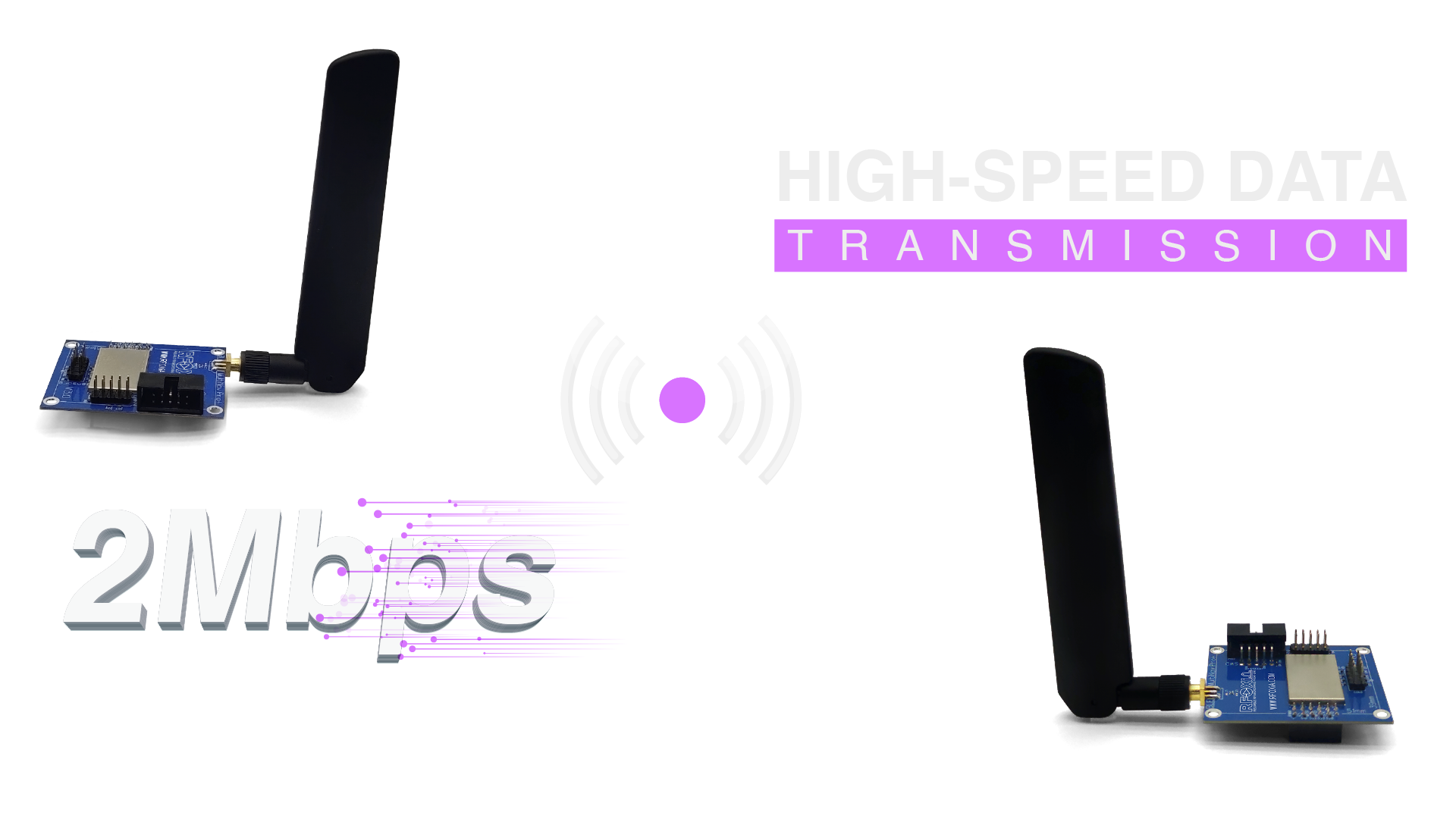
The 2 Mbps data rate at this range is equally significant. Streaming live sensor data, transmitting GPS coordinates at 18Hz, and sending control commands simultaneously does not require you to choose between speed and distance.
Precision Timing for Navigation-Critical Applications
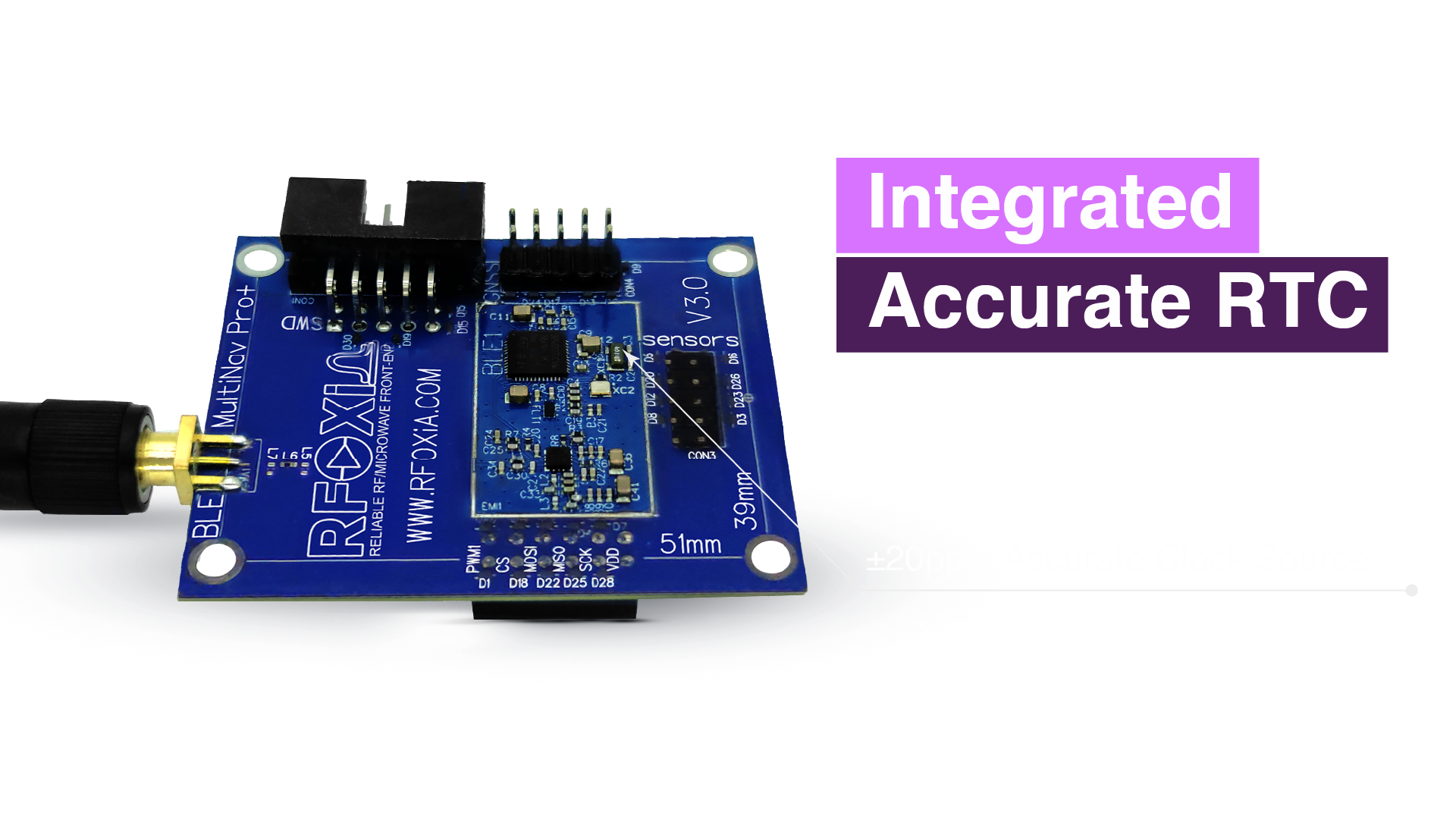
Time synchronization matters in navigation. The MultiNav Pro+ includes an integrated RTC crystal that provides precise timing for synchronization across distributed systems. If you are building swarm robotics, coordinated sensor networks, or any application where timing between nodes matters, this is not a nice-to-have — it is essential.
Practical Checklist: Maximizing Your Bluetooth Range
Whether you are using the MultiNav Pro+ or any BLE module, these engineering practices will help you extract maximum performance:
1. Maximize elevation. Even 10 meters of height over flat terrain dramatically reduces multipath interference. For drone applications, the effect is substantial.
2. Match antenna polarization. Both antennas should be oriented the same way relative to each other. Vertical-to-vertical is the standard for ground applications.
3. Avoid metal enclosures. Metal blocks and reflects 2.4 GHz. If your module must be inside a housing, use plastic or composite materials in the antenna area.
4. Check your RF environment. In congested urban environments, 2.4 GHz can be severely crowded. Survey the spectrum before critical deployments.
5. Keep antenna clear. The antenna should not be pressed against other PCBs, batteries, or structural elements. A few millimeters of clearance matters.
6. Use FCC-certified hardware. Certified modules have been tested to actually achieve their specifications within legal limits. Uncertified modules may claim performance they cannot legally or practically deliver.
Why Most BLE Modules Were Never Designed for Your Application
The honest answer to why does Bluetooth lose signal at the ranges serious applications demand is simple: commodity BLE modules were not engineered for those ranges. They were optimized for short-range consumer applications — wireless earbuds, fitness trackers, smart home sensors — where 10–30 meters is entirely sufficient.
Drone control, field robotics, remote IoT deployment, and mesh communication in infrastructure-free environments are categorically different applications. They require hardware that was designed for these use cases from the silicon up.
The RFOXiA MultiNav Pro+ exists in a market position that was previously unoccupied: professional-grade long-range BLE performance at a price accessible to independent developers, researchers, and hardware builders. Two modules for $59. FCC certified. Open source. Shipping now.
If you are serious about long-range wireless and you are tired of fighting signal loss on hardware that was never designed for your application, the RFOXiA Long Range Bluetooth Module is the engineering answer.
Frequently Asked Questions
Why does Bluetooth lose signal through walls? Concrete and brick absorb and reflect 2.4 GHz signals, causing 10–15 dB of loss per wall. Most commodity BLE modules have a total link budget of around 90 dB, leaving minimal margin for even a single obstruction.
Why does Bluetooth range change with weather? High humidity and rain increase atmospheric absorption at 2.4 GHz. The effect is most noticeable over long distances where the cumulative absorption adds up significantly.
Can Bluetooth work at 50KM? With standard commodity modules, no. With the MultiNav Pro+, yes — drone-to-drone at altitude where ground reflections are eliminated. The RF front-end, amplifiers, high-sensitivity receiver, and high-gain antenna work together to achieve this.
Is the MultiNav Pro+ legal to operate? Yes. It is FCC certified for operation in the United States and complies with all applicable power and spectral mask regulations.
Do I need programming experience to use it? No. The RFOXiA Connect app provides a full GUI interface for control and monitoring. For firmware customization, the AI Firmware Builder on RFOXiA Club generates complete firmware from plain-language descriptions.
Start Building Without Signal Limits
Signal loss does not have to be the constraint that limits what you build. Every cause described in this guide has an engineering solution — and the MultiNav Pro+ implements all of them in a single compact, affordable, FCC-certified module.
Two modules. 50KM. $59.
Explore the full specs and order yours at the RFOXiA Long Range Bluetooth Module product page, or join RFOXiA Club for free to access the AI Firmware Builder, developer community, and $10 welcome credit toward your first purchase.
Build further. Connect everything.
Written by: Moamen Mohamed LinkedIn